
Straight to the Point…
The Mediterranean is warm, sunny, and beautiful — and it will require you to walk up hills, step onto tenders, cover your shoulders in churches, and look reasonably put-together at the captain’s dinner. You can do all of that with far less than you think. Whether checking your bags or carrying on, a well-planned wardrobe, smart fabric choices, and a ruthless approach to “just in case” packing will get you through two weeks in the Med without dragging a 50 pound bag over cobblestones.
Before we go any farther, we want you to know that we have no advertising or affiliate links. Our blog is not monetized. When you see links, they are just for information and convenience, because people always ask. Click or don’t click…we don’t care, but you might love the product as much as we do! :)
Now, on to the info you need…
What to Expect: Climate and Conditions
Mediterranean cruise season generally runs from April through October, and the packing requirements shift a bit across that window. Here is the short version:
- Spring (April–May): Mild and lovely, but evenings can be cool. You’ll want a jacket. Fewer crowds tour the Med in the spring.
- Summer (June–August): Hot. Very hot. Think 90-95°F in many ports. Lightweight, breathable fabrics are a must. Peak travel season means crowds and long lines at every must-see attraction.
- Fall (September–October): Still warm during the day, sometimes even hot, but generally more comfortable, especially later in the season. Some shoulder season chill in the evenings…and less crowds overall. We love to go at this time of year.
The ship itself will be air-conditioned, sometimes aggressively, so you will want a layer on board even in July. I find a lightweight Merino or cashmere cardigan is perfect for this. We recommend checking out Weather Underground to see the historical temps for your planned ports, then checking the actual forecast the day before you leave to make any packing adjustments.

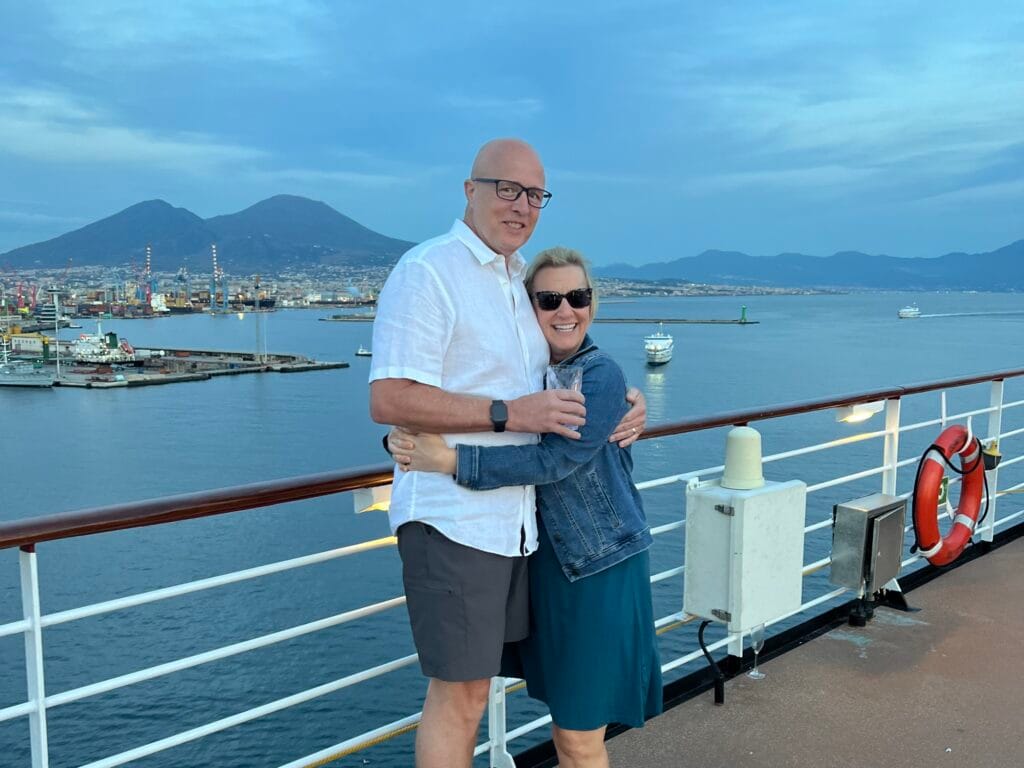
Dress Codes: Know Your Ship
During the day, all ocean cruise lines have a casual dress code. This means shorts, tank tops, sundresses, jeans, flip flops, you name it, almost anything goes during the day. Most cruise lines respectfully ask you to cover your swimsuit when not lounging by the pool, and I don’t think this is too much to ask.
For evenings, most cruise lines have some variation of smart casual, resort casual, elegant casual, or formal dress codes. Formal or dress up nights usually occur one or twice per voyage, and they will be announced in the daily itinerary. Celebrity has rebranded their formal nights as evening chic, Virgin has their signature scarlet party, and some cruise lines have a white night. Viking has no formal nights. Check your specific cruise line’s website before you pack, but here is a general guide for these terms:
- Smart/resort/elegant casual: Nice pants or dress pants, a blouse or sweater (or collared shirt for men), or a casual dress or sundress. This covers most dinners and evening activities. Generally, shorts and flip flops are not considered smart/resort/elegant casual, and most cruise lines do not allow these in the sit-down dining rooms in the evening, so check yours to be certain. Jeans can sometimes be included in smart/resort/elegant casual, but check your cruise line’s website to be sure. Jeans are much more acceptable than they used to be.
- Formal/gala/chic nights: On certain cruise lines, a cocktail dress or a suit and tie may be required for those fancy dress up nights. It is very important to know your ship. Most are a little less formal, with a nicer dress for women, and dress pants, a button down shirt and/or a blazer for men being the perfect attire. See the dress codes below for five popular cruise lines that cater to mature adults, taken directly from their websites.

Celebrity Evening Dress Code
SMART CASUAL
Smart Casual attire is required for entry to main dining, specialty dining, and the Celebrity Theatre. Smart Casual means you look comfortable yet tasteful in a dress, skirt, long pants, or jean, and stylish top or button-down. Shorts and flip flops are not considered Smart Casual.
EVENING CHIC
Evening Chic is a cocktail dress, skirt, slacks, designer jean, or an elegant top or blazer—some guests even pack a tuxedo or gown for onboard photos.
If you do not wish to participate in Evening Chic, Smart Casual attire is acceptable for dining and theater.

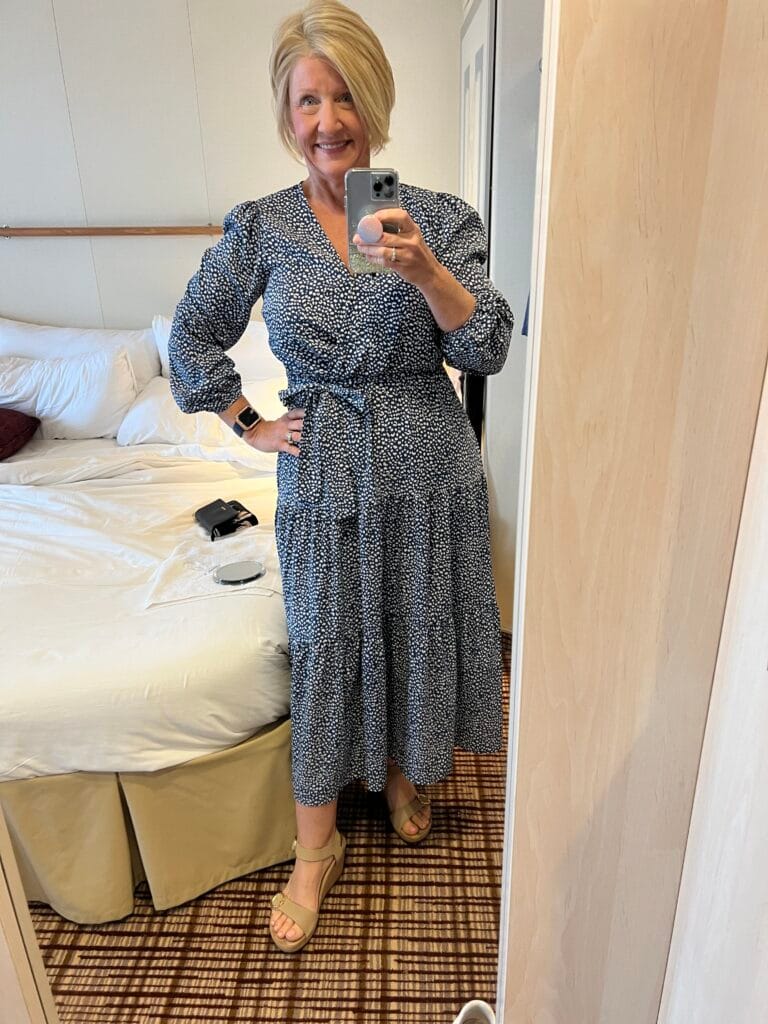
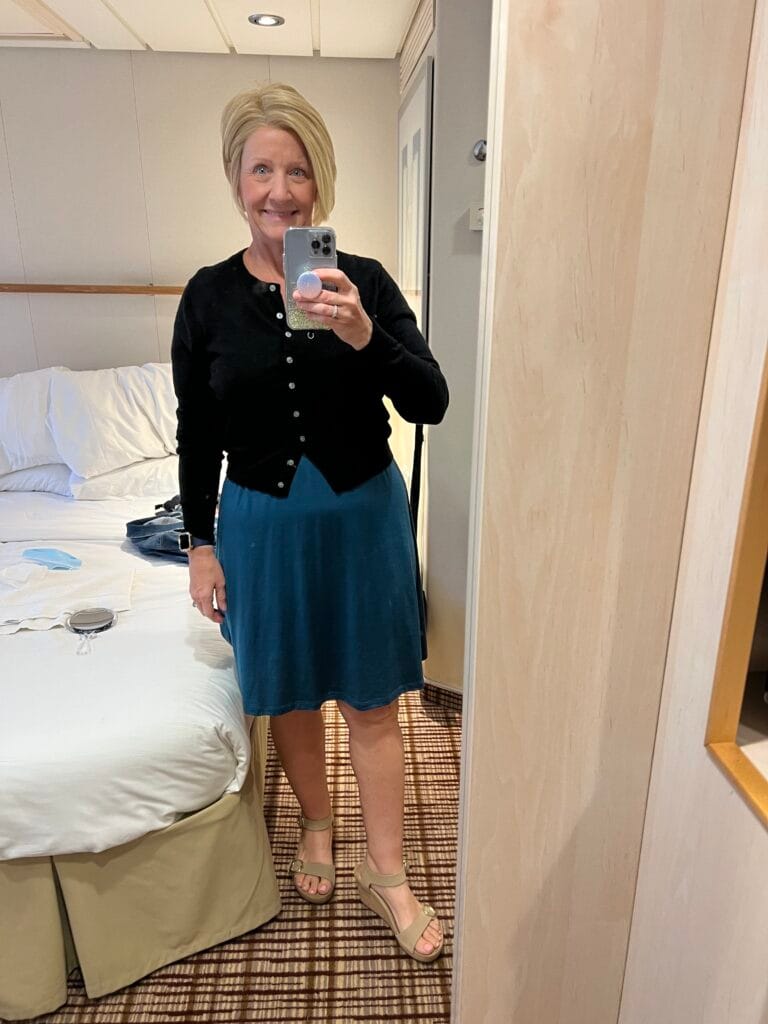
Holland America Evening Dress Code
SMART CASUAL
Most evenings follow a smart casual standard. In table service restaurants, the following attire is not permitted:
shorts, pool and beach wear, distressed jeans, tank tops.
DRESSY NIGHTS
The term “Dressy” is used instead of “Formal” to avoid confusion. Black tie or tuxedos have never been required.
Dressy Nights have no specific requirements, but the same above exclusions apply.
Princess Evening Dress Code
SMART CASUAL
Dress the same way you would for a visit to a restaurant at home. Skirts, dresses or trousers with t-shirt or blouse for ladies;
trousers and shirt or polo shirt for gentlemen. Shorts and swimwear are not allowed in the restaurant.
FORMAL NIGHTS
Evening gown, cocktail dress or pantsuits for ladies; suit, combination or dinner jackets for gentlemen.
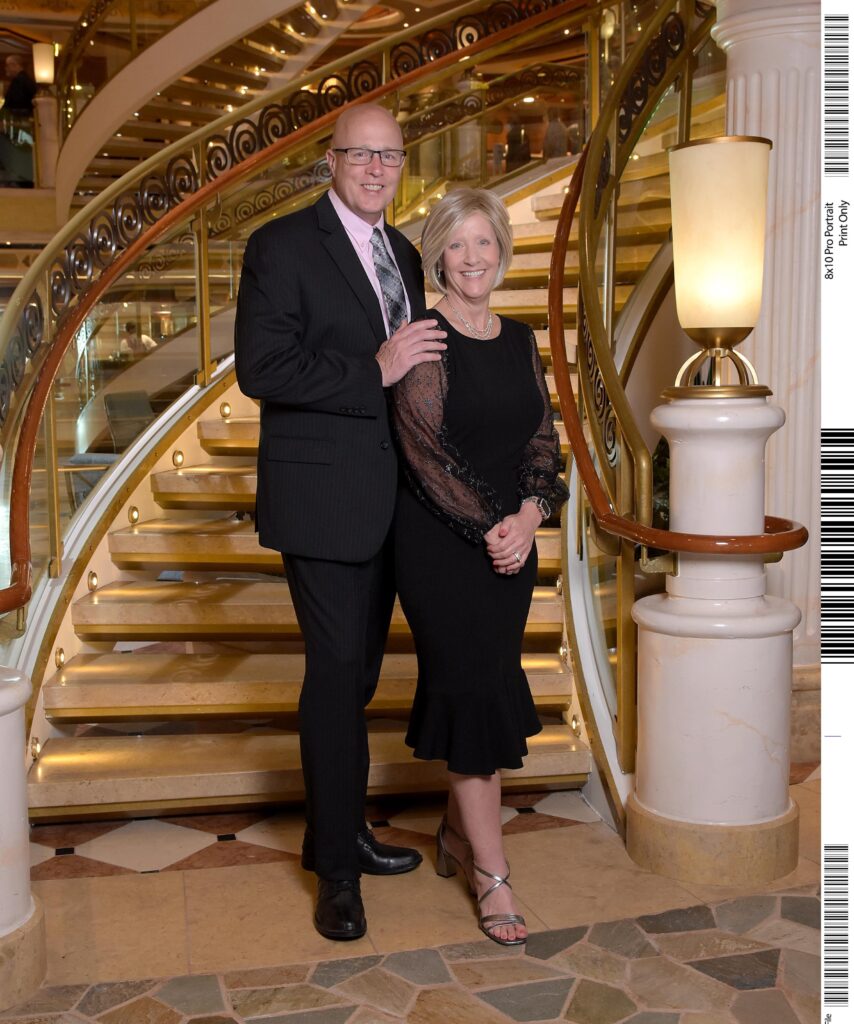

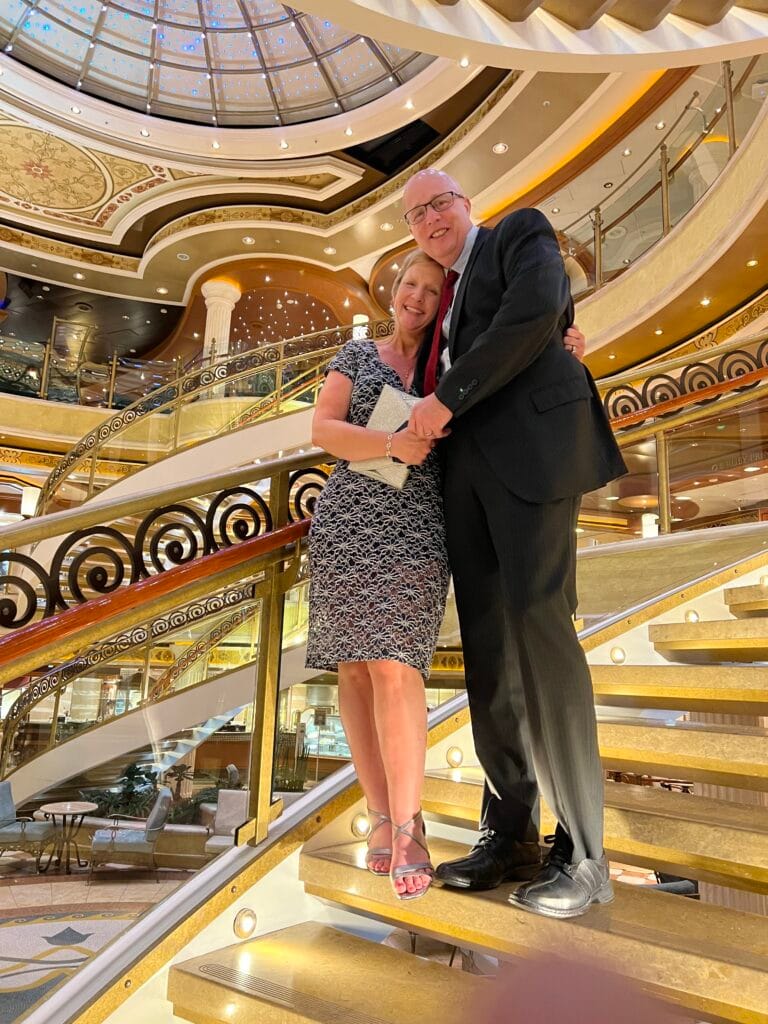
Depending on the length of the sailing, you might have more than one dress up night. If you choose to participate in the chic/gala/formal nights onboard, you do not need a different outfit for every formal night. Nobody is keeping track. Wear the same dress twice. I take one dressy dress and wear it for both chic nights when we cruise with Celebrity.
If you choose not to participate, and that is perfectly OK, you are more than welcome to wear your casual day clothing and eat in the buffet restaurant. Nowadays it seems, many more cruise lines are not enforcing their stated dress codes on the dress up nights, and that has become a point of contention among those with opinions (like me). You may see people in well… not dress clothes, on formal nights. Our opinion: We don’t recommend trying to dine in the sit down restaurants on formal night in shorts, flip flops, and a ball cap. They may admit you to the dining room if you are not following the dress code for the evening, but you should assume they will enforce the dress code. A cruise may be the only time some people get to actually dress up, and it’s nice to dine with others who are also dressed up just a bit. I love seeing everyone in their fancy outfits on dressy nights. Just go to the buffet if you’re going to wear shorts and flip flops on formal night. There, I said it.
Silversea Evening Dress Code (as of 6/1/26)
ELEGANT CASUAL
Ladies may wear blouses with trousers, refined denim, or casual dresses and skirts — pairing their attire with heels, wedges, flats, or dress sneakers.
Gentlemen may wear collared shirts with dress pants or refined denim, paired with dress shoes, dress sneakers, or loafers. Jackets are optional.
After 6:00 p.m., indoor venues prohibit ripped or distressed denim, shorts, short pants, ball caps, gym sneakers, T-shirts, and flip-flops.
FORMAL OPTIONAL
Ladies may opt to wear evening gowns or cocktail dresses.
Gentlemen may opt for tuxedos, dark suits with ties, or button-up shirts with dinner jackets. Jackets are optional.
Viking Evening Dress Code
ELEGANT CASUAL
Required attire for ladies includes a dress, skirt, or slacks with a sweater or blouse. For gentlemen, trousers and a collared shirt.
A tie and jacket are optional. Jeans are not permitted. There are no formal nights.
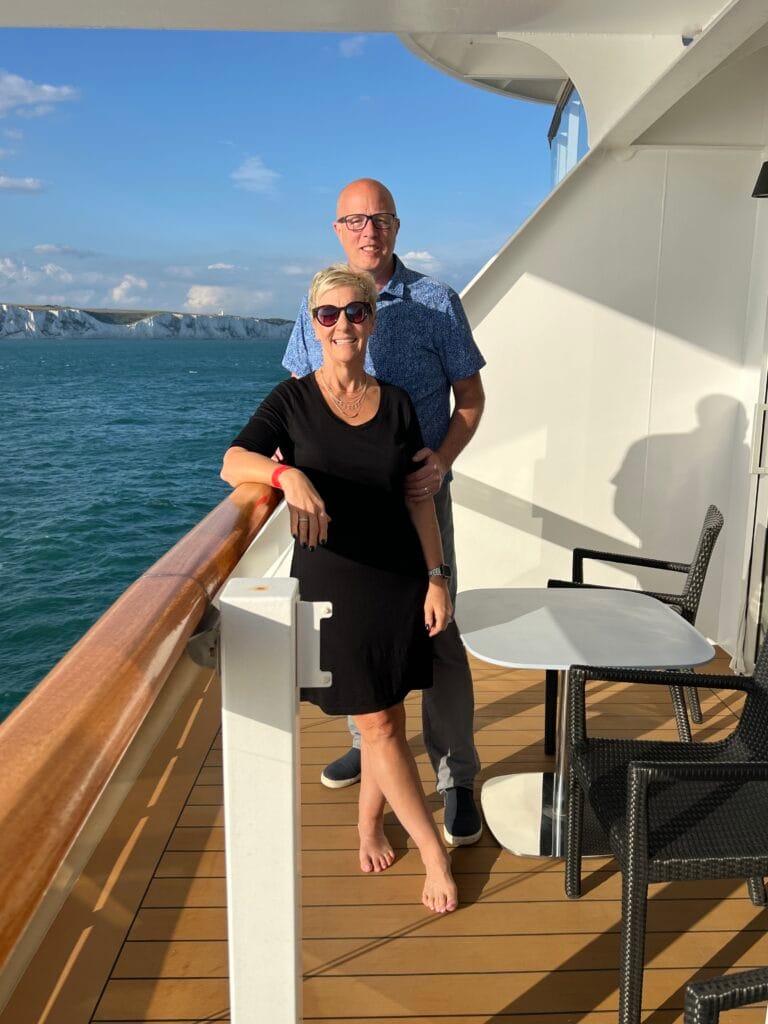

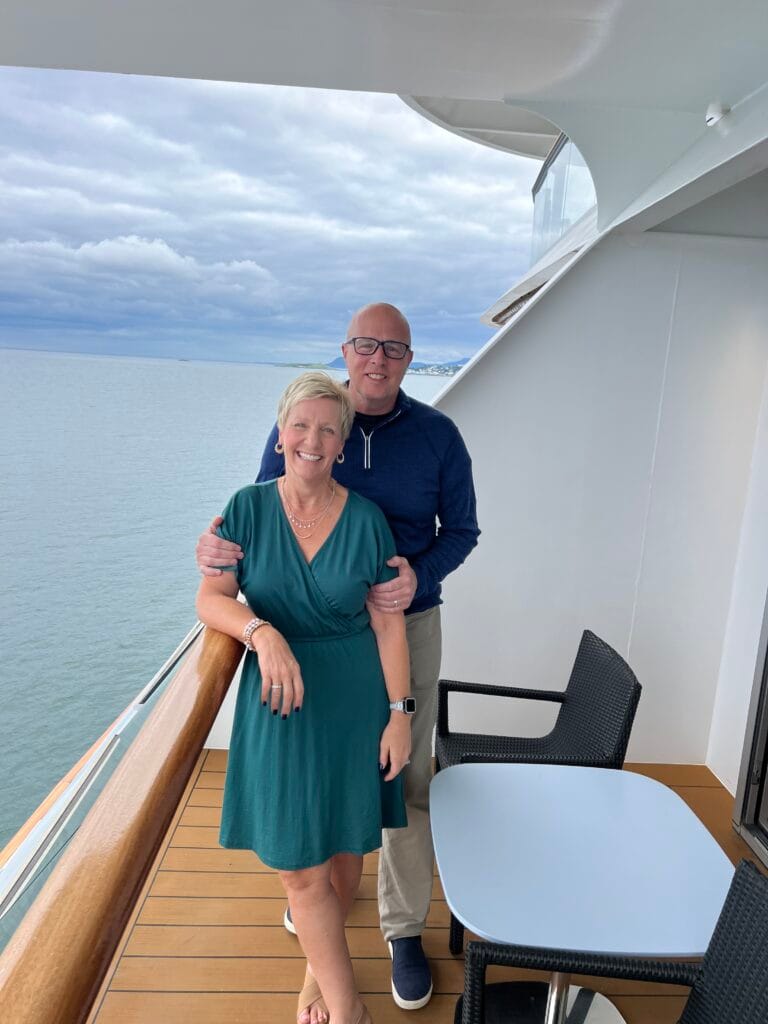
Building Your Mediterranean Cruise Wardrobe
Choose a Color Palette
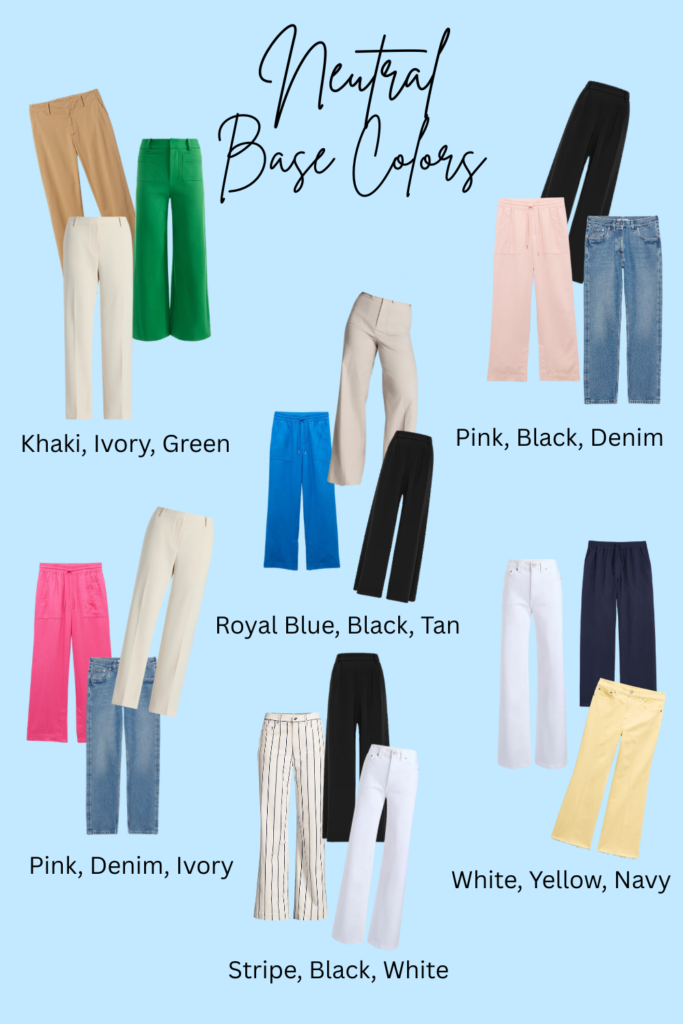
Your color palette should be built around three core colors that you love. These will be the main colors for your cruise wardrobe. These core colors do not necessarily have to “match” each other, but the rest of your pieces need to coordinate with these three core colors. Consider choosing core colors that are neutrals, but neutral doesn’t necessarily mean black or white here. You’re headed to the Med — don’t be afraid to choose some colors you may not typically wear. Choose some colors that are fun or a bit flirty if you so desire. Of course, there is nothing wrong with tried and true black, white, and navy, as I tend to pack on a lot of trips, but consider other colors as neutrals. For our upcoming Med cruise, my core colors are black, bright blue, and ivory, with pink as an accent color. In addition to black and ivory being neutrals, bright blue is also a neutral because it can be worn with black, ivory, pink, or florals. If I owned anything yellow, I’d love to do the navy, white, and yellow core below, but it’s not a color I can wear well. Here are some examples of core colors that can be used as neutrals, and collages of my pieces for that upcoming cruise.
Choose the Right Pieces
Most packing strategies for a Med cruise fall into two categories: minimalist packing using a small capsule wardrobe, and maximalist packing taking two separate outfits for every day. To be clear, neither strategy is wrong. You’re on vacation, you want to be comfortable, you want to be chic, you may want to try something different than what you typically wear at home, and all of that is OK. My packing strategy falls somewhere in the middle, and based on experience, that is what I am going to recommend here.
Whether checking your bags or carrying on, the capsule wardrobe concept is ideal for the Mediterranean because the climate is relatively predictable and most activities fall into four categories: port days, ship days, evenings, and swimwear. Your wardrobe just needs to cover those four scenarios. An intentional collection of clothing where every piece coordinates with everything else, letting you create multiple outfits from a minimal number of items will best serve you on a Med cruise. See my complete article on capsule wardrobes for more in depth information and ideas.
What Is a Capsule Wardrobe?
A capsule wardrobe is a small, intentional collection of clothing where every piece coordinates with everything else,
letting you create multiple outfits from a minimal number of items.
For travelers, it means choosing a limited number of clothing items in a coordinating color palette.
Choose the Right Fabrics
This is not the trip for heavy cotton. Yes, I know, it’s a natural fiber and the only fabric some people can wear comfortably, and if that’s your case, then you know how to make cotton work for you. Cotton does tend to collect moisture, not dry out, and become heavy. Heat, humidity, and the reality that you will be walking thousands of steps means you will likely want other natural fibers like bamboo or Merino wool, or quick-dry tech fabrics in nylon or polyester blends. Merino in particular is a miracle fabric: it regulates temperature, resists odor, and dries in a few hours if you sink wash it. It works in 95-degree heat and in the over-air-conditioned ship dining room. Some folks are truly allergic to all types of wool including Merino, but if you can wear it, it is a game changer. I wear merino approximately 90 percent of the time, both at home and on the road. I also love linen for warm weather travel, and I embrace the wrinkles. My Retreat linen pants from Athleta get a lot of wear. Another favorite of mine is the Venice wide leg pants from Athleta. They are a nylon blend, moisture wicking, quick drying when I need to sink wash, and so very comfortable.
Shop Your Closet
I do usually recommend shopping from your closet for most trips. We have been traveling for a number of years, and I have purchased pieces over time that fit well into my life at home and my activities on trips. I don’t own anything that I call “travel” clothes. Most of my clothing pieces work in many situations. For example, classic black pants are a staple in my wardrobe. I own several in different leg styles and fabrics, including polyester, ponte knit, Merino, and nylon. Straight leg jeans are now considered a classic wardrobe piece, as well as wide leg and skinny. Anything goes in the jeans category nowadays, when paired with the right top. I wear my linen pants a lot during the summertime, and I live in my Merino wool prices year round. You probably have pieces in your closet that would be perfect for a Med cruise, without spending a ton on a new wardrobe you are going to wear once and then donate.
The best advice I can give you is this: don’t take anything on a trip that you haven’t already worn at home (with the exception of maybe that fancy dress for formal night.) You don’t want to pack an entire suitcase full of new clothes you’ve never worn, then find out on a long port day that those new shorts are giving you a wedgie, that new top is gaping at the bust, or those new shoes are giving you a blister. If you buy new clothes, put them on and wear them for a Target run, or to pick up the kids from school, or out to dinner, just to be sure they will wear well and be comfortable.
What to Pack: Clothing
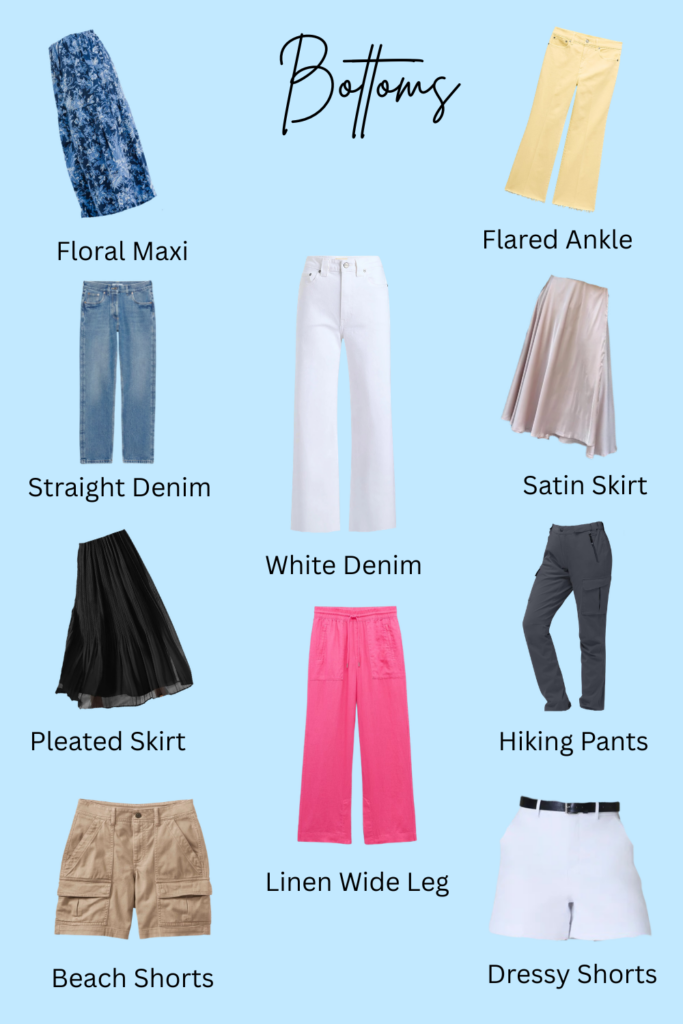
Bottoms (3–5 pieces)
- Two to three pairs of lightweight pants — one or two casual (linen, Columbia-style hiking pant, or nylon travel pant like Athleta), and one dressier (ponte knit or lightweight dress pant)
- One skirt or casual dress that can do double duty for port days and dinner
- One pair of shorts to wear on board or if you plan a beach day. If you don’t need or wear shorts, then skip this, or add another skirt or pant. I have included some options in the collage.
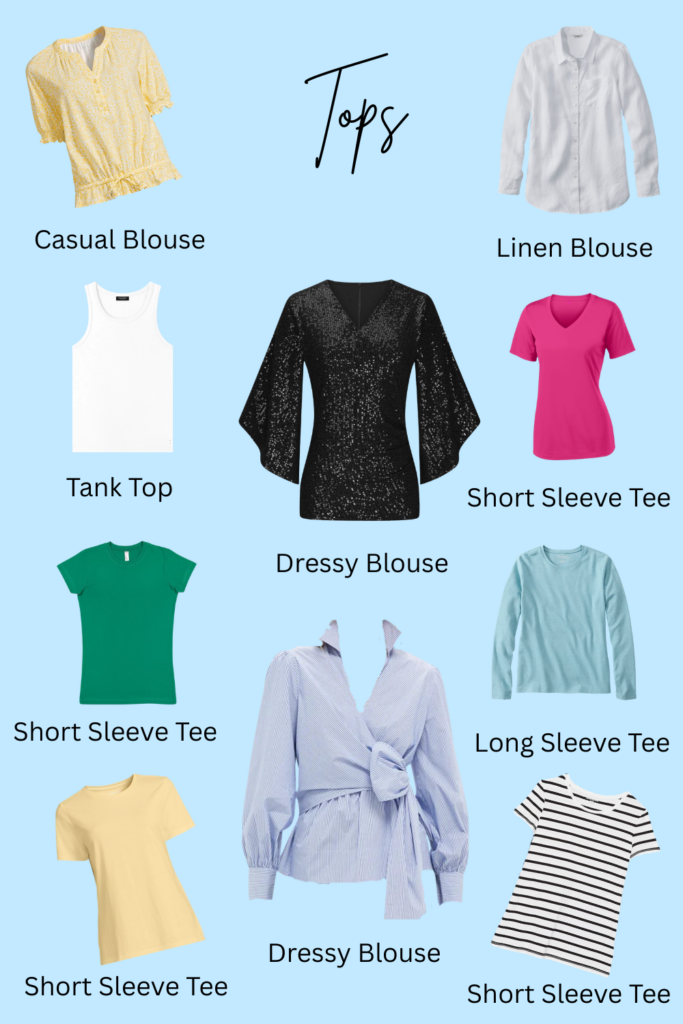
Tops (4–6 pieces)
- Two or three lightweight tees or tanks — merino or quick-dry nylon, poly blend, or tech fabric — that can be worn alone or under a blouse or other layer
- One or two blouses that can dress up a casual bottom for dinner, perhaps over a tank
- One or two nicer tops for dress up nights if you are not wearing a dress
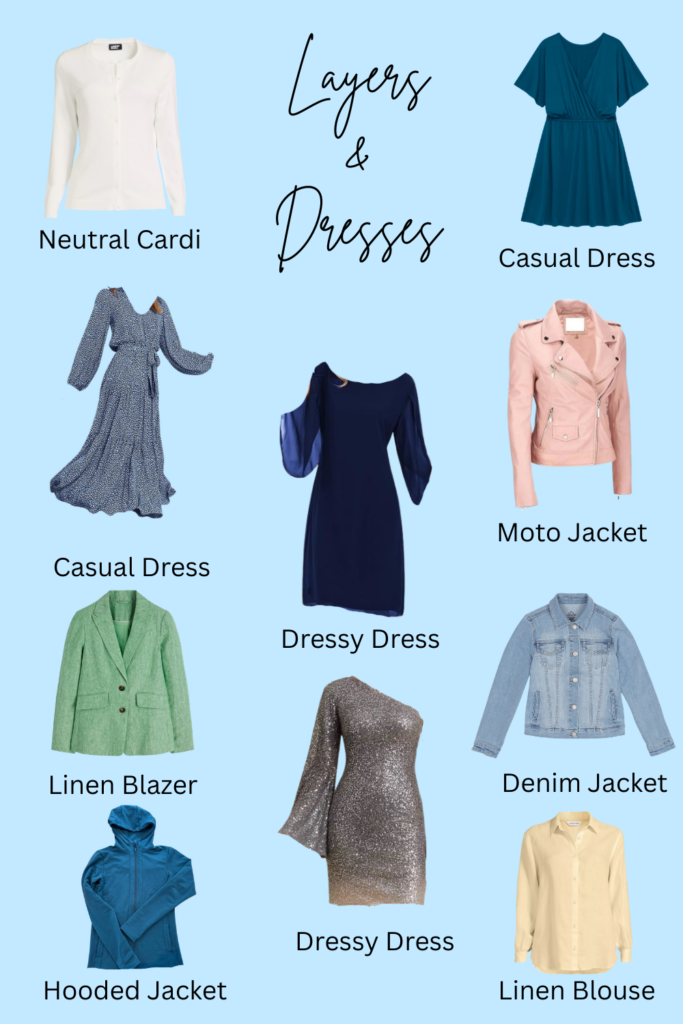
Layers (2–3 pieces)
- One lightweight zip jacket for the airplane, chilly evenings, or change in forecast — I never leave home without my WoolX Finley jacket
- One dressier layer — a blazer, a wrap, or a cardigan for cool evenings, religious sites, or to dress up an outfit
- One lightweight casual denim or linen jacket or layer to wear with pants or dresses
Dresses (2–3 pieces)
- One or two casual dresses that can do double duty for port days and dinners
- One dressier option for dress up night, depending on your cruise line. If you don’t have a dress up night, omit this piece, or add another casual dress.
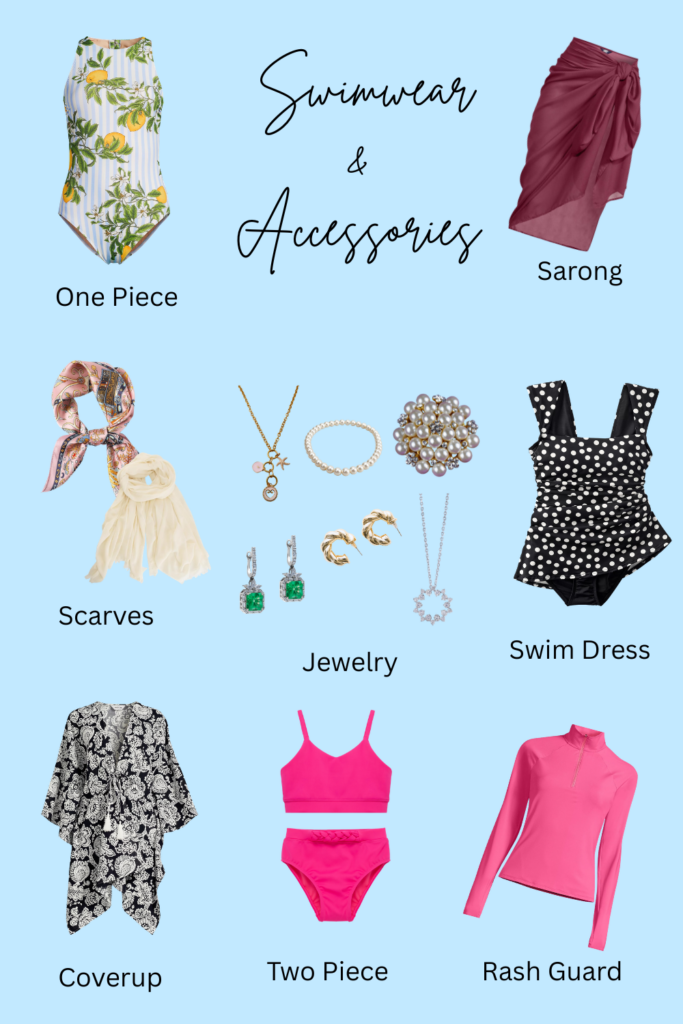
Swimwear
- One swimsuit — for the Med, this is usually plenty, not so for the Caribbean, of if your itinerary has multiple sea days in a row
- One cover-up — a sarong is a fabulous multi-use piece that can also double as a beach blanket, cover your shoulders when needed, or be worn as a scarf
Accessories
- A lightweight pashmina or scarf — this is the MVP of all packing. It covers your shoulders at a church, keeps you warm on a chilly evening, and dresses up an outfit all in one. Do not skip this very versatile piece. Tie it around the handle of your bag if you are not wearing it.
- Jewelry — I am a fan of one or two necklaces that can dress up a plain tee or simple black dress
Shoes: The Three-Pair Rule
The three pair rule for shoes from blogger and travel advice guru Alex Jimenez at Travel Fashion Girl is the best shoe advice ever. The Mediterranean has one critical requirement — comfortable walking shoes that can handle cobblestones. You will walk on uneven surfaces in nearly every port. This is not the place for cute-but-painful shoes. Alex recommends:
- Touring shoe: A comfortable walking sneaker or a supportive sandal with good grip. You will wear this most days.
- Activity shoe: A shoe for any planned special activity, such as a hiking shoe or boot. My activity shoe for a Med cruise is usually a wedge or a block-heeled sandal — something that looks nice but that I can actually stand in when dancing at the club after dinner. I will wear those every evening so I consider them my activity shoe.
- Wildcard: An additional shoe for comfort or variety. A ballet flat or second sandal for the beach and casual port days, or a dressier heel if your cruise has formal events that warrant it.
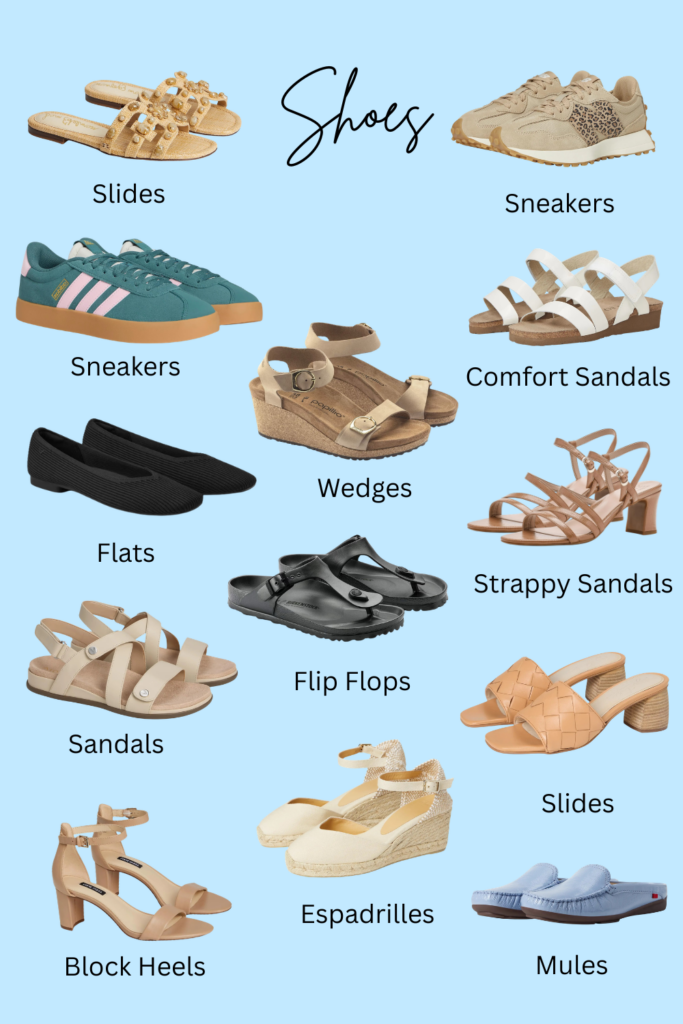
Shoes are the hardest part for me. I have wide, finicky feet and a chronic pain condition, and I need to be comfortable. I always add a pair of flip flips (in my mind they don’t count in the three pair rule), like my super comfortable Birkenstock Gizeh EVA sandals to wear around the ship or to the pool or spa, and I often take sneakers, sandals, wedges, and flats for an ocean cruise. Whatever you pack, plan to wear your heaviest pair on the plane to lighten your load. Below are some styles that are perfect for a Mediterranean cruise.
What’s In My Bag?
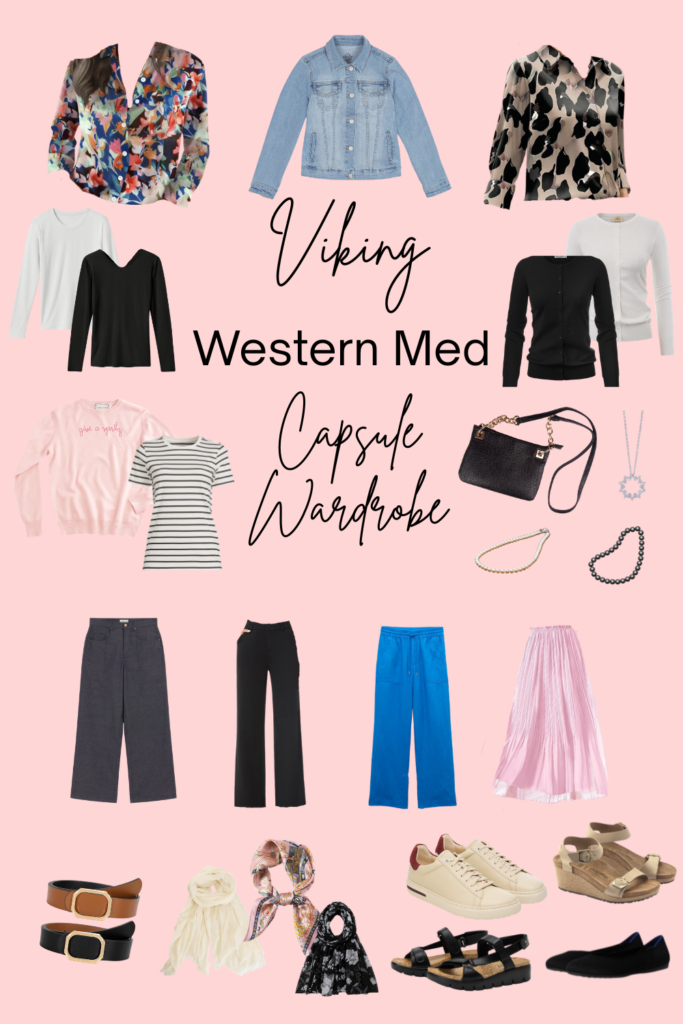
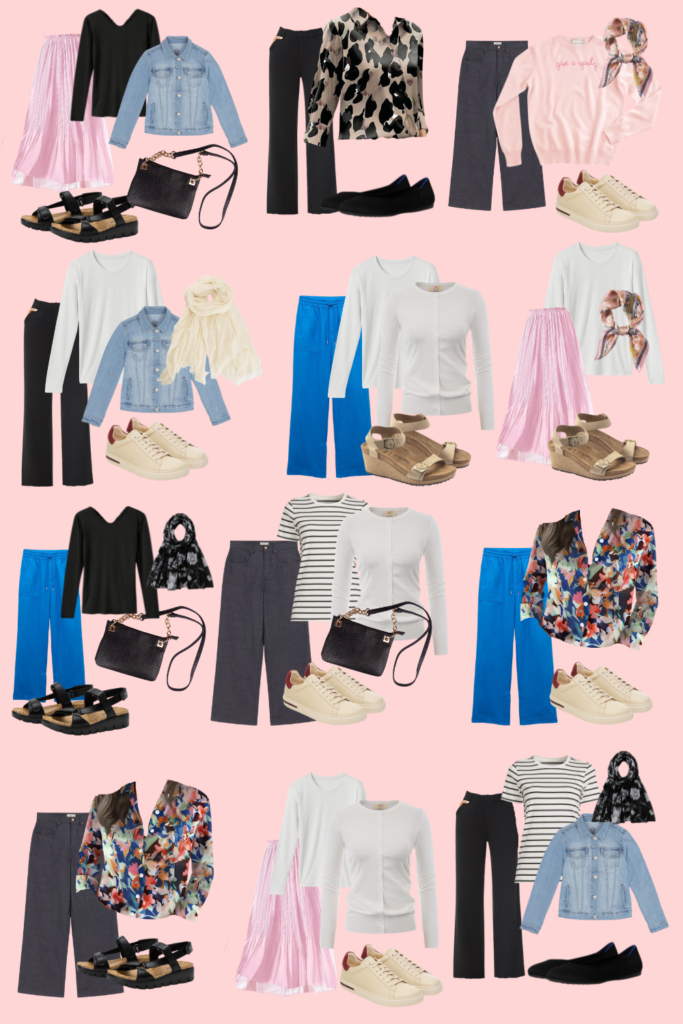
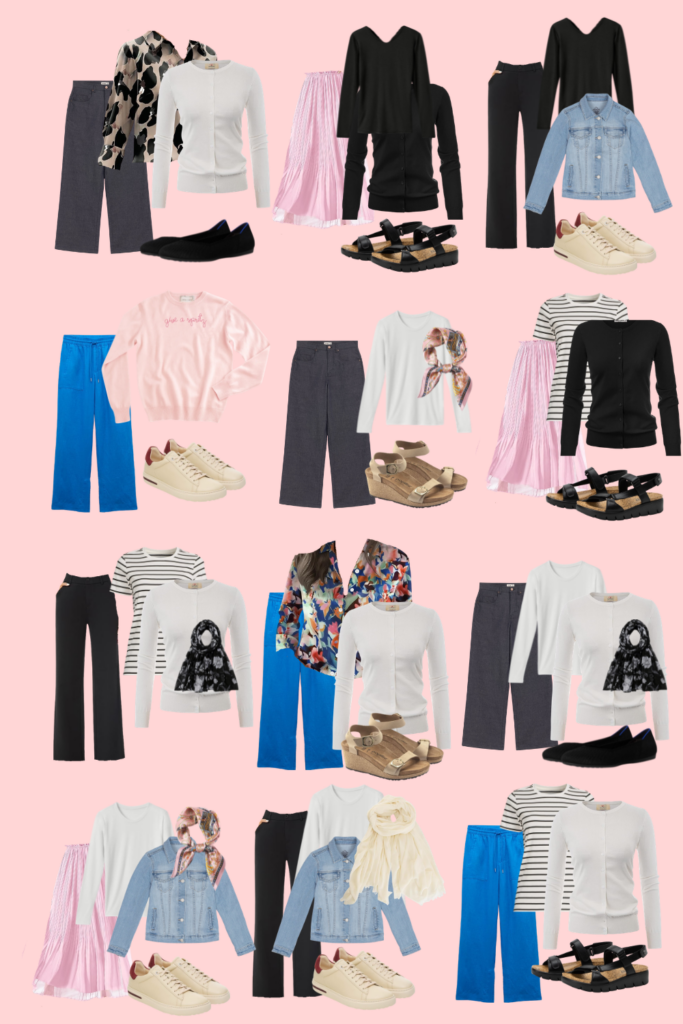
The following collages represent my entire packing list for our Viking Iconic Western Med cruise, a 10 day trip with no formal nights. Not pictured are my Merino wool zip jacket for the flight, a raincoat, and my swimsuit, sarong, and flip flops. I have four bottoms, six tops (three tees, two blouses, and one crew neck pullover sweater), and three layers (two cardis and one lightweight Tommy Bahama Chambray O’Lei jacket). The blouses could be considered layers, but I do not plan on wearing them as layers. I have three scarves and one cross body bag with a removable strap that I can change to a short strap for evenings. I have my usual sneakers, flats, sandals, and wedges. As you can see, my strategy is not the bare minimum, it’s a color coordinated capsule with enough variety in the pieces to keep me happy and looking (hopefully, but opinions will vary) stylish. :) I’ve shown 24 outfit combinations, so lots of ways to wear these pieces. (This all fit into my 22″ Travelpro Maxlite 5 two wheeled bag and a backpack, so I did not check my bag for this trip.) Click here to see our packing article for this trip and mine and Steve’s full packing lists.
Toiletries and Liquids — The Hardest Part of Packing Light
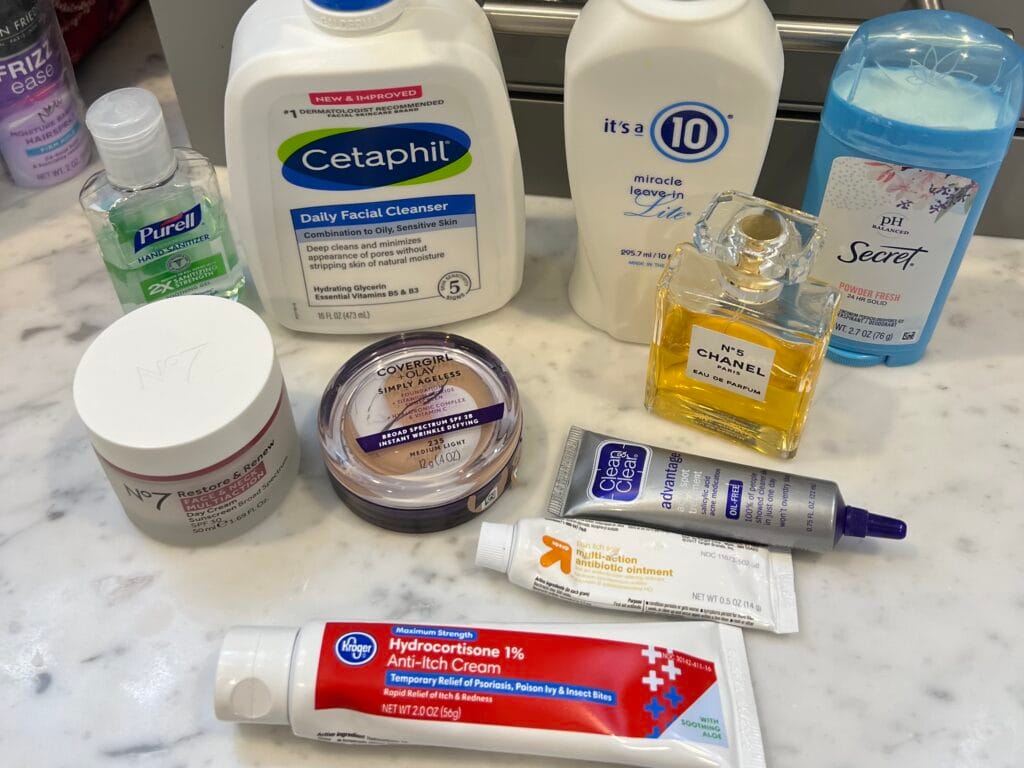
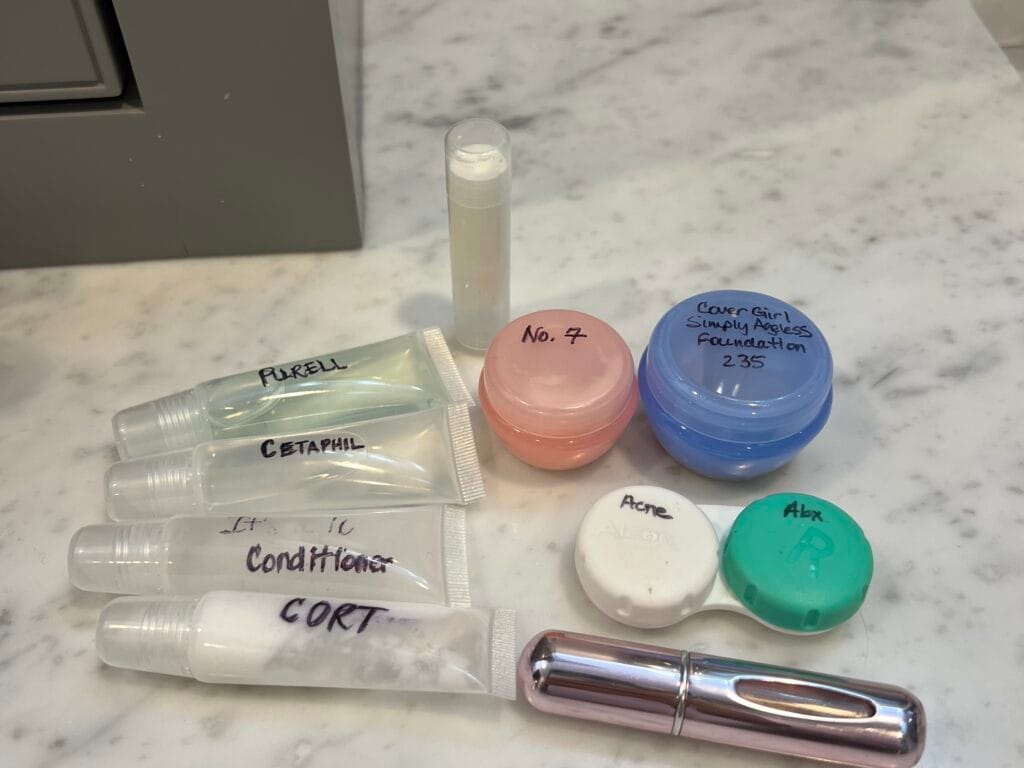
If you are flying to your port and carrying on your bags, you are subject to current TSA liquid rules, though these are in the process of changing as new screening technology is being implemented. Pare your liquids down as much as possible. I decant my products into smaller containers — lip gloss tubes, small plastic pots, contact lens cases (all available on Amazon) — and test them at home before the trip to see how long each will last. Please see my complete articles on traveling by carry-on and decanting liquids if you would like more help with this. If you are checking bags, you may not need to decant your liquids, as larger quantities are allowed in checked bags. Here are few ideas about popular liquids that many of us routinely pack. Downloadable packing list located below.
- All hotels and cruise ships supply shampoo, so skip packing this unless you have specific needs. You can likely get by for a couple weeks without your favorite.
- Most cruise ships supply conditioner and body wash, so find out what products your ship supplies and skip these if possible. For example, Viking provides very nice shampoo, conditioner, body wash, and body lotion.
- Hair products — many styling products can be decanted into smaller containers.
- Sunscreen should be non-negotiable. Pack a travel size and buy more ashore if needed. Special note about sunscreen — do not decant this as some containers like silicone will degrade the active ingredients.
- Contact solution cannot be decanted into a non-sterile container. Pack a travel size and buy more when you arrive.
- Makeup — decant your moisturizer, makeup remover, micellar water, toner, concealer, and liquid foundation into a contact lens case, lip gloss tube, or small pot. You might be surprised how long it will last when you try this at home.
- Insect repellent is worth having, especially in certain Greek island ports. Pack wipes instead of liquid.
- If you plan to sink wash clothing, pack laundry sheets instead of liquids, or use the cruise ship’s soap or shampoo as we do. I even wash my Merino pieces this way, and they are fine. I do wash them in Outback Gold at home.
These photos are from a recent trip where I decanted the products in the first photo into the containers in the second photo to reduce the packaging and save space in my toiletry bag. Don’t worry, I don’t wear perfume on the airplane, and neither should you. ;) Yes, that’s deodorant melted down in the microwave and poured into an empty lip balm container. I learned this from a hiking blog, where the weight you carry on your back really matters! It seems extreme for a cruise, but that deodorant container is a bunch of empty plastic that takes up space. Even if you are checking your bags, this will reduce your overall weight and maximize the space in your bag.
Electronics — Things We Cannot Live Without
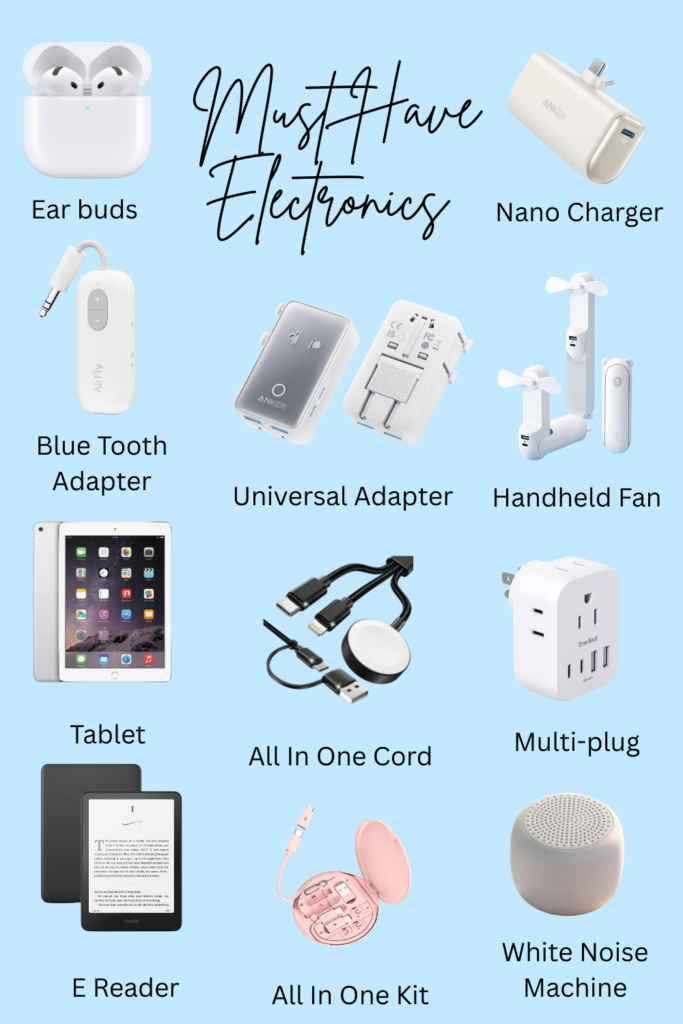
You will want all your usual electronic devices and chargers, plus a few extras for the heat of summer or for comfort. This part of packing can be difficult due to the size, weight, and bulkiness of these items. Try to pare down as much as possible. Here are some things to consider:
- Charging cords for all your devices — consider an all-in-one cord, a dual ended cord, or a cord adapter kit to decrease the number of cords you have to carry.
- Outlet adapters — you will definitely need an outlet adapter for your hotel room in Europe (most likely a Type C), and may need an adapter for your ship. Check your cruise line’s website for what type of outlets are on the ship. Consider a universal adapter that can be used in most countries around the world. They have various plugs built into the device to save space, and many can accept multiple charging cords at the same time.
- Multi-plug — if you don’t have a universal adapter, consider a multi plug to add more outlets when you need them. Most cruise ships have two or three outlets in each cabin. Be aware that cruise lines prohibit multi-plugs with surge protectors, as these are considered a fire hazard. If you choose a multi-plug with a US Type A/B plug, you will still need an outlet adapter for your hotel, and most likely for the ship also.
- Power bank — long port days with lots of photos drain a battery fast. Consider a small power bank, or nano charger, that plugs directly into your phone, instead of a heavy rectangle one, as your phone is most likely the only device you will need to charge on the go.
- Tablet and/or E-reader — this is non-negotiable for most of us, and there is not really a way to save any space here, except to read on your tablet, which is difficult in the sun and harder on our eyes.
- Handheld fan — not optional for this menopausal 59 year old in the heat of summer. Mine doubles as a power bank and flashlight. I will not leave home without it.
- Earbuds for the flight. This is a better option than large over the ear noise-canceling headphones if you are trying to pack lighter.
- Blue tooth adapter — go cord free with the airplane’s in flight entertainment system. It’s tiny.
- Camera — save some room in your bag for your camera if you prefer this over your phone for photos.
- Mini white noise machine — this one is tiny and doesn’t take up much room, and I sleep much better with this than using an app on my phone.
- Hair tools — be certain your appliances are dual voltage or you may burn them up trying to use them overseas. Please read our article here for more information on dual voltage, and how to know when you need an adapter or converter.
Other Things Worth Packing
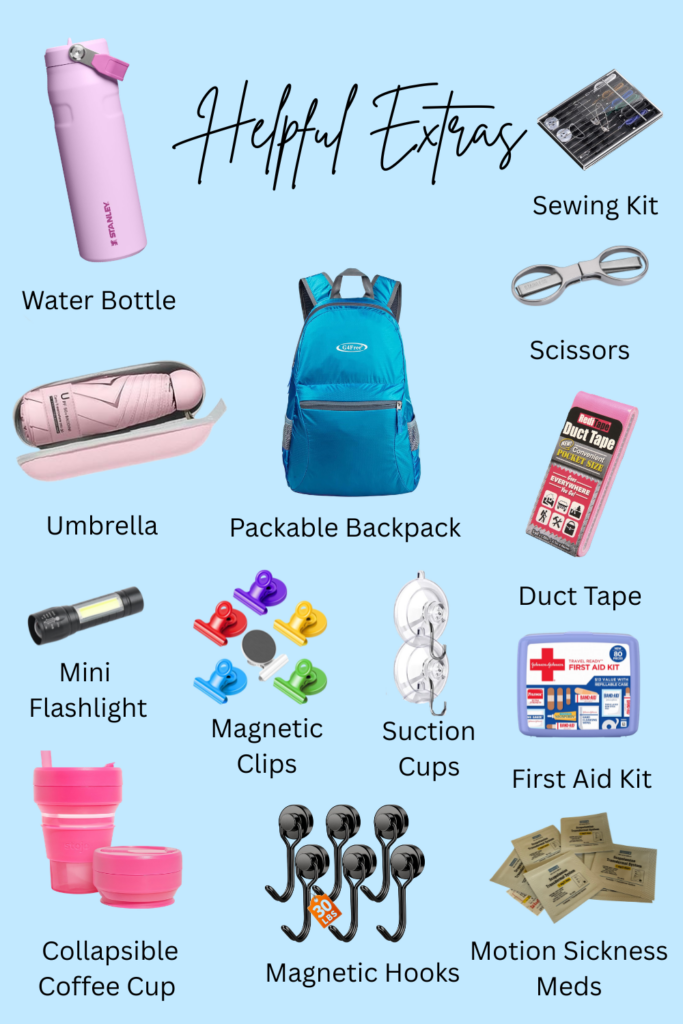
- Your favorite reusable water bottle — staying hydrated in the heat matters, and you can refill on the ship. Plus…save the environment.
- Collapsible coffee cups — we can’t get enough coffee, so we pack these on every trip to take coffee back to our cabin in the early morning or take on a shore excursion. Once empty, we collapse them, toss them into our backpack, and wash when we get back to the room.
- A small flashlight — useful for an emergency, or nighttime trips to the restroom without turning on the bright lights. Mine sets upright like a lantern.
- Motion sickness remedies if you are prone — the Mediterranean can have real swells.
- A small first aid kit — bandaids and blister bandages, plus ibuprofen, acetaminophen, Benadryl, and Excedrin. I also put some antibiotic ointment and some acne medication into a contact case, because I always get a giant zit when I really don’t need one, even at age 59!
- Magnetic hooks and clips — the cabin walls are likely magnetic, and we like ours to hold my purse or our hats by the door, plus corral the daily papers. Most cabins have plenty of storage, so don’t overdo it and make your cabin look sloppy. There are many opinions about this topic online, but we always pack a few and I refuse to be shamed for it.
- Suction cups — let’s face it, most of us ladies need a magnifying mirror for eye makeup or chin hairs. I’m just keeping it real, ladies. I hang mine on the bathroom mirror with these. Also useful to hold a shower poof or your razor. I keep my hooks, clips, and cups in a small zipper pouch so they are ready to go for the next cruise.
- A packable nylon backpack — we like to carry this one on shore excursions for sunscreen, jackets, water bottle, etc.
- A small sewing kit, safety pins, and small foldable scissors are useful for wardrobe malfunctions.
- A small amount of duct tape for emergency suitcase repairs, holding your curtains closed when the morning sun comes too early and the ship is rolling, wardrobe repairs (such as the hem on your pants), or a million other uses. Google this for more surprises…you’l be amazed. Buy a small one or wrap some around a pencil or old credit card. If you don’t use it, you have it for the next trip.
- Travel umbrella — we keep a very small one in our bag.
What to Leave at Home
In the interest of being completely honest, and based on some of my past packing blunders, here are some things I recommend you leave at home:
- Heavy jeans — too hot, too slow to dry, takes up too much space. Leave them. These lightweight trouser jeans are the exception in my bag.
- Multiple dresses for formal night — one is enough, unless you are fashionista.
- Cotton tee shirts — again, if that’s what you are most comfortable in, by all means pack them, but I generally don’t recommend them for travel for the reasons stated above.
- The “just in case” outfit — pack for what you have planned, not for what might happen.
- Hair dryer — ships have them. So do hotels.
I will be honest with you: I still overpack sometimes. I keep notes after every trip about what I didn’t wear or didn’t like and I get a little better each time. The goal is not perfection. It is being intentional — packing what you will actually use, in fabrics that will actually work, so your bag is manageable and your trip is enjoyable.
A Few Additional Tips
If you travel with a partner, cross-pack one complete outfit in your travel companion’s bag, and one complete outfit in your personal item,
in case your luggage is delayed or lost.
Pack your flight essentials — eye mask, earbuds, lip balm, charging cords, ibuprofen — in a separate pouch in your personal item
so you are not digging through your bag on that overnight flight.
Take advantage of the cruise ship’s laundry service, or the self serve laundry if available. It will cut your packing list significantly.
You can buy almost anything you forget in Barcelona, Rome, Athens, or any major port city.
You are not on the Artemis mission to the moon.
Downloadable Packing List
Click below to access and print our downloadable Mediterranean cruise packing list. You can use this as a starting point, add your own items, and make substitutions as needed.
Summary
Packing for a Mediterranean cruise should be fun and not stressful. If you choose the right fabrics, a coordinating color palette, and pieces that can be mixed and matched to create multiple outfits, you will have more time and energy to enjoy the cruise, and spend less time stressing about what to wear. Whether you are checking your bags or carrying on, use these tips to help you pack smarter and enjoy the trip with less worry.
Like what you read? Hate it? Please leave us a comment below, but don’t be bitchy. Happy Travels! (Your email address will not be shared.)
You both look very smartly dressed!
Thank you Diane, we are no fashionistas, but we try! :)