Come along with us as we spend two days exploring Budapest, then eight-days on the Viking Embla!
For the best viewing of this page on a tablet or phone, turn your device sideways.
This was our second river cruise with Viking, and we can tell you — it definitely won’t be our last. We sailed in March/April 2023. I don’t care for traveling in the heat, so we like to vacation in the shoulder season. Europe in the spring is a lovely mix of sunshine, occasional rain, and much smaller crowds.
The Itinerary
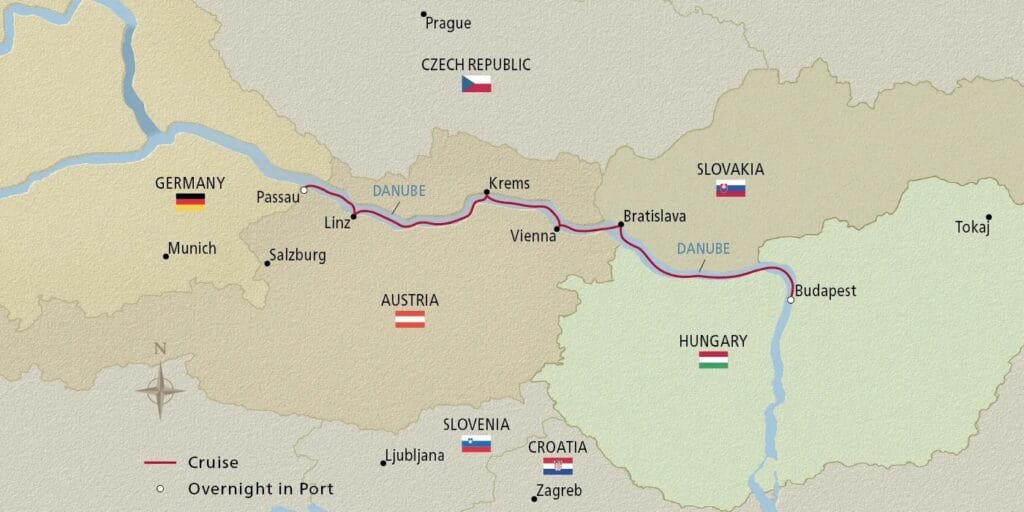
The Viking Danube Waltz is a port intensive eight-day voyage sailing between Budapest, Hungary and Passau, Germany. In addition to Budapest and Passau, ports of call include Bratislava (Slovakia), Vienna (Austria), Krems (Austria), and Linz (Austria). Viking provides an included excursion at every port (not one per day), which is one of the many things that sets them apart.
The Ship
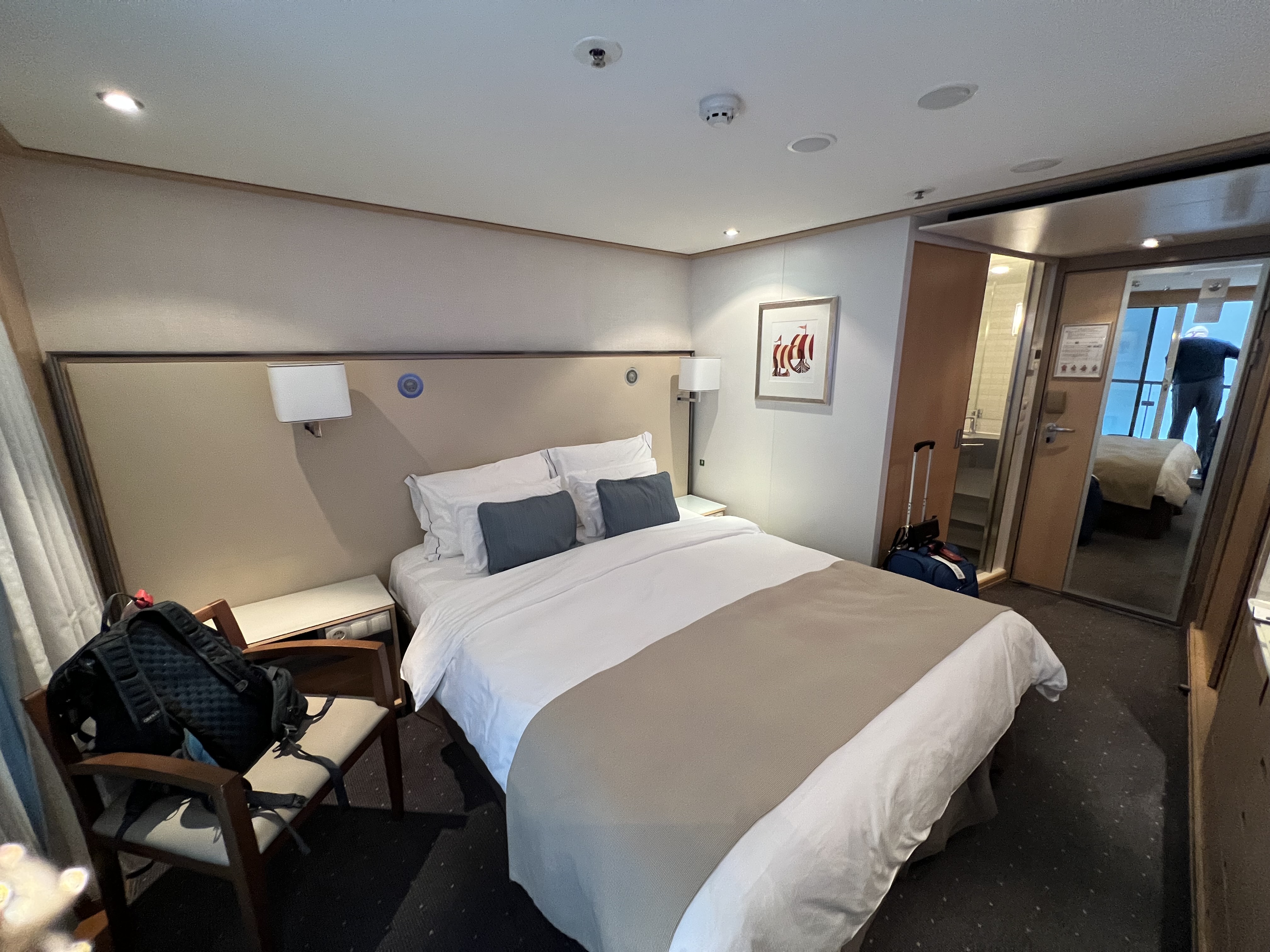
All Viking Longships used on the Danube river are identical and carry just 190 passengers with a crew of about 47. (They have different ships for different rivers and you can see them all on the Viking website.) The ships are beautifully designed in Viking’s signature Scandinavian minimalist style — clean lines, natural materials, lots of light. Cabins are nicely appointed with comfortable beds, plenty of storage, flat screen TV’s, a refrigerator, and toiletries. We sailed on the Viking Embla in cabin 217 in the Veranda category. We appreciate having the balcony and the ability to sit outside with our coffee in the morning. All Viking river cruises include beer and wine with lunch and dinner, specialty coffees and teas available 24/7, and complimentary WiFi. Viking guarantees one included excursion at every port of call (not one per day).
On Viking, your cabin category determines when you are able to book shore excursions. The higher priced cabin categories have access to book excursions before the lower priced categories. The cabin categories, amenities, and booking dates are clearly spelled out on the Viking website before you book. After booking, you will have access to the My Viking Journey section of the website, where you can book excursions, make payments, and access any other information you need. Do not be concerned if you are unable to book excursions before you sail. You will be able to book excursions and make changes to any excursions you pre booked once you are on the ship.
The Weather
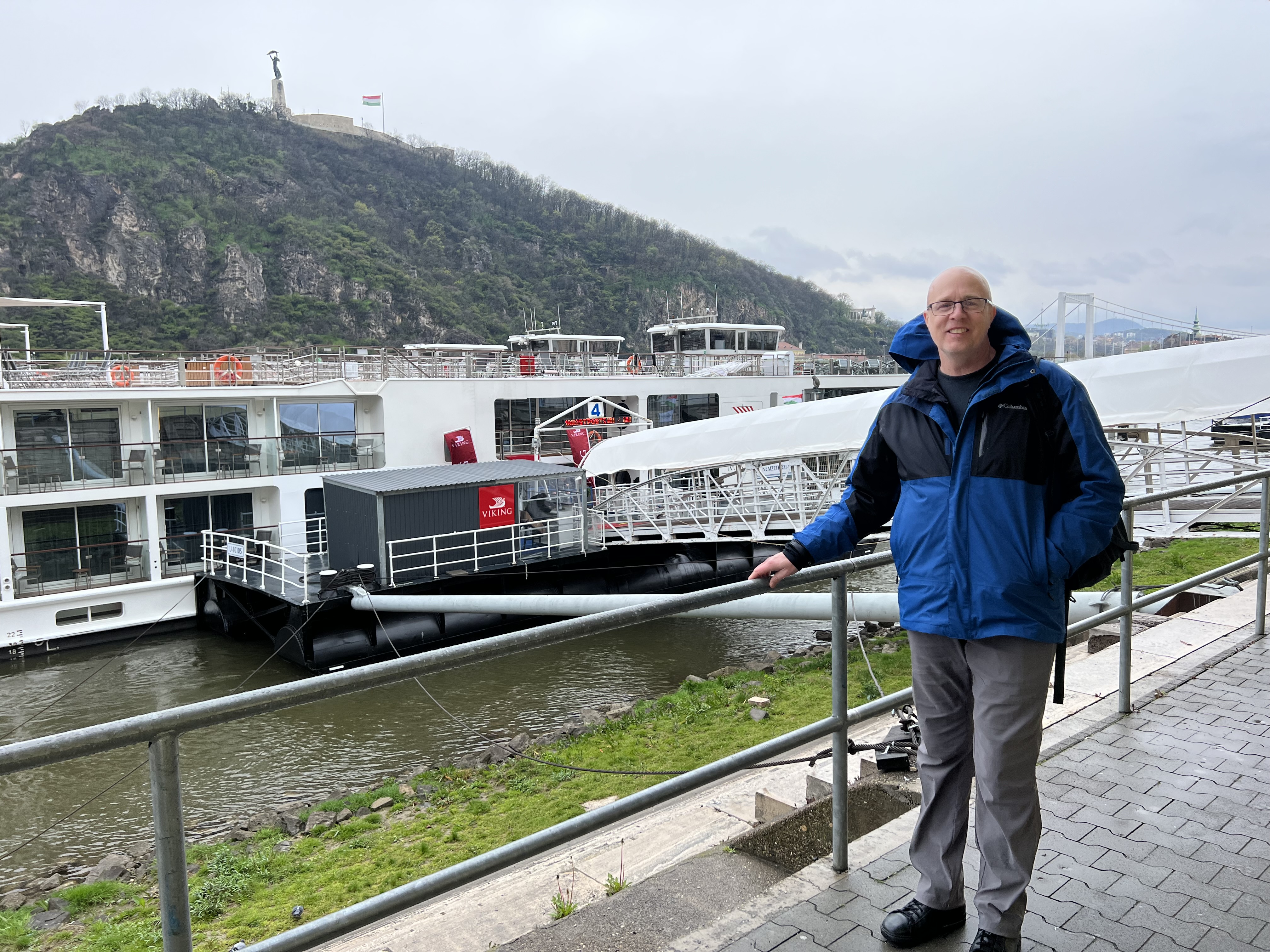
If you’ve ever considered a Danube river cruise and wondered whether March is too early in the season, we’re here to tell you that spring is a great time to sail the Danube. The crowds are smaller and the chance that a sailing will be impacted by low water levels is almost non-existent. (Low water levels later in the season can cause sailings to be cancelled or parts of the trip to be conducted via busses, rather than by ship.) March weather along this route can be anywhere from 35°F to 60°F on any given day. Yes, it can be chilly. Yes, you’ll want layers. But the scenery through the Wachau Valley in late March is simply stunning.
Dress Code/Packing
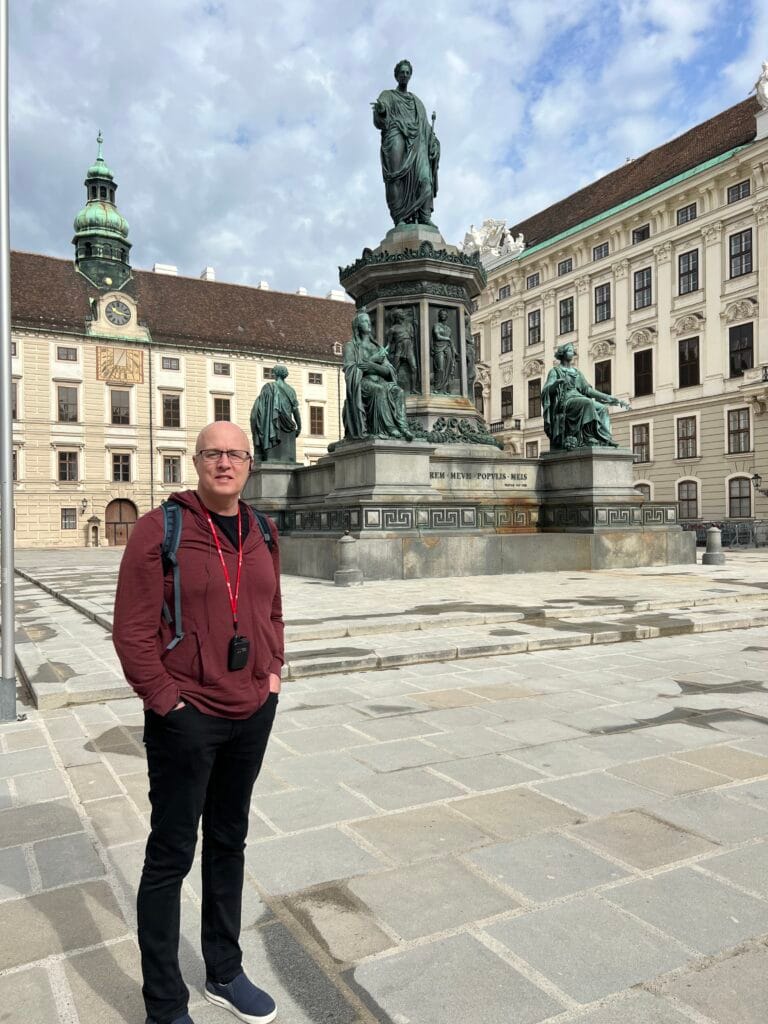
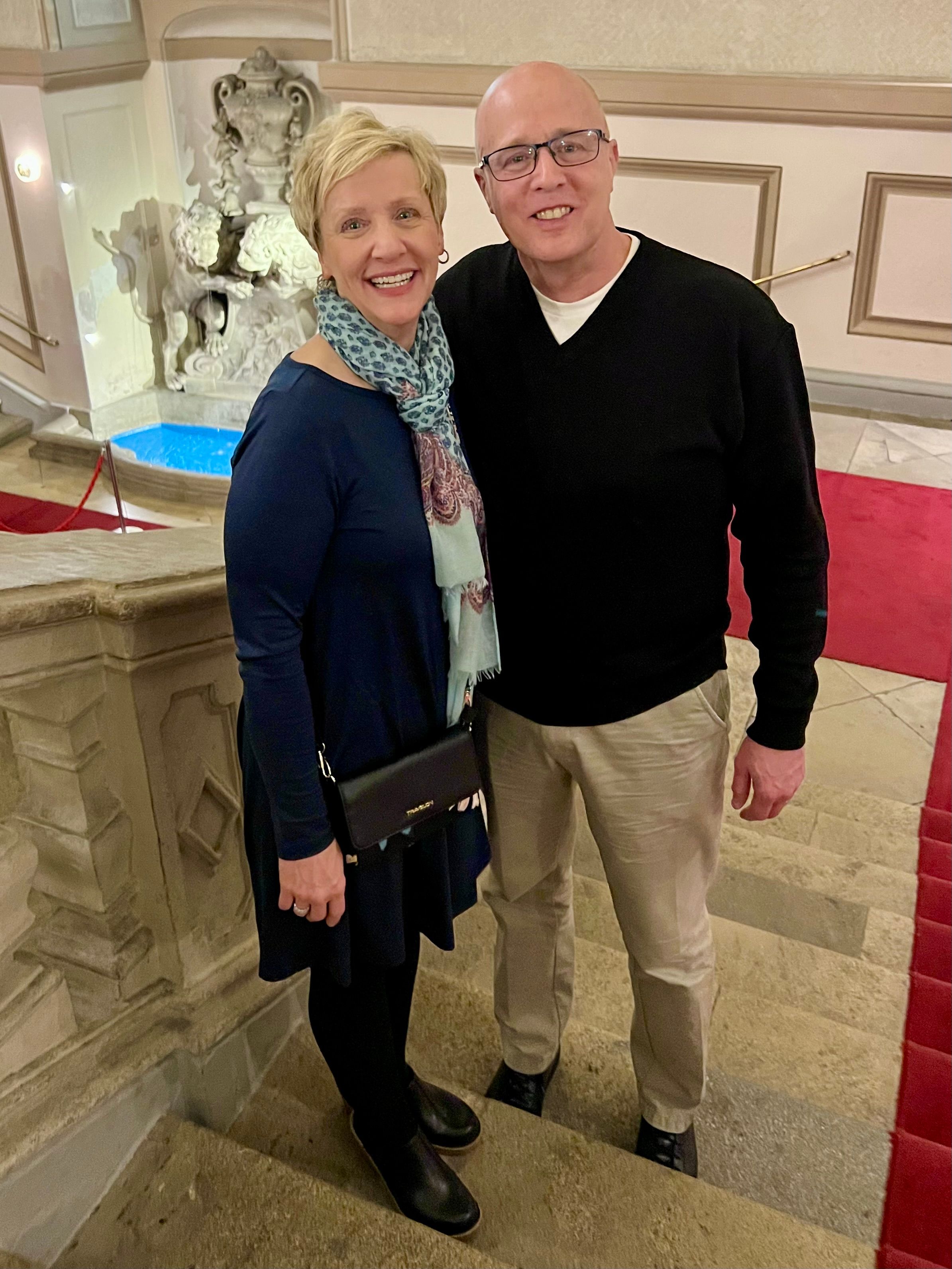
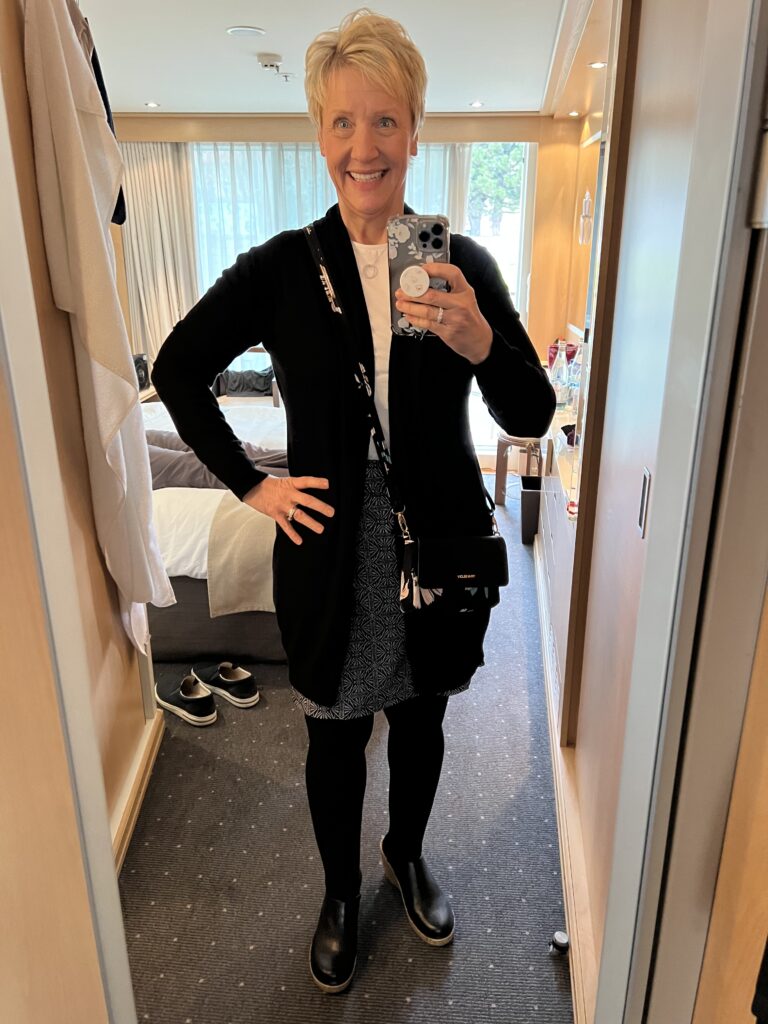
Viking’s river cruise dress code is casual during the day, including shorts, slacks, or jeans, and comfortable shoes for walking tours. Recommended evening dress according the Viking river cruise website is “elegant casual.” For ladies, this may include a dress, skirt or slacks with a sweater or blouse; and for gentlemen, trousers and a collared shirt. You do not necessarily need to dress up for dinner, but we like to change out of our day clothes into something nicer for evenings on the ship. You will see a few people wearing the casual clothes they had on that day for the excursions, and you will see people wearing jeans, which are perfectly acceptable, but most people dress a little nicer in the evenings. Overall, river cruises are less dressy than ocean cruises. There is no reason to overthink the dress code. Wear clothing that you might wear out to a nice dinner at home. There are no formal nights on Viking river ships.
We generally pack in a carry on suitcase and a backpack each, so we tend to pack a bit lighter and plan to do some sink laundry along the way. We don’t mind, and it keeps us from checking our bags, and thus preventing them being lost by the airline. We packed lightweight, quick dry clothing for this trip, as is normal for us. We like lightweight Columbia or Eddie Bauer hiking pants, and we are fans of Merino wool tee shirts, tops, and jackets for day wear. I also like to wear skirts and dresses, so I packed a couple of each for this trip. I always wear casual black merino wool slacks on flights, and also wore those frequently on this trip. We both wear/wore uniforms in our careers, so we like dressing up a bit when we have the chance. To learn more about packing in a carry on and not checking bags, you can read our packing advice here. I have also posted a complete packing list for our Viking Capitals of Eastern Europe cruise. If you would like to learn how to make a capsule wardrobe work for you, you can read my advice here.
Money/ Tipping
Germany and Austria both use the Euro, but Hungary uses the Hungarian Forint. You will likely want some local cash for this trip. Public toilets in Europe usually require a small fee (€1 or less) and you may want some cash for small souvenirs or tips while in country. We use our debit card to withdraw some local cash when we travel, as this gives you the best exchange rate. Please see our Complete Money Guide for more information. Alternatively, you may want to order some local cash from your bank, but you will generally pay a higher fee for this. We withdrew a few Euro, and some Hungarian Forint to tip our private guide in Budapest. We also took an excursion to Český Krumlov in the Czech Republic, but did not have the need to get any Czech Koruna for this day trip, as we tipped our Viking guide in Euro. Apple Pay and Google Pay are widely accepted throughout Europe, and we use Apple Pay almost exclusively when we travel. A note about American Express: this card is not as widely accepted in Europe as it is in the US, so you should take an alternative credit card.
The tipping culture in Europe is different from the US. They pay their waiters and bar tenders a living wage, so they don’t rely heavily on tips to supplement their income. Generally speaking, a 10% tip is customary for good service in restaurants and bars. We like to leave the tip in cash instead of adding it to the bill when possible.
On the ship, the official currency is the Euro, but you won’t need any cash for the ship. Everything is charged to your onboard account, which is settled by credit card (or cash if you prefer) on your last day. Tips for the ship’s staff and crew will be added to your onboard account, but this can be changed once on board. Current recommended tipping amounts for the ship’s staff and crew are $20 per guest per day. Tips for bar service are automatically added to your bill at the point of service, and these tips are separate from the tips for the ship’s staff and crew. Tips for local guides and drivers on excursions are expected for good service and not included in the cruise fare. Viking’s current recommendation is $5 per guest for half day tours and $10 per guest for full day tours. Tipping for drivers is recommended at $2 to $6 per guest. Tips are always at your discretion.

Insider Tips
For the best exchange rate when traveling outside the US,
use your debit card to withdraw local cash from a bank ATM.
See our Complete Money Guide for more important information.
Pre-Trip: Two Days in Budapest on Our Own
We landed in beautiful Budapest from an overnight flight, booked a one way transfer on the miniBud airport shuttle, and dropped our bags at the InterContinental Hotel on the Pest side of the Danube. The verdict is still out on whether to nap or just push through until bedtime when you have a six hour time change. We’ve done it both ways, and this time we just pushed through. The InterContinental is a lovely hotel in the perfect location—close to bars and restaurants, an easy walk to board the ship, and beautiful views across the river to Buda.
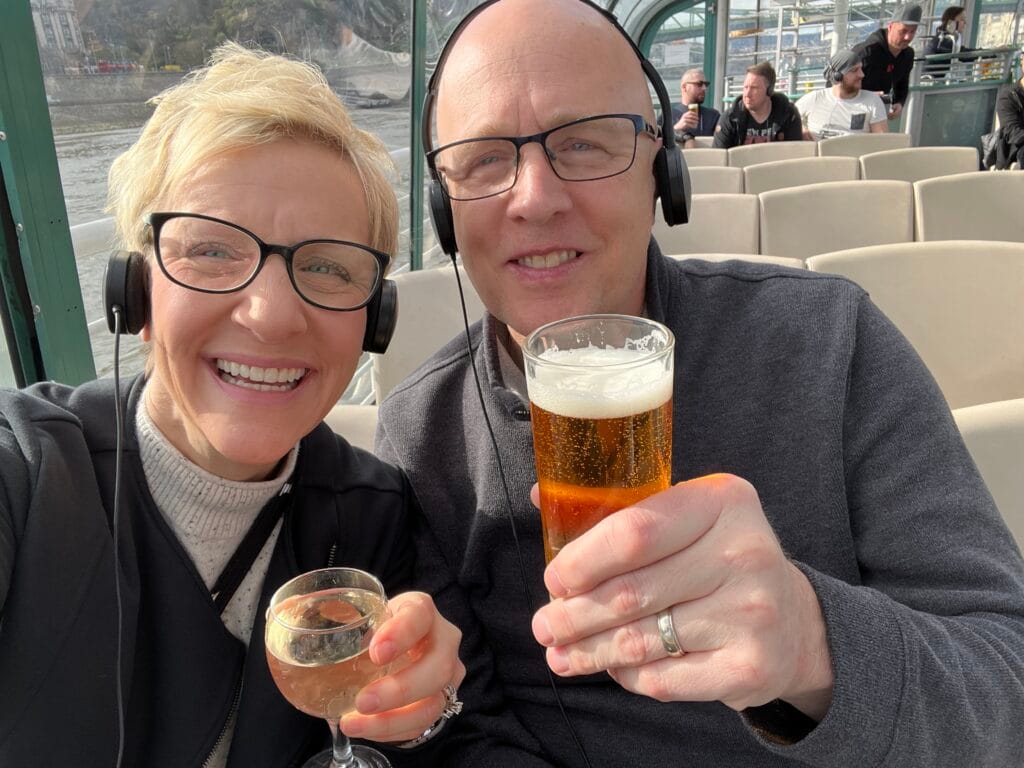
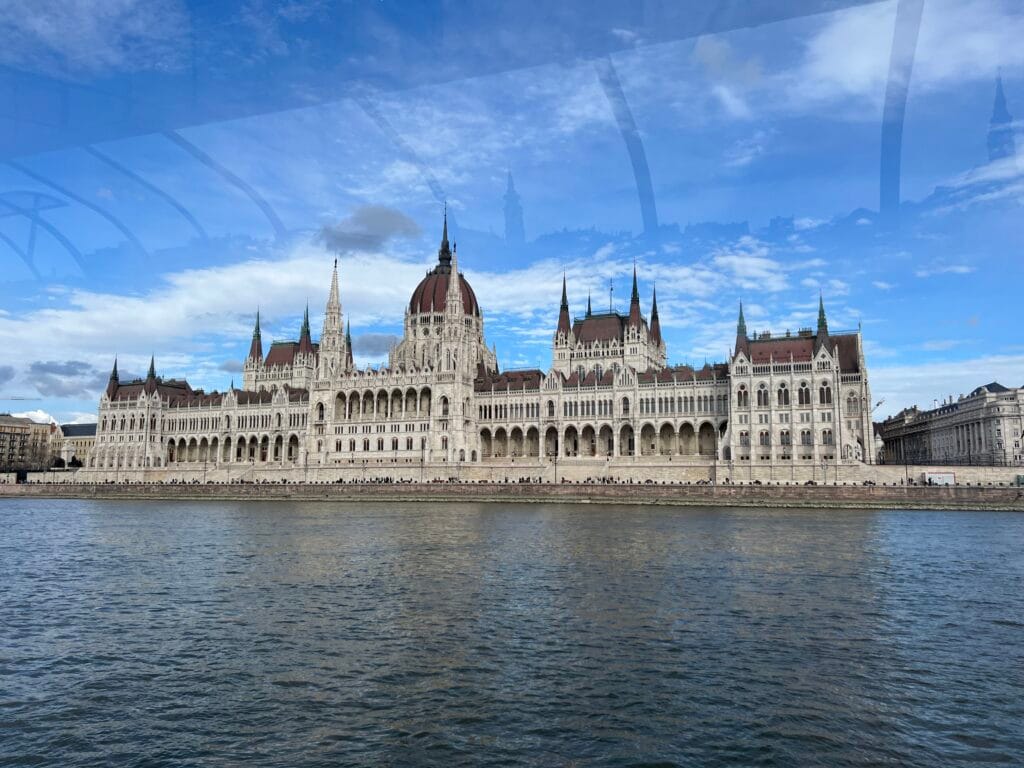
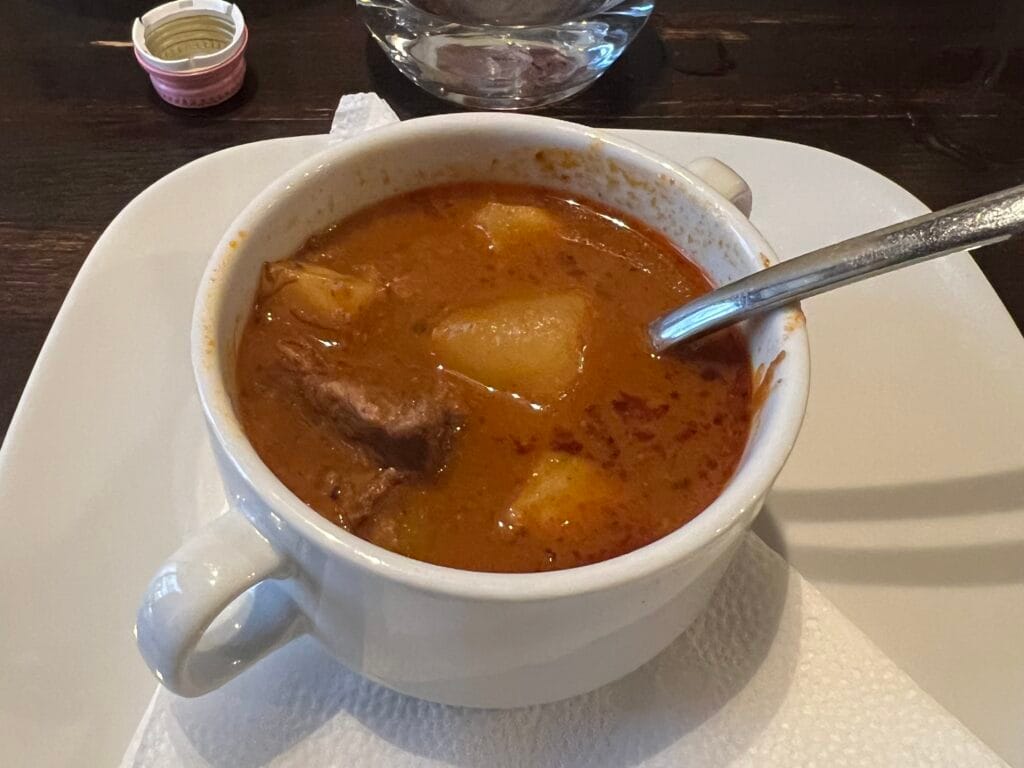
Down on the waterfront, we hopped on a daytime sightseeing cruise on the Danube, complete with Champagne, which gave us our first look at the Parliament building, Buda Castle, and Fisherman’s Bastion, all places we would be visiting in the coming days. We then wandered the river walk and found a cozy restaurant for dinner, where we dove headfirst into Hungarian Goulash — a rich, paprika flavored dish perfect for a chilly evening. Dining outside under the heaters is the quintessential European experience; we don’t do that routinely in the Midwest. We poked around the shopping district and the markets a bit before calling it a very early night.
Sunday 3/26 A Day with a Private Guide
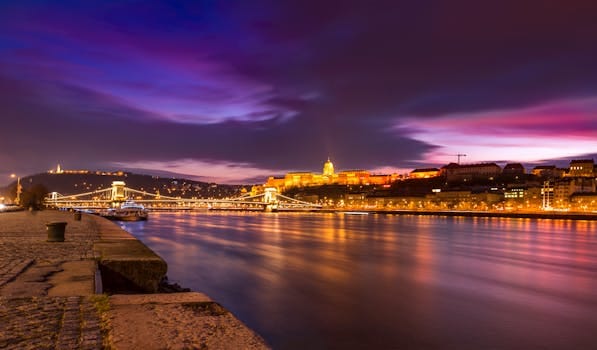
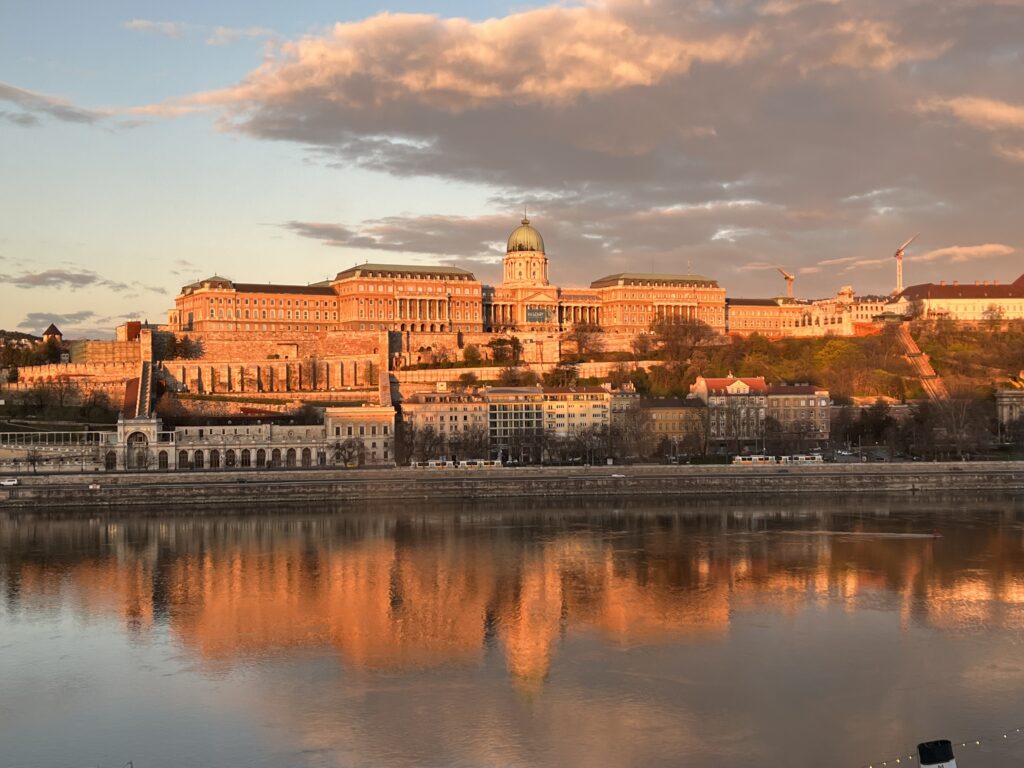
We woke up Sunday morning to one of the most beautiful sights of the entire trip: Buda Castle across the river bathed in morning sunlight, glowing gold from our window. It’s the kind of moment that makes you glad you booked that river-view room. We took the photo below through the hotel window with our iPhone. Truly. It’s that beautiful.
We hired a local guide through Tours by Locals for a full-day private tour, and it was absolutely the best decision we made. Our guide, George Soliman, was knowledgeable, friendly, professional, and a joy to spend the day with. He can be found on Tours By Locals, or on facebook at https://www.facebook.com/george.soliman.1656
Insider Tips
Book local guides directly when possible. Tours By Locals takes 25% from their posted rate.
Word of mouth and travel groups are great ways to find a reputable guide.
Always book private guides as early as possible to secure your preferred date and time.
On the Pest side, we saw gorgeous churches and synagogues, including the Dohány Street Synagogue — the largest in Europe. Our guide explained the heartbreaking history of Hungary’s Jewish community and the Holocaust, which didn’t occur here until 1944. It was sobering and important history that we would not have fully understood without him.
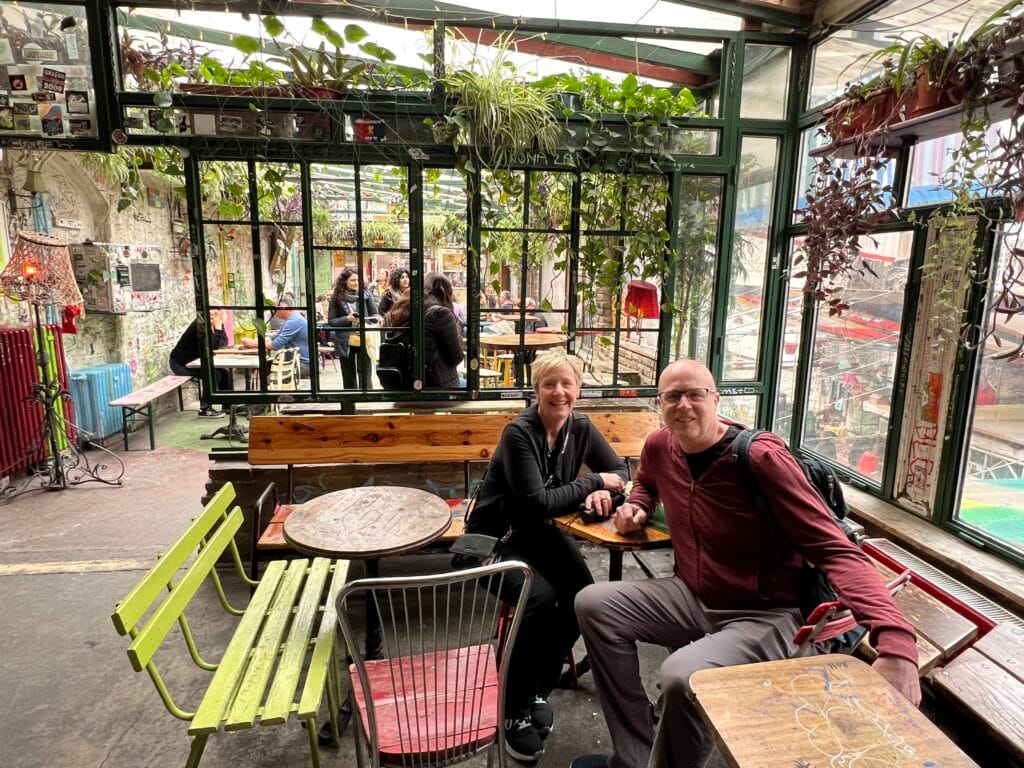
We also explored the Ruin Bars — a unique Budapest cultural phenomena. Built in the ruins of the old Jewish Ghetto, these open-air, deliberately dilapidated bars and clubs are unlike anything we’ve seen. They’ve transformed a sad chapter of the city’s history into a vibrant entertainment district. We also visited Hero’s Square, the City Park, the Opera House, and Vajdahunyad Castle. The Budapest Metro — one of the oldest in the world — was impressively clean and efficient. When we visited the Parliament building (stunning from the outside), our guide pulled out a bottle of Pálinka, the traditional Hungarian fruit brandy, for a toast. We bought a small bottle to take home.
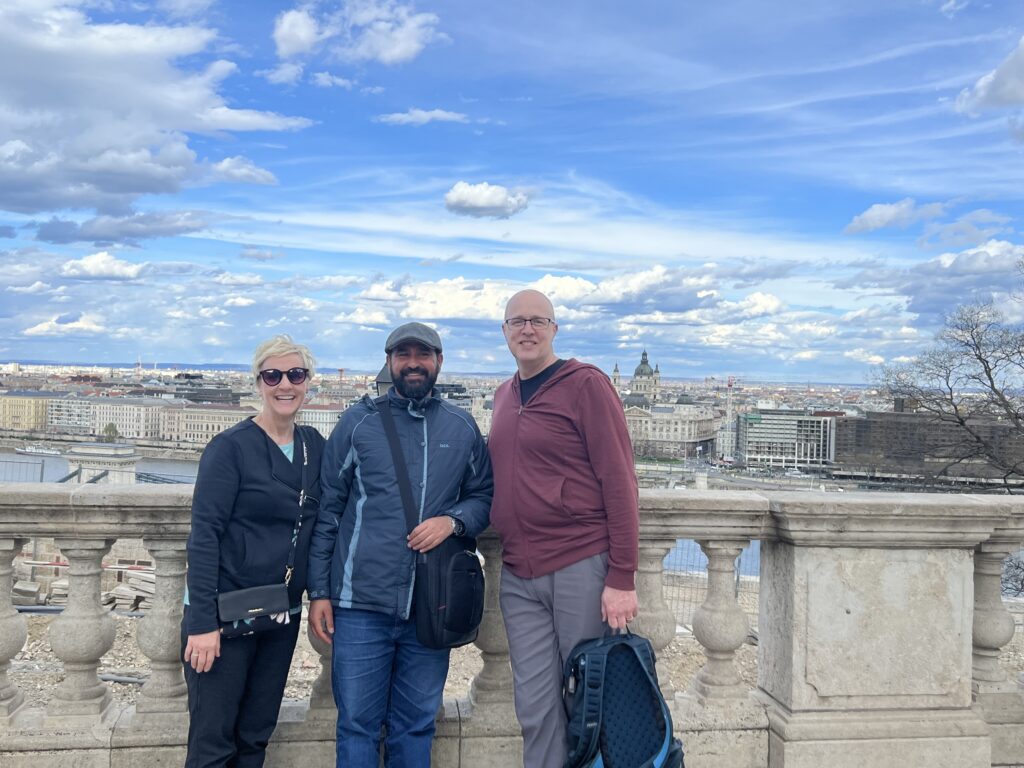
On the Buda side, we climbed up to Buda Castle and Fisherman’s Bastion for sweeping views over the river and the city. We had lángos for a quick lunch, which is deep-fried bread with toppings similar to pizza. Definitely do not skip this. It’s worth the calories. We stopped for a cherry strudel and a coffee on the way back to the hotel. We never turn down a good coffee shop. We later had cabbage rolls and a chimney cake for dinner. I think we tried all the Hungarian specialties in one day!
Monday 3/27 Day 1 Boarding the Viking Embla
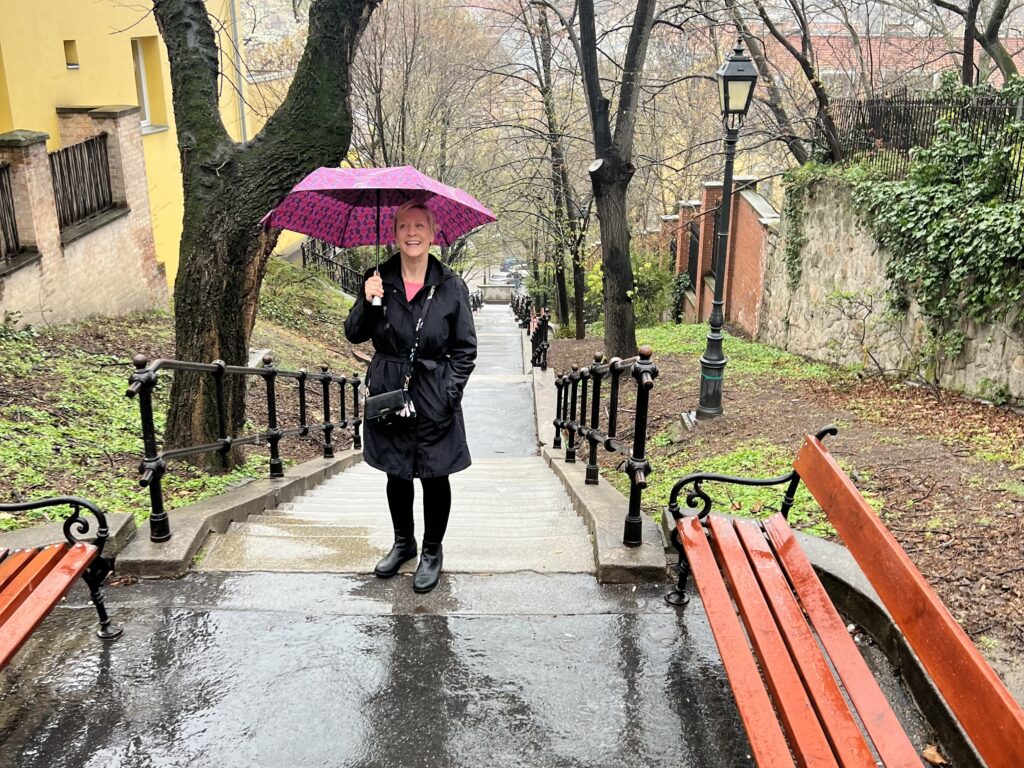
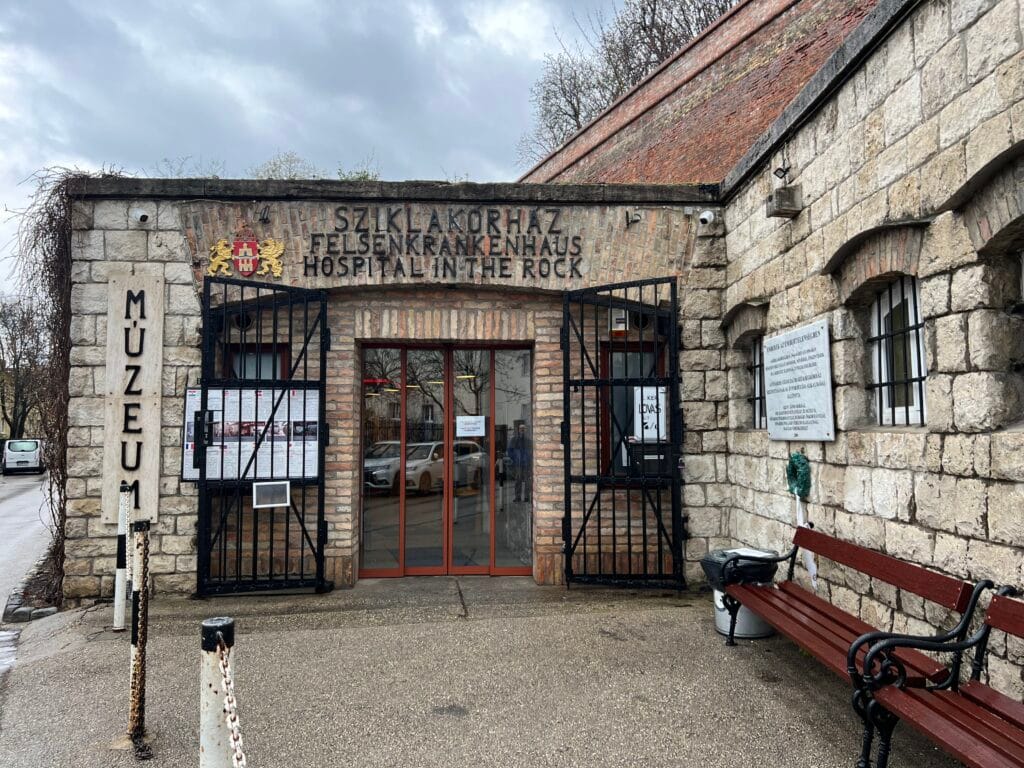
Viking considers the day you board the ship as day one of the trip, so you will see that reflected on their website and in this article from now on. We wanted to make the most of our time in Budapest, so instead of boarding the ship as early as possible, we planned a day on our own. It rained most of the morning so we pulled on our rain gear and headed across the river to visit the Hospital in the Rock — a truly fascinating museum built inside the limestone caves beneath Buda Castle. Originally excavated as a WWII hospital and later converted into a nuclear bunker during the Cold War, the tunnels are packed with original 1940s and 50s medical equipment, mannequins depicting wartime scenes, and Cold War-era relics. Photography isn’t allowed inside. As an RN, I found it fascinating, but imagining the working conditions made me glad to have spent my career in a modern operating room.
After a coffee and a slice of cake (did I mention we never turn down a good coffee shop?), we went back to Fisherman’s Bastion to visit St. Matthias Church and to climb the bell tower, all 197 steps, for panoramic views over Budapest — well worth it, even with the clouds and the drizzle.
Insider Tips
There are three ways to get to Fisherman’s Bastion:
Ride the Buda Castle Funicular (easiest)
Take a city bus (most affordable)
Walk up the many hills and steps (best for all the cake you will eat at the top)
We finally made our way from the InterContinental Hotel to the boarding location about 2:30 in the afternoon. It is an easy walk along the waterfront to the ship, but the street that runs parallel to the walkway is quite busy. We only travel with a carry-on sized suitcase and a backpack each, so you may want to take a taxi, or use the tram that runs right in front of the hotel if you don’t want to walk the 15 minutes and 1 km (6/10 of a mile) with your bags. At the boarding ramp, the staff took our luggage and we climbed aboard the Viking Embla for our eight day journey along the Danube.
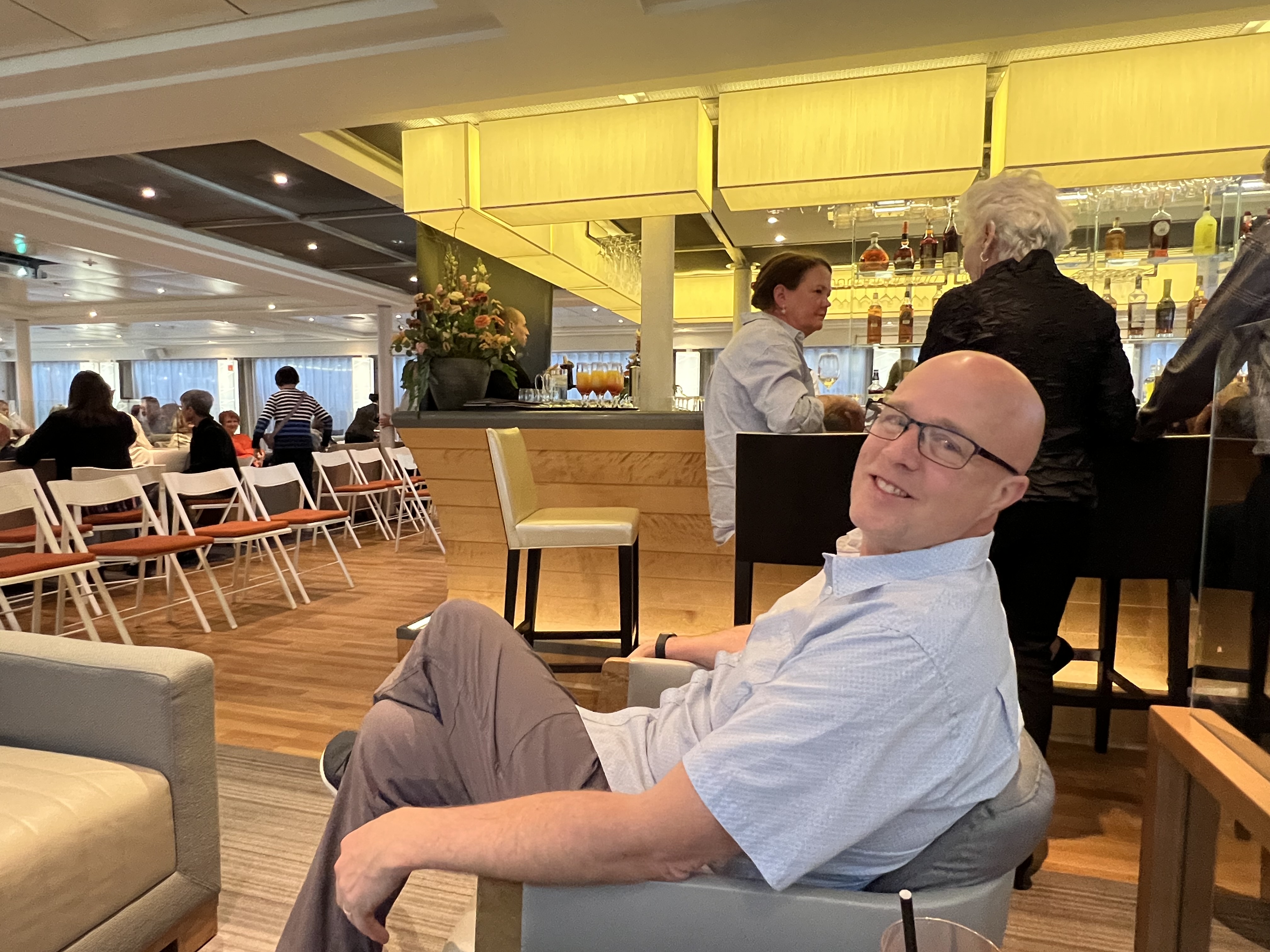
We unpacked, settled in, and headed straight to the lounge for our customary Aperol Spritz and Gin and Tonic. Speaking of drinks, there is a lively debate online about whether the Silver Spirits package is “worth it.” You will see people adding up the price of drinks and deciding how many drinks it would take to equal the $27 per guest per day to get their money’s worth. I won’t debate that here, but I will tell you that we buy the drink package on every cruise we take. We find the benefits of the package are in line with things that are important to us—developing camaraderie with the bar staff, enjoying the upgraded drink selections, and not being nickeled and dimed while on vacation. In addition, we love that they make our drinks without us asking when they see us coming. To us, it’s priceless.
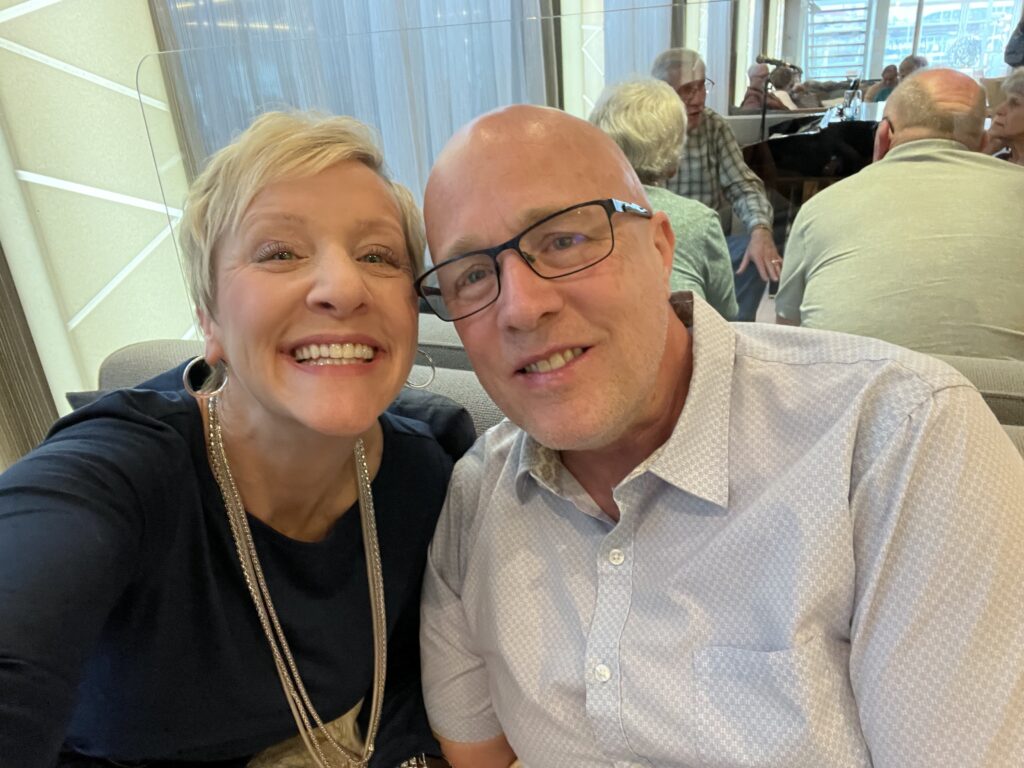
The Lounge (very creative name) is where you will gather each evening before dinner for the next day’s port talk, and for any lectures or entertainment. There are not quite enough seats to accommodate everyone in the lounge at the same time, so the staff will set up some extra chairs for events where everyone is expected to attend. We had our first dinner in The Restaurant (another very creative name), where the food was wonderful and the service was warm and gracious from the very start. We made some great new friends that evening over dinner, which, it turned out, was one of the very best parts of the whole cruise.
Tuesday 3/28 Day 2 Budapest/Behind the Iron Curtain
The ship overnighted in Budapest on Monday, giving us another full day in the city — and we used every minute of it. We skipped the included walking tour of Budapest and instead went on our own to the Budapest Central Market. It’s an easy walk from where the ship is docked. The ground floor is a bustling produce market where locals shop for fruits, vegetables, pickles, and paprika. The upper floors are filled with embroidered tablecloths, folk art, and souvenirs. Budget at least an hour here. Viking offers an optional tour to the market, but you honestly don’t need to pay for a tour, as it’s quite simple to go on your own.
In the afternoon, we took Viking’s optional Behind the Iron Curtain excursion, and it was one of the highlights of the entire trip. Our guide, a woman who was raised under Communist rule, was extraordinarily knowledgeable and deeply personal in her storytelling. We visited Memento Park, an open-air museum on the outskirts of the city where all of Budapest’s Communist-era statues were relocated after 1989. You will find enormous bronze figures of Lenin, Marx, and Soviet soldiers here.
Insider Tips
Do not skip the optional Behind the Iron Curtain excursion.
It is a uniquely fascinating experience that can only be had in Budapest.
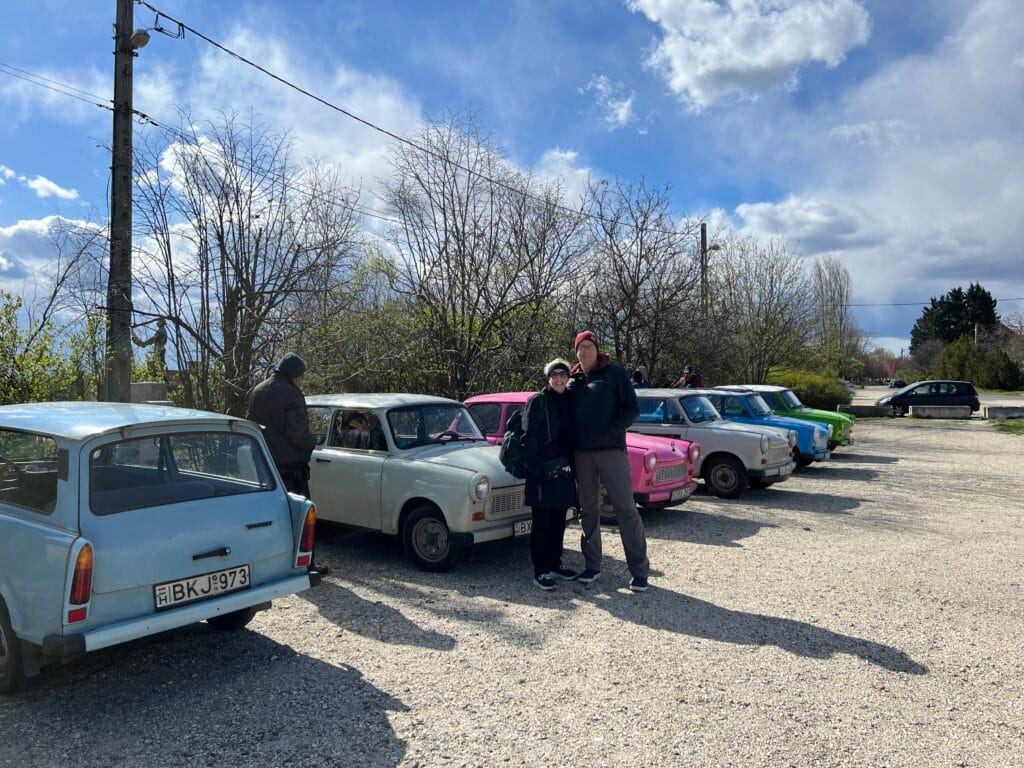
The best part was our mode of transport: a Trabant, the boxy little car manufactured in East Germany and one of the only vehicles available to Hungarian citizens under Communism. Some people waited over seven years for delivery of this vehicle! We got to try our hand at driving it. If it’s been a few years since you’ve driven a stick shift, don’t worry, it will all come back as soon as you get behind the tiny little wheel. If you’re 6’5″ like Steve, best of luck squeezing in. We also visited the Budapest Retro Museum, a wonderfully curated collection of everyday objects from Communist life — kitchen appliances, toys, propaganda posters, and more. It tells the story of an entire way of life that most Americans know almost nothing about. We were the only two people on the ship to take this excursion, but many others wished they had after hearing our stories.
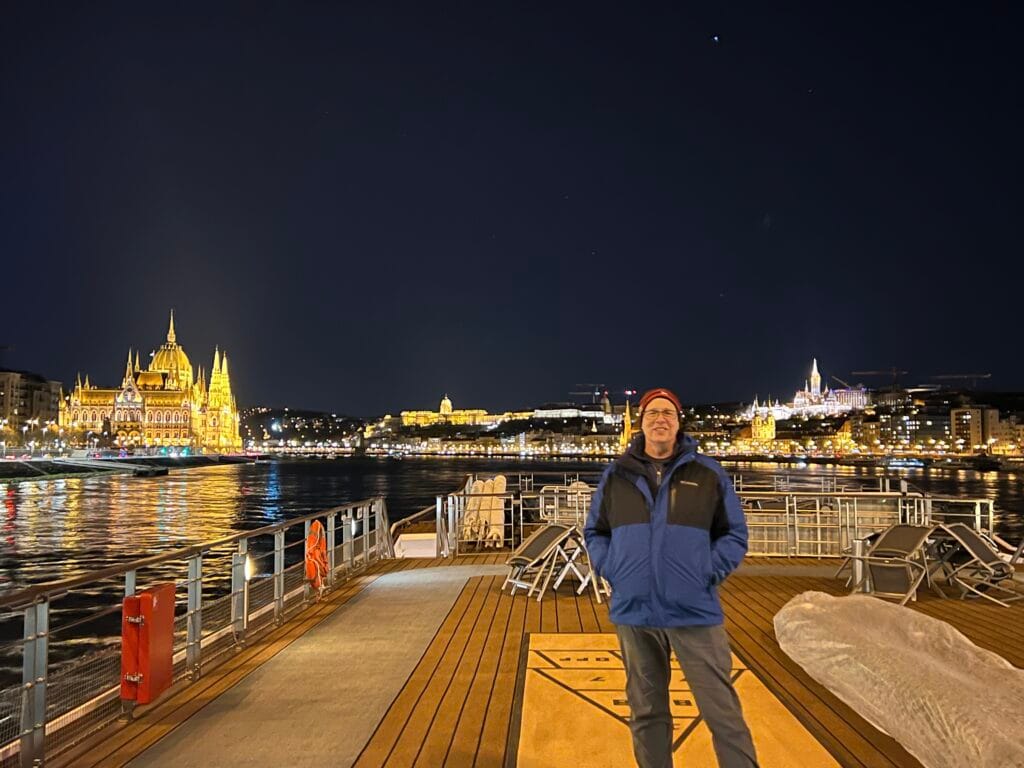
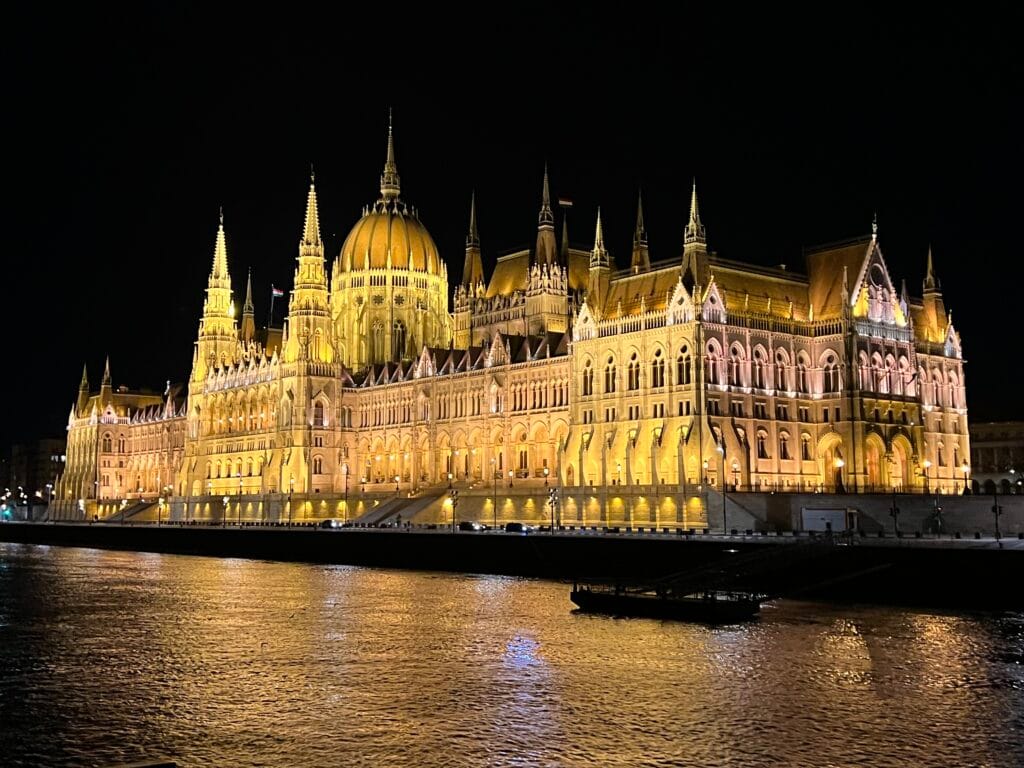
That evening after dinner, we went up to the Sun Deck to watch Budapest’s magnificent illuminated skyline slip away as we finally set sail. Budapest is simply one of the most stunning cities I have ever visited. I would argue that The Parliament building all lit up at night is perhaps the most beautiful building in all of Europe.
Wednesday 3/29 Day 3 Bratislava, Slovakia
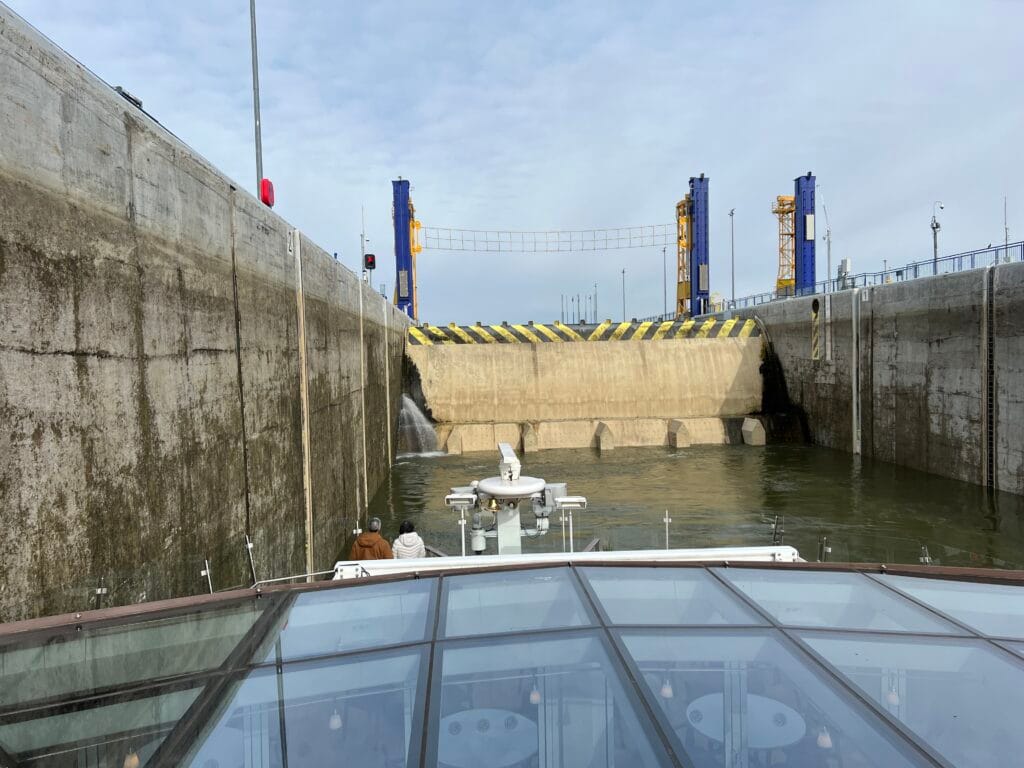
We had a leisurely morning on the ship as we cruised toward Bratislava. We passed through our first set of locks — which are fun to watch — and attended a mandatory safety drill. Then our program director, Marek, gave one of the best presentations of the entire cruise: a personal account of growing up in Slovakia under Communist rule. Marek was 14 years old when the Berlin Wall fell in 1989. Listening to someone describe that moment from a lived experience is eye-opening. We became fast friends with Marek, and still keep in touch with him today (2026).
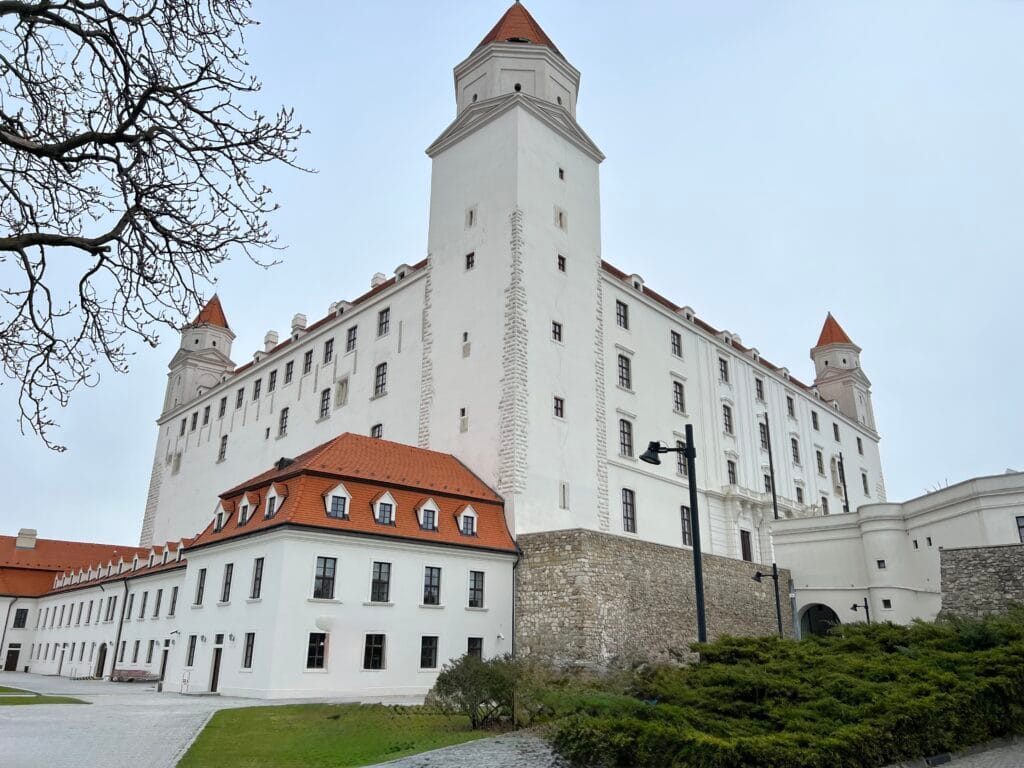
After lunch, we had our included Panoramic Bratislava tour. The Slovak capital is often overlooked by travelers rushing between Vienna and Budapest, and that’s a shame. The Old Town is compact and gorgeous, lined with baroque buildings and churches. We visited the grounds of Bratislava Castle (our tour did not include an inside visit), which sits dramatically on a hill above the Danube with sweeping views in every direction. The whole city is walkable and charming.
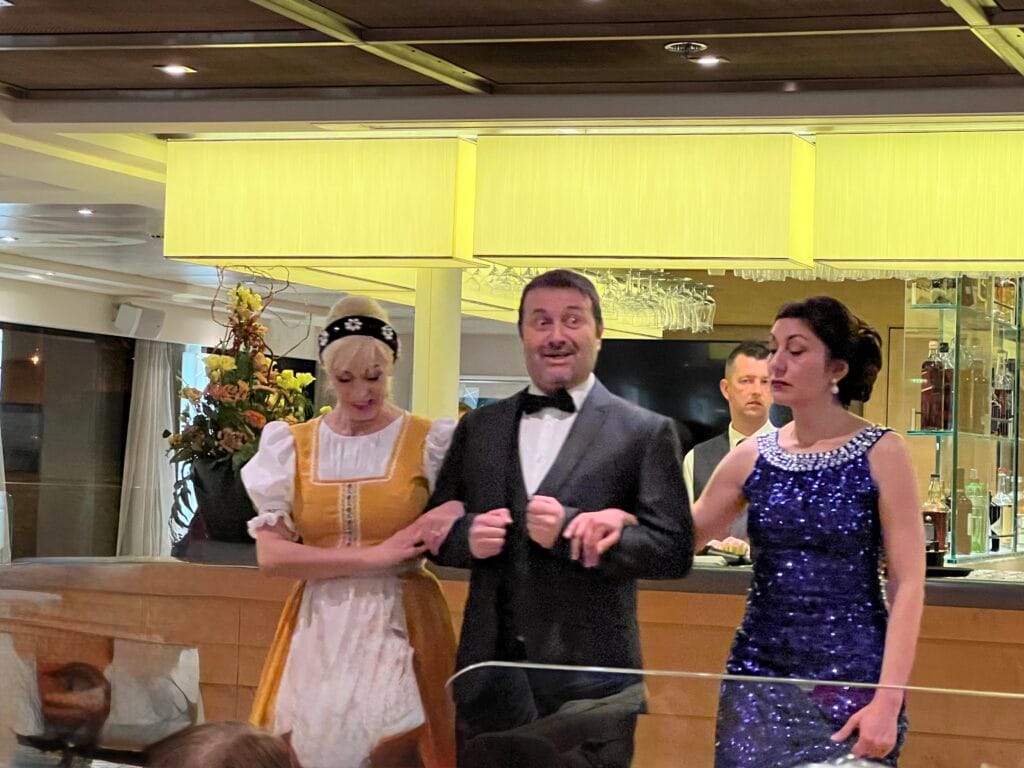
After dinner, a Slovakian opera company came aboard for a performance. We didn’t understand a single word of it, but it was absolutely magnificent. Viking regularly brings local performers on board, and they are not to be missed.
Thursday 3/30 Day 4 Vienna, Austria
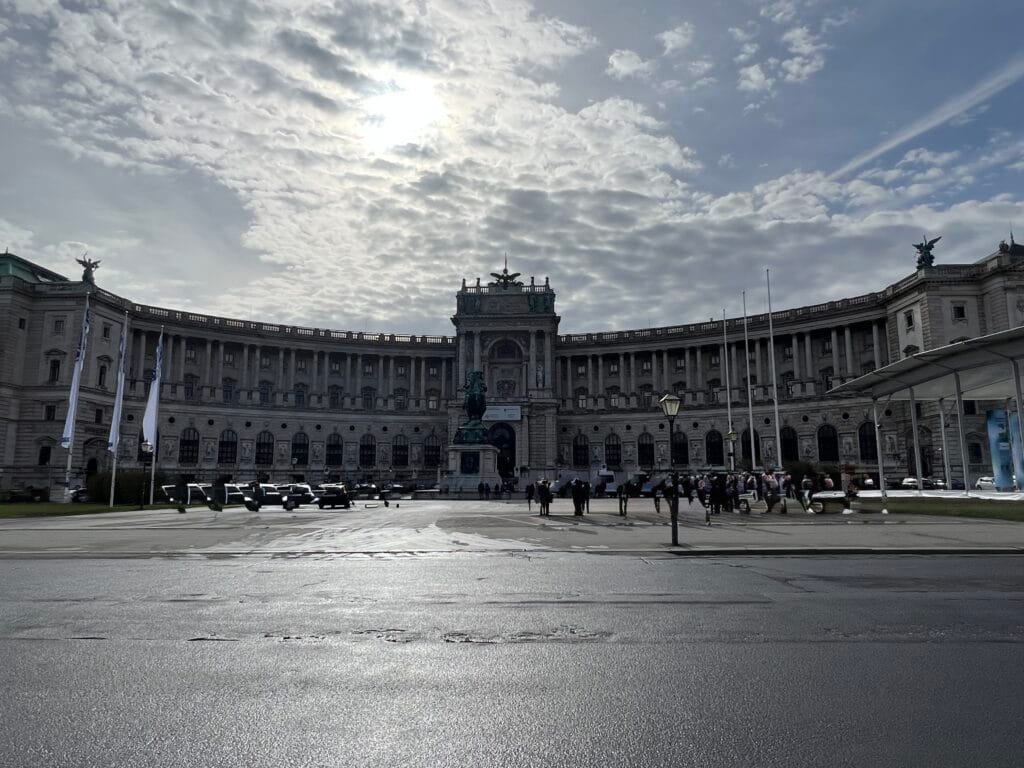
The history here is layered and complex. As a city on the losing side in both World Wars, Vienna carries its past with a certain somber dignity, and Austrians are not proud of it. One of the most sobering moments of the tour was standing in front of the Hofburg Palace balcony from which Hitler announced the annexation of Austria in 1938. We took the included Panoramic Vienna tour, and our guide was candid about the nation’s history. In our free time on the tour, we found a coffee shop near St Stephen’s Church, then wandered the high end shops nearby. Have I mentioned we never pass up a good coffee shop?
Insider Tips
In your free time in Vienna, visits St Stephen’s Church
and grab a coffee on nearby Graben for the quintessential Vienna coffeehouse experience.
We also learned something that surprised us: The Sound of Music, a staple in American high school, college, and community theater, is deeply unpopular in Austria. The Austrians — who are ethnically and linguistically German — find the film’s portrayal of their culture inaccurate and the Nazi content deeply troubling, given their own complicated history with it. As Americans, we often think we understand the history of other cultures, but that is often not the case. Traveling opens your eyes and your minds to opportunities not otherwise had.
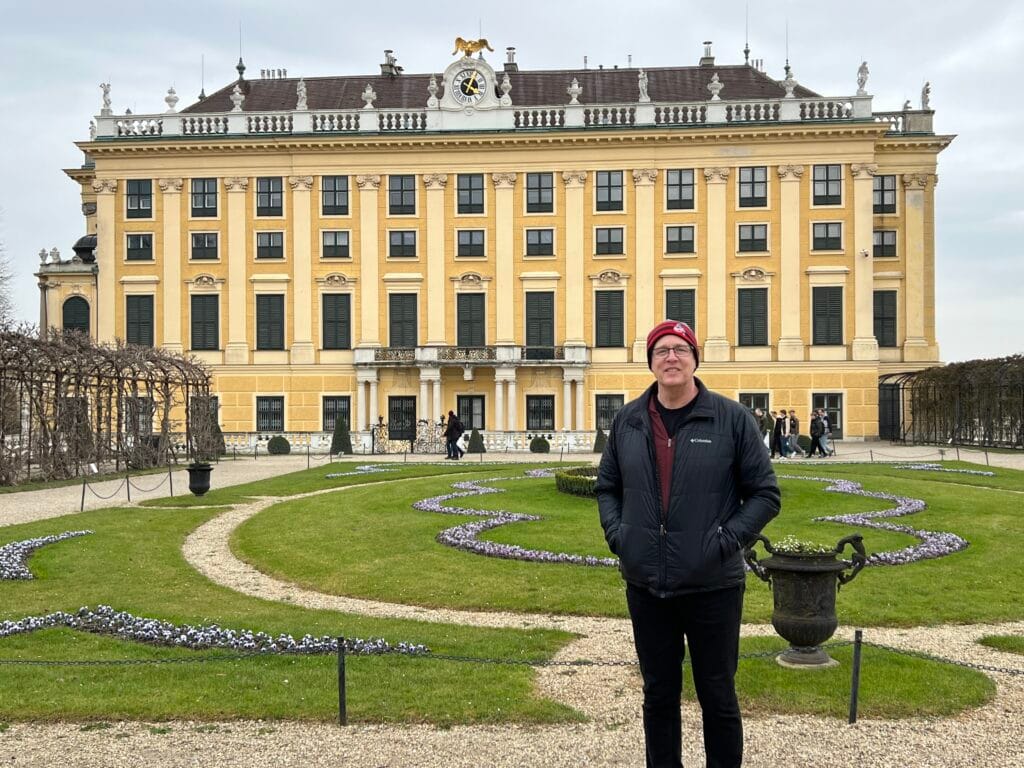
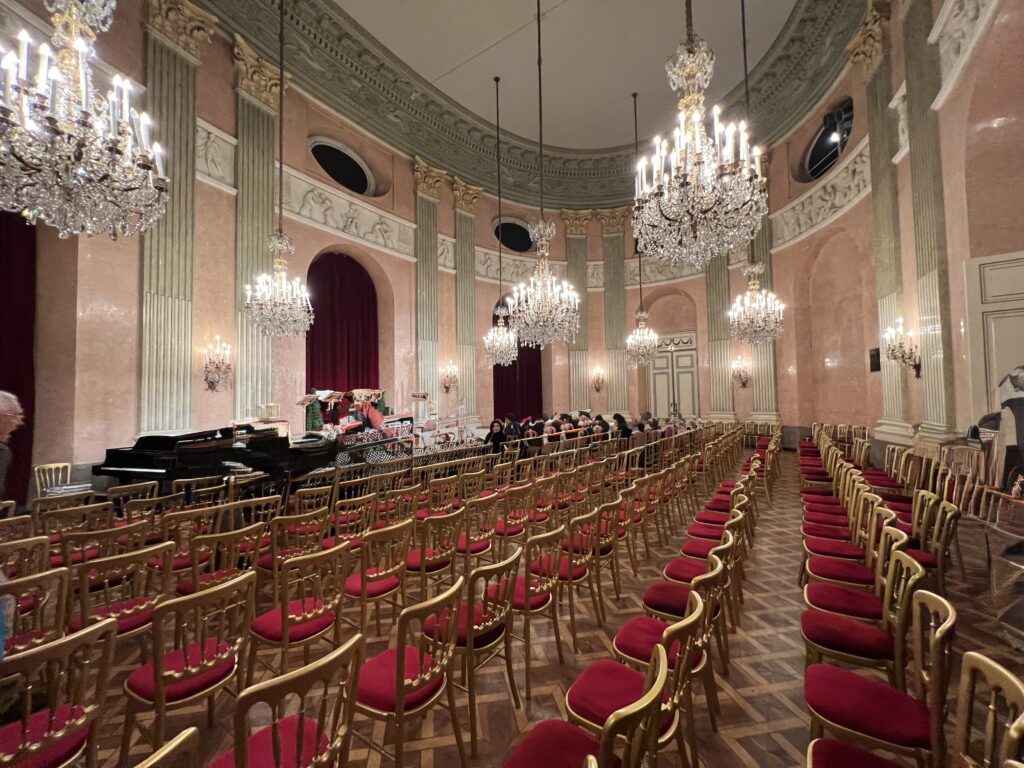
The highlight of the day was visiting beautiful Schönbrunn Palace, a UNESCO World Heritage site, on the optional Viking excursion. Schönbrunn was the Hapsburg dynasty’s summer residence — 1,441 rooms, 40 of which are open to the public, and grounds so perfectly manicured they look painted. After dinner on the ship, we took the optional excursion to Palais Auersperg for a Mozart and Strauss concert. It was beautiful, moving, and romantic—the perfect end to our very busy day in Vienna.
Friday 3/31 Day 5 Krems & the Wachau Valley
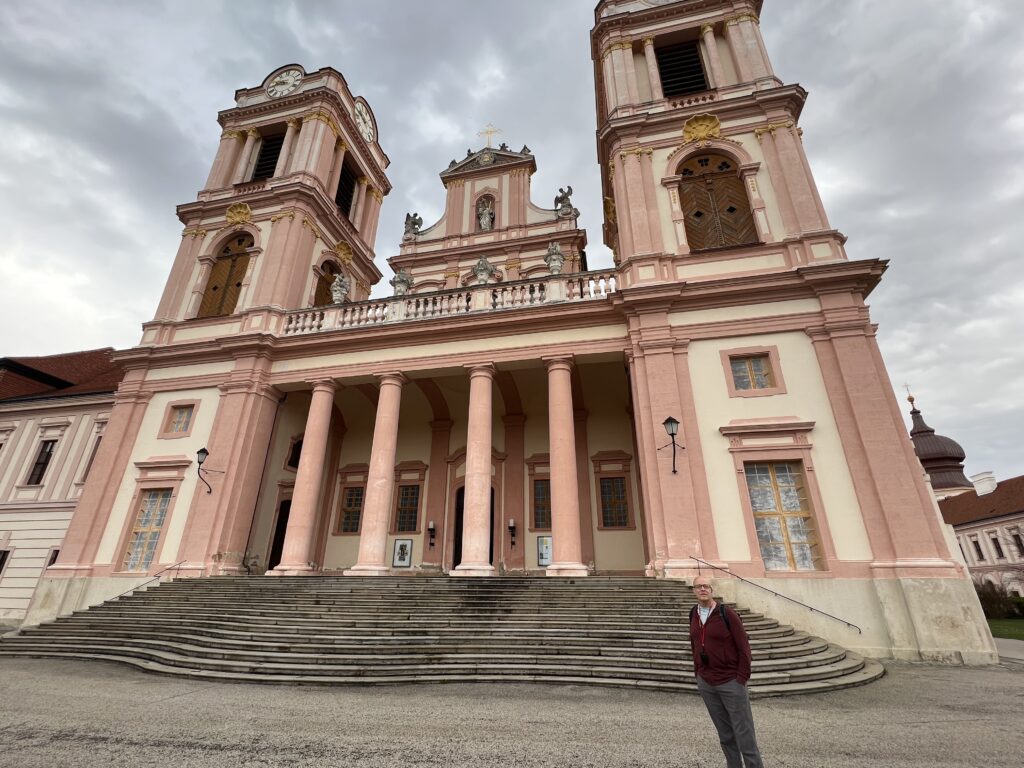
We docked in Krems, Austria today and boarded coaches for the included Göttweig Abbey excursion. Göttweig Abbey is a Benedictine monastery perched on a hilltop high above the Danube, founded in 1083. About 30 monks still live and work here. The abbey is famous for its apricot jam and wine, which we were encouraged to sample upon arrival. Both are available in the gift shop. The frescoed ceiling of the Imperial Staircase and the views from the top are worth the trip.
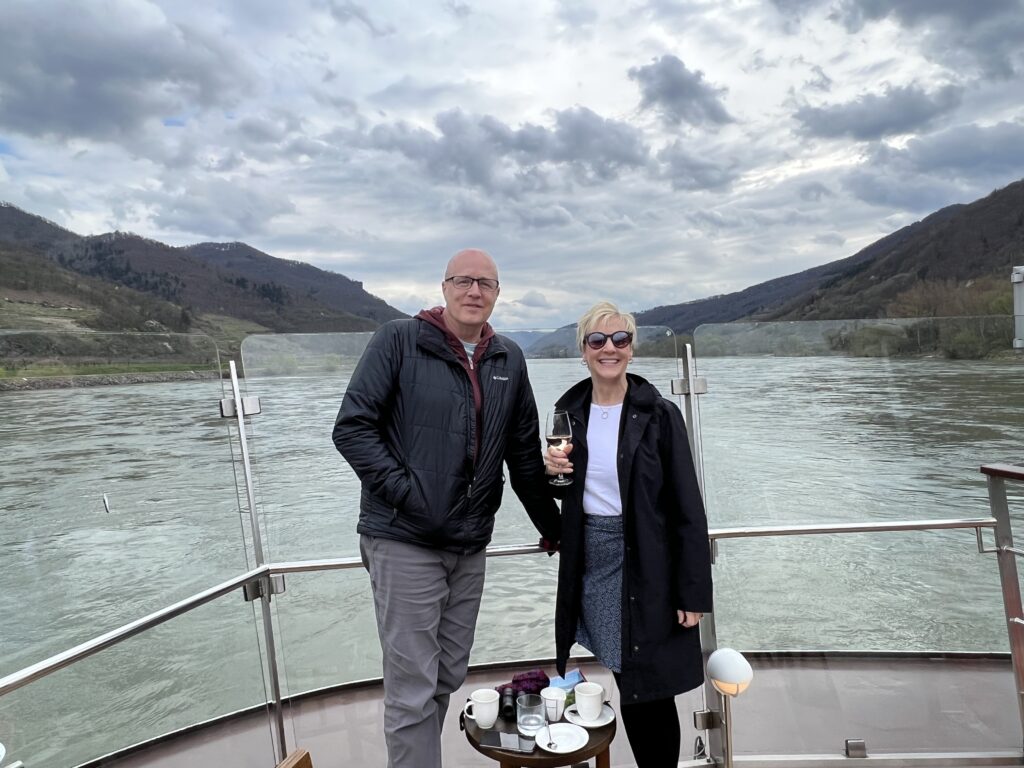
The afternoon brought us a little sunshine, but nonetheless some chilly weather for sailing through the Wachau Valley, a UNESCO World Heritage landscape, and arguably the most beautiful stretch of the entire Danube. Castle ruins cling to hilltops. Terraced vineyards descend to the water’s edge. Medieval villages dot the banks. We lucked out with the best seat on the Aquavit Terrace, ordered a glass of wine, visited with friends, and just watched it all go by. It was an absolutely perfect afternoon.
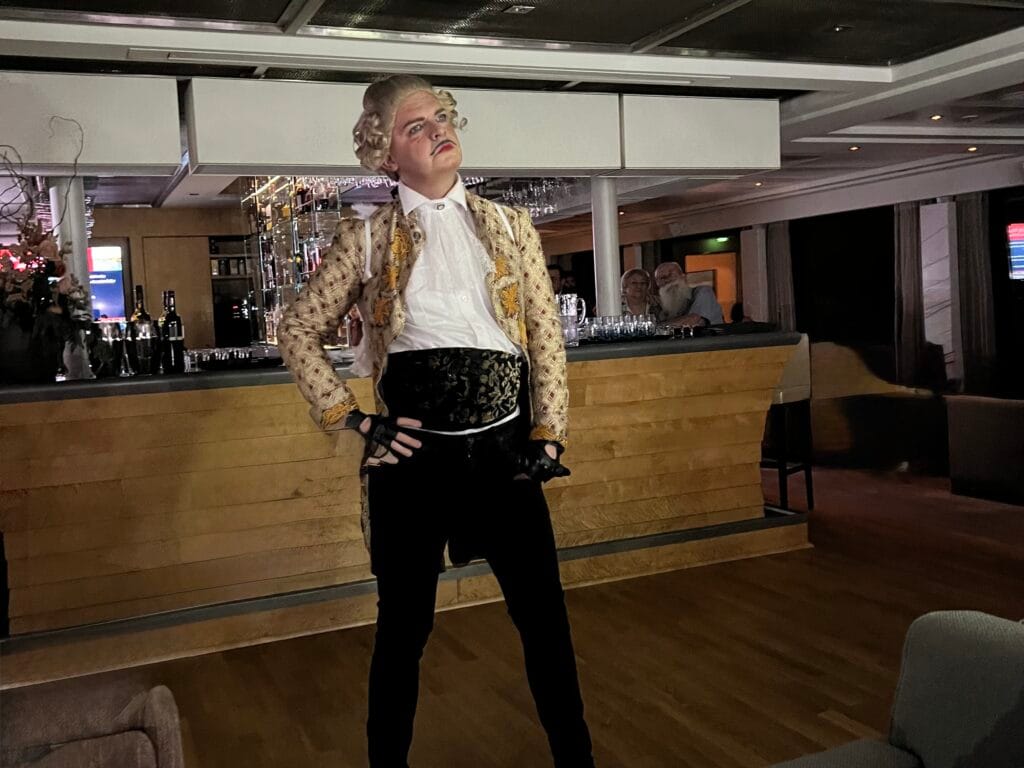
After our dinner of traditional Austrian food, with the tables and the wait staff all decked out in an Austrian theme, our fabulous Program Director Marek took the stage in the lounge for his remarkable one-man show: An Evening with Mozart. In full 18th-century costume, with a powdered wig, a velvet coat, and a set of wings, he performed the life of Wolfgang Amadeus Mozart — part lecture, part musical theater, and entirely captivating. Marek has been with Viking for 18 years as of this sailing in 2023. He told us that he used to present this as a dry lecture, and people kept falling asleep. So he came up with the idea of dressing as Mozart himself, and had to audition the concept for Viking executives before they would approve it. It was one of the most entertaining evenings of the entire trip. Fast forward to 2026, and Marek is still performing this show on the Viking Embla, but now with Mozart’s wife added to the show!
Saturday 4/1 Day 6 Linz/Český Krumlov
We docked in Linz, Austria today, a lovely city with an interesting and complex history. The capital of Upper Austria, Linz is known for Johannes Kepler University, as Kepler taught mathematics here for several years. Anton Bruckner worked as a composer here, and Adolf Hitler spent part of his childhood here. Linz was well known as a support city during WW II, with Mauthausen Concentration Camp nearby. Many of its streets were renamed after the war as Linz reckoned with its Nazi past.
Insider Tips
Český Krumlov is completely worth the full-day excursion from Linz.
It’s one of the best-preserved medieval towns in Central Europe and absolutely beautiful.
Alternatively, you can visit the Mauthausen Memorial Site on an optional guided Viking tour.
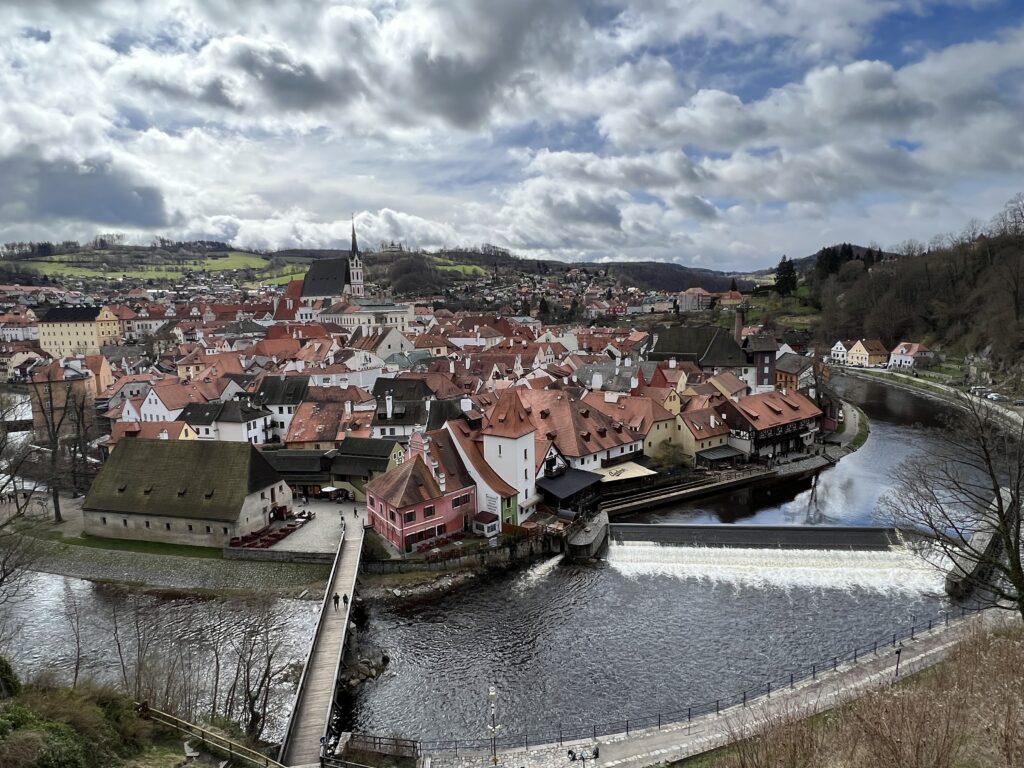
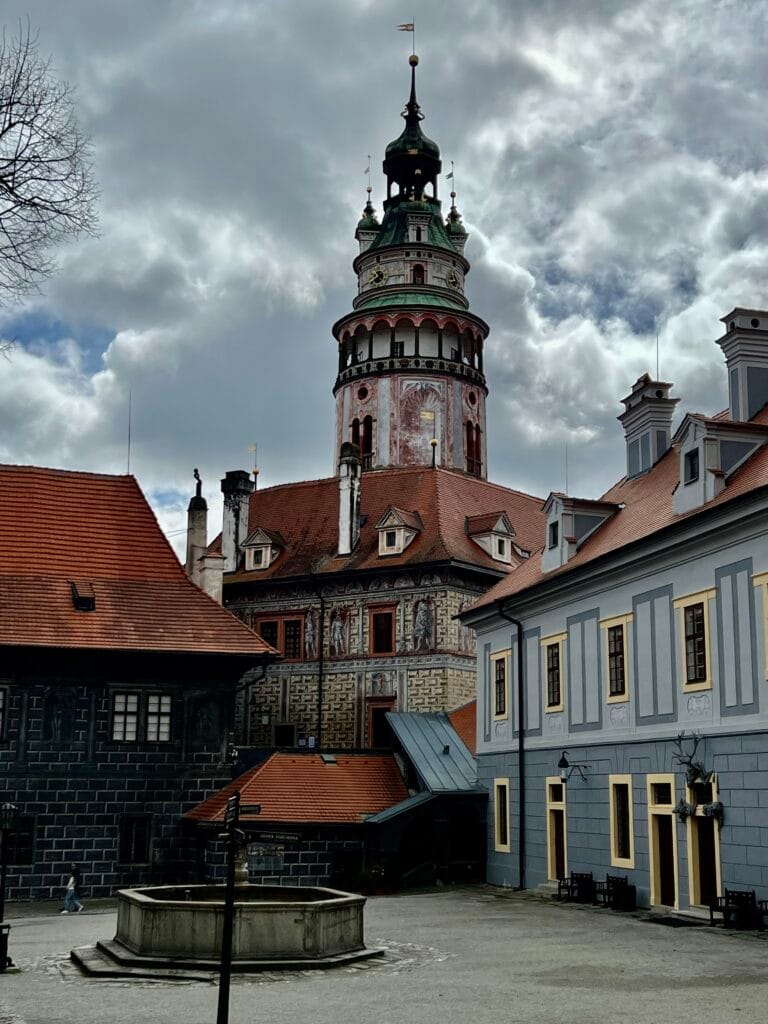
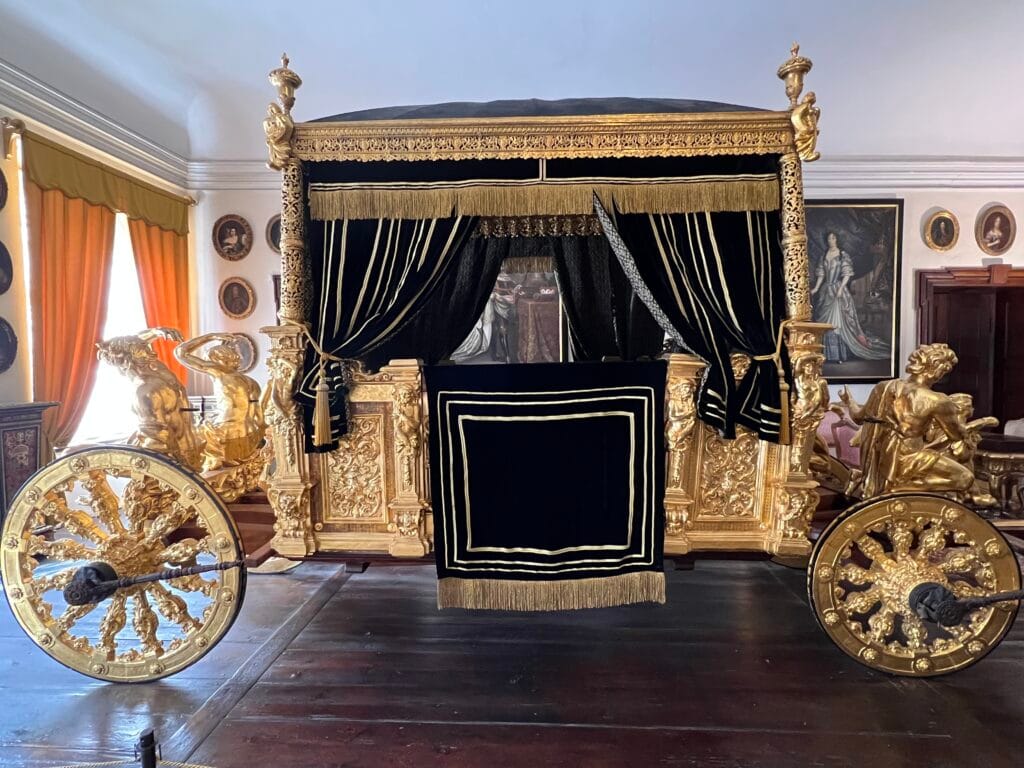
With limited time, we were not able to visit Linz proper or the Mauthausen Memorial Site. (We had a trip planned to Dachau once we finished the cruise and went to Munich for a few days.) We instead opted for Viking’s full day excursion across the border into the Czech Republic to visit Český Krumlov, a storybook medieval town known as “Pocket Prague.” Our local guide was fabulous. Český Krumlov has been continuously inhabited since around 70,000 BC and looks like it hasn’t changed much since the 14th century. We walked the castle grounds and had a delicious family-style Czech lunch (included in the cost of the excursion). In our free time and for a few Euro, we took a separate private guided tour inside the castle itself — a baroque theater, royal apartments, painted ceilings, and live bears in the moat—very castle-y. We thoroughly enjoyed this excursion and highly recommend you consider it. Be aware that there is a an uphill portion of the walking tour to reach the castle. It follows a gently sloping paved path for about 15 minutes of uphill walking, but the views of the Old Town from above are spectacular.
This evening after another lovely dinner, an Austrian theater company came aboard and performed a Sound of Music show — yes, the very one the Austrians quietly can’t stand, but with enormous enthusiasm from a ship full of mostly Americans—Viking’s typical guests. We enjoyed the show.
Sunday 4/2 Day 7 Passau, Germany
Our final port was Passau, or Dreiflüssestadt (City of Three Rivers), a German city of remarkable beauty and equally remarkable luck. We took the included Passau Walking Tour. According to our guide, when American forces arrived at the end of WWII, the mayor knew that the war was lost and surrendered the city peacefully — saving it from destruction. The Russians arrived just two hours later. That decision preserved Passau’s extraordinary medieval architecture entirely intact. Today the city has a strong economy and a thriving university. It’s a beautiful city and we thoroughly enjoyed the tour on this rainy day. Don’t miss St Stephen’s Cathedral—it houses the largest church pipe organ outside the US.
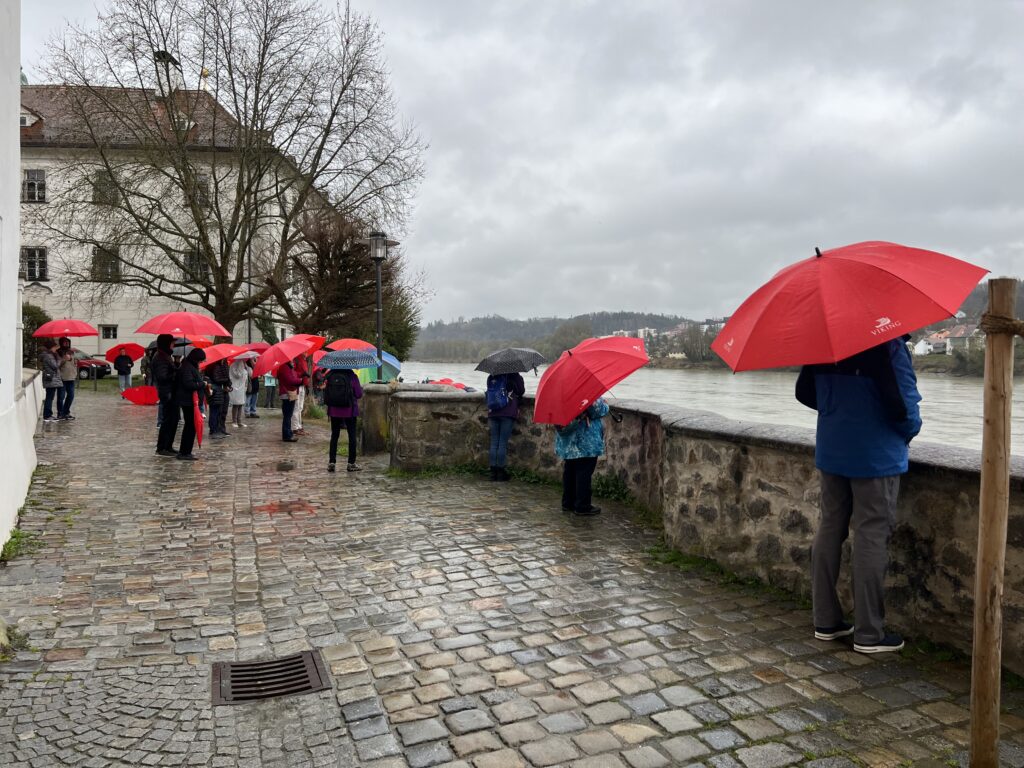
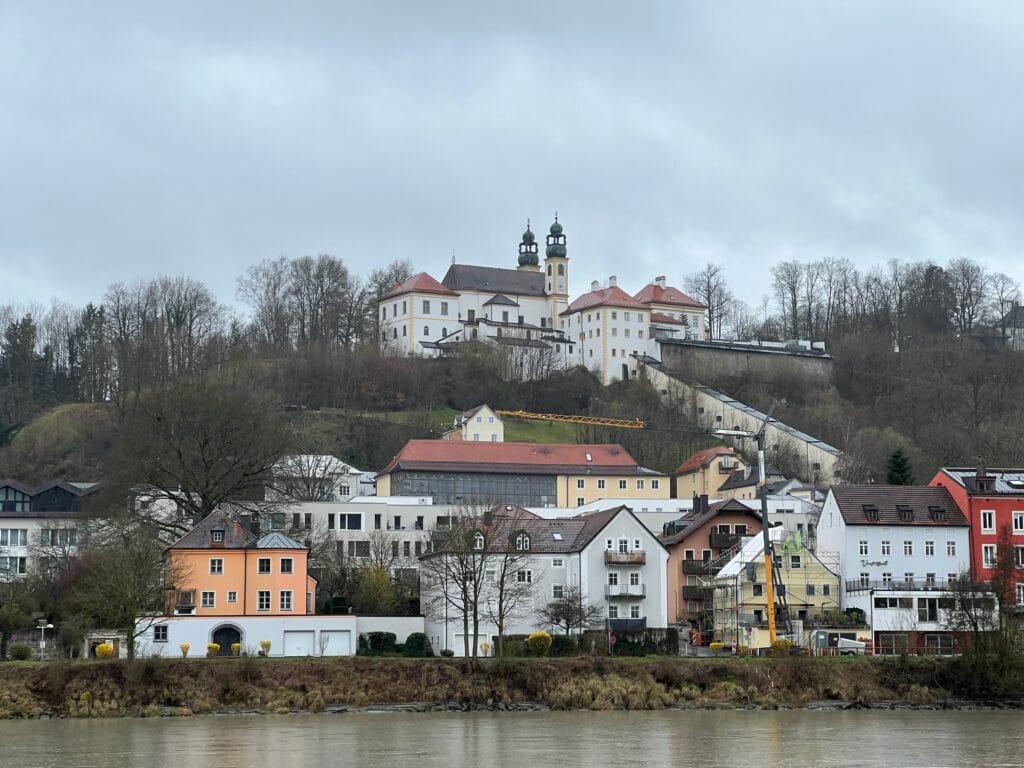
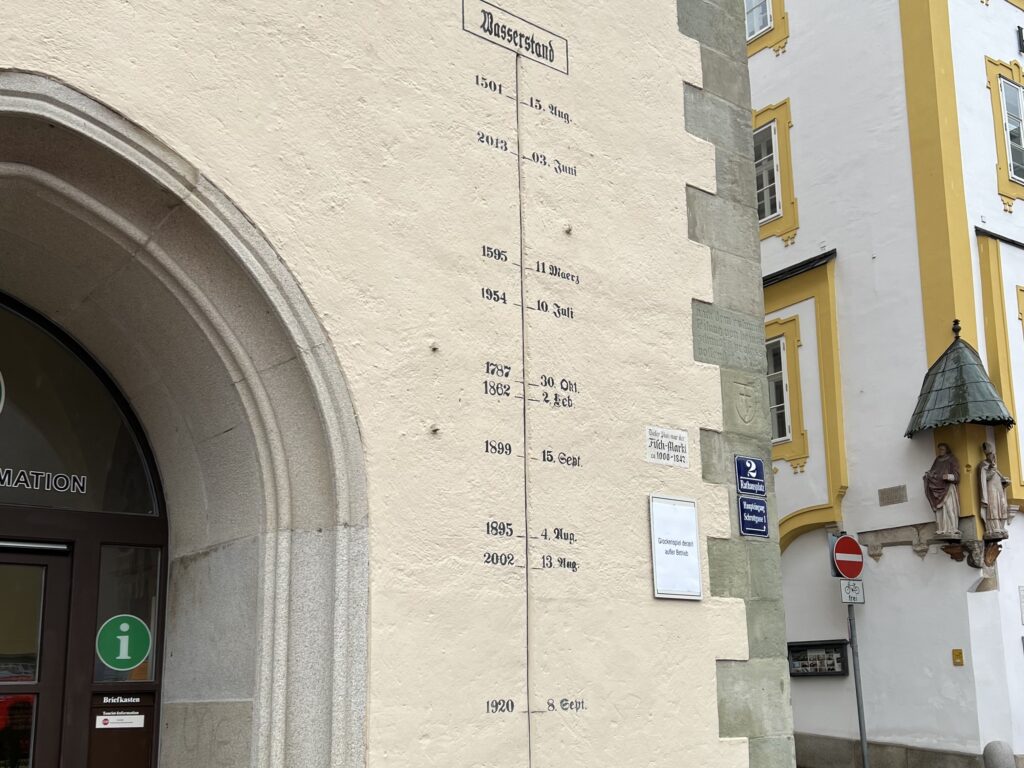
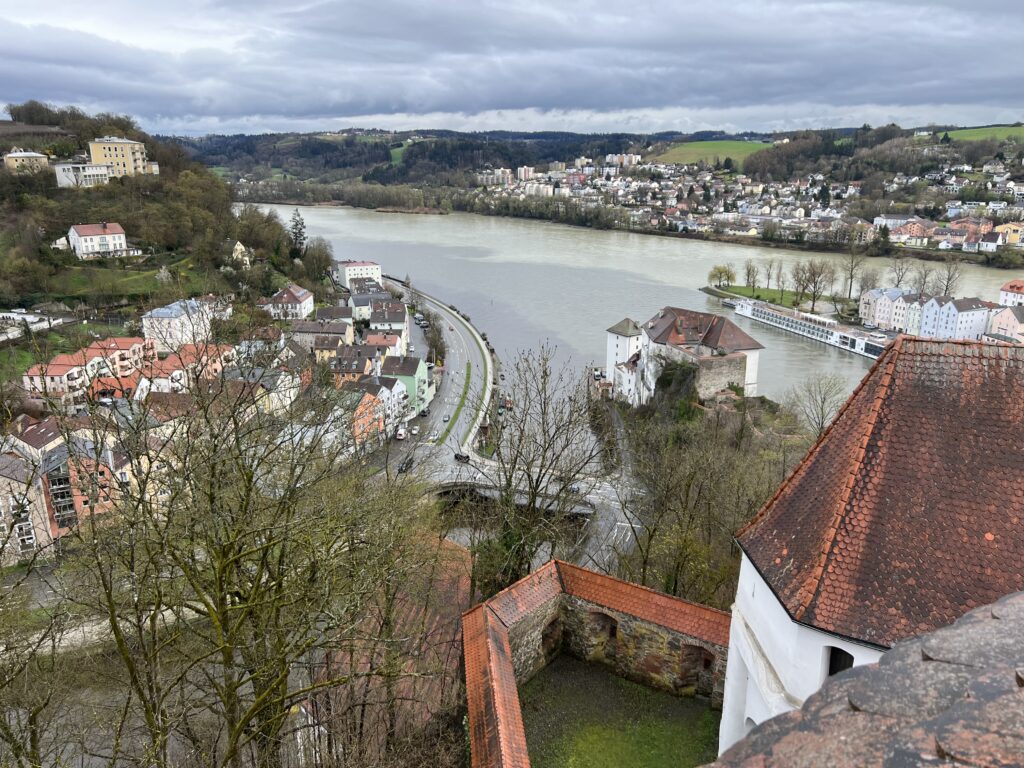
Passau sits at the confluence of three rivers — the Danube, the Ilz, and the Inn — and from the right vantage point, you can actually see the different colors of the waters where they meet, the three streams refusing to blend for a remarkable distance. On our own time in the afternoon, we took a city bus for about €2 each up to Veste Oberhaus, the fortress overlooking the city, for a spectacular view of the confluence. If you prefer, you can hike up the hill, but we did not prefer.
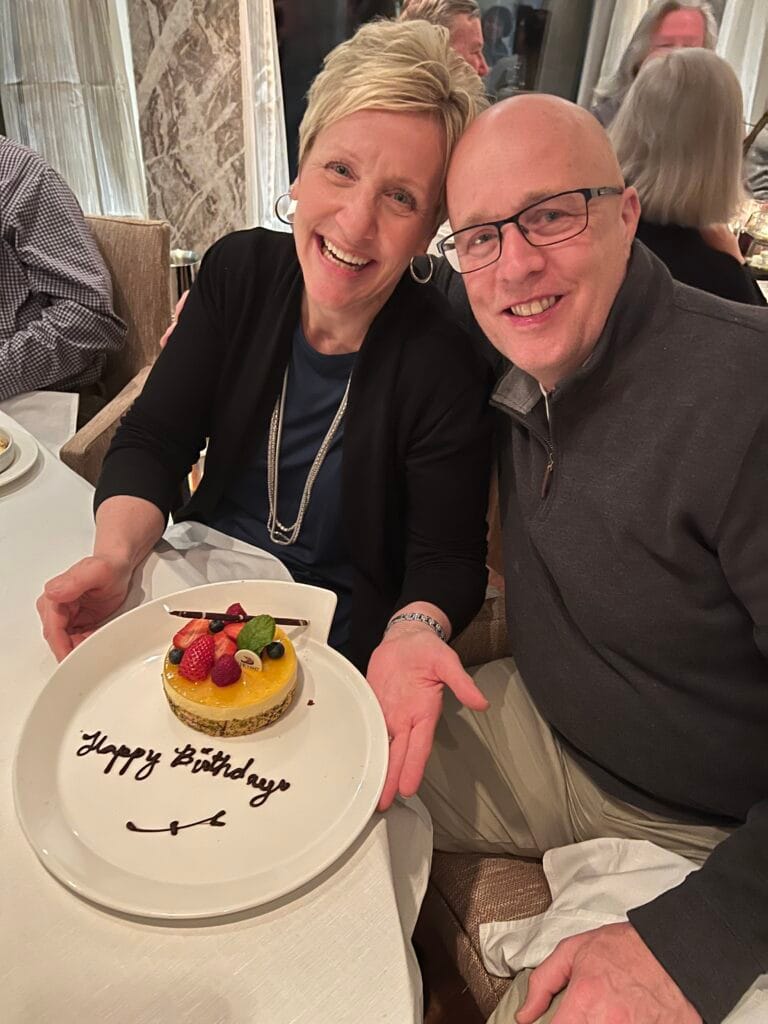
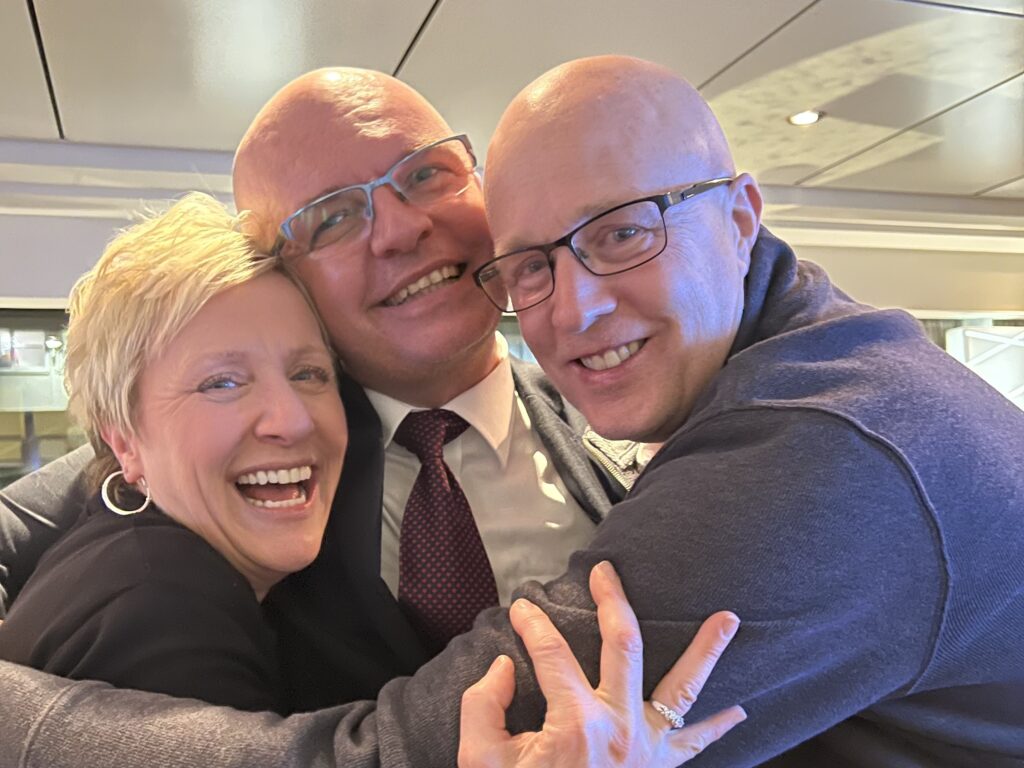
Back on the ship for the evening, we had our last dinner in The Restaurant. My birthday was in two days, so Viking gave me a great birthday celebration, complete with cake to share with our friends. After dinner, we hosted a university historian for a lecture on the full history of the Danube — its role in trade, warfare, migration, and the rise and fall of empires. It was the perfect way to close out the week. Viking bills itself as “the thinking person’s cruise,” and we really enjoy the educational offerings. We sat in the lounge afterward, our last night aboard, having drinks with friends, and none of us wanting to leave.
Monday 4/3 Day 8 Disembark/Train to Munich
The day had come to disembark the beautiful Viking Embla and leave its wonderful crew, fabulous food, and our new friends behind. We had Viking arrange a taxi to take us to the train station in Passau. You will need to pay the driver in Euro cash at the drop off point, so plan ahead for that. I don’t recall the exact amount, but I want to say it was around €40. We purchased train tickets at the kiosk and headed to Munich to spend a few days. You can also get a train to the Munich airport if you are returning home, or to anywhere else in Europe you plan to go. If you purchased your airfare through Viking, the airport transfer is included.
Insider Tips
Pickpockets are always present in the train stations, so be aware and keep an eye on your belongings.
Summary
This was our second river cruise with Viking, and we booked a third for the following March, this time the Capitals of Eastern Europe sailing. That tells you everything you need to know about how we feel.
What Viking does better than anyone is destination immersion. Every port has an included excursion. Every evening has a cultural program. Every lecture teaches you something real. Our program director Marek alone — with his personal stories of growing up under Communism, his Mozart show, his warmth and humor throughout the week — was worth the price of admission.
River cruising is simply a different kind of travel. You unpack once. You wake up in a new city every morning. The ships are small enough that you know your fellow passengers by name on day one. The Danube — with its castles and abbeys and vineyard valleys and ancient cities — is one of the great rivers of human history. Sailing it slowly, stopping to explore, eating the food and hearing the stories, is about as close to perfect as it gets. Following this route, we learned more about the Hapsburg Empire, World War II, the Cold War, Mozart, the Holocaust, and the complicated history and beauty of Central Europe than we could have imagined. This is why we travel.
We hope this trip review has been helpful. If you have any questions, please contact us and we’ll be happy to help.
Like what you read? Hate it? Please leave us a comment below, but don’t be bitchy. Happy Travels! (Your email will not be shared.)
Really enjoyed reading about your river cruise. We did the Danube in the opposite direction and had a wonderful time.
Thank you Erin, it’s a great trip!