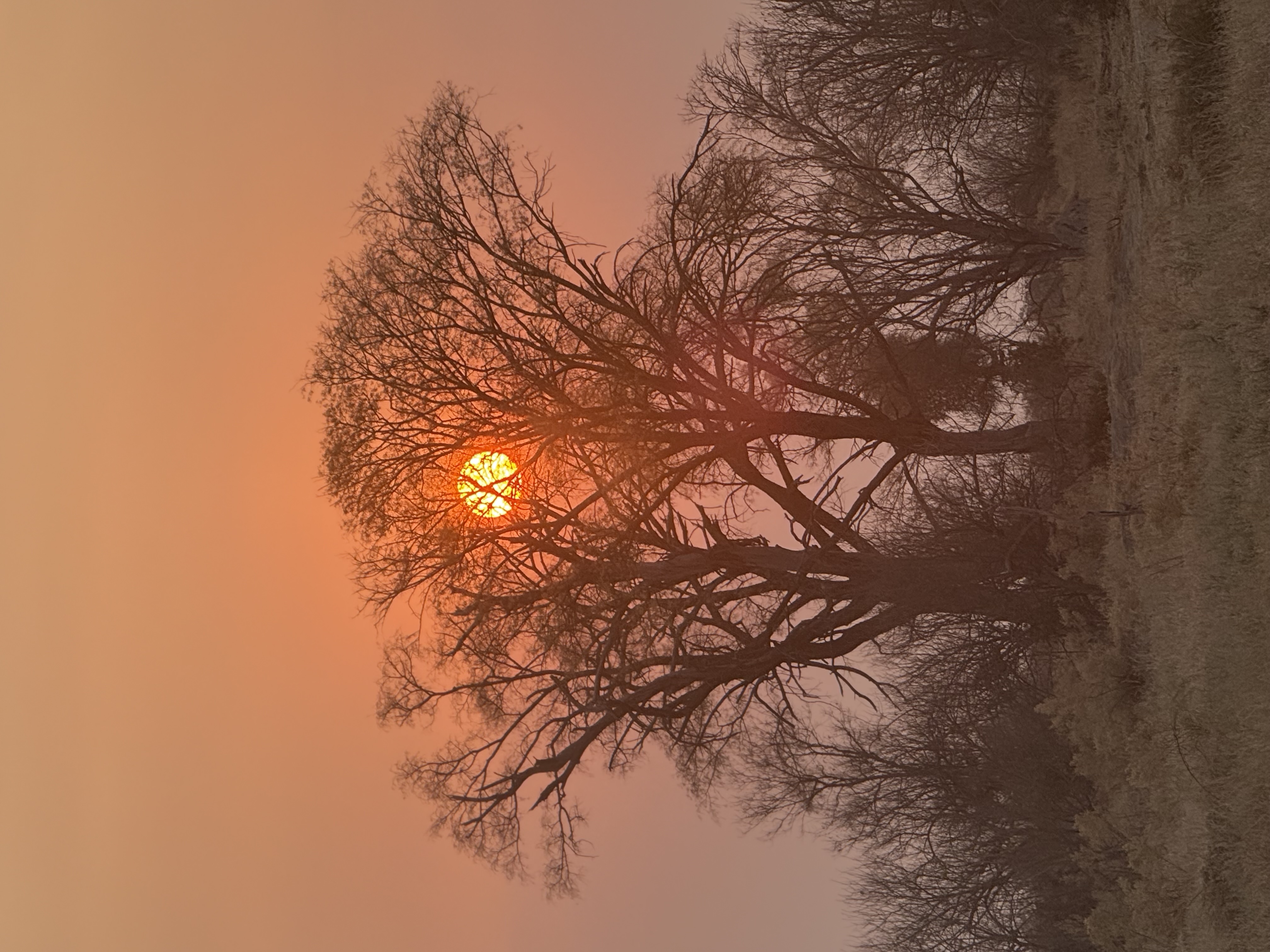
Lion Delay, Mokoro Trip, Kgotla Dinner Sept 11 Thursday
Today started with a lion delay. We were supposed to get our wakeup call at 6 am. The guides check the camp for animal activity and make sure it’s safe, then walk to each individual tent to wake us. Once they wake us, we are allowed to leave the tent and walk to the lodge area on our own without an escort. This has been the standard procedure at all the camps. We had been hearing the lions in the camp all night and our wakeup call never came, so we knew something was up. Pretty soon here came the guides in the jeeps to pick us up. The lions had been roaming the camp all night and had finally left, but were still close by. After breakfast, we headed out on our first game drive, and found two of the large male lions nearby, one resting on a termite mound so he could survey the area, and one resting under a tree, on opposite sides of the camp. They were both very large males with full manes. We also encountered the young male leopard we had seen the day before, and this time we also saw his mama nearby. She is weaning the cubs and this is the first time we had seen her. We watched her for a bit as she stalked an impala, but she was either not that hungry, or she decided the impala was a bit too big to be worth the effort to take it down. We watched the young male climb a couple tress and disappear into the leaves for a nap.
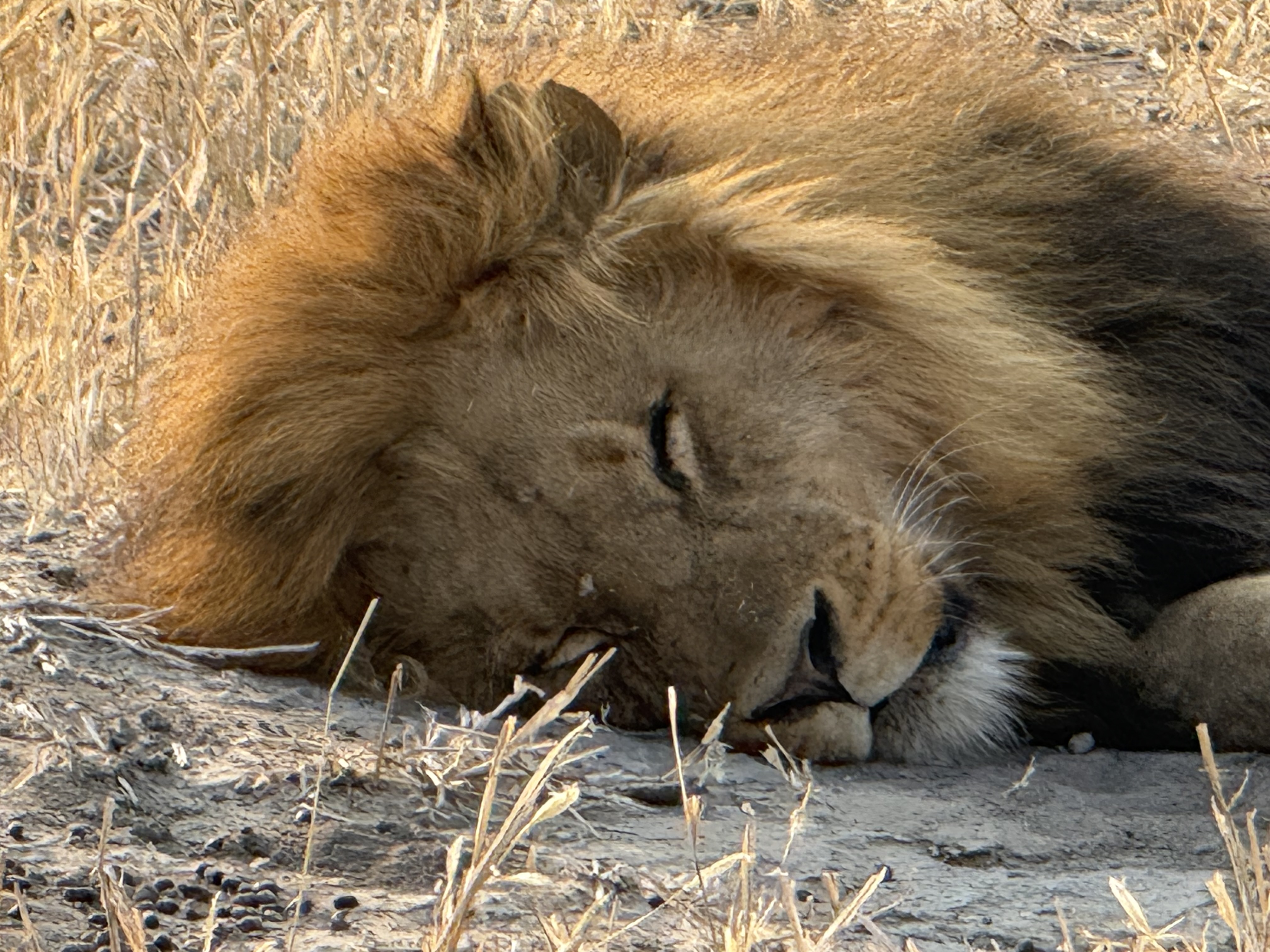
Sleepy lion
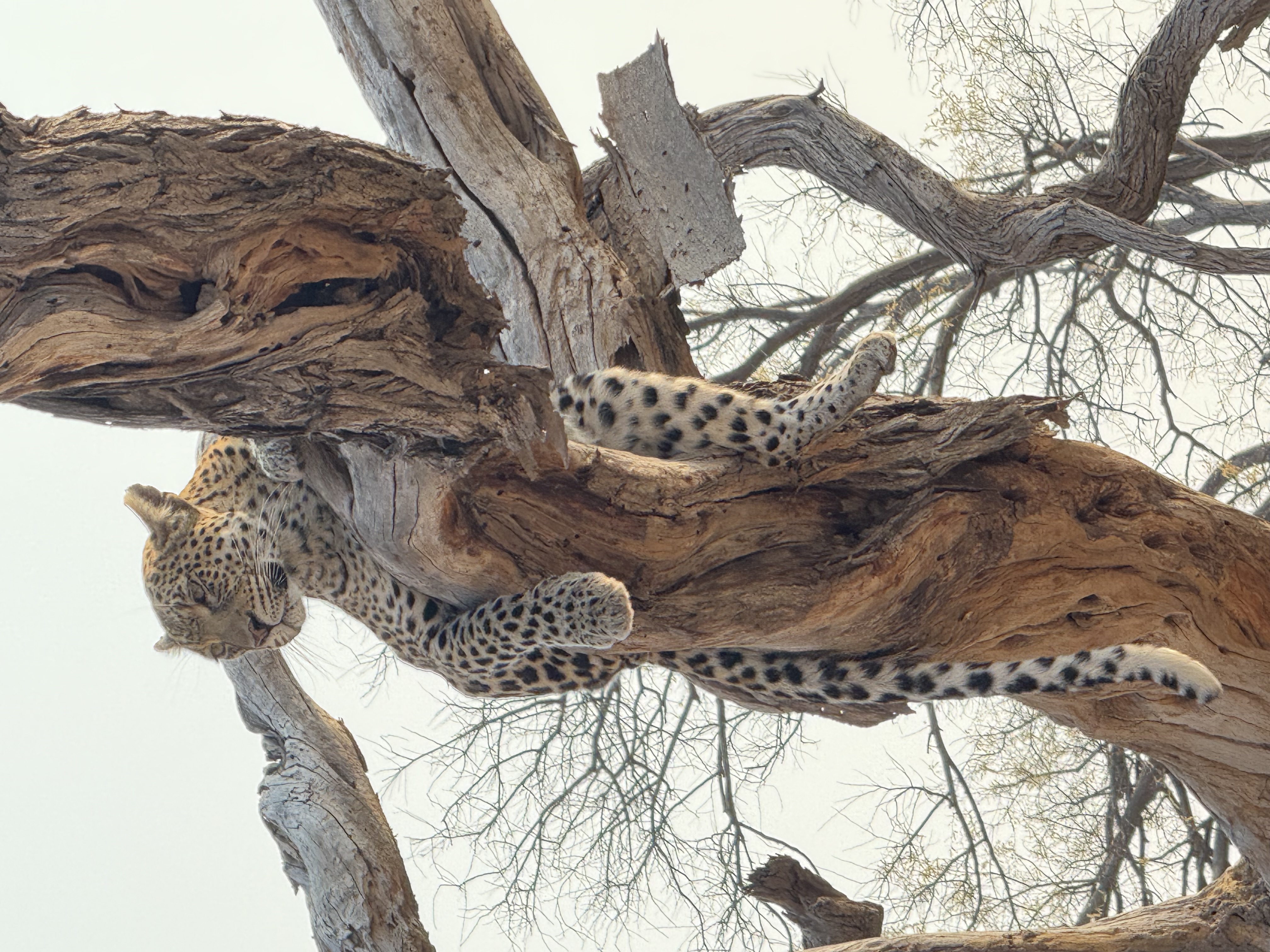
World’s cutest leopard
We continued on to the waters of the delta for our mokoro excursion. A mokoro is a dug out canoe, commonly made from the ebony or sausage tree, and used extensively in the Okavango Delta and on the Chobe River. They are propelled through shallow water by standing in the back of the canoe and using a pole. The locals learn how to navigate them when they are very young and they made it look super easy. We had two people per mokoro, with a guide in the back. When we first got in, it felt super unstable and like we were going to capsize. We soon learned to go with the flow and it felt a bit safer. Mind you, these shallow waters of the delta are inhabited by crocs and hippos, both of which we saw before getting in the mokoro. We set out on a 45 minute excursion and saw lots of interesting frogs, insects, birds, and plants, plus the aquatic antelope, which we had not seen before today. So Many. Different. Antelopes. When our guide Fannah, who’d gone ahead with no passengers, spotted a hippo, we all made a U turn and headed back to shore. Totally safe. Totally. We did have life vests on so our torsos would bob in the water once we were bitten in half by a hippo.
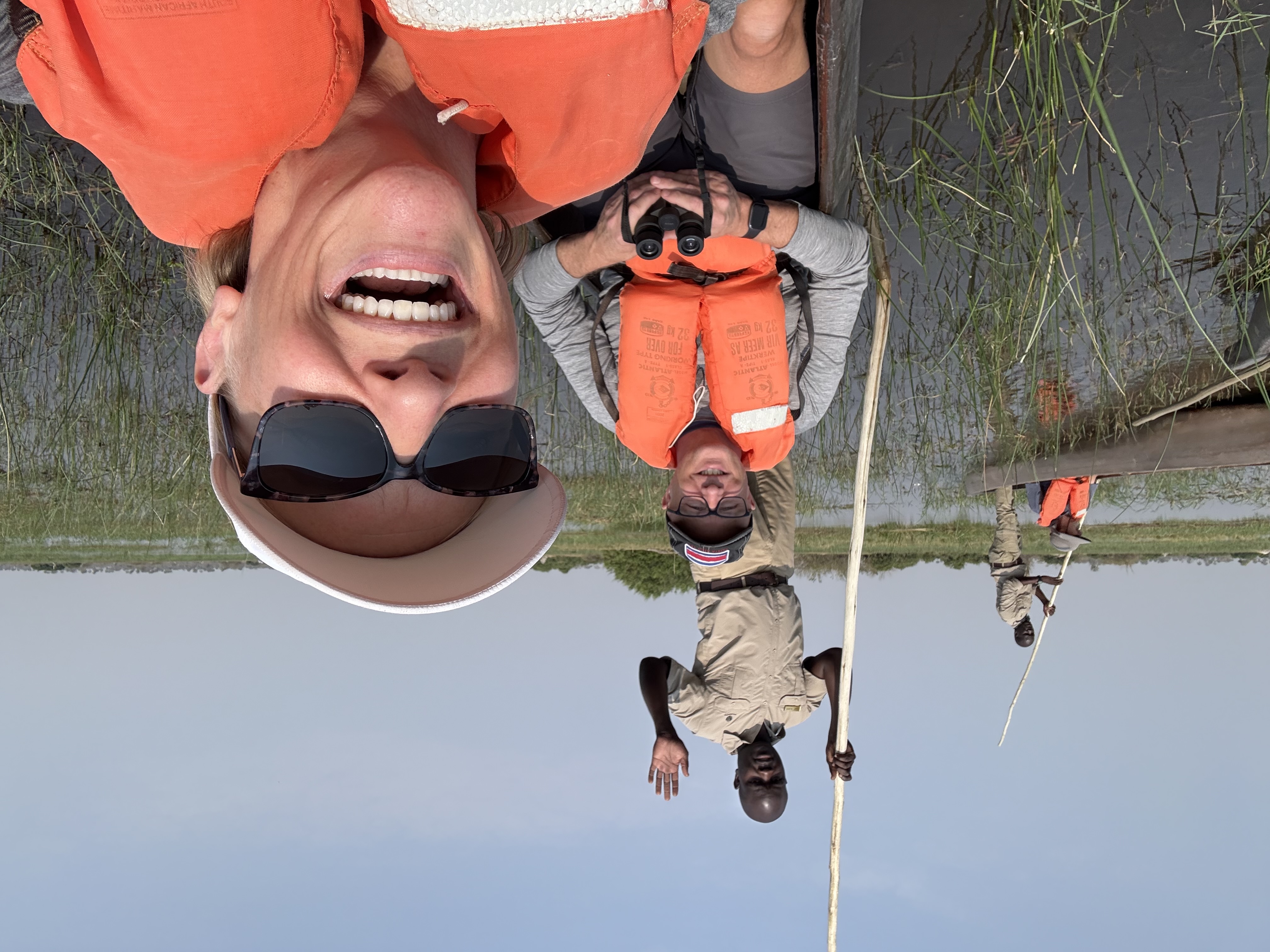
Mokoro excursion
On the way back to camp, we found the big pride of 11 lions resting in the shade of a large tree. It wasn’t super exciting, as they were just sleeping in a paw pile. By the time we got back, it was Africa hot in our tents, so we all hung out in the lounge under the fans until time for our afternoon activities. We had a quick tour of the “back of the house” to see the kitchen, laundry, office, mechanical shop, septic, and solar systems that run the camp. The hardest working people in the camp work in that hot kitchen with no AC or fans. They are cranking out delicious and beautiful food four times per day for us. It was impressive. Of course, the locals are used to the heat, and we are not, but wowsa, it was hot in there.
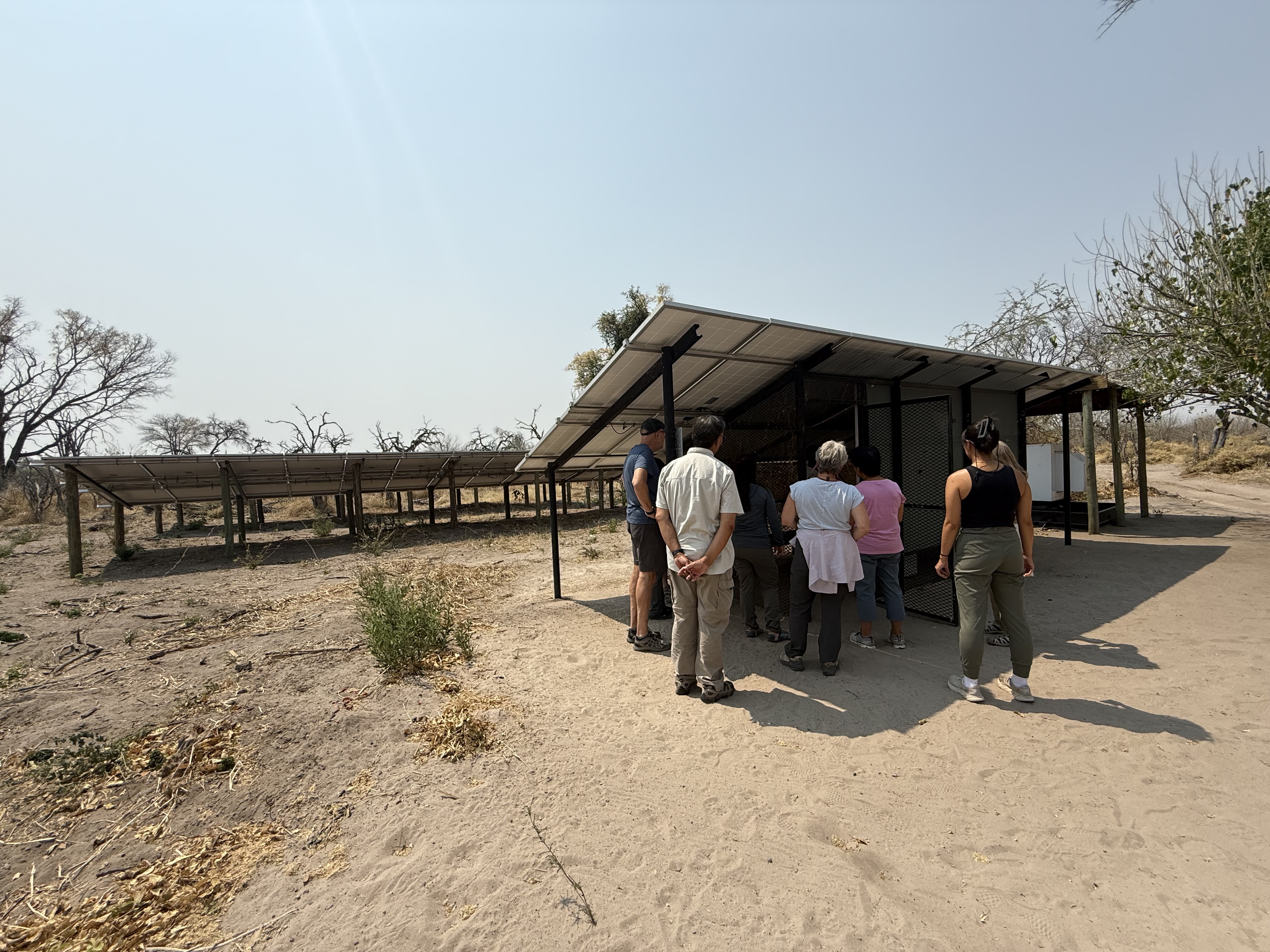
Solar panels at Santawani Camp
In the afternoon our guide, Ona, gave a talk on the geology and development of the Okvango Delta. The waters that form the Okavango River and its delta originate in Angola, and the river used to flow through Mozambique into the Indian Ocean. Long story short, plate tectonics basically caused Botswana to form into a bowl, and now the river fans out into a delta since it can’t reach the sea. The changing geology also caused the Kwando River to make a 90 deg turn and start flowing to the north. On the map, it looks like two rivers coming together, but it’s one river making a left turn. That’s science for ya. Or magic, one of the two.
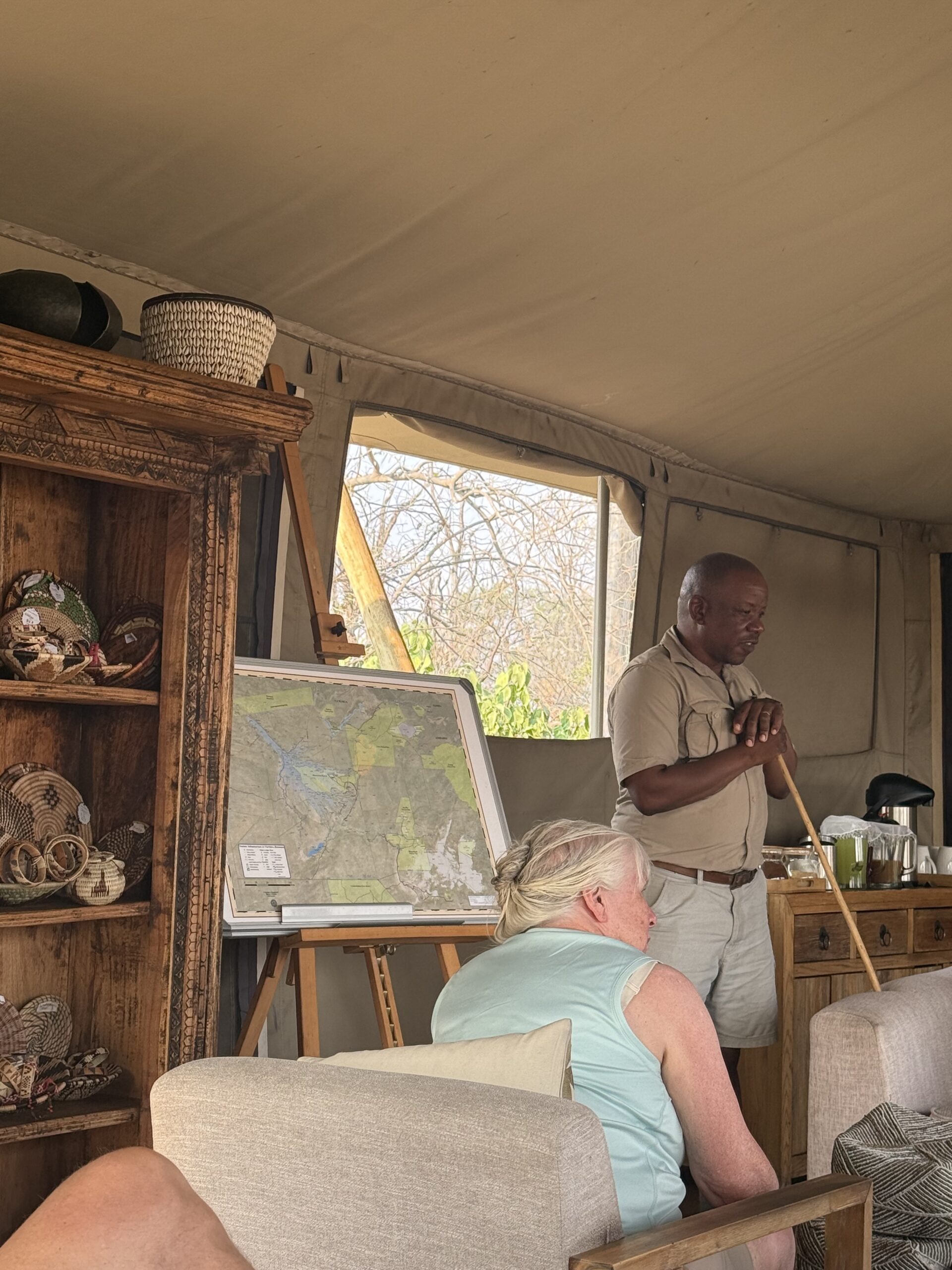
Our guide Ona
We then headed out for our last evening game drive. We spotted the leopard cubs again, hanging out in the trees. We also saw the jackal family with four little jackal babies coming out of their den, before coming across the pride of eleven lions, this time with one of the large males with them for a total of twelve. They were just waking up from their naps and heading out to hunt. We followed them to a watering hole and found a small herd of elephants getting a drink. Let me say a this: I definitely did not sign up to see lions taking down a baby elephant. I signed up to see them taking down an impala, but that is not what the bush gave us this evening. The bush gives what the bush gives. Luckily for us, we were losing daylight very quickly and headed back to the lodge when it got dark. Our guides told us the lions would think long and hard before attempting to take down a baby elephant who had four big mamas with huge tusks surrounding them. So the lions may have gone to bed hungry, or moved on to look for their preferred meat snacks.
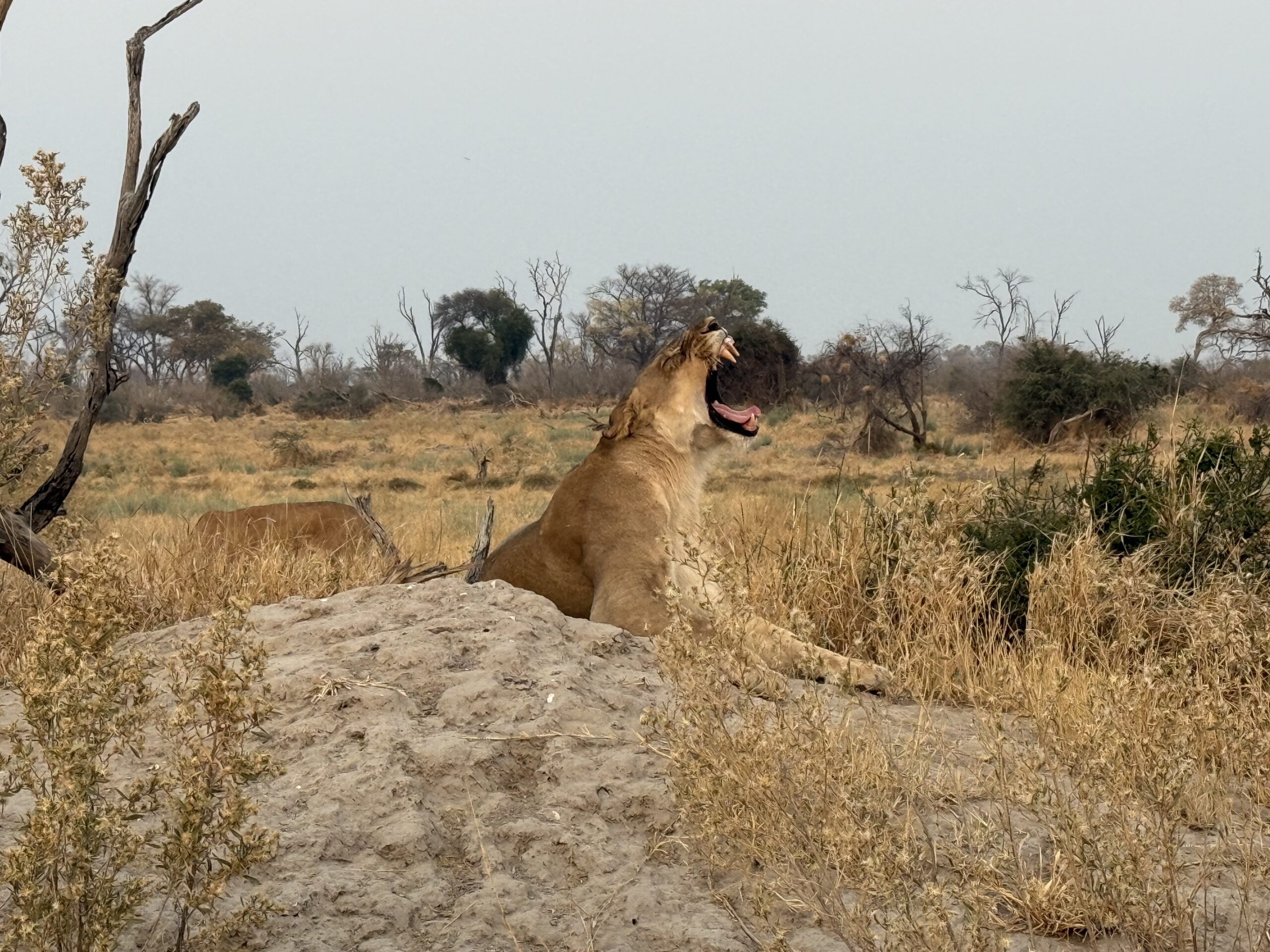
Big yawns means they are about to move out
Dinner was outside in the kgotla area. This is a round fenced gathering place with a fire pit where Botswanans have celebrations, public meetings, and hold councils and court. Dinner was traditional Botswanan fare of beef, chicken, polenta, potatoes, and vegetables. They encouraged us to eat with our hands to for the full local village experience, but I had already tried that and failed miserably, so decided on the utensils. They sang for us and we went around the groups saying the things we were thankful for on this trip. Of course I got all choked up when I tried to speak. I’m not joking about this being a life changing experience. Yes, we’ve seen tons of animals and beautiful scenery, but meeting the people and gaining an understanding of how they live, how our cultures differ and how they are the same, and having authentic conversations with people a world away has been humbling and eye opening. Not to mention how they all rolled out the red carpet like we were royalty at every camp we visited. They see a new group of people every three days, and they still give us the full experience every time. From Zimbabwe to Zambia to Botswana, this has absolutely been the best experience of my life.
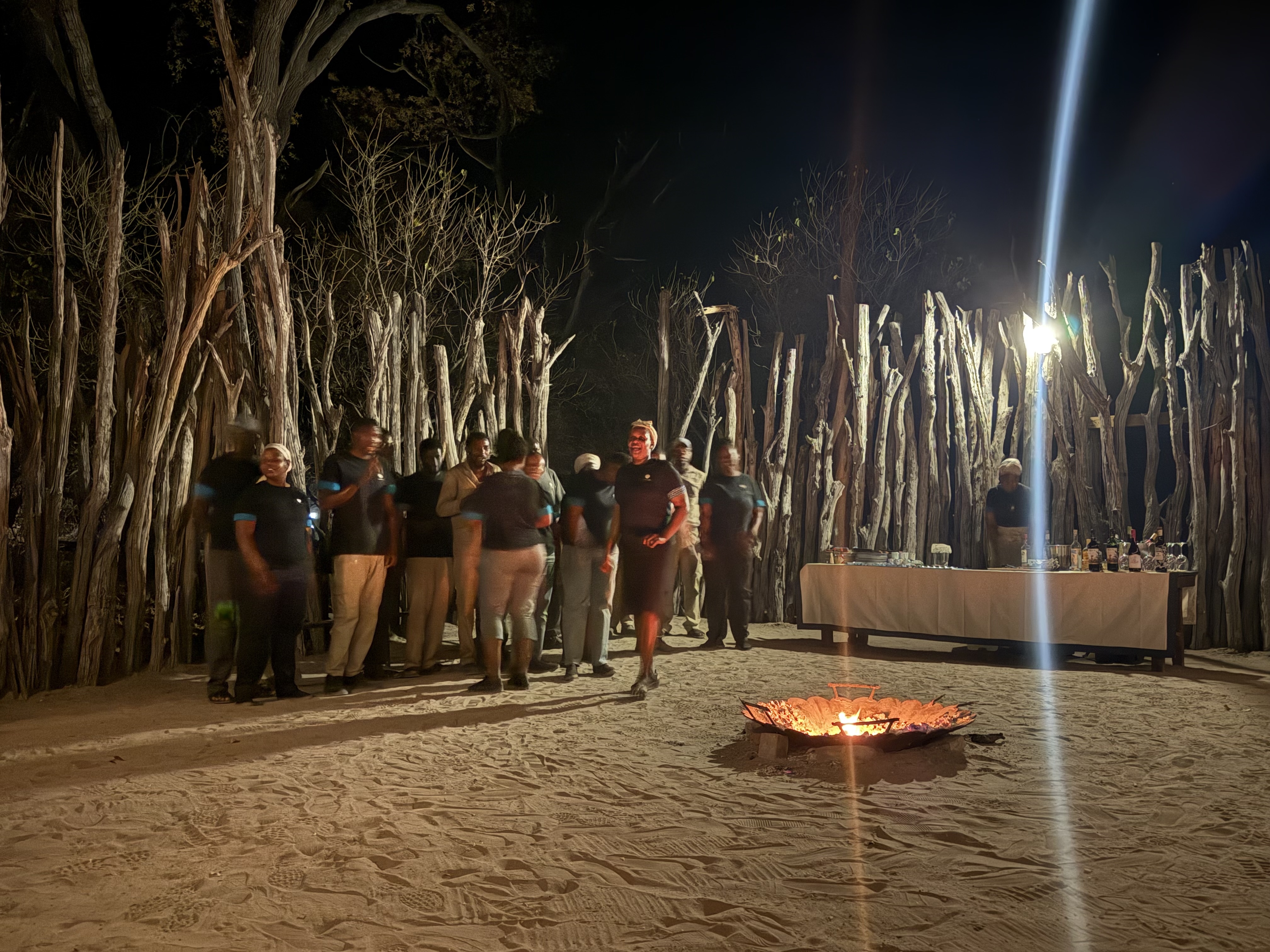
Santawani camp staff at our final bush dinner
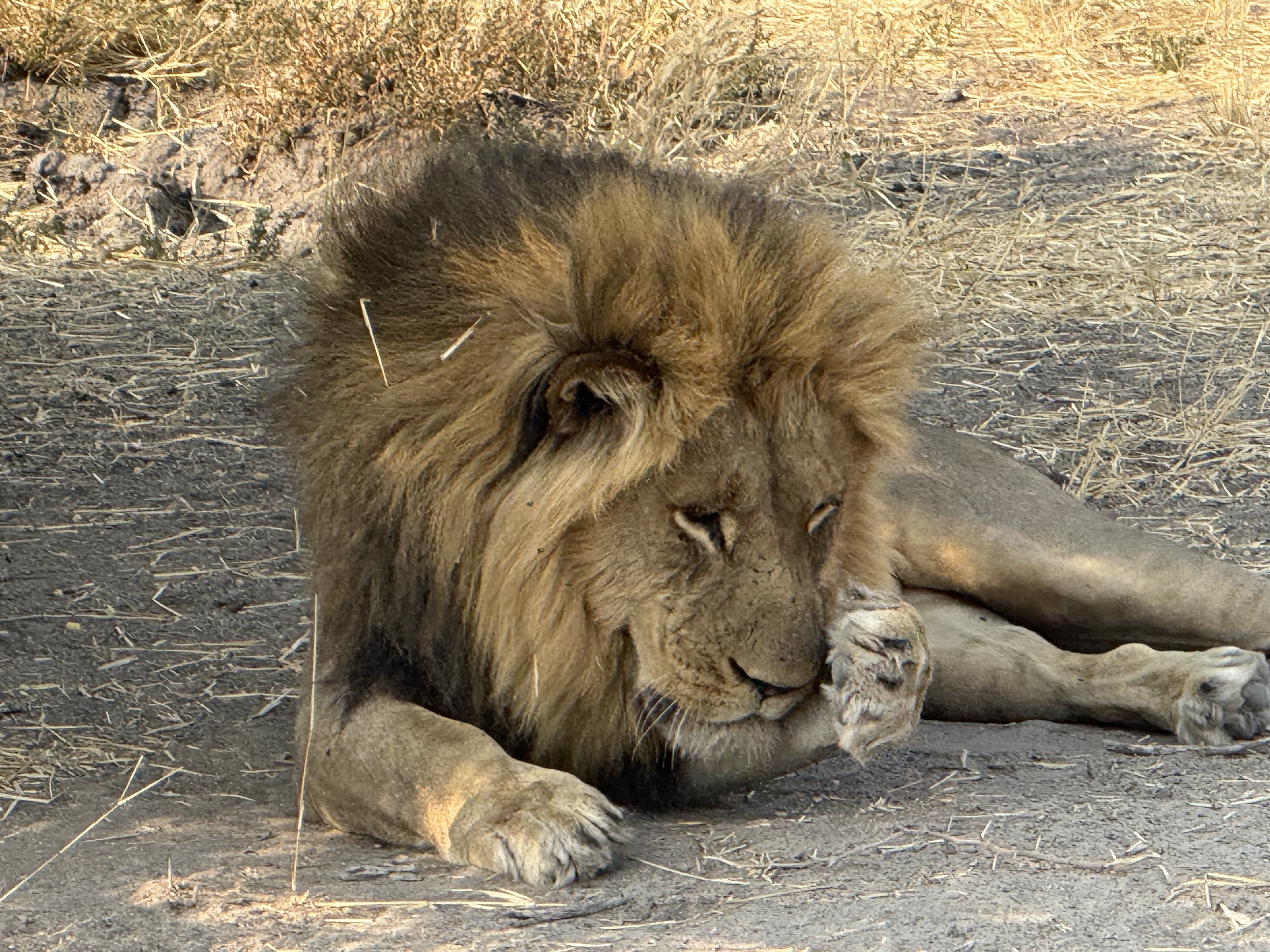
Washing his face…just like our cats at home do
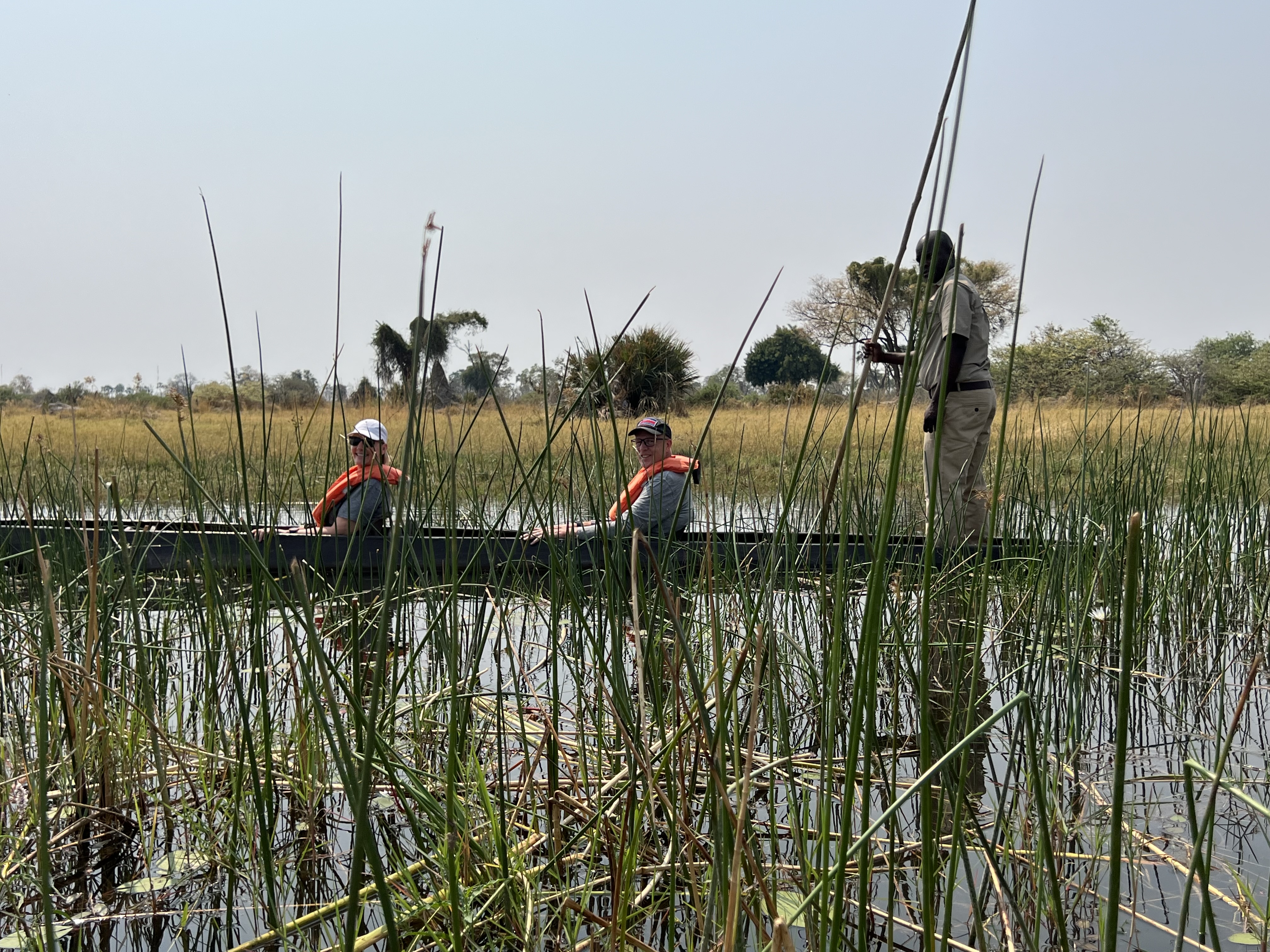
On the hippo watch
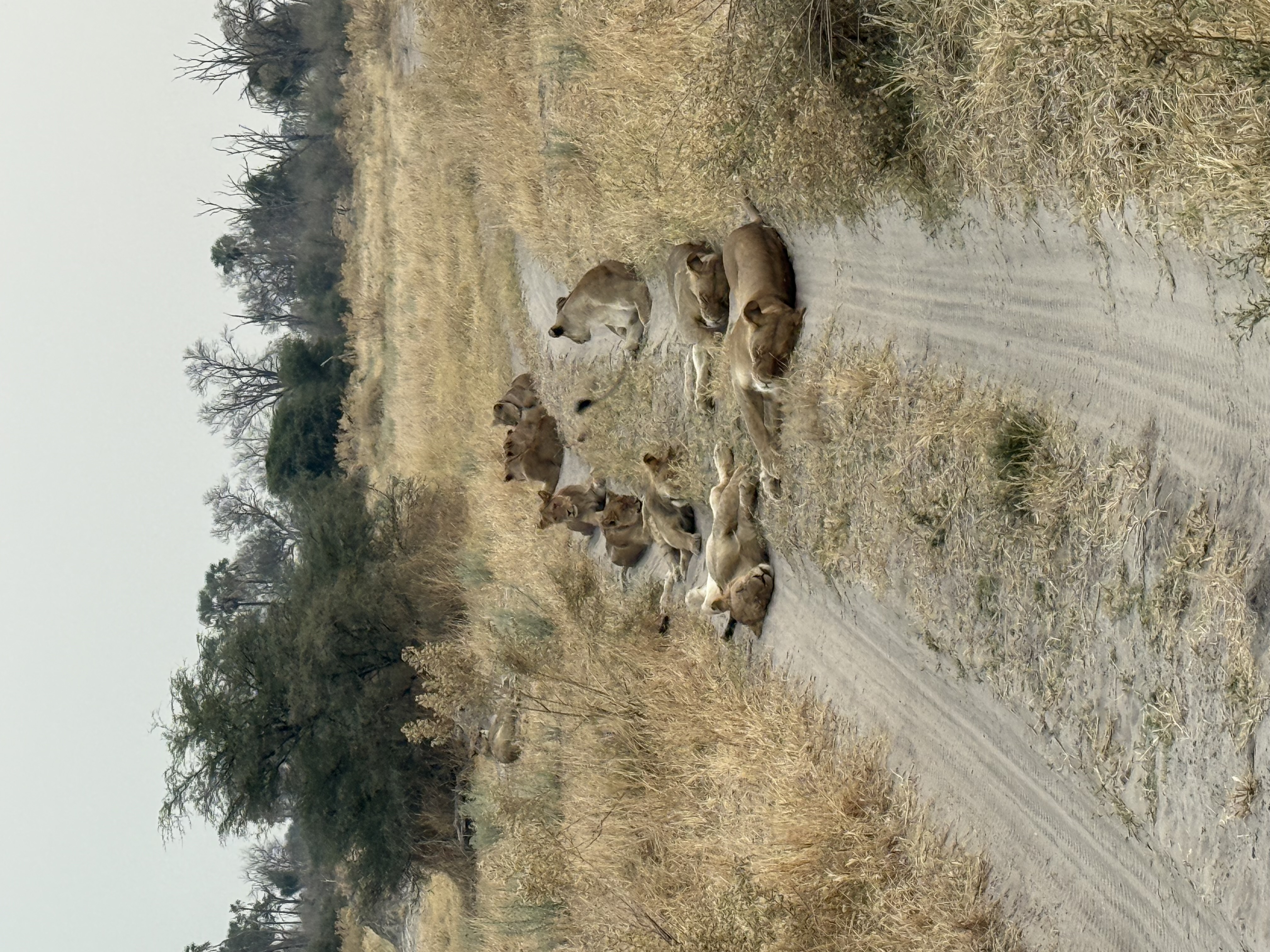
Road block