
Egypt and the Eternal Nile
Join us as we sail the Nile and visit temples, monuments, and pyramids.
For the best viewing of this page on a tablet or phone, turn your device sideways.
We took our first trip with Overseas Adventure Travel in January 2025 and it definitely did not disappoint! OAT had come recommended by a few people we know, and we had become a little disappointed with the size of the group tours on Viking, so we booked with OAT. Egypt had long been on our radar, and we were very happy with the decision to go with OAT.
The Itinerary
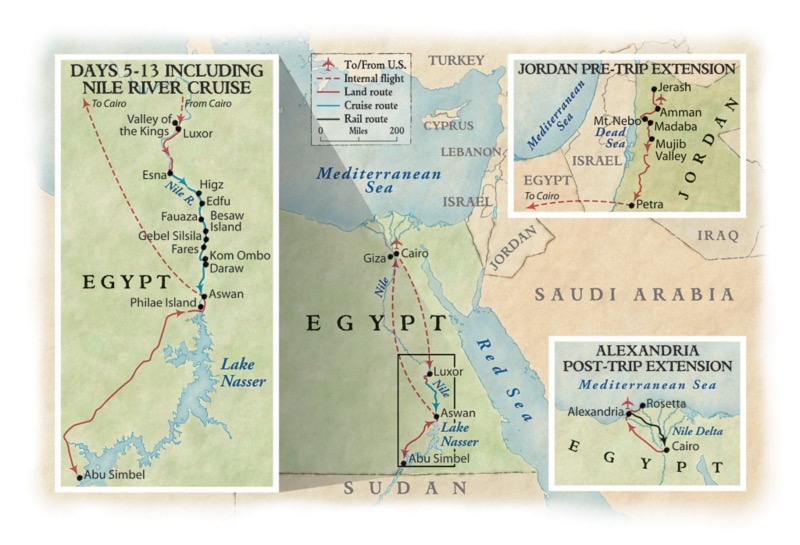
We booked the trip called Egypt and the Eternal Nile by Private Classic River Yacht. Sounds fancy, doesn’t it? This trip is 16 days, including travel days. It includes three nights in Cairo, two nights in Aswan at the famous Old Cataract Hotel (featured in Death on the Nile), one night in Abu Simbel, five nights on the yacht, two nights in Luxor, and one final night in Cairo. Our trip sailed north from Aswan to Luxor, but on some dates the ship sails south from Luxor to Aswan. Your itinerary might be slightly different depending on the direction you sail on the Nile portion of the trip.
Weather
January was the ideal time for us to go. I am a huge hot wimp, and definitely do not like to travel in the heat. We had beautiful weather and highly recommend going in the cool season from December through February. The rest of the year is So. Damn. Hot. No, thank you! We had amazing weather that ranged in the 70’s and low 80’s F for the entire trip. Nighttime lows dipped into the high 40’s and 50’s, so the evenings were perfect.
Trip Experience Leader
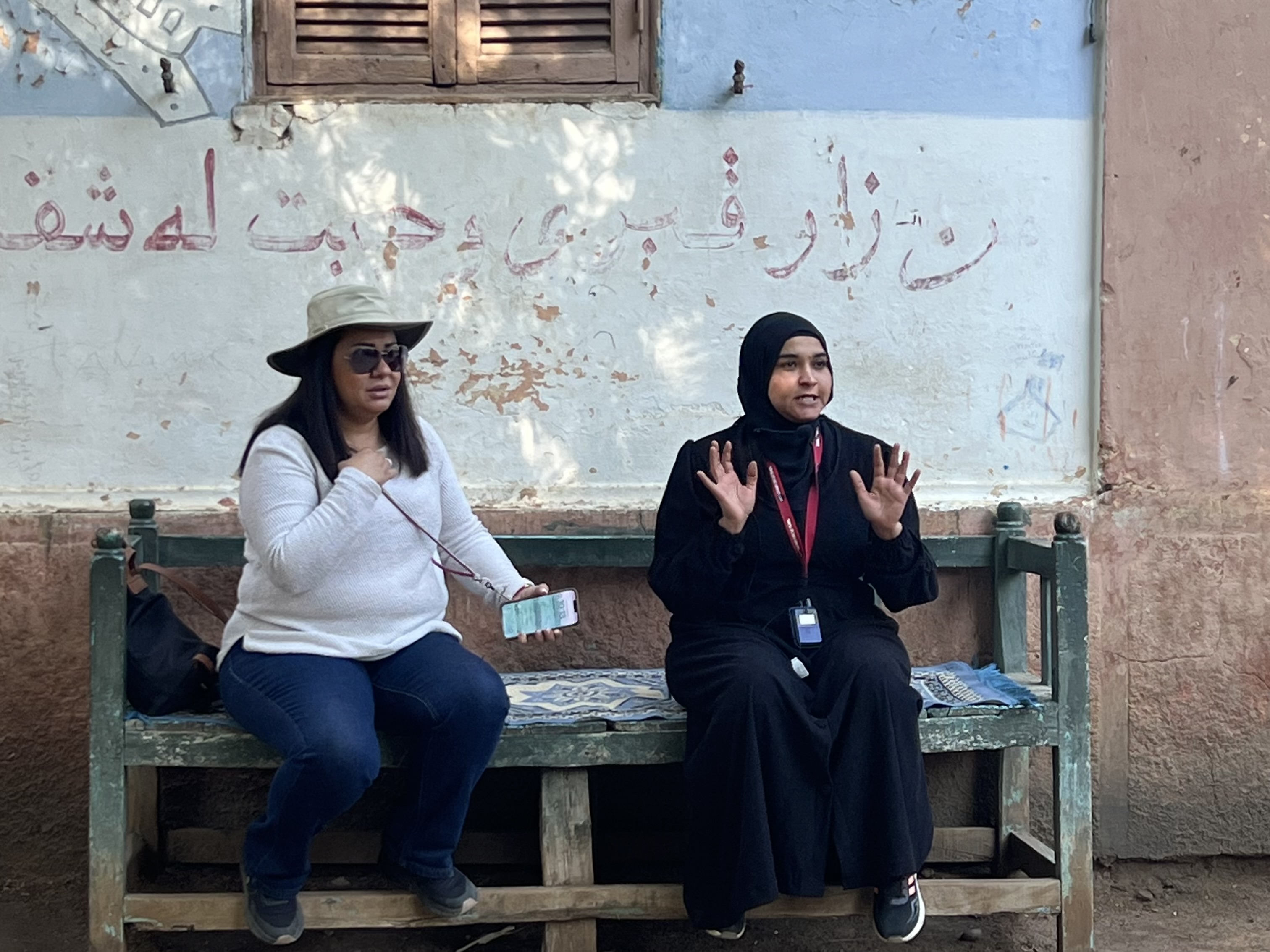
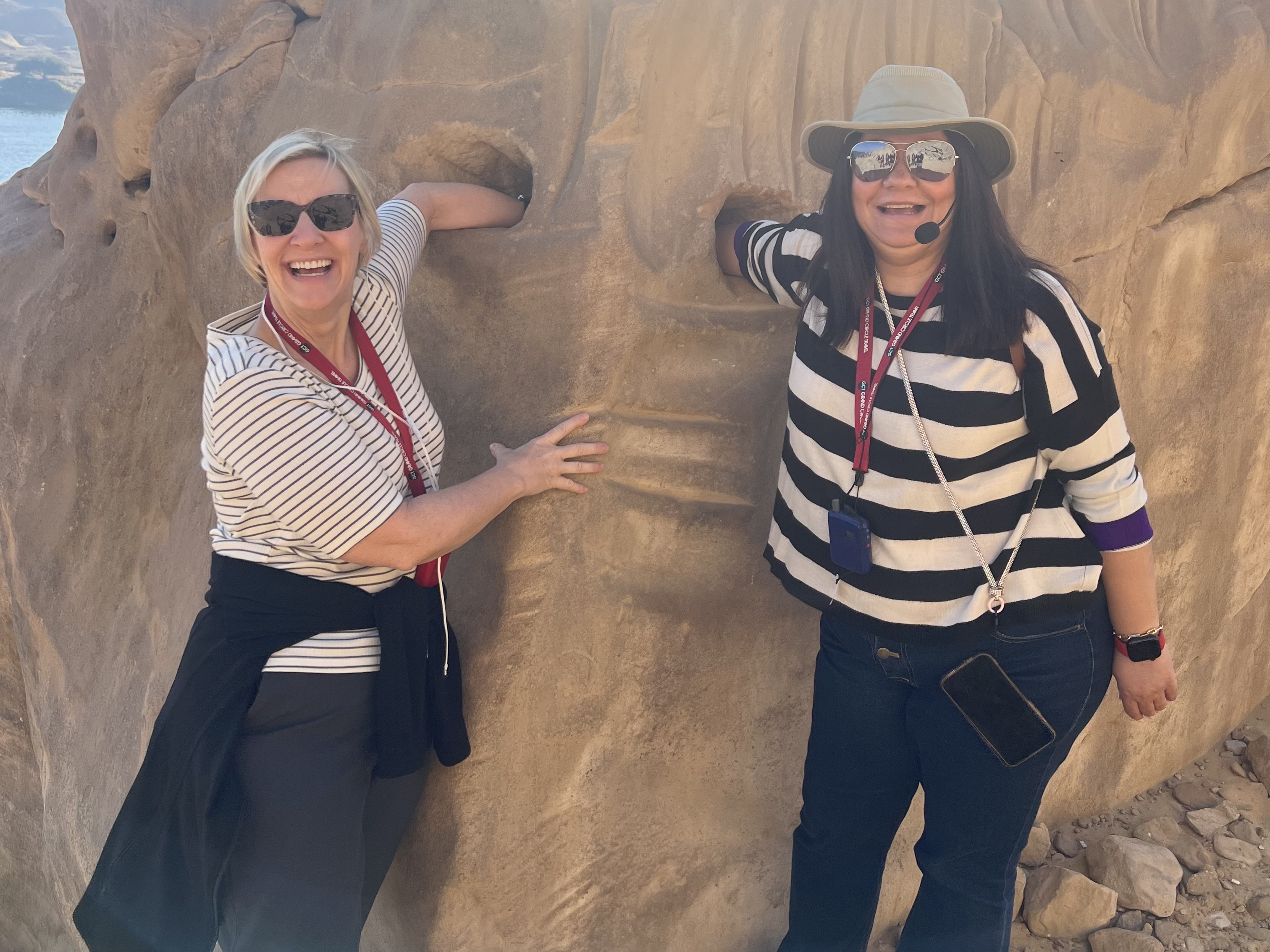
All OAT trips include a dedicated Trip Experience Leader, who will be with you every day of the trip. On Egypt itineraries, the TEL is a highly educated Egyptologist who will share all of their knowledge and make ancient Egypt come to life. Our TEL was Gladys Haddad and we cannot say enough great things about this lovely lady! She was the bomb! The TEL will contact you via email a week or two prior to your trip with some important information. We were able to ask her a couple questions and were glad to get her guidance. I was concerned about packing a prescription pain medication called Tramadol that is not allowed in Egypt. I have a chronic pain condition, and long days touring require me to take it or risk missing the next day of touring. I had already contacted the Egyptian Consulate office in Chicago with my questions, but they were of absolutely zero help. Zip, zilch, nada. I definitely did not want to end up in an Egyptian prison (!) while my husband sailed the Nile without me.
Gladys instructed to me to pack it in its original container, take only the amount I would need for the trip, and bring a letter from my doctor explaining the need for the medication. I did all this, packed all my meds in my personal item, and no one in customs ever asked to see any of the medications or look at the documentation. I was glad to have her guidance and would do the exact same thing again, as you are always expected to follow all the rules. Customs agents are funny like that.
Communication
You will need to download the WhatsApp app for this trip. After the TEL contacts you prior to the trip, he or she will set up a WhatsApp group chat and will use that to communicate with the group once you are in Egypt. It is very common for tour guides outside the US to use this app. WhatsApp runs on Wifi or cellular data and is free to set up and use. Download it before you leave the US and turn on notifications so yo don’t miss any important info.
Busses and Porters
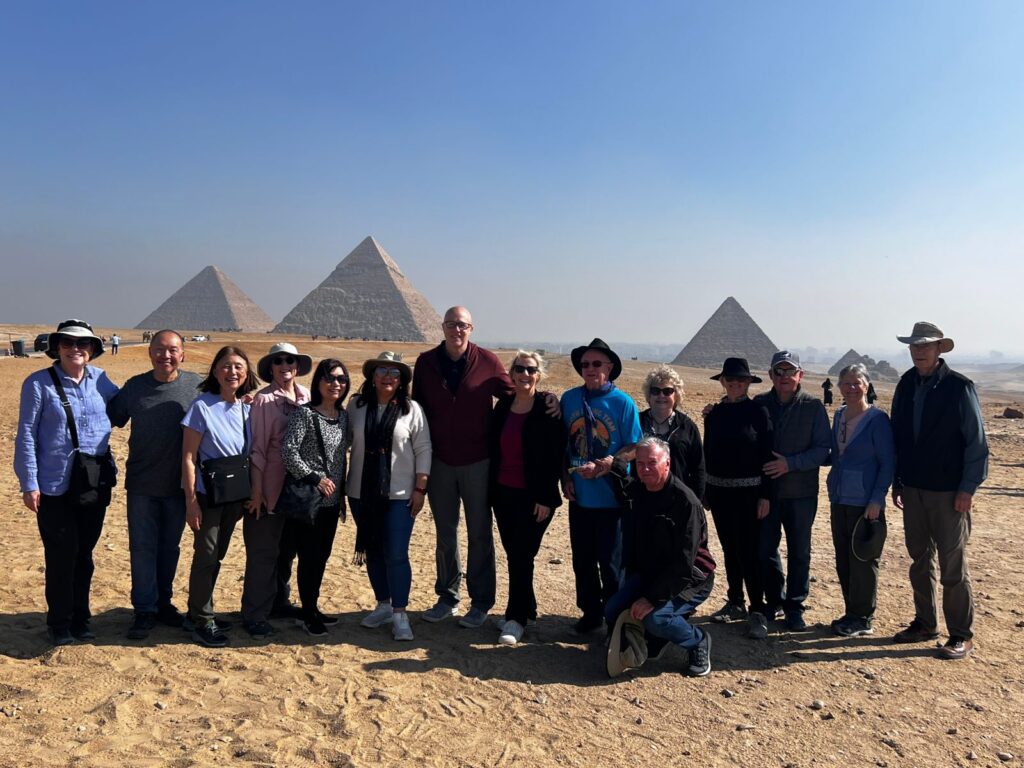
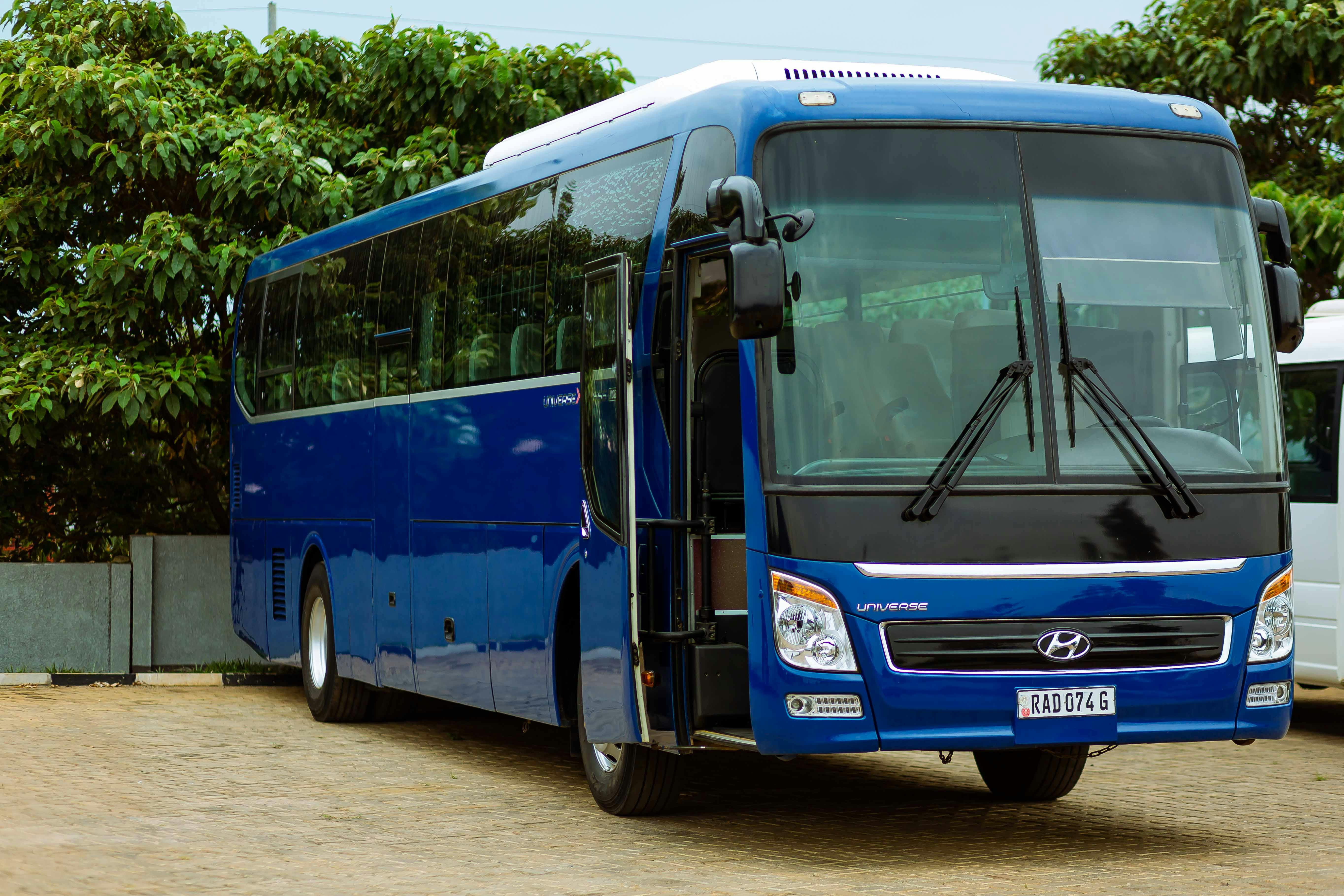
OAT also has dedicated bus drivers and porters at all hotel locations to handle your luggage. (We are light packers and pack in a carryon bag and a backpack each, so we handled our own.) The buses we used were full size tour buses, had a useable restroom on board that many took advantage of, and were stocked with coolers full of complimentary bottled water. The air conditioning was great, and the speaker system was a plus. Gladys spent a lot of time while we were in route to a destination explaining what we were going to see or telling a story about an ancient Egyptian. We only had 14 people in our group so we were able to spread out all over the bus and be comfortable. The maximum group size for this trip is 16.

Drinking the Water
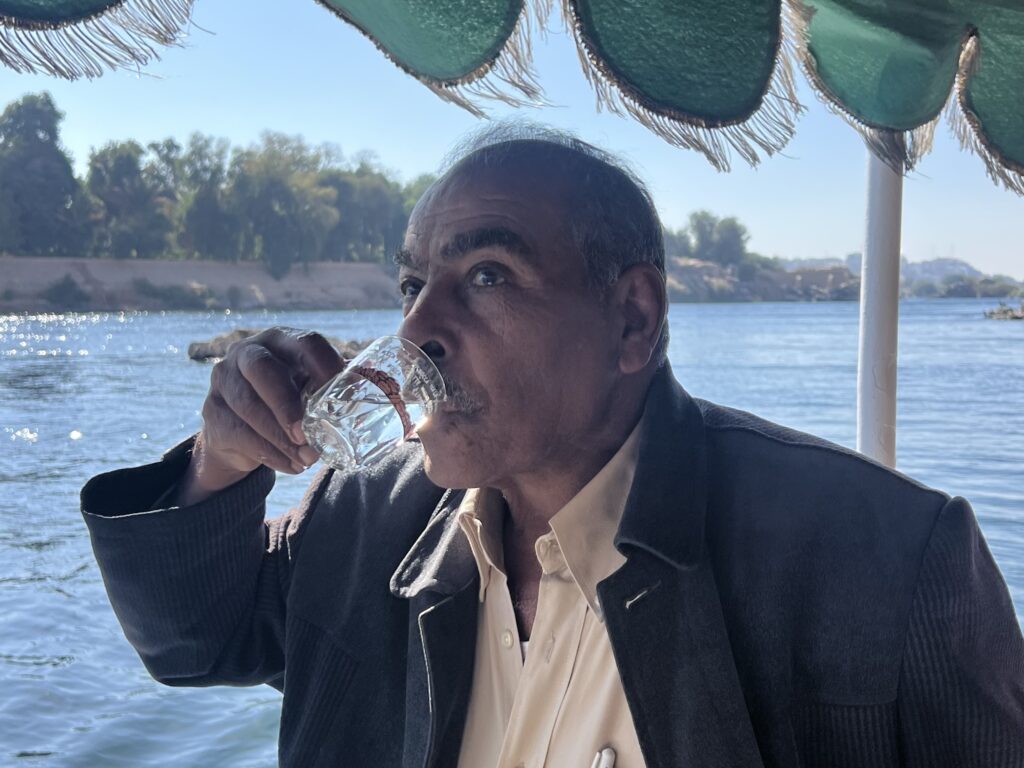
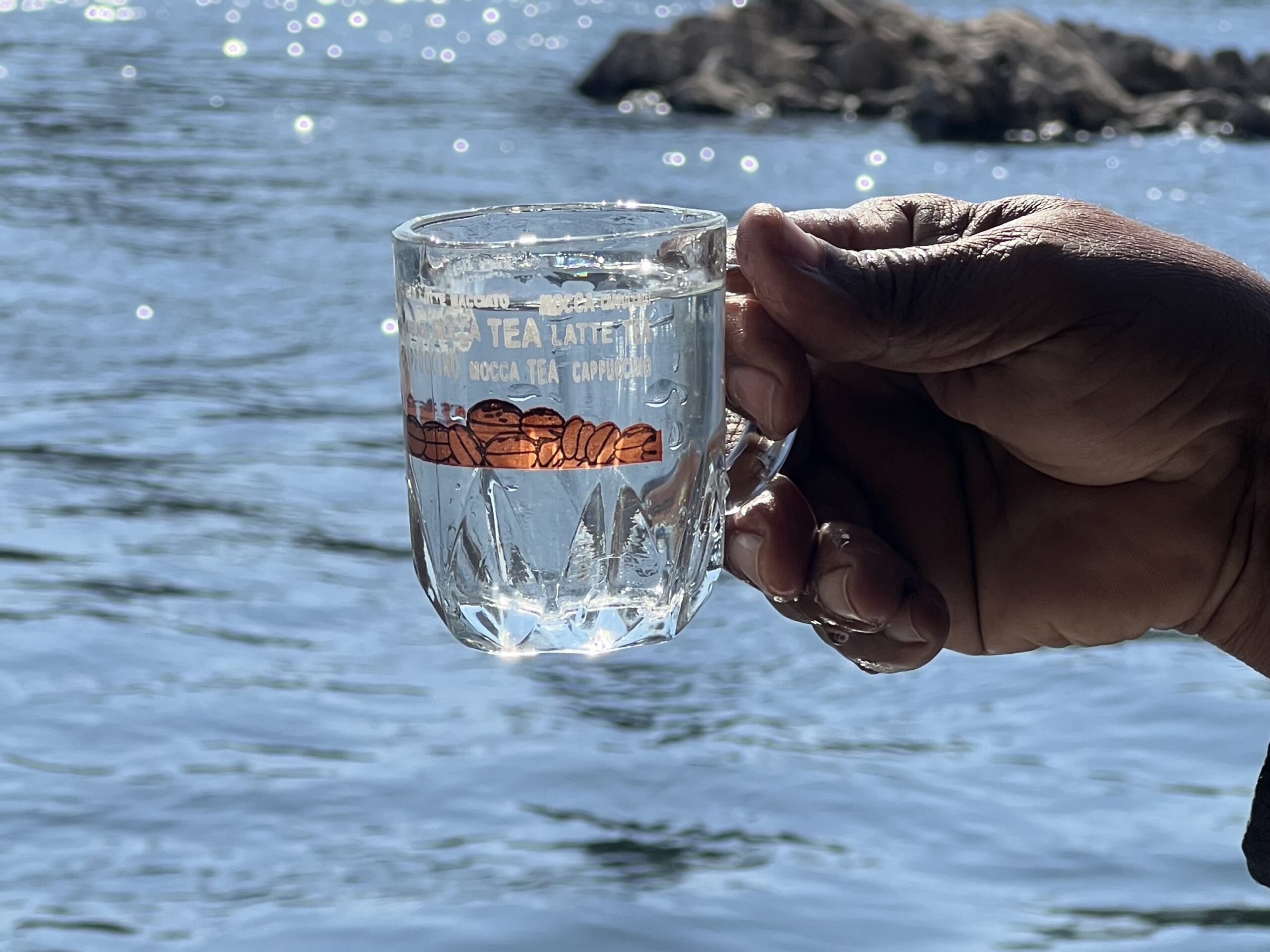
Speaking of bottled water, those of us not from Egypt cannot drink the tap water in Egypt. We lack the gut microbes to handle the native flora in the water, and it can give you diarrhea or “Mummy Tummy.” Complimentary bottled water is provided in all the hotels and you must use this water for drinking and to brush your teeth. Try not to let the shower water get into your mouth either. I know I wasn’t perfect with this, but neither of us were ever sick.
Medications
Speaking of Mummy Tummy, OAT will send you a very thorough list of things you need to take on this trip, including certain medications. This info can also be accessed on their website. We asked our doctors for prescriptions for antibiotics to cover respiratory and gastrointestinal issues. We also asked for Paxlovid in the event one or both of us got COVID while on the trip. We filled these prescriptions a couple weeks before the trip.
In addition, we packed COVID tests, masks, Excedrin, Advil, Sudafed, Mucinex, Benadryl, Zyrtec, Pepto Bismol, Zofran, cough drops, Imodium, and stool softeners. Can you tell I’m an RN? I had every possible ailment covered! I like to be prepared, and while we could probably find most of these things in Cairo if needed, they would not be readily available in the villages, and let’s face it…when you need any of these, you need them now.
I purchased most of these in blister packs when available to take up less space. When I had to purchase a bottle, I transferred a few pills to small zip top pill bags for packing, and wrote the name of the medication on the bag with a sharpie. I packed my prescription medications in small zip top bags also. I asked the pharmacist for extra labels that I applied to the small bags to reduce the space and weight that the bottles would have taken up. I carried a paper copy of all my prescriptions, and the above mentioned letter from my doctor for the Tramadol, since it is a controlled substance. I also take a few over the counter vitamins and supplements, but I pare these down to just the essential one or two when I take a trip.
As far as vaccinations are concerned, there were none recommended by our doctor or by OAT for this particular trip. As an RN, I had been vaccinated for Hepatitis A and B years ago. Hep A is spread by contaminated food or water, so my husband chose to be vaccinated for both Hep A and B prior to this trip.
Medications really are nothing to worry about. Just follow these common sense guidelines and you will be fine. Customs agents don’t want your Tylenol, and don’t care about your vitamins. They are looking for people smuggling actual drugs, not casual tourists with a few meds in their bags.
Tipping
Tipping in Egypt is expected everywhere you go. Most of the public restrooms were 10-20 Egyptian Pounds (EGP), which is about 40 cents US. It was easy to use our ATM card at the bank inside the Marriot Hotel in Cairo on our first day to get some small bills for tipping and souvenirs. The 10, 20, and 50 EGP are paper notes instead of coins. Apple pay and credit cards are widely accepted in larger tourist areas like hotels, restaurants, and museums. We were advised to use only cash at all the vendor locations at the attractions. See our article on using ATMs while abroad here.
Vendors
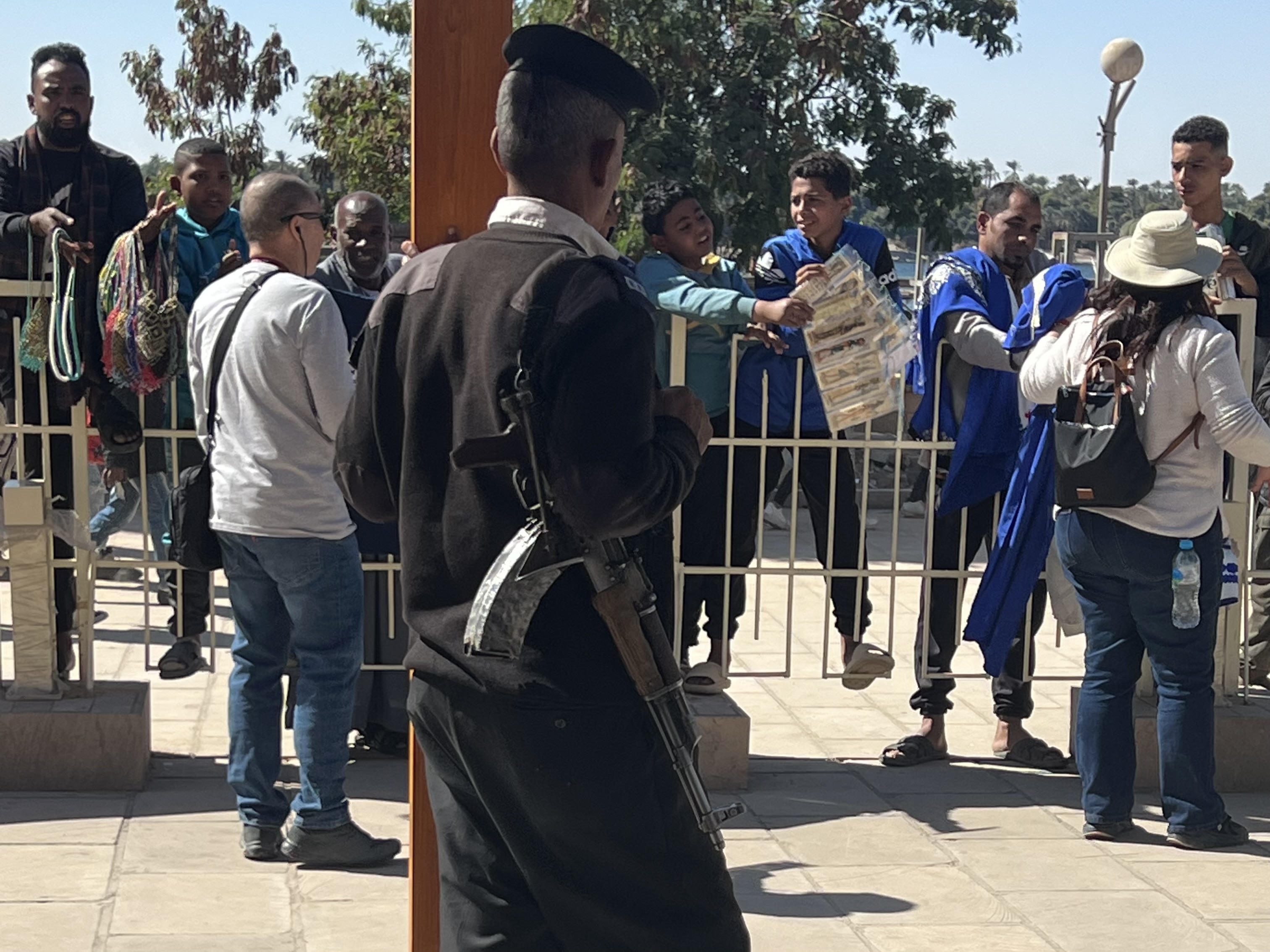
Vendors. So. Many. Vendors. They are everywhere you go, and they are unavoidable. Most tourist sites direct you through the vendors to leave the site, like a gift shop at the end of a museum in the US. The vendors can be relentless, but we never had any trouble. A smile and a firm no thank you does the trick. If you stop to talk, you will be bombarded with more vendors. This is fine if you want to buy something, and many in our group did buy on occasion, including us. Just be prepared and learn how to politely and respectfully bargain for what you want. These vendors are all trying hard to make a living, and most are kind and honest. Don’t be surprised to see many of the vendors are young children in locations outside of official vendor stands, such as at Kom Ombo. Your TEL can direct you to reputable shops in the cities also. I purchased a cartouche from a silversmith that Gladys recommended near the hotel in Luxor.
Dress Code
The dress code for this trip and for Egypt in general is very casual and conservative. Dressing conservatively for women generally means covering your shoulders, no low cut shirts that show cleavage, and dresses, skirts, or shorts that come at least to the knee. (Resorts on the coast are the exception to this rule.) This is not required, but it is appreciated when visitors dress more in accordance with the local culture. I’ve read accounts from other bloggers that some men can be a bit assertive with cat calling and whistling at women who are dressed less conservatively. I interacted with several men, young and old, and they were all very kind and respectful.
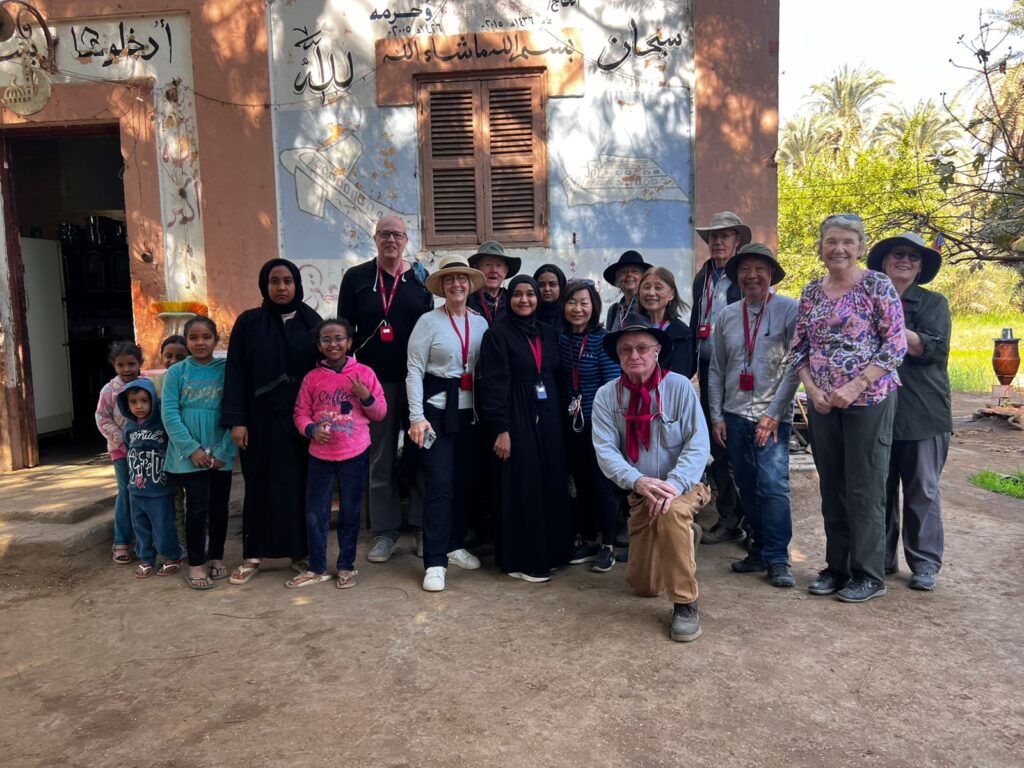
Egypt is about 80% Muslim, and while we saw women in Cairo in jeans or pants, most of the women and men in the smaller villages were wearing the traditional galabeya. It is personal choice for Muslim women to cover their hair and is not required by any law. In the cities we saw more women without a head covering, but in the villages, all of the women wore a head scarf. As tourists, we were not required to cover our hair in either of the mosques we entered in Cairo. The Muhammad Ali mosque, which we did not visit, does require women to cover their hair.
Packing
We packed lightweight quick dry clothing and layers for this trip. We like nylon Columbia hiking pants (or something similar) and merino wool tee shirts, sweaters, and jackets, and most people on this trip were wearing similar casual clothing. I always pack at least one casual dress or skirt for the occasional dinner when I want to get out of touring clothes. We always plan to sink wash a few items on every trip so we can pack a bit lighter. They are dry the next morning and are ready to wear. I just used the soap or shampoo from the hotel and the ship to sink wash our clothes. See my related article on why we love merino wool clothing here.
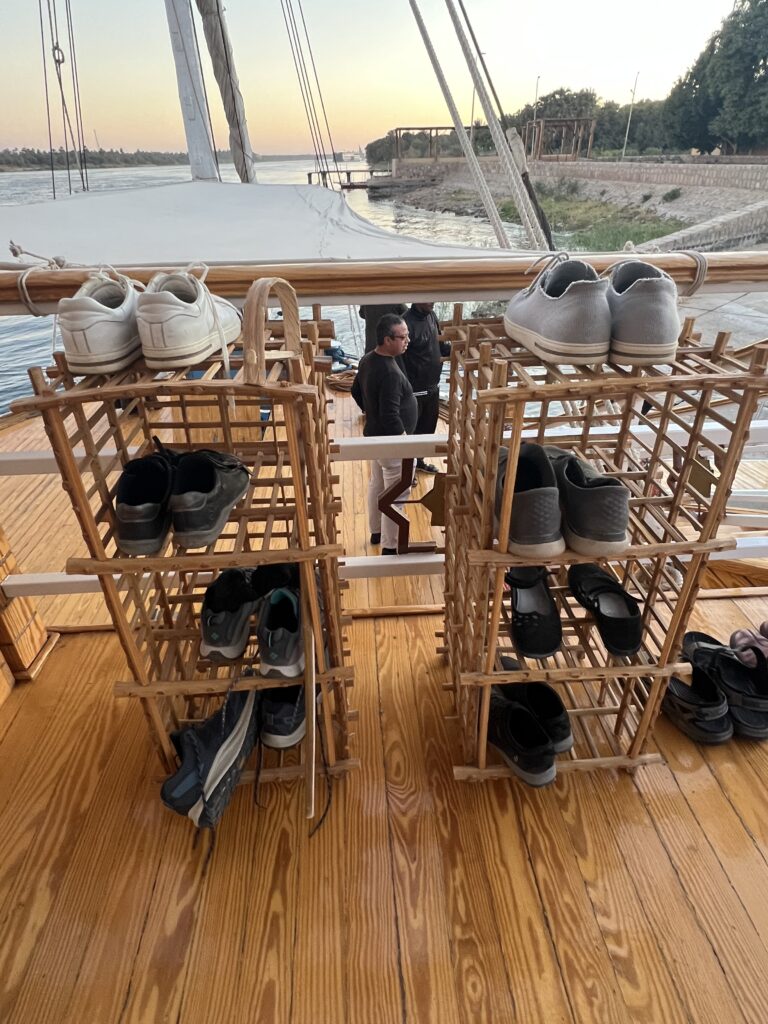
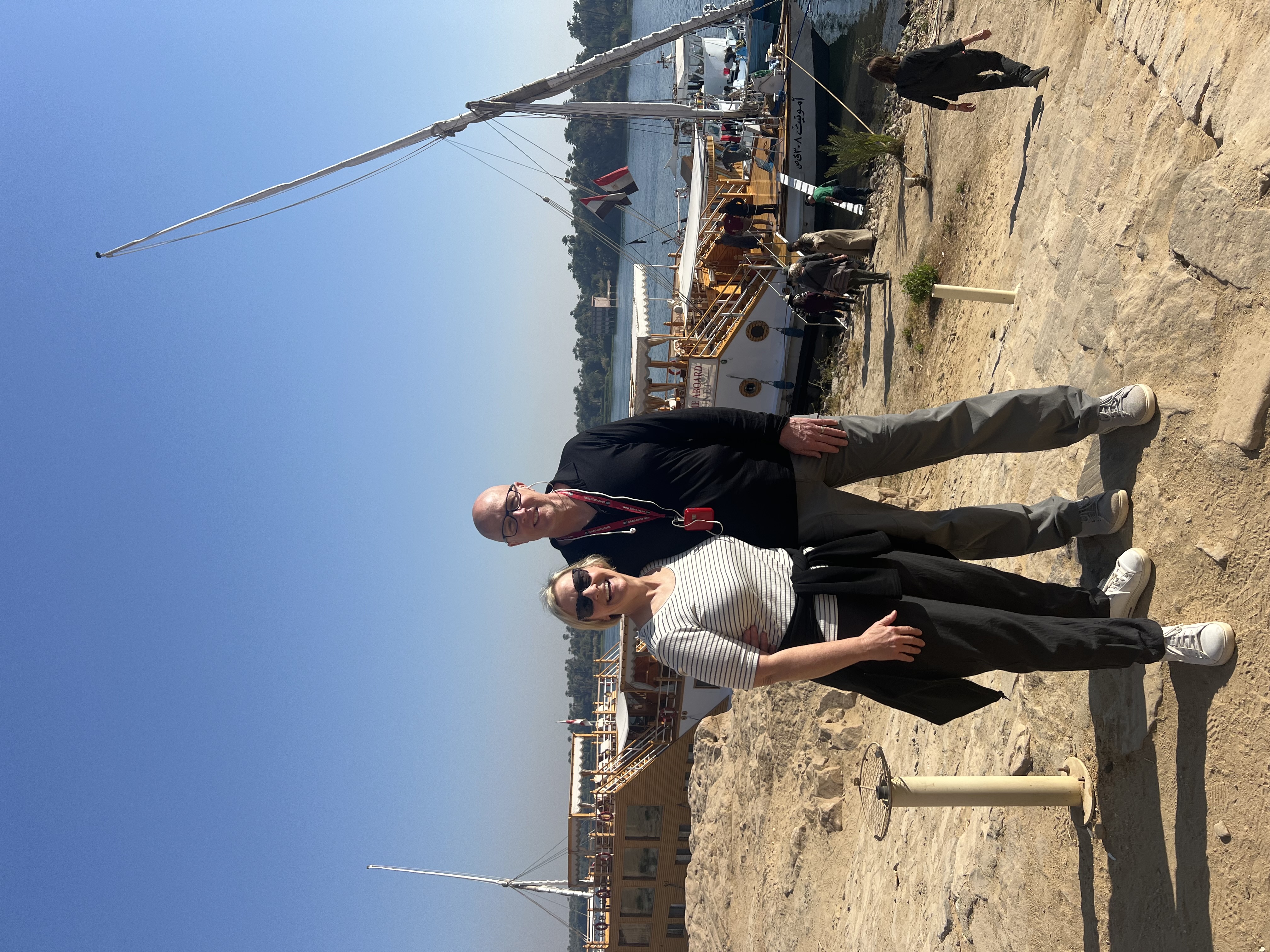
We wore regular sneakers for all the touring days and flip flops or house slippers on the yacht. No need for hiking shoes or boots for this trip. Comfortable footwear is the key. You will need a dedicated pair of shoes (closed toe are recommended) to wear off the yacht each day. Plan to leave your slippers, flip flops, or other sneakers or shoes of your choosing on the rack in the morning as you’re leaving the ship, and put on your dedicated sneakers for the day. When you return to the ship, you will leave your shoes on the rack and put on your slippers or flip flops to wear around the ship. This helps keeps the ship clean. Some people bring the slippers from the hotel in Cairo and wear those on the ship. We brought slippers from home.
The Flight to Cairo
I normally book my own airfare and Steve usually catches a jump seat on the airline he works for. His airline does not fly to Egypt, so he needed a ticket this time. We let OAT book our flights since it was our first trip with them. We flew from Louisville, KY (we live on the Indiana side of Louisville and that is our home airport) to Cairo with layovers in Houston (yes, that’s the wrong direction!) and London. We had about a 3-4 hour layover in London, and it was perfect for getting through passport control and customs, and finding a bite to eat before we boarded our flight to Cairo.
We left the US on Monday afternoon and arrived in Cairo on Tuesday night. We should have called OAT and been a bit more picky about our flights, as we wasted about 8 hours going to Houston instead of flying to the east coast first. (Louisville has a small airport and does not have any direct flights to Europe.) Economy tickets were included in the price we paid for our trip, so we paid an extra fee of $1200 per person to upgrade to premium economy. I always fly premium economy to Europe, and I really like the premium economy product on Delta and United. I just can’t bring myself to pay for business or first class for a 7-9 hour overnight flight. I just suck it up and save my money for another trip!
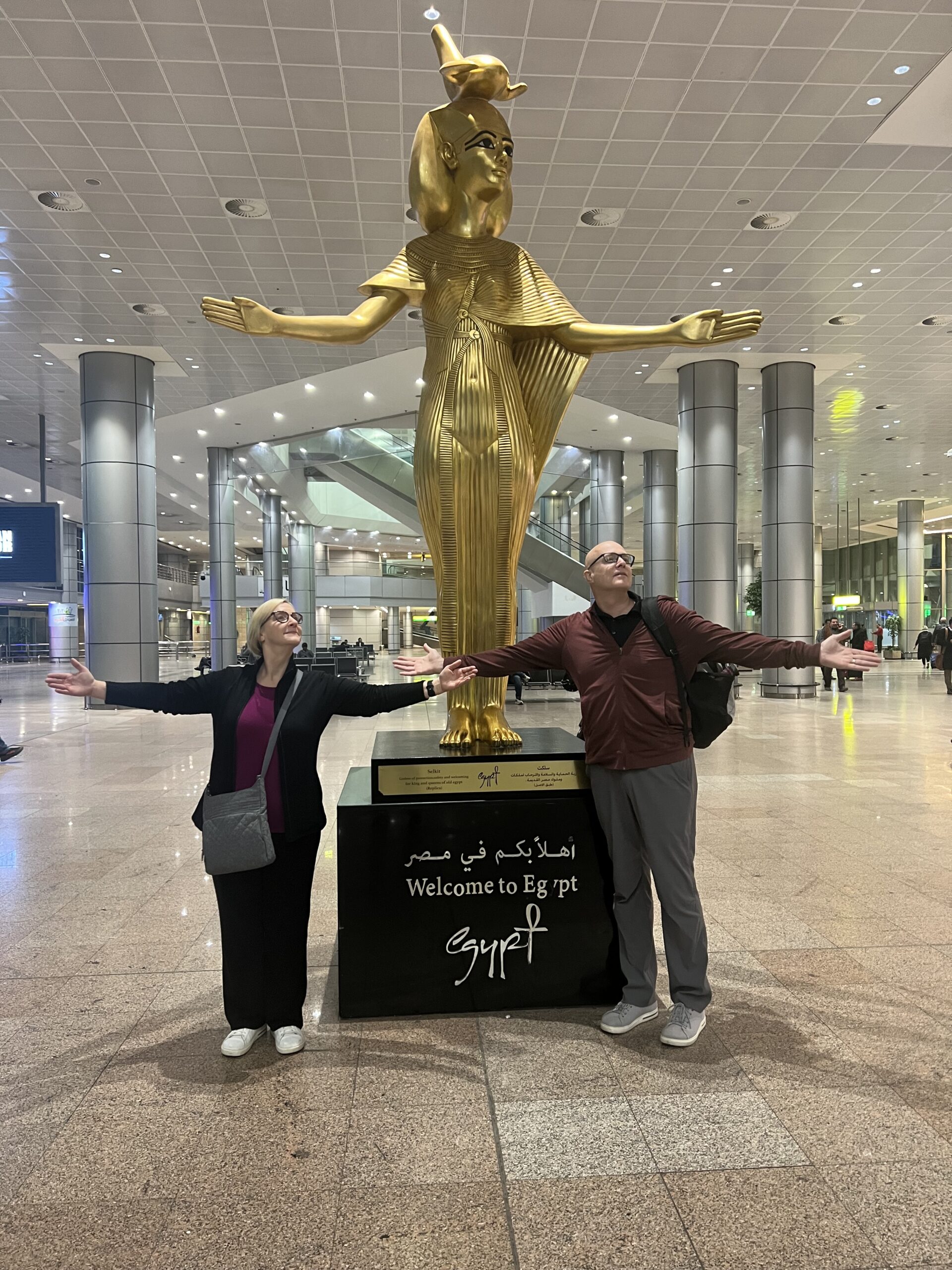
Arriving in Cairo
Let the trip begin!
OAT considers the day you leave the US as day one of the trip, so you will see this reflected in the information on their website and in this article.
Day 1 Sunday 1/19/2025 Leave the US
Day 2 Monday 1/20 Arrive in Cairo
We arrived in Cairo about 9 pm. An OAT representative met us at the airport, took our $25 cash (US dollars required) per person for the Visa, led us though the line to get the Visa, and took us to a van waiting outside and straight to the hotel. We were very glad to have this service after our long day of travel. It is included if you purchase airfare through OAT, or you can pay for this transfer service if you book your own airfare. The driver and guide were great, full of knowledge, and funny. They kept us awake and entertained on our way to the hotel and we really appreciated them not getting us killed in Cairo traffic. You really have to experience this to believe it. The lines on the road marking the lanes are merely suggestions. And no one uses their headlights at nighttime to avoid bothering other drivers(!). Unbelievable.
At the hotel, our guide gave us a brief tour and picked up our keys at the desk. We had nothing left to do except shower and fall into bed.
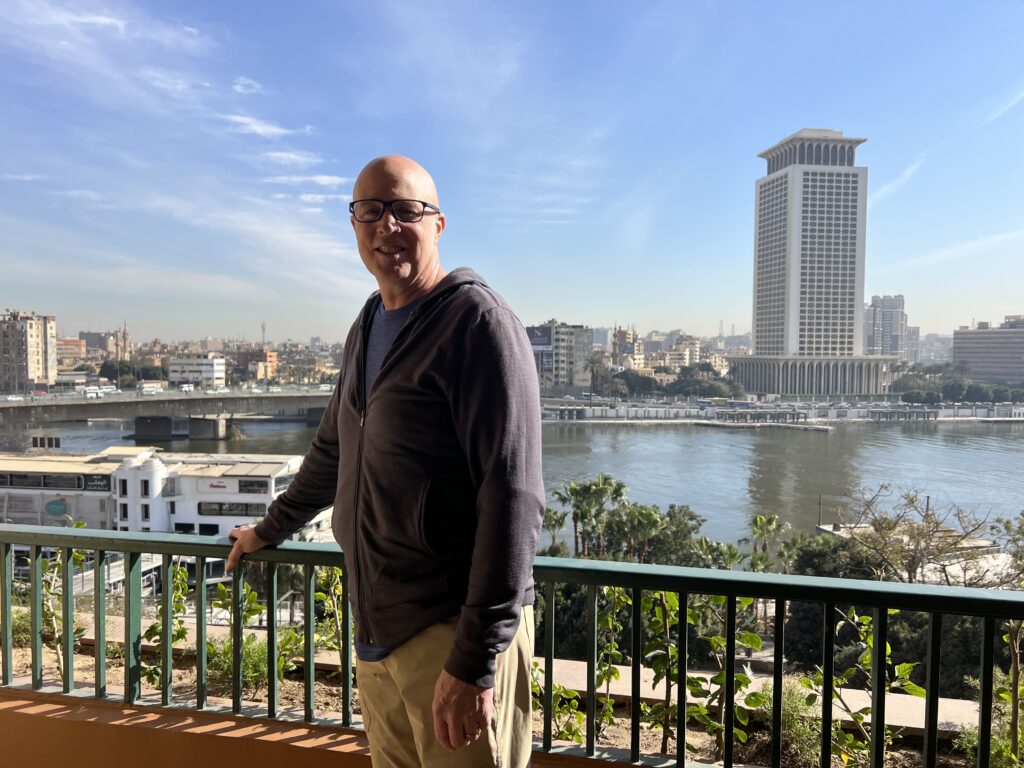
View of the Nile from our balcony at the Cairo Marriott
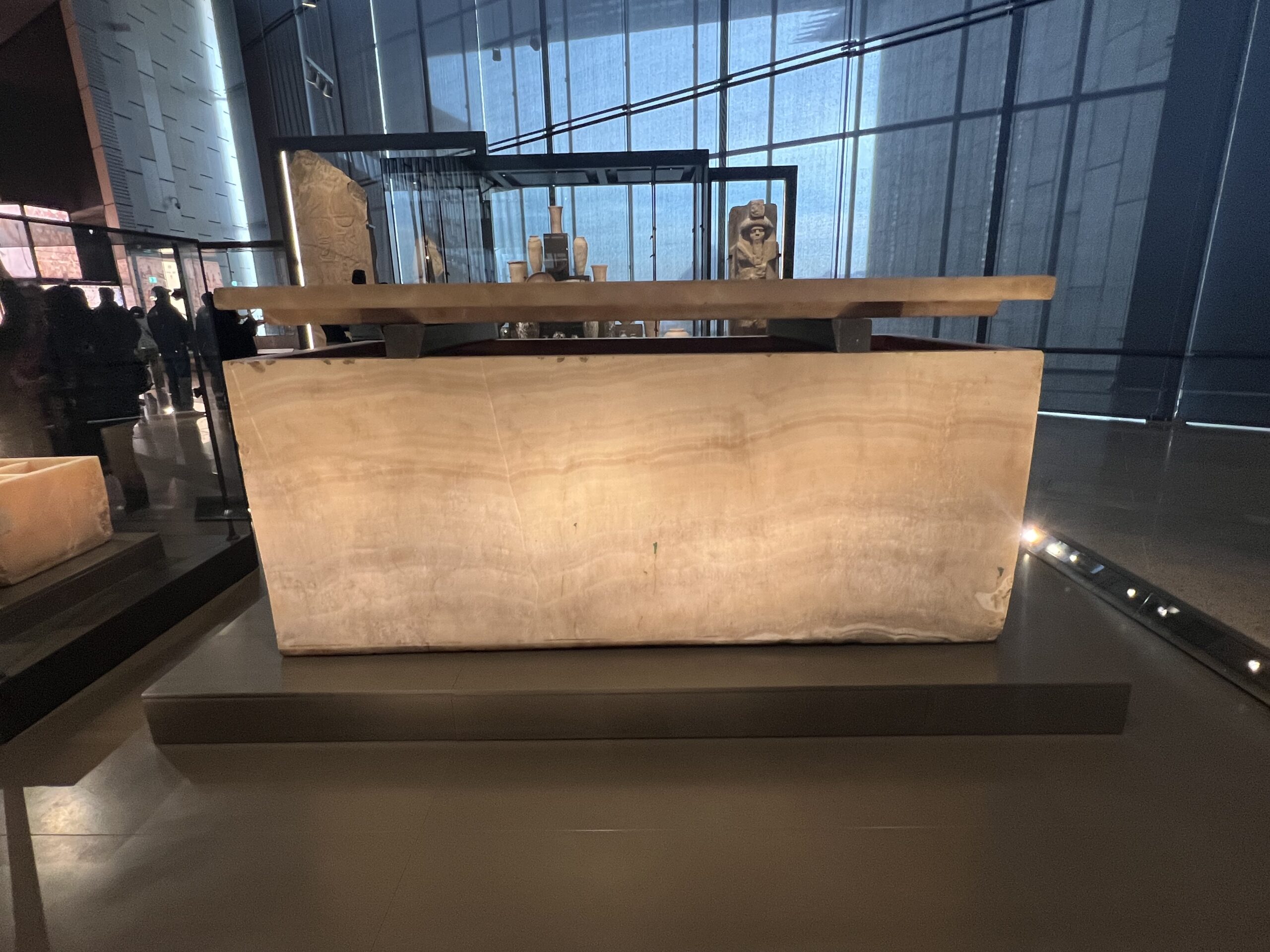
Tomb of Queen Hetepheres, mother of Khufu

Rameses II at the GEM
Day 3 Tuesday 1/21 Cairo
We started this day with the included buffet breakfast at the Cairo Marriott. The Marriott is a beautiful property with a lovely outdoor seating and dining area. It did get a bit chilly in the evening, but there are lots of heaters available to sit by if you want dinner or drinks on the patio.
Breakfast was followed by a briefing with our TEL Gladys. Gladys let us know the time and location for the briefing using the WhatsApp group chat she had set up for us. She used this to communicate lots of important information to our group throughout the trip, including the next day’s itinerary, so it’s very important to have this app downloaded and set up prior to leaving the US.
There was one very important rule that Gladys made sure we all understood: no talking about US politics! We were encouraged to ask and talk about Egyptian and Middle Eastern politics, culture, religion, etc., so no topic related to Egypt was off limits. From what we had read, there had been a few groups who had their trips ruined by one or two people discussing US politics. Everyone followed the rules, and we had no issues.
After the briefing and getting to know our fellow travelers, we headed to the brand new, and still not quite finished, Grand Egyptian Museum. Construction began in 2003, stopped for several years after the Arab Spring uprising in 2011 when tourism plummeted, and just recently opened. They are in the process of moving many treasures from the old museum to the new one. The King Tut exhibit is still at the old museum, so we didn’t see that until we returned to Cairo after the river trip.
The GEM truly is grand. It was built in the desert right next to the pyramids. You can get a great photo of the pyramids from the large viewing windows. We saw lots of fascinating artifacts and really enjoyed the visit. We had the included lunch in a café inside the museum and it was delicious.
In the afternoon, we had some free time. A few folks went to the shops that Gladys recommended, but we relaxed at the hotel on the lovely outdoor terrace with some Egyptian wine. The Egyptian wines were much more affordable than the imports, and they were acceptable substitutes for our favorites. Our group later had the included dinner at a local restaurant.
Day 4 Wednesday 1/22 Cairo
Wednesday we visited the Pyramids! It was everything we thought it would be. The 4500 year old Great Pyramid of Khufu is the only survivor of the Seven Wonders the Ancient World, and is currently the only one of the three large pyramids visitors can go inside. It was the world’s tallest manmade structure for 4000 years. Your TEL will help you get tickets if you want to climb the stairs inside, and yes, you definitely want to climb the stairs inside if it’s your first visit!
The ”stairs” were actually 130 steps up a steep ramp, about 24” wide, with two-way traffic all bumping into one another, all while hunched over and using the guardrail to pull yourself up. Then, another 130 steps up an identical ramp, only this one had a very tall ceiling. Finally, there was a 6 foot area where Steve had to crawl to enter the burial chamber. The burial chamber itself was very anticlimactic, just a small room with no decorations on the walls. It was quite warm up there, by the time we had climbed all those steps, so we snapped a couple quick photos and started down the ramp. Going down was actually harder because you had the same cramped ramp while hunched over, but also leaning back to keep yourself from pitching forward. My quads were killing me the next two days, but totally worth it!
We also got to ride camels. They aren’t kidding when they say hold on and lean back when they stand up and sit down! One lady in our group almost fell off. Our camel Charlie was a sweet lover boy. Camel riding can be a bit controversial due to the living and working conditions of some of the camels. Our guide negotiated with a gentleman she knew, so we felt fairly comfortable that the camel was well cared for. The fee was $5 USD per person to sit on Charlie and have a few photos taken. We were both happy to have participated and we gave the gentleman $25.
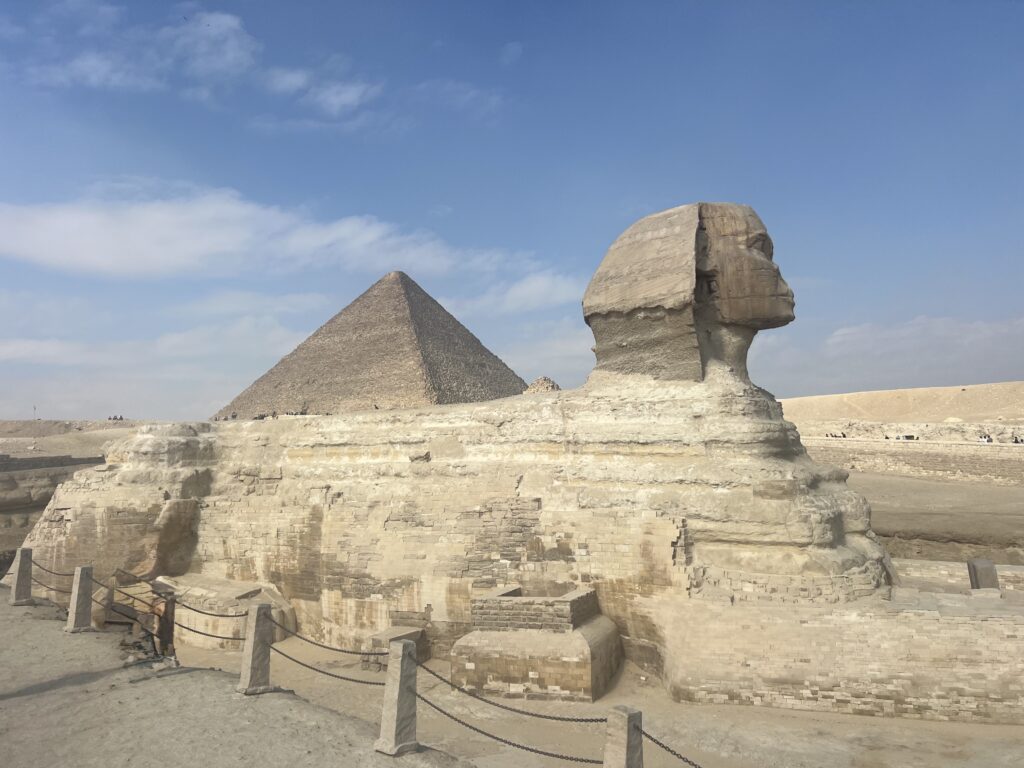
Later we visited the Great Sphinx of Giza and the valley temples. After a lovely dinner at the hotel’s outdoor dining area (dinner is on your own on this night), we went to bed early for our 0230 wake up call for our flight to Aswan on Thursday morning.
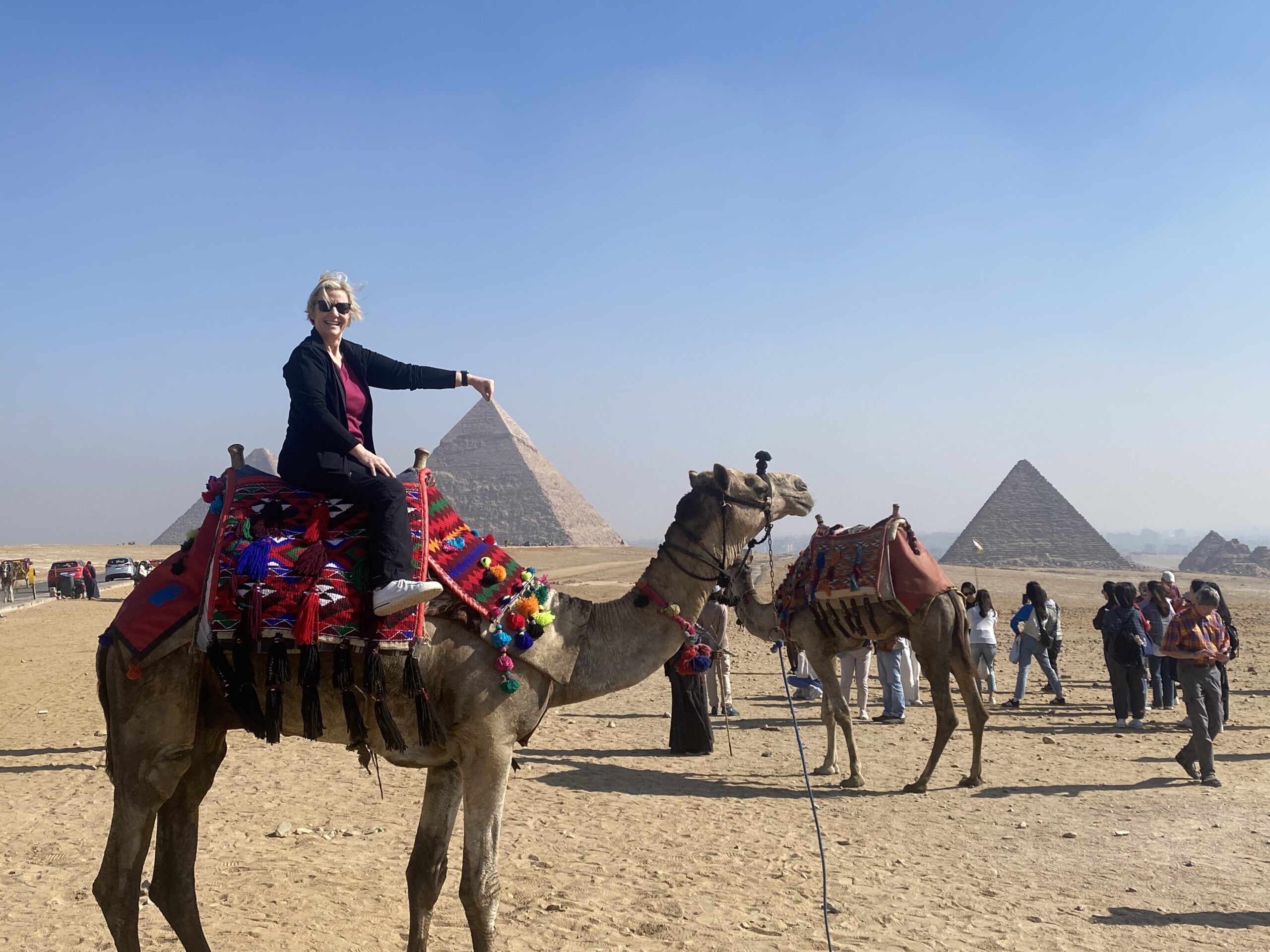
Riding a camel at the Pyramids
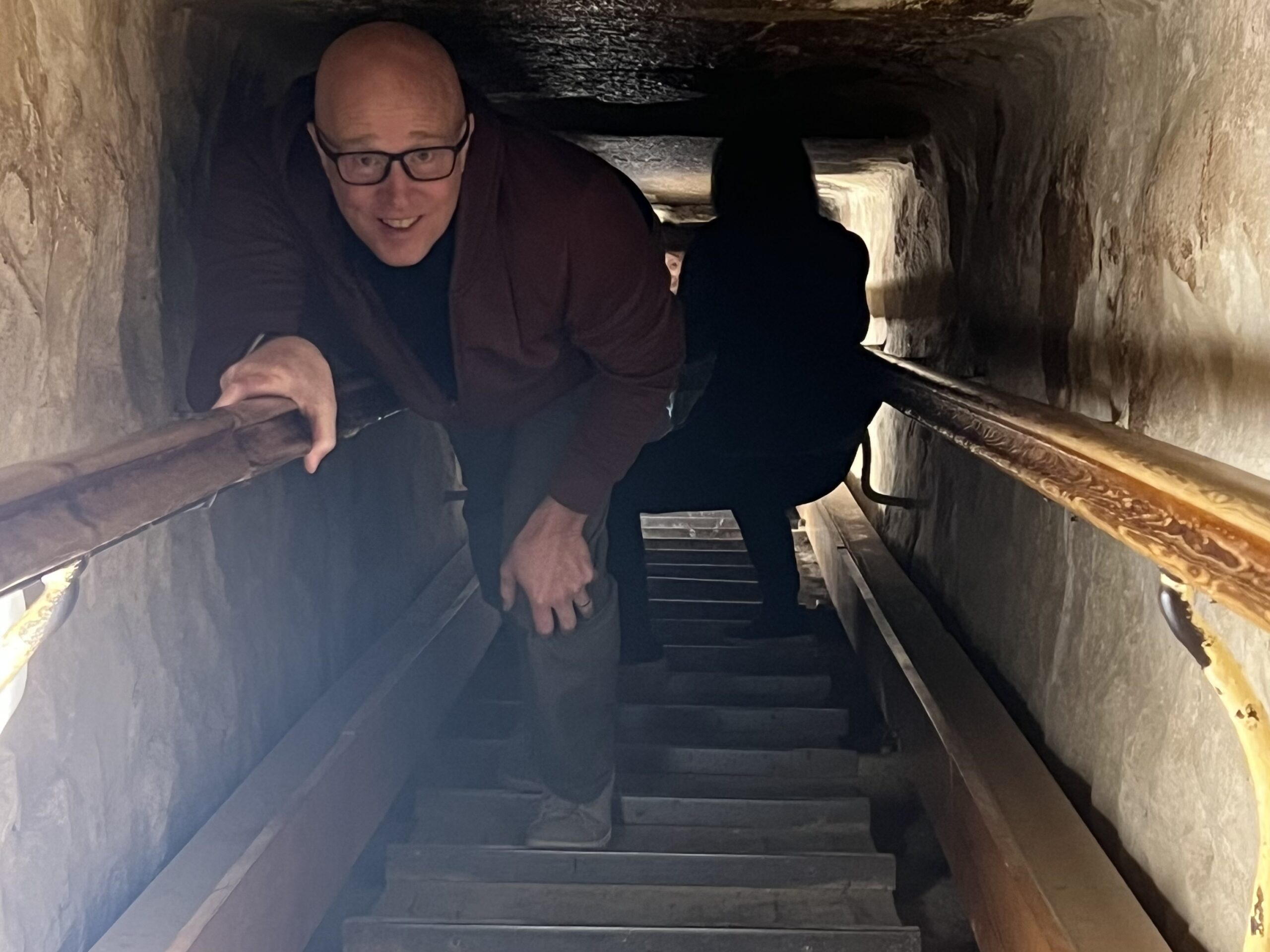
Inside the Great Pyramid of Khufu
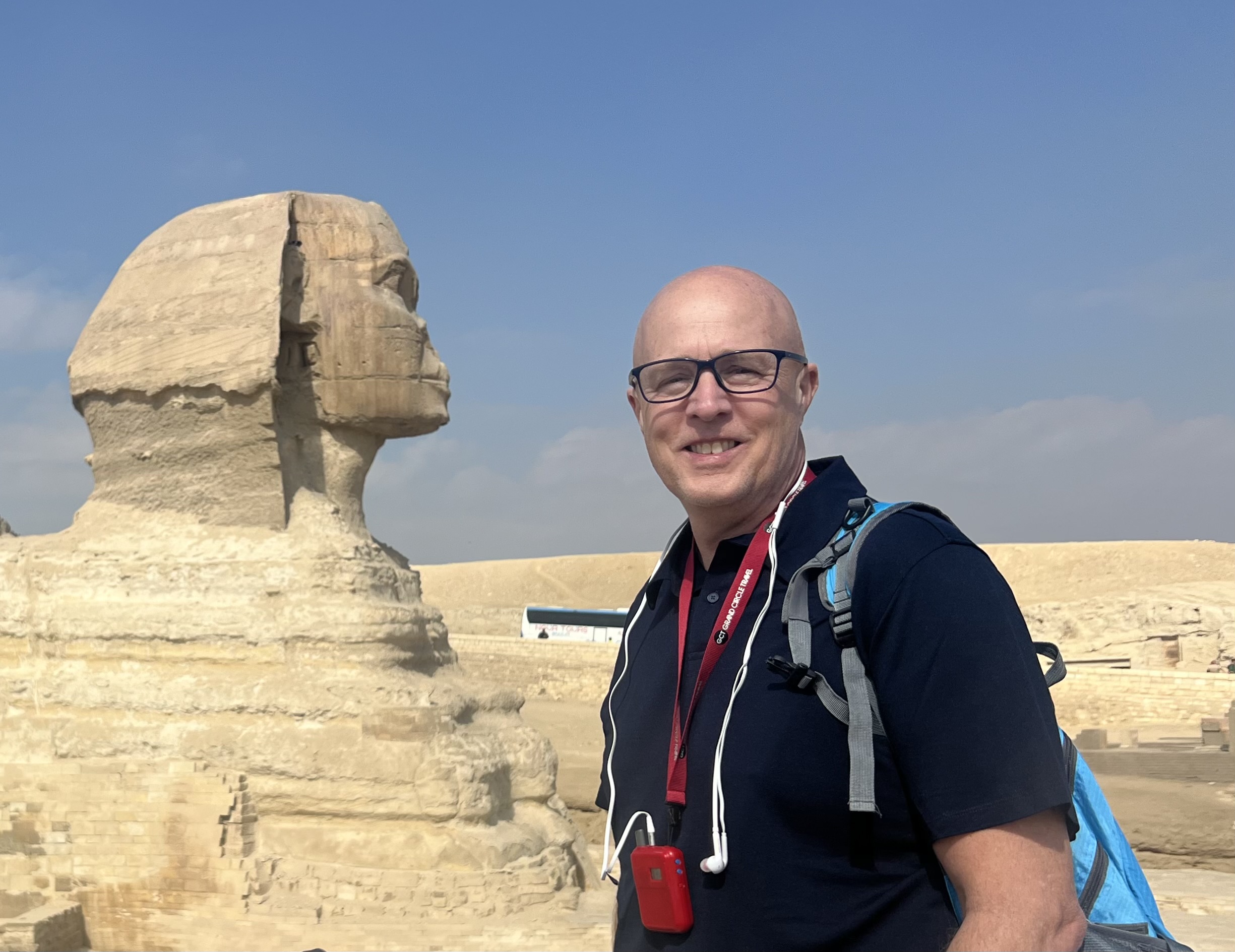
The Great Sphinx
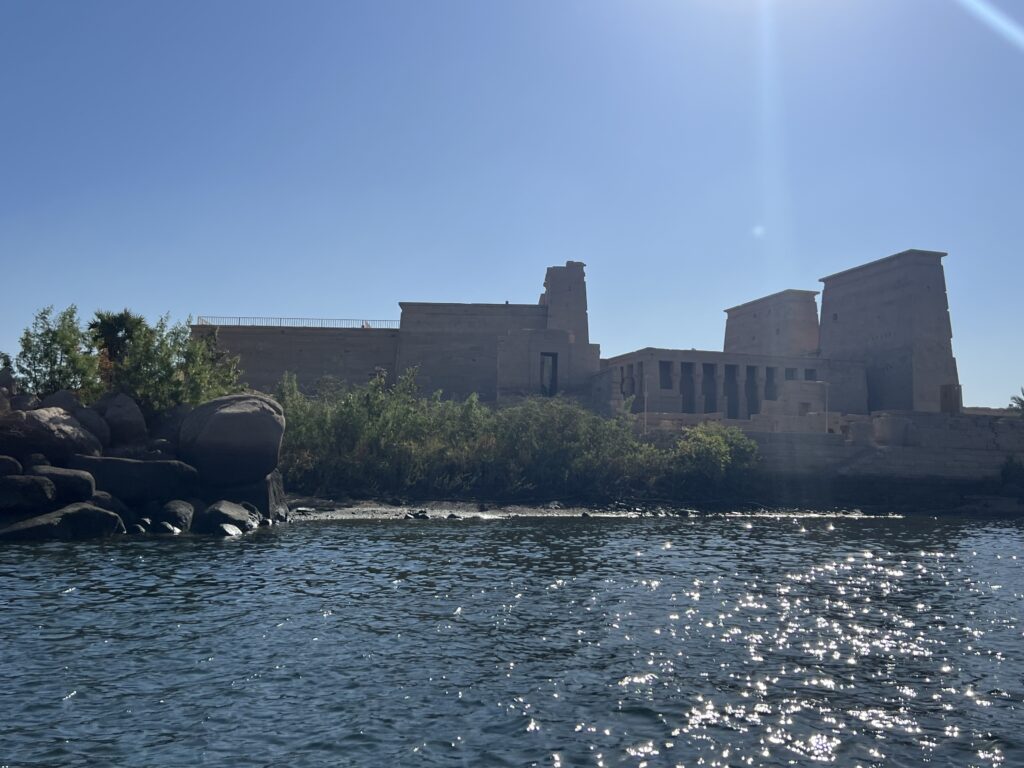
Philae Temple
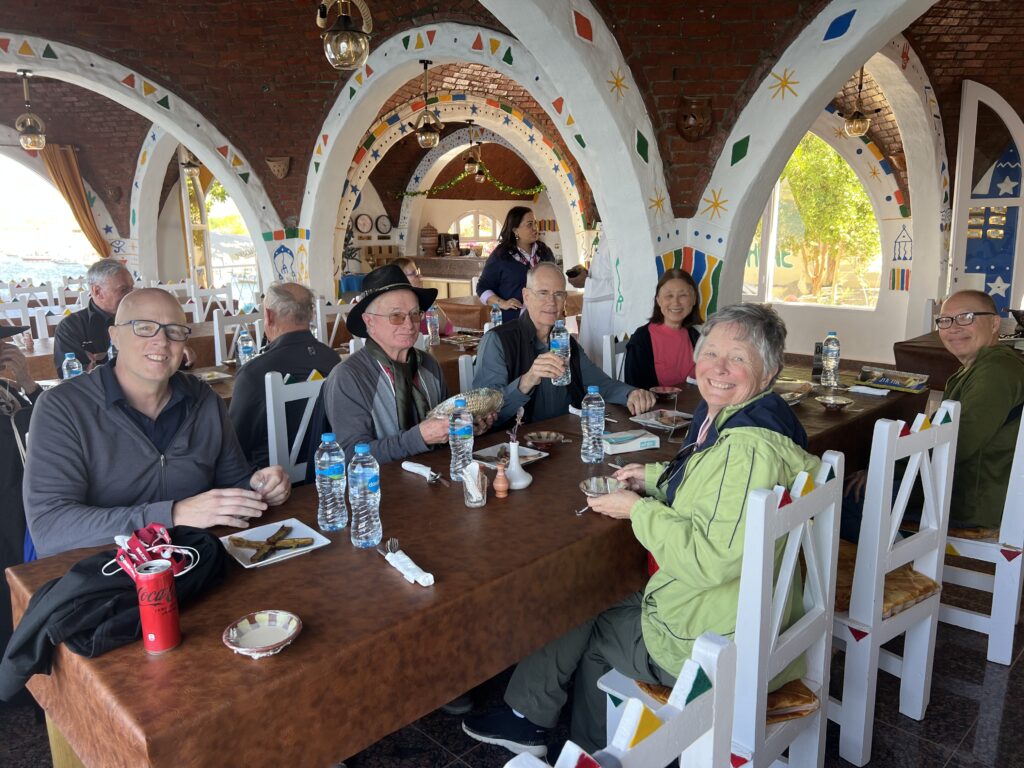
Lunch at the old Nubian Guesthouse
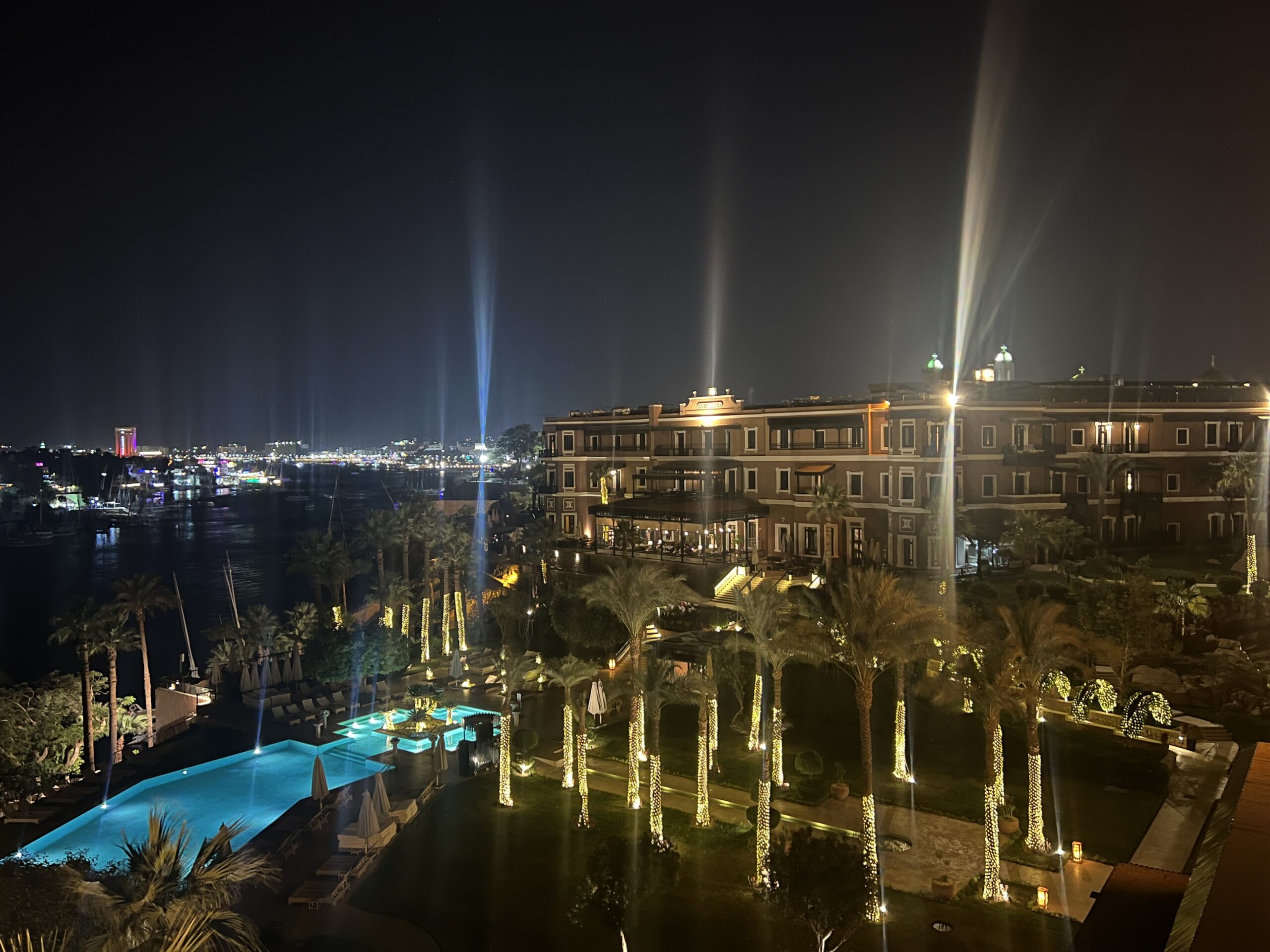
View from our balcony at the Old Cataract Hotel
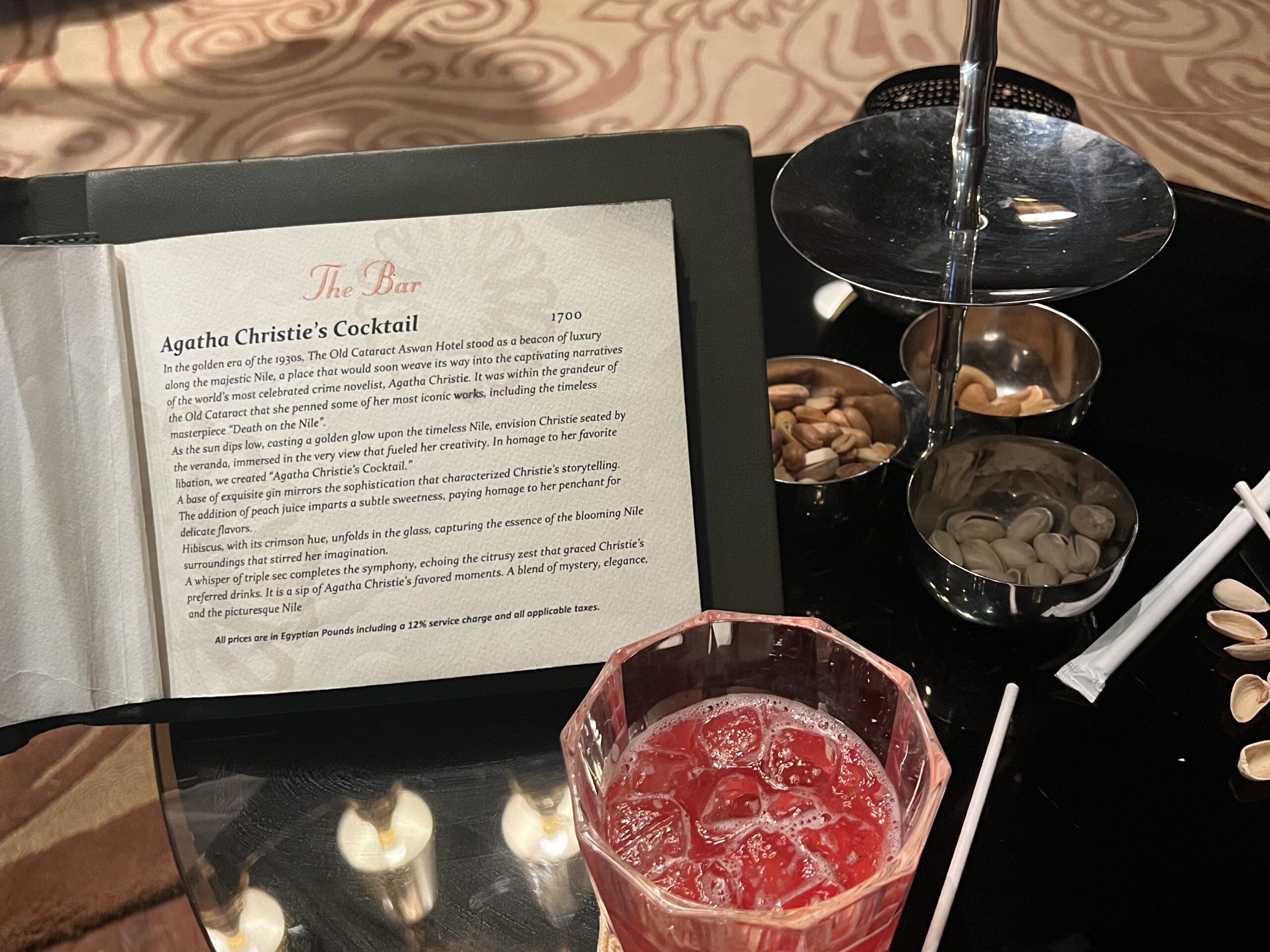
We had to have Agatha Christie’s Cocktail
Day 5 Thursday 1/23 Aswan
Thursday morning started bright and early for our flight to Aswan on Egypt Air. This was a regular commercial (full) flight on a Boeing 737. We checked our carryon bags, and kept our backpacks with us in the cabin. Intra-trip flights are always included and arranged by OAT. Gladys helped everyone secure their paper boarding passes and check luggage. Everything went smoothly from security to check in to claiming our bags in Aswan.
In Aswan, we boarded a full size tour bus and headed to the High Dam that created Lake Nasser. After touring the dam, we took a boat to visit Philae Temple. The creation of Lake Nasser, while limiting the annual flooding of the Nile, and providing energy, jobs, and irrigation for crops, unfortunately flooded many historical sites and temples, including Philae Temple, which was founded in the 7th century BC. They actually built a wall around the temple, drained the water, and relocated it to a higher nearby island. They did this by cutting it into 40,000 carefully numbered pieces and reconstructing it exactly as it had been built. We could see some wooden pillars sticking up out of the lake on the island where the temple had originally stood. We then had a lovely lunch (included) at the Old Nubian Guesthouse, with traditional Nubian dishes served in tagines, before checking into our hotel.
We stayed the famous Old Cataract Hotel, which was built by the British and opened in 1899. It was completely renovated in 2008. Many famous people have stayed there, including Agatha Christie, Winston Churchill, Princess Diana, and Omar Sharif, to name just a few. We toured the Agatha Christie suite, and had an Agatha Christie cocktail. They are really capitalizing on Agatha Christie! The hotel and grounds are absolutely breathtaking and beautiful. We had a Nile View room in the new tower and it was fabulous. The hotel, the service, and the breakfast were all amazing.
Later that evening we ate dinner at the home of a lovely local family. OAT provides a Home Hosted Dinner on each of its adventures. While the host families are modestly compensated by OAT, they are gracious enough to open their homes for us, visit and share stories, and prepare a delicious dinner. Our group of 14 was divided among three host families.
Our family was a young couple with 2 boys, and the wife’s mother, who was a retired school teacher. Her father had passed away. Multi-generational families are common in Egypt. The wife worked in security at the Aswan Airport. They lived in a modest home with a big garden, fruit trees, and chickens. We brought some small Lego sets as gifts for the boys and they seemed to be a huge hit. We had a lovely meal, a great visit, and talked about all our similarities and differences. It was a great experience and we totally forgot to take any photos before we left.
Lots of opinions surround the subject of gift giving on OAT trips. You can find a lot of this discussion online in various forums and groups. The host families do not expect gifts, but they are appreciated. The host families are contracted by OAT and host a group several times per year. Some travelers bring an item from their hometown or home state, such as local honey, syrup, or salt water taffy. We had already asked Gladys in an email for the ages of the family members, and decided on small toys for the children. Not all travelers bring gifts and there is no pressure to do so. The general consensus is to not bring tea towels or magnets, because what are they supposed to do with hundreds of those? You get the picture, just don’t bring that stuff.
Day 6 Friday 1/24 Aswan
On Friday, we started the day with a two hour birding tour on a small boat on the Nile. We also visited the Aswan Botanical Gardens. Our guide was fabulous. His father had been the head gardener at the Old Cataract Hotel for many years, with a team of only 4 people. Our guide told us that today, there are 300 gardeners that maintain the grounds. We saw so many birds and plants that we lost track of all the names, but it was a really enjoyable tour.
Two young boys were serenading us with the “Macarena” as we boarded the boat, and a gentleman who was fishing came over and showed us the elephant fish he had caught. Of course, everyone in Egypt wants a tip for everything, and we obliged. Tips are very low here. It’s a very small amount of money to us, but makes a big difference in their lives.
After lunch we visited the Aswan Spice Market. So many vendors who reeeeeeeeally want you to buy something. Many of the folks in our group bought souvenirs, and the baskets of hibiscus blooms, dates, and spices were beautiful. They make a delicious tea from the hibiscus blooms.
We then had the Agatha Christie tour at the hotel, where we got to see the suite she stayed in for a year. It can be booked today, but I’m sure we couldn’t afford it! The tour is free and is available twice per day on most days. Lots of people took the tour. After the tour, a few of us got together for drinks at the terrace bar to watch the sunset before the included dinner at a local restaurant called Makani.
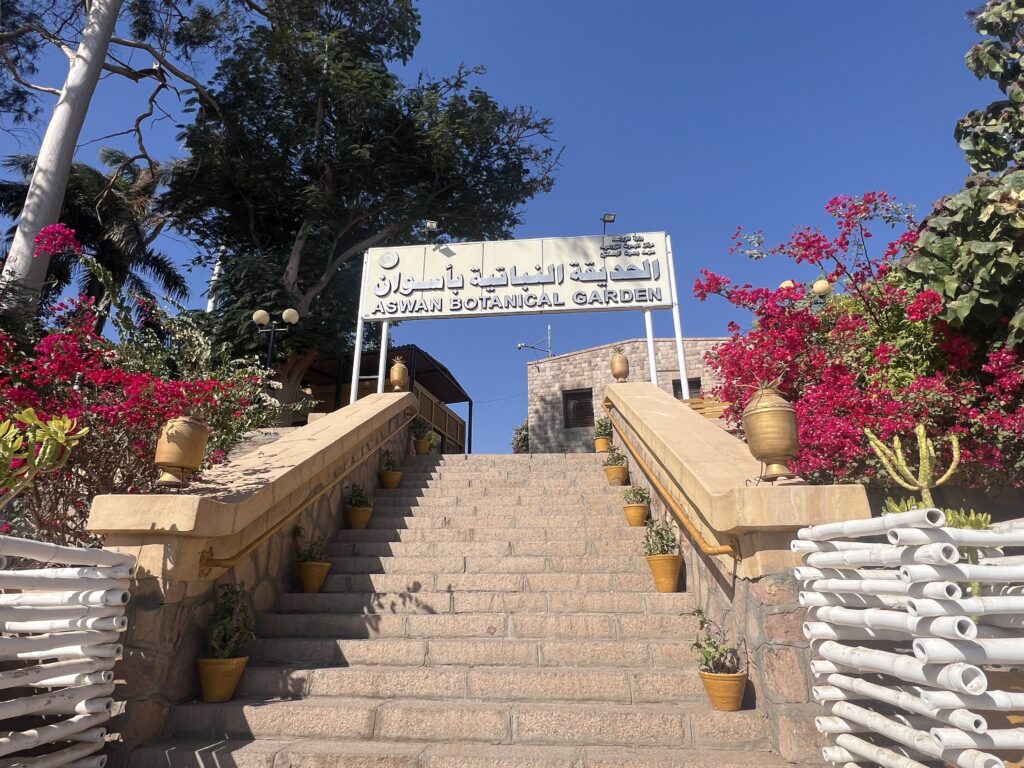
Aswan Botanical Gardens
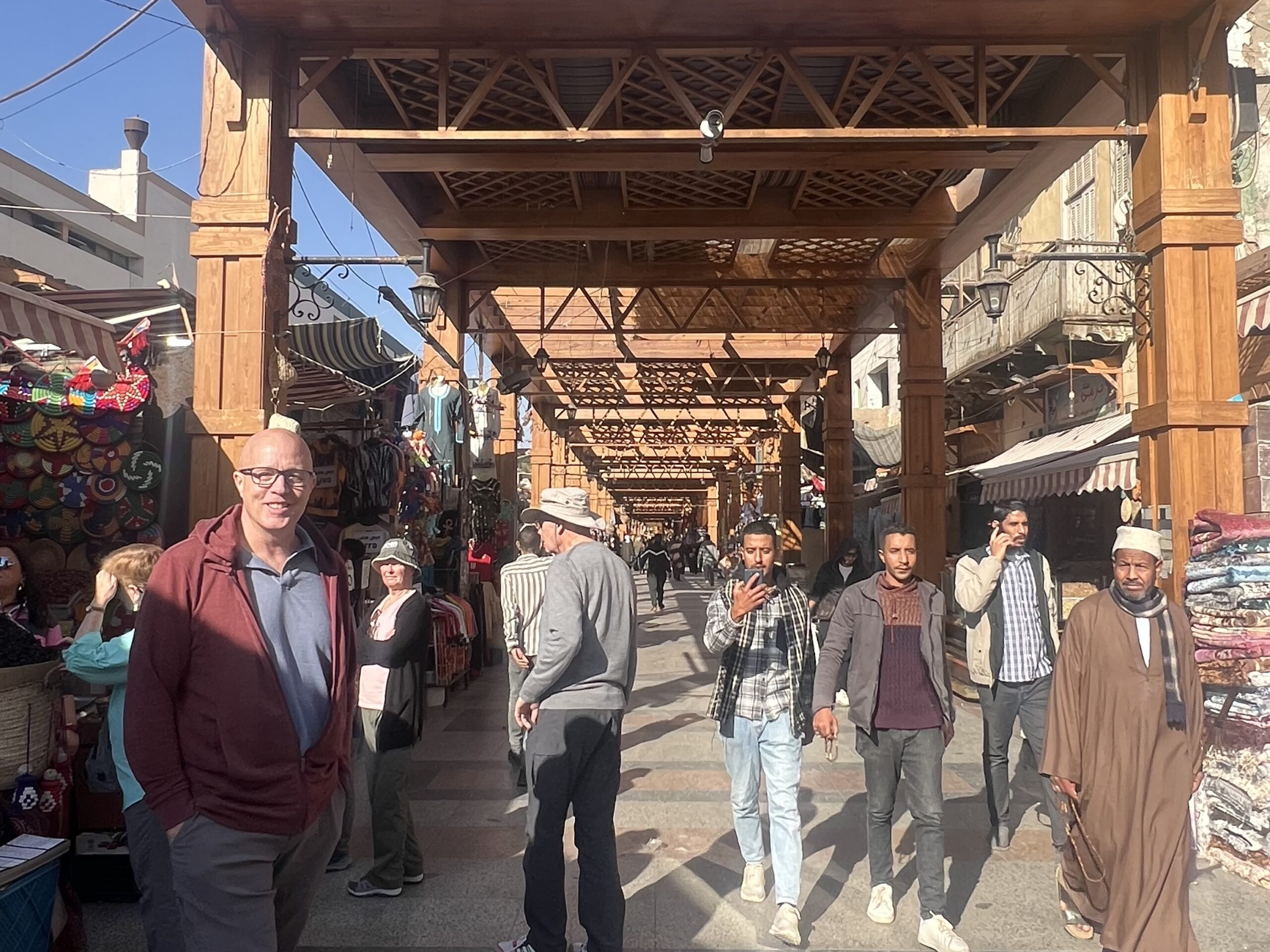
Running the vendor gauntlet at Aswan Spice Market
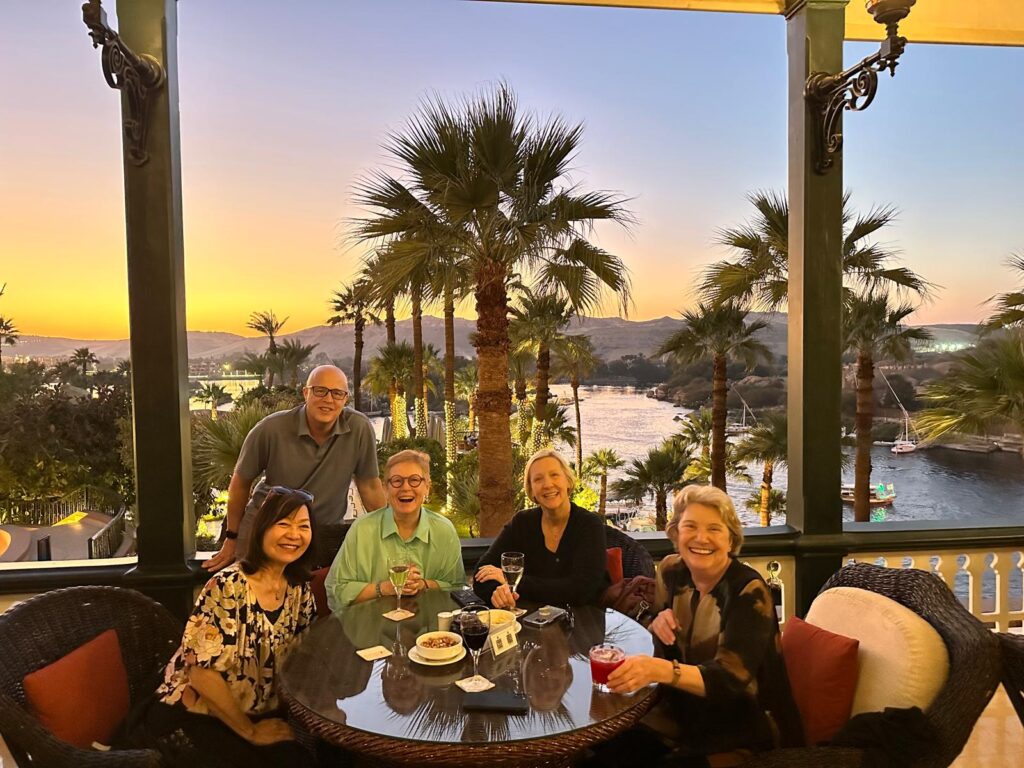
Drinks on the terrace at Old Cataract Hotel

Half way to Abu Simbel

The Temples and Lake Nasser at Abu Simbel
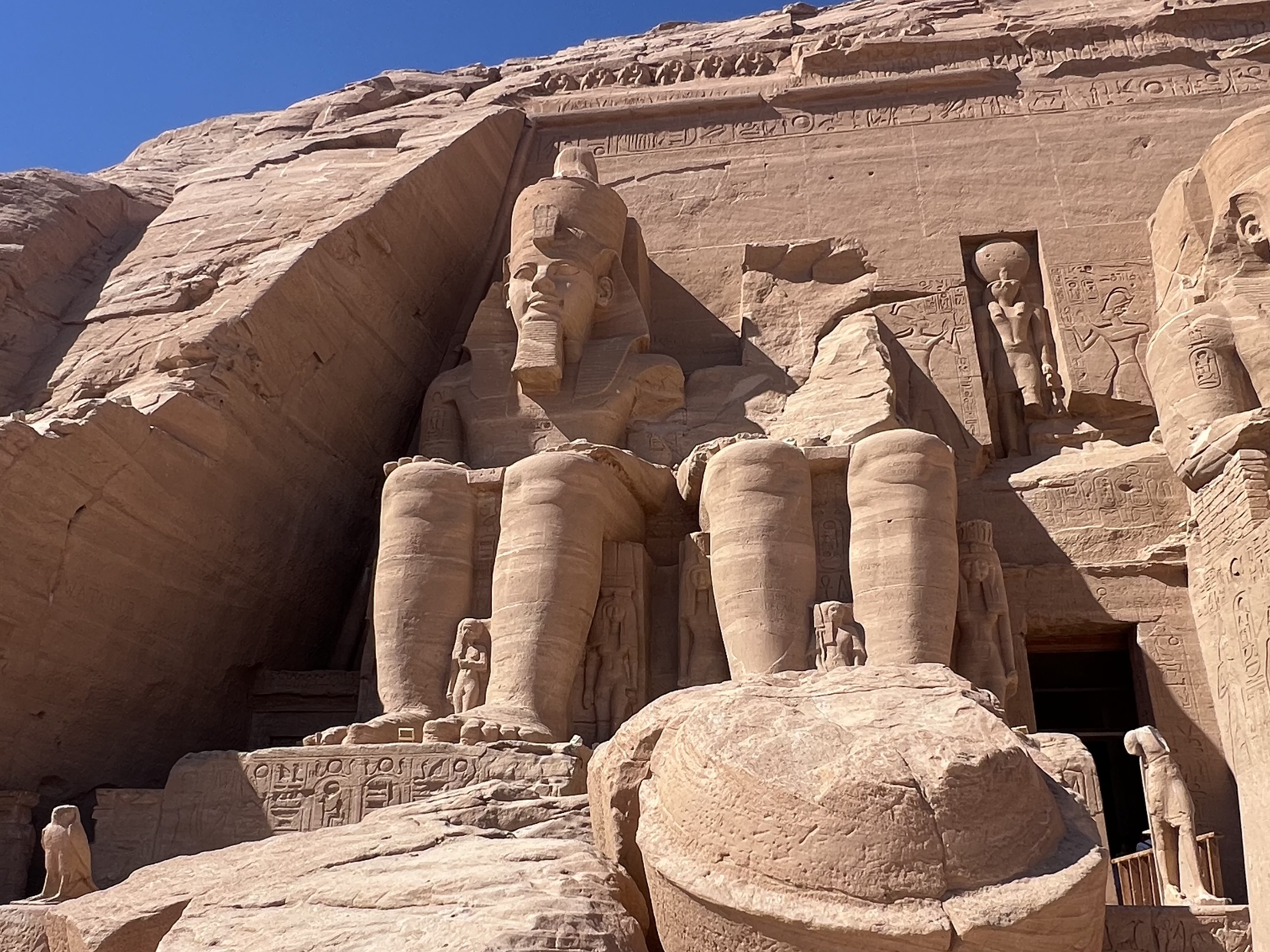
Reconstructed exactly as the original
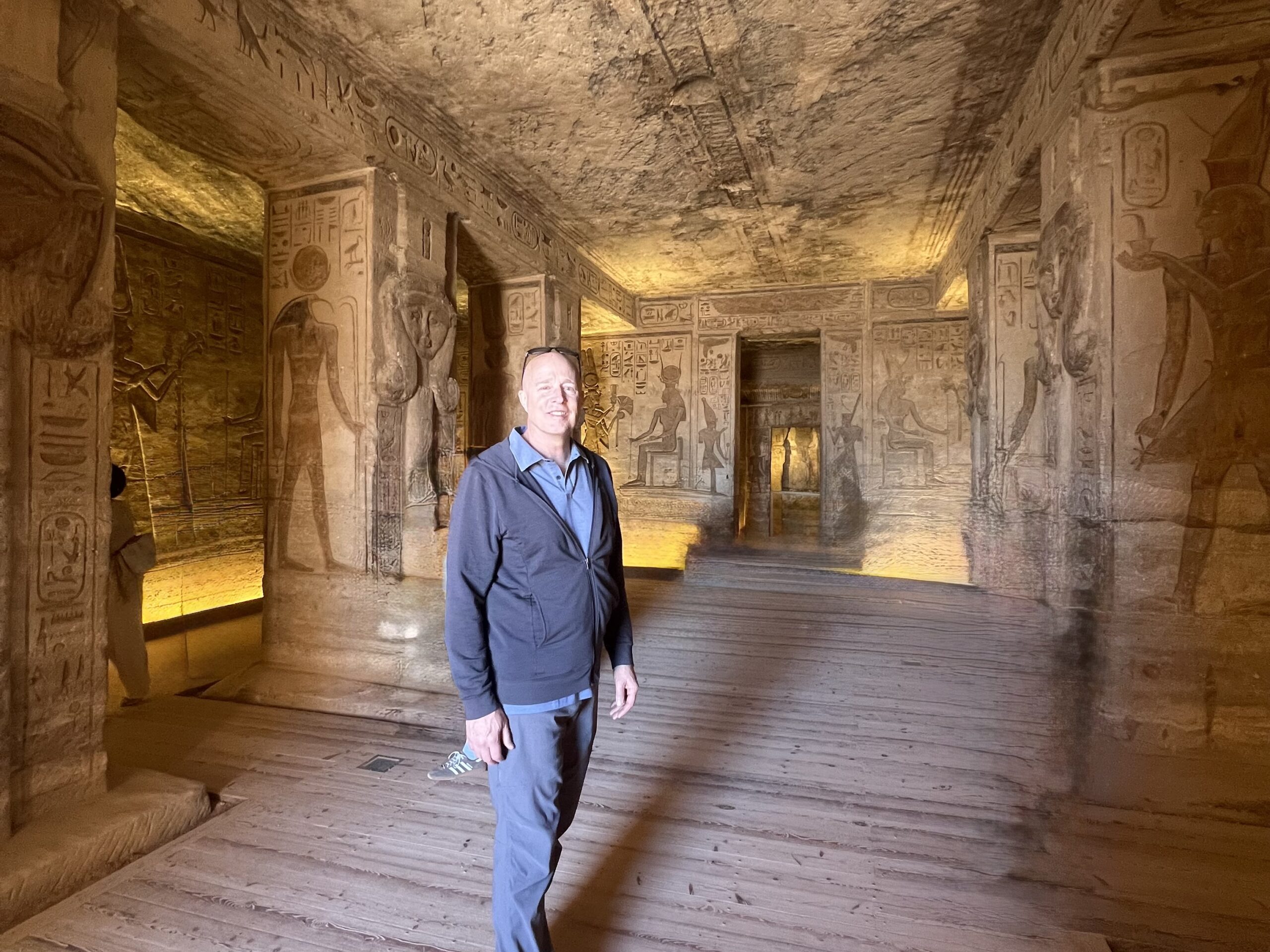
Interior of Rameses II Temple
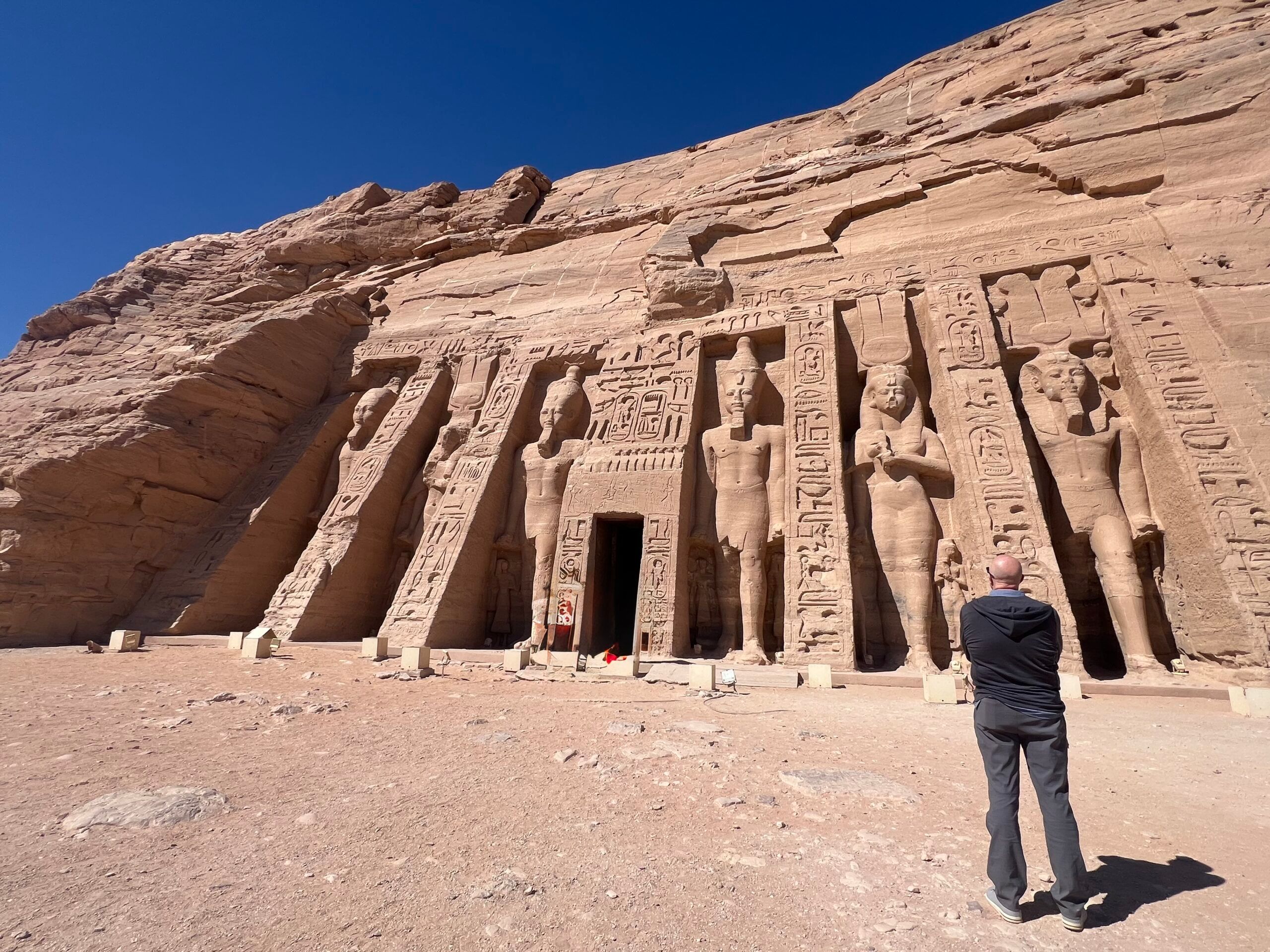
Nefertari’s Temple
Day 7 Saturday 1/25 Abu Simbel
On Saturday, we left Aswan on our four hour drive to Abu Simbel. We had a full size tour bus with 14 people, so it was very comfortable. We stopped at a little coffee shop about half way, and now we can say that we have literally walked in the Saharan sand in BFE. We had to explain BFE to the rest of our tour group, as it’s apparently a midwestern term. 🤪 (If you really don’t know, it’s Bum Fuck Egypt, and it means the middle of nowhere. Don’t shoot the messenger.) The place we stopped is literally the only place to stop on the way to Abu Simbel. Lower your expectations for this place. While it was clean and the coffee was OK (did I mention we never pass up an OK coffee shop?), it looks like an uninviting hut from the outside. They had a small assortment of snacks and drinks, the restrooms were clean with functional flush toilets, and the fee to use them was 10 EGP per person. They even handed us the TP to use, as they were rationing it. Probably a good thing in the middle of BFE.
On the way, we drove through an area of the desert that has been revitalized with lots of canals that bring water from Lake Nasser. They now have multiple growing seasons and they grow a lot of crops that they had to import in the past. We saw corn fields that looked a lot like home.
When we arrived in Abu Simbel, we headed straight to visit the Temples. The temples are located down a long stone path from the parking area to the lake, so it’s all uphill on the way back. It’s an easy walk, but if you have mobility issues, you may have some trouble walking back up the path, especially in the hot sun. There are carts available to transport you back to the top for a very small fee.
The temples were constructed in the 13th century BC for King Rameses II. There are two massive temples, one dedicated to him, and one dedicated to his wife, Queen Nefertari, who died in childbirth. The temples were carved from solid rock and were quite impressive. They are a UNESCO World Heritage Site, and at one time, they were nearly buried in sand. Excavation began after an Italian explorer managed to enter the temple in 1817. They soon discovered King Ramses II liked himself a whole lot, and decorated his wife’s temple with lots of images of himself.
The construction of the Rameses II temple is quite fascinating and very impressive. On February 22 and October 22 of each year, the sun’s rays reach the back of the temple and illuminate three of the four sculptures located on its back wall, Rameses II, Amun-Ra, and Ra-Horakhty. The statue of Ptah always remains in the dark. These dates are significant for being likely being Rameses II’s birthday and coronation day.
These temples were also threatened by the rising waters of Lake Nasser after the High Dam at Aswan was built. They were originally carved into the rock at the edge of the Nile. In the past, tour boats could pull right up to the temples and disembark, much like they did in Death On The Nile. In an almost unbelievable 3 year project involving hundreds of engineers and 25,000 workers, the temples were cut into 1,036 blocks weighing an average of 20 tons each, and moved up the cliff 200 feet to be above the new waterline. It truly is fascinating and was called the greatest archaeological rescue operation of all time by the UNESCO Courier.
The area where the temples originally stood is marked by signage and there are lots of photos on display in the visitor center. Be prepared to walk the vendor gauntlet as you leave the visitor center. There is not really a way to avoid it. Again, if you wish not to purchase anything, smile and say a firm but polite no thank you.
Day 7 Saturday 1/25 Abu Simbel (continued)
After our visit to Abu Simbel, we checked into the Seti Abu Simbel hotel. It is a lovely hotel located on the island near the temple. The hotel was built in the traditional Nubian style with domed roofs. The grounds are beautiful with several pools and lots of outdoor seating areas. We had the included lunch after checking in to the hotel. This hotel is not to be missed on a visit to Abu Simbel.
In the afternoon, we grabbed a glass of wine from the outdoor hotel bar and attended a talk with a social studies teacher who told us about the Nubian culture. Nubians lived in the area around the modern day border of Egypt and Sudan. We were about 8 miles from the border. Most of the Nubian farmland and their homes were destroyed by Lake Nasser. Our speaker’s grandfather is now buried under the lake. 😢 They were promised new land and new homes by the Egyptian government, but these things were not delivered. Over 100,000 Nubians were displaced. This led to the great Nubian Migration, and now most of their people and culture have been assimilated into Egyptian culture. It is a dying culture and language that they are trying hard to keep alive.
We had a bit of free time before dinner, so we took a walk around the hotel grounds, which are really beautiful. The included dinner was in the hotel dining room. It was a buffet style dinner with several good choices. We watched a beautiful sunset from our lake view balcony before returning to Abu Simbel in the evening for a narrated light show that told story of Ramses II. Take a flashlight if you have one, and also take a warm jacket, as it got pretty chilly when the sun went down and the lake breezes were blowing.
Today was also the anniversary of the Arab Spring in 2011. Our tour guide was very involved in the protests and was a member of one of the new political parties during the next several years when tourism stopped and Egypt was rebuilding their economy. She had friends who were shot during protests. She told us some stories about the Revolution and her role in it during our ride to Abu Simbel, and it was fascinating to hear her first hand account. Tourism resumed here in 2017. She is now a free lancer who does a lot of tours with OAT.
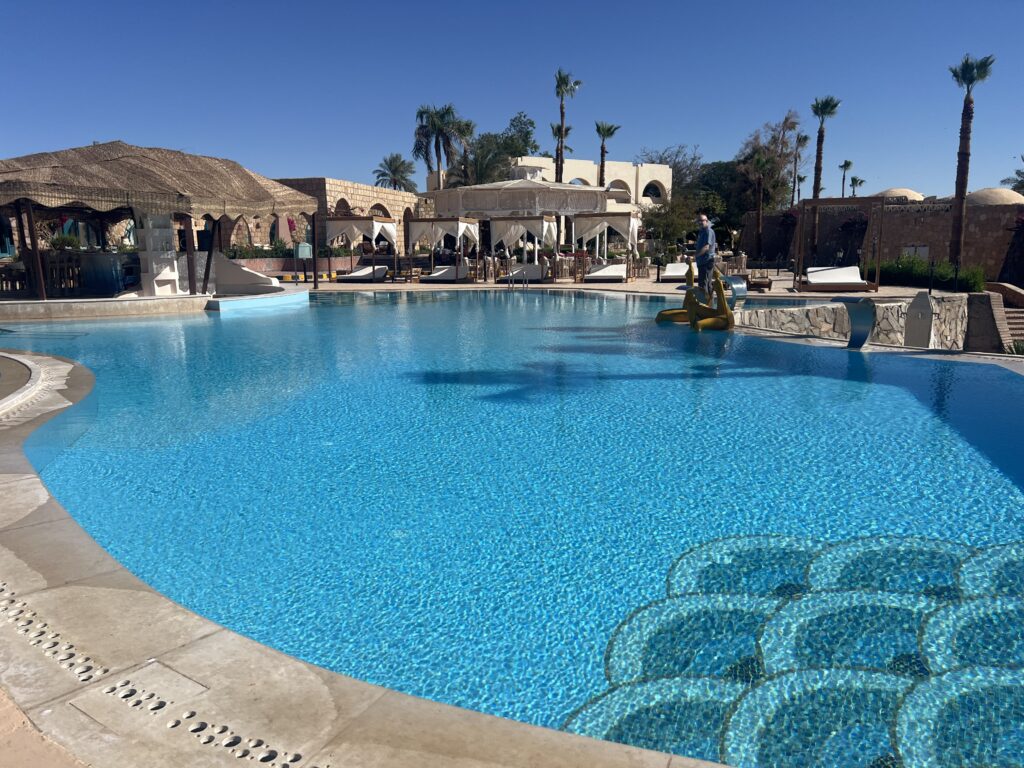
Seti Abu Simbel
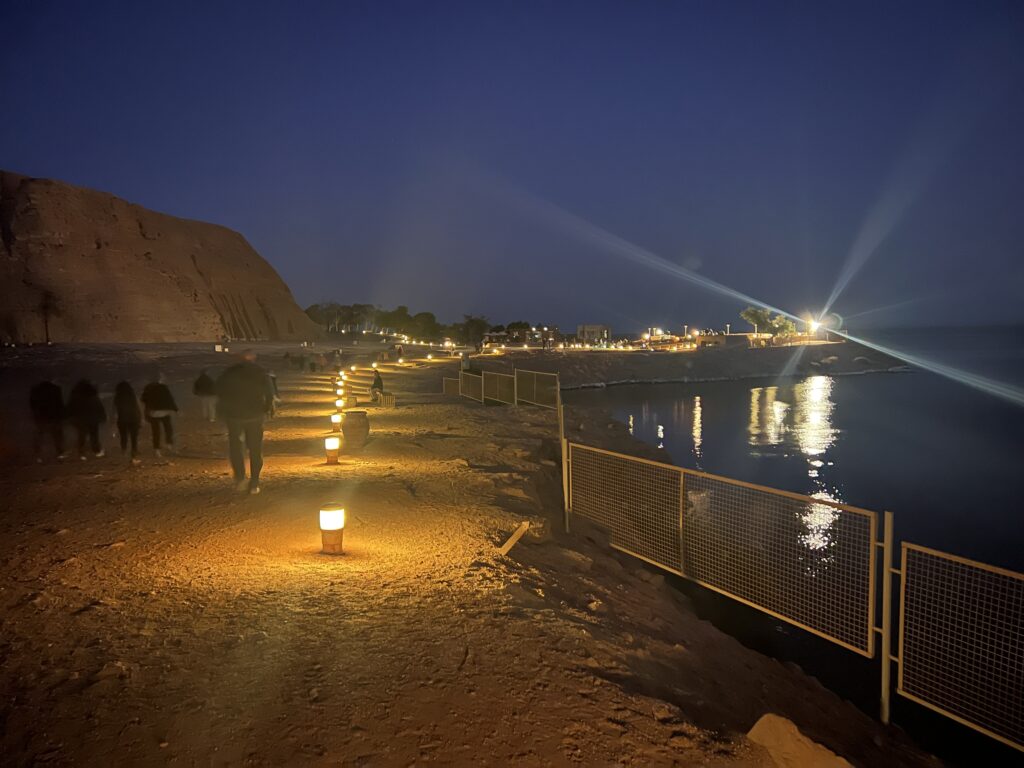
Pathway to the light show
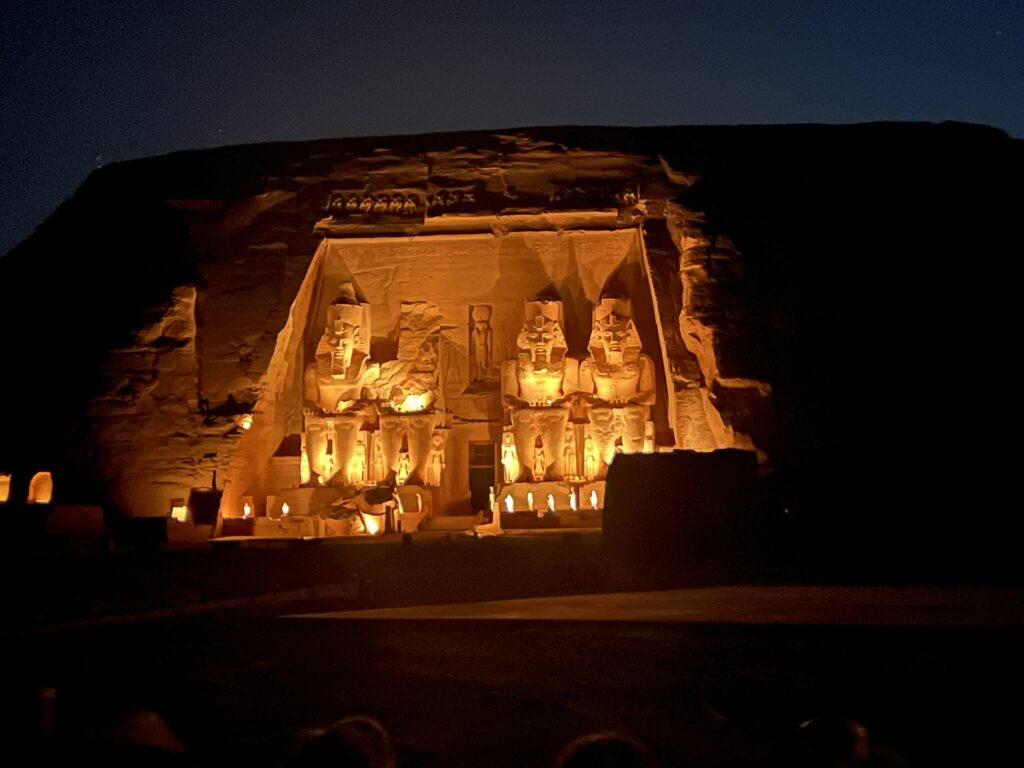
Rameses II Temple at Abu Simbel at night
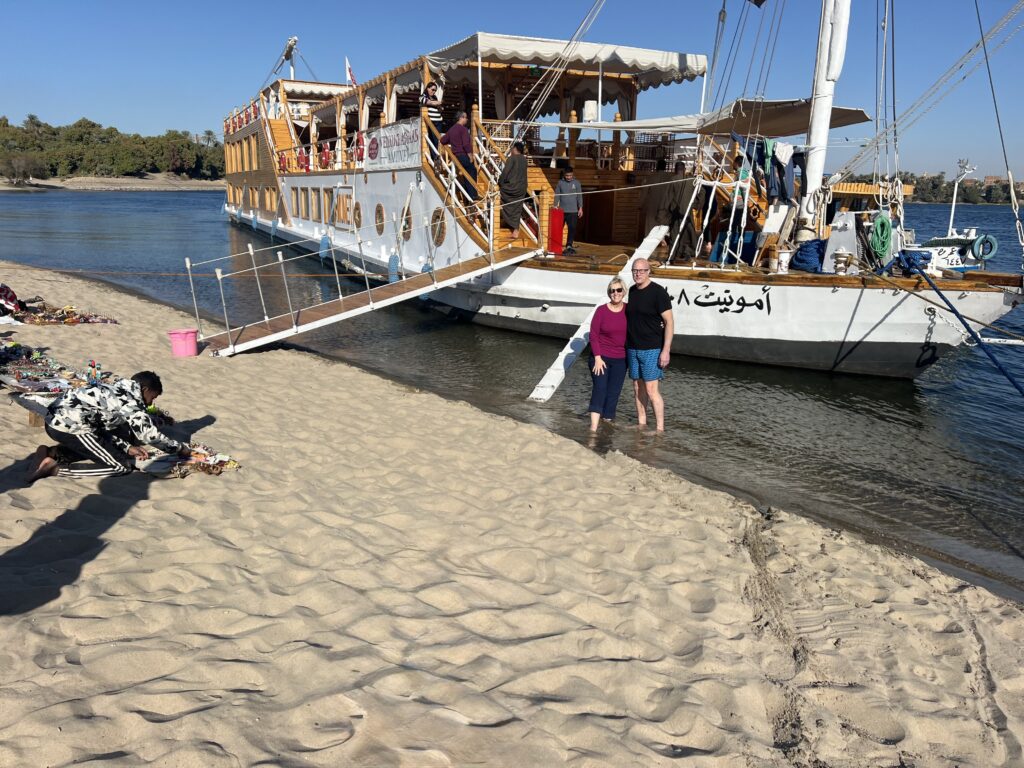
The Amunet docked on the Nile

Our cabin on the Amunet
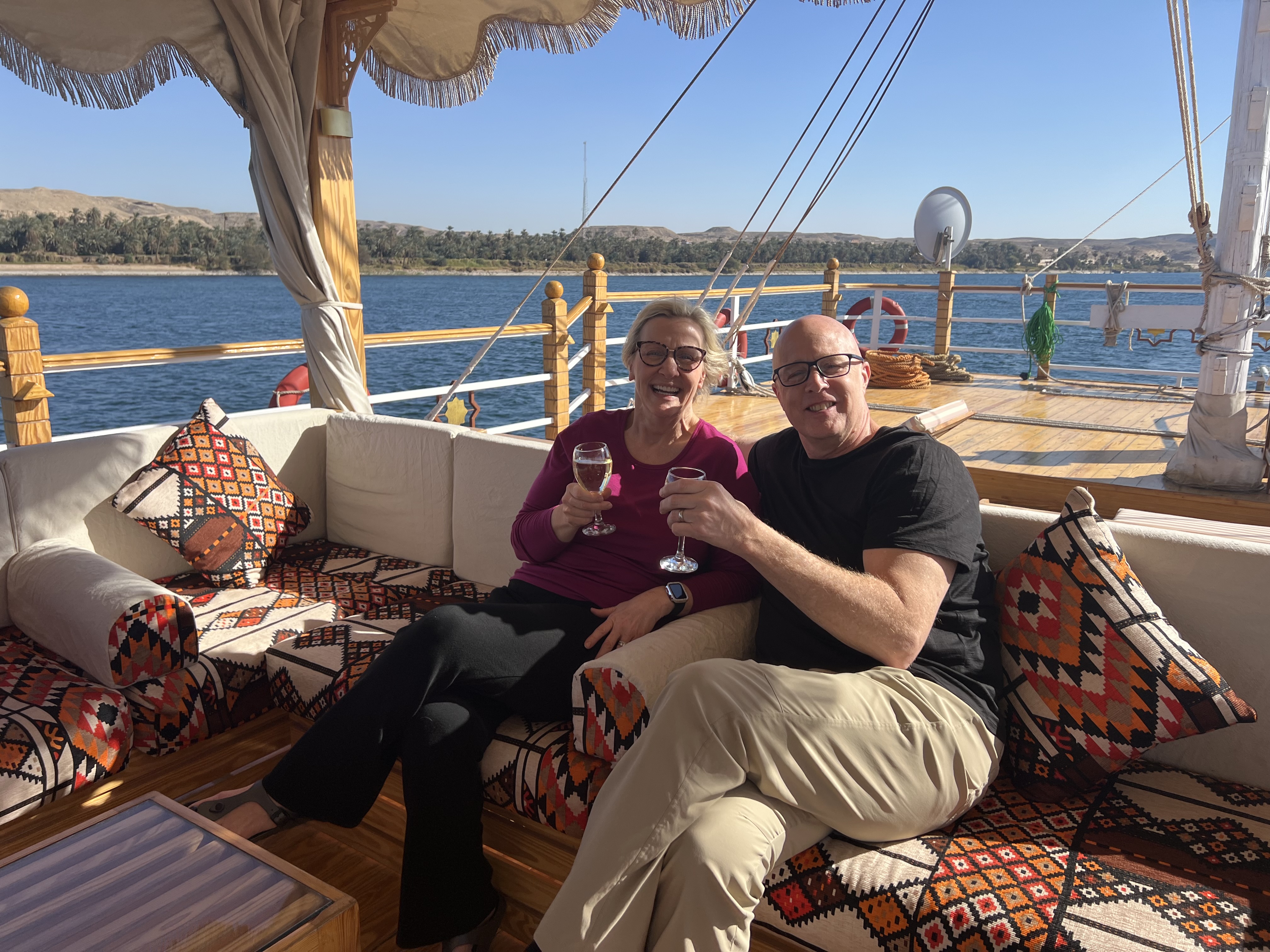
Top deck of the Amunet

Bar menu on the Amunet
Day 8 Sunday 1/26 Return to Aswan/Board Yacht
On Sunday, we traveled back to Aswan from Abu Simbel to board the Amunet. The yacht is a dahabeya, which is a small non motorized sail boat, so we were pulled down the Nile with a tug. For the next five days, our group of 14 sailed north from Aswan to Luxor.
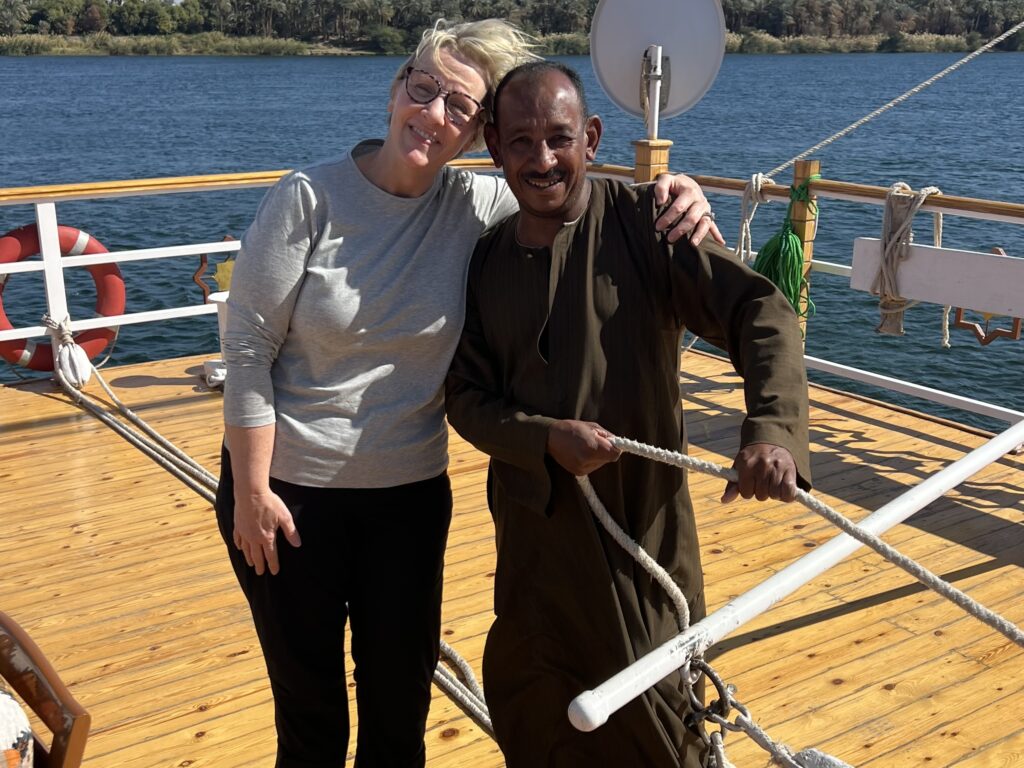
The yacht could not be more lovely or accommodating and the 10 person crew was professional, kind, amazing, and fun! The rooms are all on the lower level and have two twin beds, a nice bathroom with a decent sized shower, a closet, two large windows, and room for your bags under the beds. Upstairs, there is a large lounge area with comfortable couches, a bar, and the dining room where we ate our meals each day. There is also a large covered outdoor seating area with couches and tables with charging ports on this level. On the top level is another large, partially covered seating area. We loved sitting up there in the afternoon and evening with a glass of wine.
We had a nice lunch after boarding the yacht. Don’t worry about going hungry on this trip. There is a lunch buffet each day that consisted of 2-3 entrees, several salads and sides, bread, fruit, cheese, and desserts. Dinner was a sit down affair, and you placed your dinner order while you were at lunch each day so it would be ready for you that evening. Breakfast was also buffet style, with made to order eggs. There are three large round tables in the dining room that accommodate a total of 18 people. We had to really watch what we ate, as we didn’t want to come home with five extra pounds.
After lunch, we set sail down the Nile. Yes, down the Nile, as it flows north from Aswan to the Mediterranean. The Med area is known as lower Egypt, while the areas south, on higher ground, are known as Upper Egypt. Soon we pulled over to a small beach area where we all disembarked and Steve went for a very quick swim in the cold Nile! He was the only one of our group to actually get all the way in the river. I rode a donkey for about 30 seconds before I fell off and landed in the sand. The young boys who brought the donkeys had a good laugh, and had to show off their riding skills. I gave them a tip and we had a group hug.
We continued to sail for the rest of the afternoon, then we pulled over to the shore and anchored for the night. On a small boat such as this one, we were able to pull over and dock at lots of places that the larger ships like Viking could not. We saw tons of these larger ships over the next few days, and were very glad we had chosen OAT for this adventure.
In the evening after dinner, several of us sat up on the top deck and had some wine and visited. It started to get a bit chilly after the sun went down. There is no heat in the cabins on the yacht. While I was never cold, I was glad I brought leggings and a warm top to sleep in. Temps dipped down to 55 deg F for the next few nights, but we were very glad to have that, rather than 110 deg F in July!
Speaking of drinks on the yacht, two glasses of beer or wine with each meal are included. If you don’t drink them, they don’t accumulate. Regular coffee, soft drinks, and tea with meals is also included. Additional drinks, including specialty coffees, are available for a very small charge. I had a latte each morning and we had a drink each evening, like wine or a Gin and Tonic, and our bill when we disembarked was about $20 USD.
Day 9 Monday 1/27 Daraw, Kom Ombo, Fares Village
Monday was a very busy day with lots of activities. We started out by taking a small boat to the shore where we rode in the back of some rickety pickup trucks to the Daraw Livestock Market. We were then treated to a tour by a livestock agent. We saw lots of cows and camels and got to hold baby goats. Egypt imports about 3000 camels per week (!) from Sudan, 65% of which are used for meat. The others are used in farming and tourism. We later saw camel meat for sale. The meat is regulated and inspected by the government, even though it was hanging outside.
We then walked through the market, where a local man that our guide knew had made fresh pita bread and was frying falafel made from fava beans. It was delicious! Lots of open cooking was going on in what we would consider less than sanitary conditions. The market also sold many things other than livestock, including fruits and vegetables, beef and camel meat, prepared food, Egyptian cotton, shoes, clothing, electronics, and coffee. We tried the coffee and it was very strong and bitter. Did I mention we never pass up a random coffee at an open air market?
OAT is the only tour group that takes travelers to the market, so the locals were just as curious about the group of Americans walking through their market as we were about them. My blonde hair drew a lot of attention and several people asked to take photos with me. I was quite surprised. It was a great experience and we really enjoyed interacting with the locals. Everyone from the older men to the women wearing Niqabs (similar to Burqas) to the small children were very curious, kind, and welcoming. A group of young men were almost afraid to touch me until I reached out and put my arm around them. Even though there is a language barrier, everyone understands a smile, a handshake, or a hug.
After visiting the livestock market, we returned to our yacht in our rickety pickup trucks, and headed down the river to the Temple of Kom Ombo. It was constructed beginning in 180 BC and is an unusual double temple that is perfectly symmetrical on either side. It is dedicated to two gods, the crocodile god Sobek, and the falcon god Haroeris, or Horus the Elder. We saw hieroglyphics of medical instruments and calendars that were mostly accurate, except for the lack of leap years. In its day, it was beautifully painted, and some of the paint remains today. The temple has been destroyed over the years by flooding on the Nile, earthquakes, and humans taking the stones for other buildings. It was partially restored in 1893.
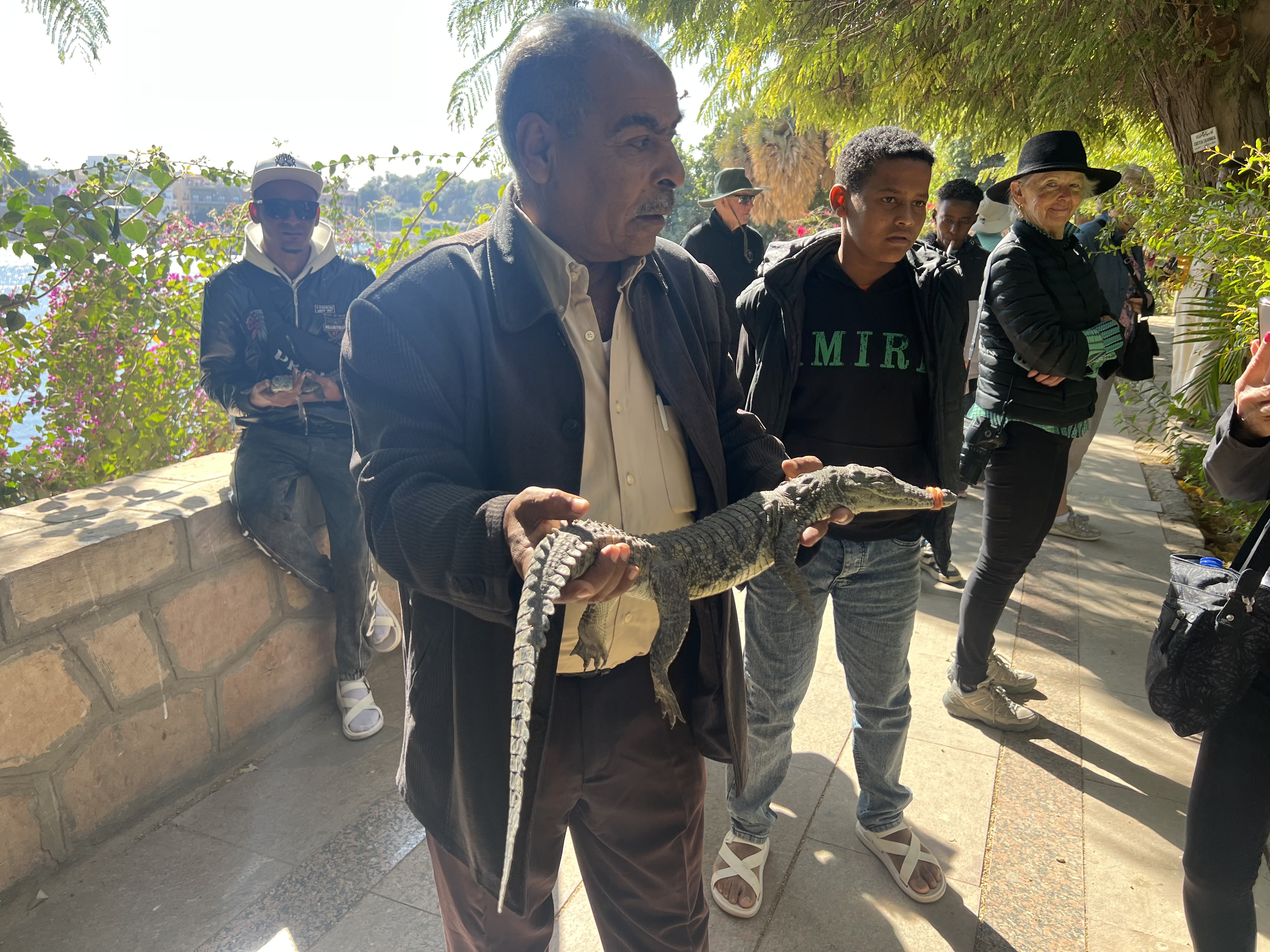
While in Kom Ombo, we also had a quick visit to the Crocodile Museum and saw several mummified crocs. The Nile used to have lots of crocs, but since the High Dam was built and Lake Nasser created, all the crocs have been located in the lake above the dam. That’s why Steve swam in the Nile, no crocs!
Be aware that at Kom Ombo, there will be tons of vendors, many of them young boys. They will ask for your name, and if you give it to them, they follow you all the way to the temple, and are waiting for you again when you leave the Croc Museum, hollering your name. We bought some small souvenirs from them, as did many in our group, but a few were so aggressive that a security guard had to intervene.
When we returned to the yacht, we had adorable crocodiles waiting for us in the hallways, just like on a cruise ship, only more adorable! We had lunch, then sailed down the Nile in beautiful 70 degree sunshine. We counted at least 40 other larger boats sailing the other direction. We were glad to be on our tiny yacht that can dock anywhere and to have had the ability to change up our itinerary to beat the crowds if needed.
Later in the afternoon, we docked at Fares Village and took a very dusty ride in Tuk Tuks to meet Mohammad, a local man who makes mango boxes for a living. It’s a very common job for the local villagers. The boxes are made from palm fronds and are used for harvesting mangoes only one time each, then are sold for other uses. He also made the chairs we sat in while there, and the shoe racks on the yacht. It was amazing how fast he worked with a giant machete-like blade. Steve tried his hand at making a box, but didn’t use his feet as Mohammad did! Mohammad also made all of us an Ankh to take home. An Ankh is the Egyptian key of life and its shape is a representation of the Nile and the delta area on the Mediterranean. The cross bar represents the border between upper Egypt in the south and lower Egypt in the north. After returning to the ship in the Tuk Tuks, we had another lovely dinner and a drink up on the top deck before retiring.
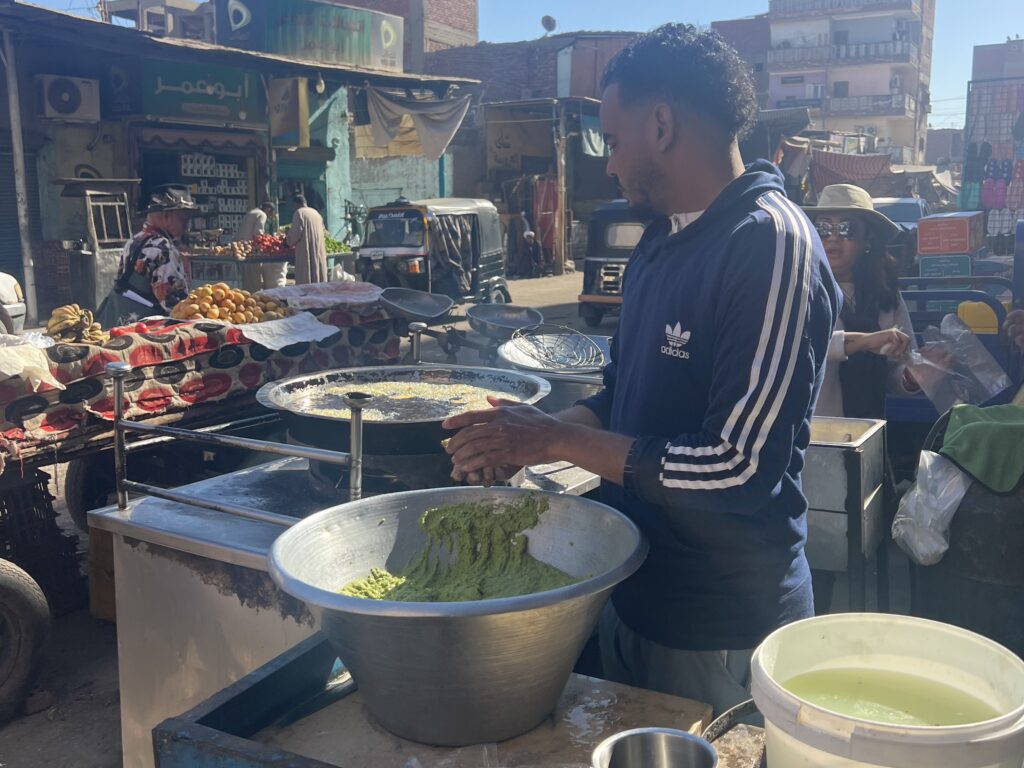
Handmade Falafel
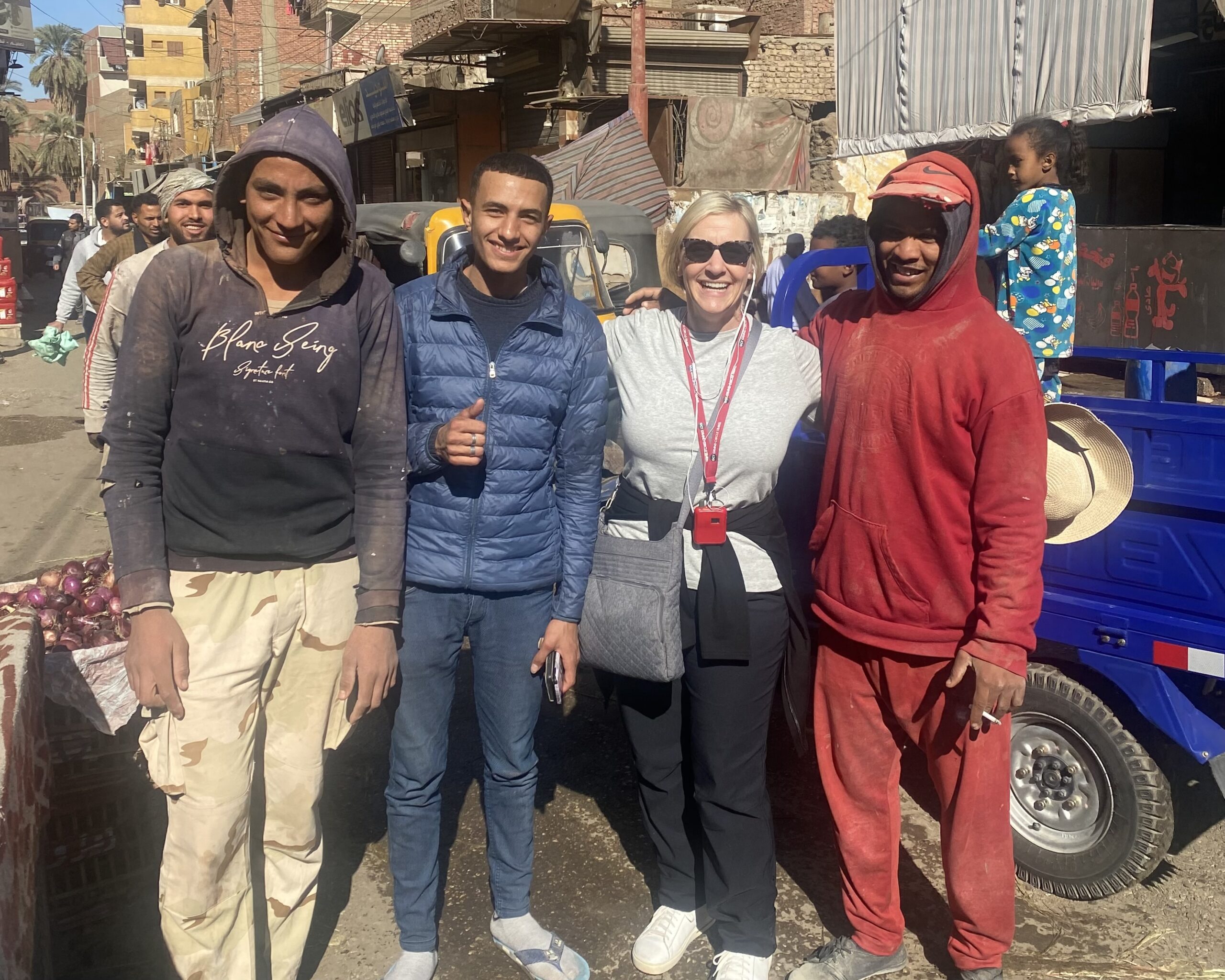
Hanging with the locals
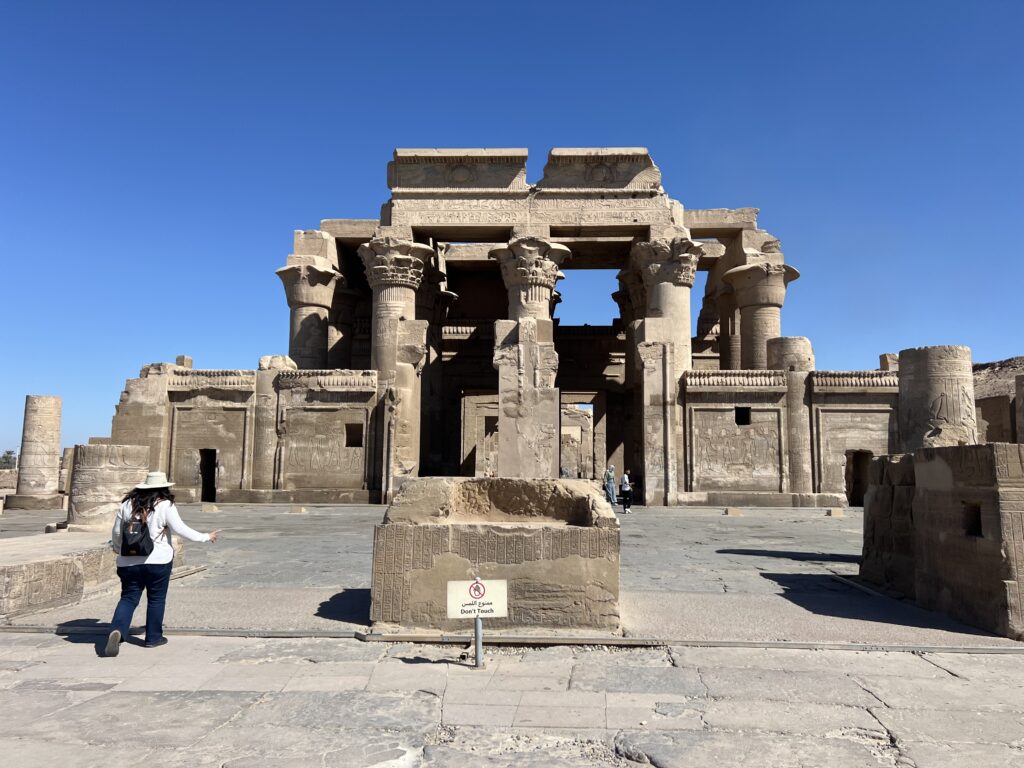
The Temple at Kom Ombo

Fares Village Tuk Tuks
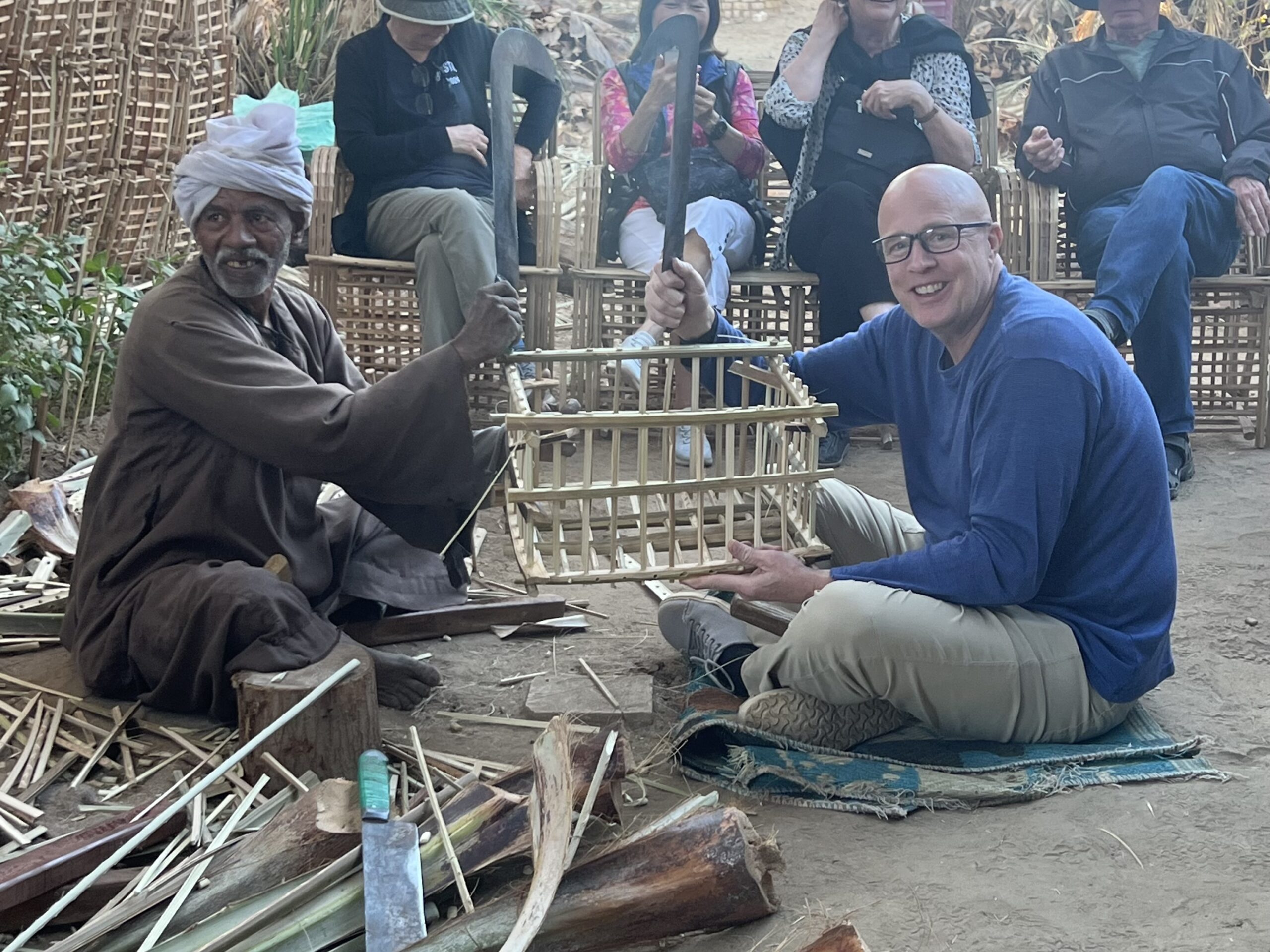
Making mango boxes
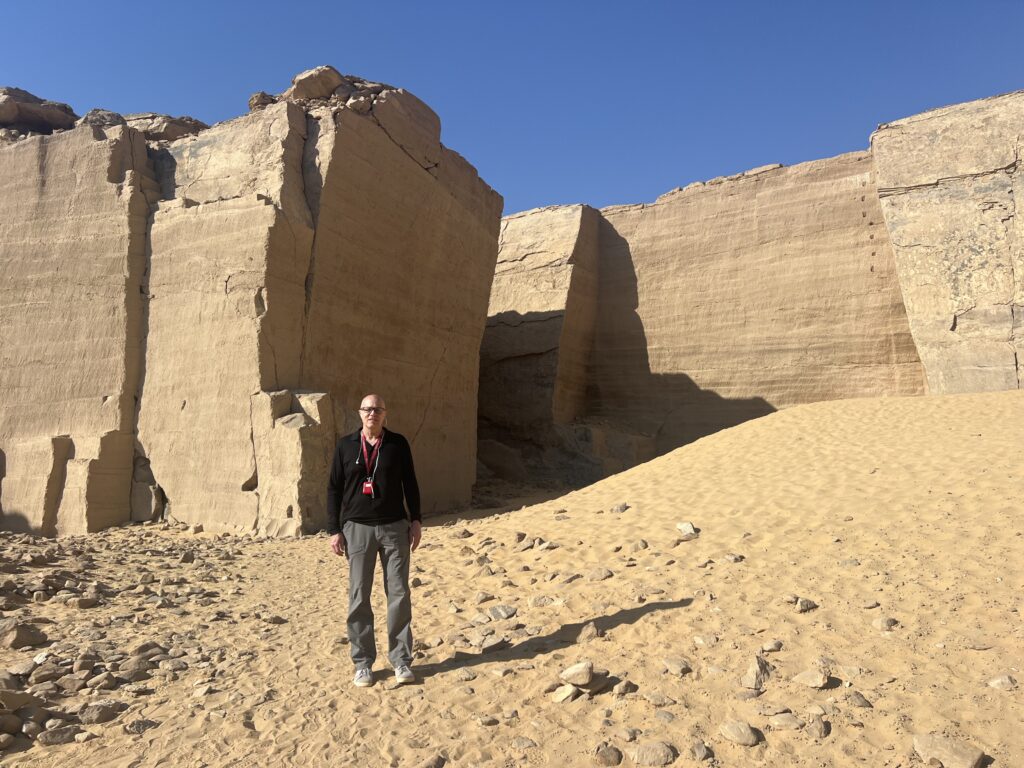
Sandstone quarry at Gebel el Silsila

Sayed’s home on Besaw Island
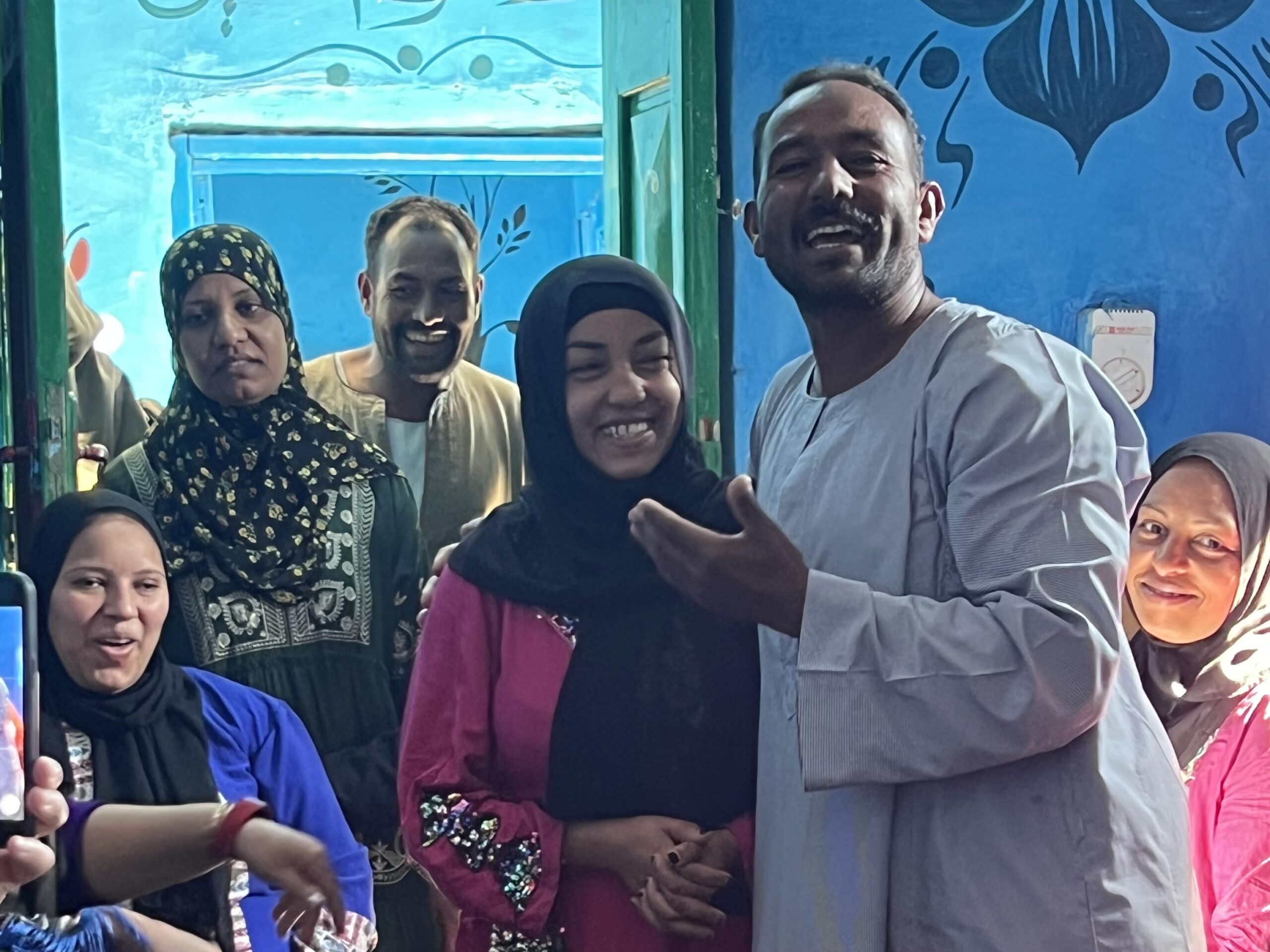
Sayed and his family

Our yacht the Amunet
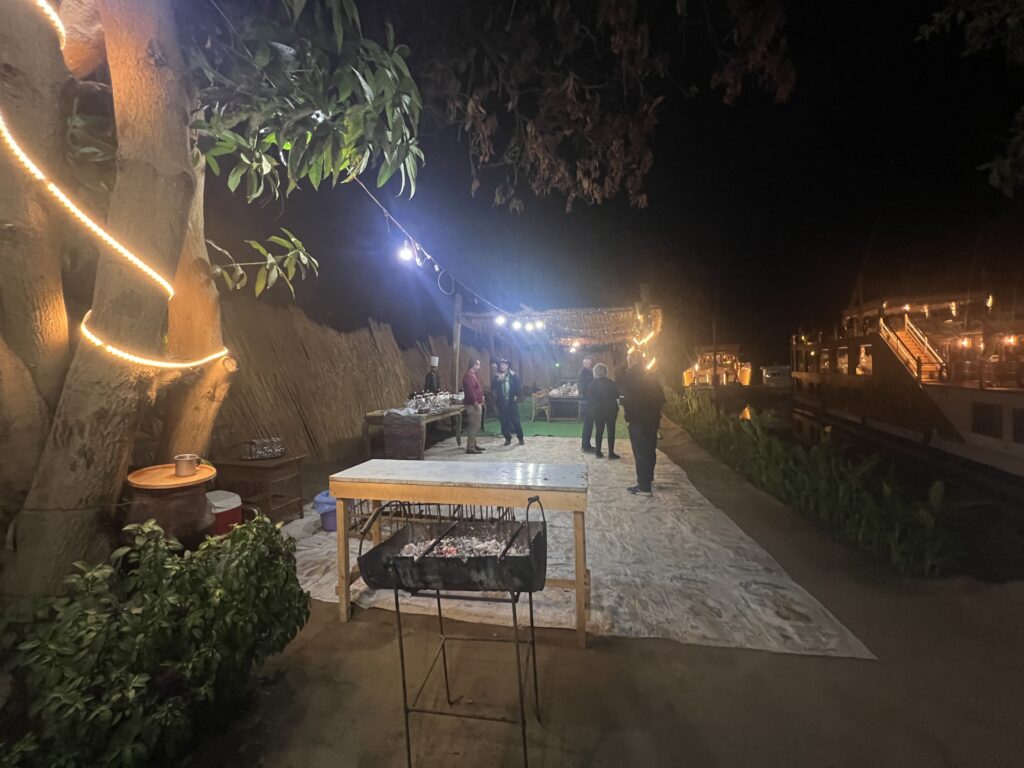
Picnic area along the Nile with the Amunet
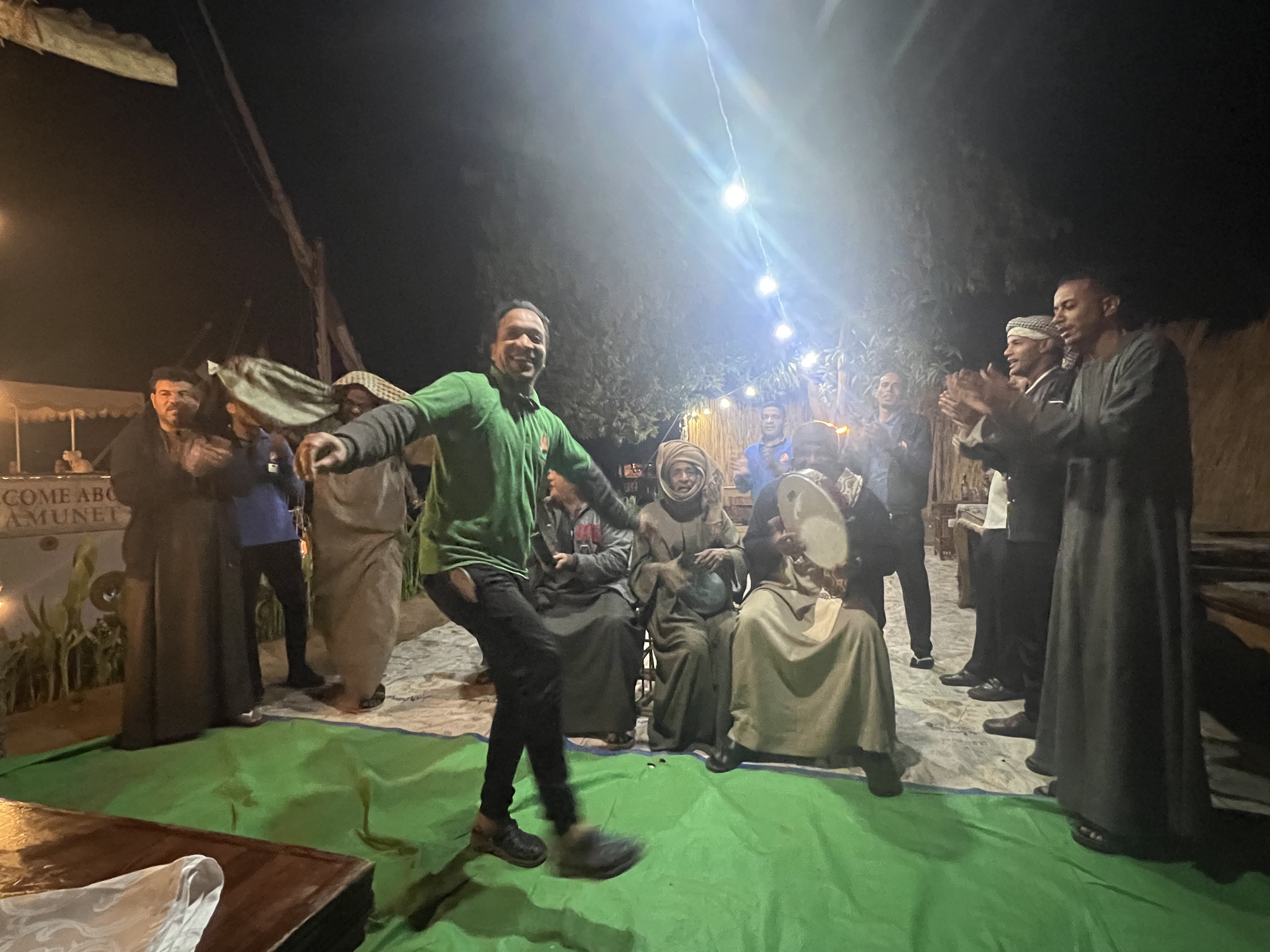
Our crew with the land owner
Day 10 Tuesday 1/28 Gebel el-Silsila and Besaw Island
On Tuesday we docked at Gebel el-Silsila, the site of several sandstone quarries, temples, and tombs on both sides of the Nile. This is also the point where the cliffs on either side of the Nile are at their closest distance. The villages and temples here were built for the quarry workers around the period of 1550 BC. We had a guided visit of The Temple Of Horemheb, the largest of the many temples located here, and walked through some of the stone quarries. The stones that were quarried here were used for some of the famous temples including those at Karnak, Luxor, and Kom Ombo.
Next was our “A Day in the Life” adventure. OAT provides this experience on each of its trips in all locations. While many tour companies visit some of the small villages along the Nile, OAT provides an in-depth half day visit to Besaw Island. Besaw is an isolated 250 acre island in the Nile with about 350 inhabitants. The island used to flood before the High Dam was built, so the residents lived in tents. They now live in permanent houses and have all the modern amenities of electricity, running water and plumbing, television, cell phones, and internet.
Most of the men are farmers and fishermen, and the women all have traditional roles. The women and men were all dressed in traditional galabeyas. There are no cars and no medical clinics. It is as if time has stopped. They have to go to Aswan or Esna for serious medical care, although there are midwives and doulas on the island to help with childbirth. They have no policemen and no crime, but they have a 10 person council to settle disputes.
When we arrived, we were met by Sayed, a local farmer, who took us on a tour of his village. Sayed is a super outgoing, friendly, and funny guy who we could tell loves to welcome visitors to his island. Our first stop was a small building with a large oven where a few of the local ladies were baking sun bread. We got to help put the bread in the oven and try samples of the fresh, delicious, warm bread. We also got to see their farm with fields full of corn, alfalfa, safflower, onions, and zucchini, to name a few, plus mango and banana orchards. A few of us volunteered to help plant a new banana tree in the orchard. We were also treated to some singing from the local children.
Next, we were welcomed into Sayed’s home. Sayed lives in a house with his wife and three children, his parents, and his brother, SIL, and their children. The house is modest and is made of mud bricks, brightly painted and decorated with vivid colors. We sat in the living room and were served hibiscus tea before lunch. Lunch was served at a long table in the open air dining room and started with delicious orzo soup, followed by some traditional Egyptian dishes.
After lunch, we were served dessert in the living room while we saw photos of Sayed’s wedding, and we had plenty of time to visit and share information. We were encouraged to ask any questions. Because Besaw Island is 100% Muslim (along with 80% of Egypt), and all the women cover their hair, I asked if that was changing, like we had seen in Cairo with the younger generation. The women answered that while they knew it was changing in some places, they had no desire to change the practice. I also asked about birth control and was told it is quite common for ladies to use birth control pills. I then asked where they would go if they could travel anywhere in the world. Sayed’s answered was Mecca, and his daughter answered to Cairo or Alexandria.
Some of the group asked about education. There is an elementary and middle school on the island, but the children go to a nearby town for high school. The children all learn English in school now, but Sayed only learned English about 5 years ago and his wife spoke little English.
Many of us brought small gifts for the children, but again this is not a requirement. We gave the young boys some Lego sets and stickers, and we gave the girls some nail polish and friendship bracelet sets. (These were lightweight and easy to pack in our carry ons.) We were happy to see them already wearing nail polish, and they seemed very pleased with the gifts.
This whole experience was amazing. My heart was full and I was so overcome with emotion (I cry at Hallmark commercials) that I burst into tears when we returned to the yacht. People all over the world are exactly the same. We all want the same things in life: peace, health, and happiness. It’s just that happiness means different things to different people, depending on their circumstances. Who is to say who is happier? Us in the US with our fancy homes, cars, and vacations, or those on Besaw Island with no desire to change or leave, but with everything they need.
When we returned from Besaw Island, it was time to unfurl the sails on the yacht. The yacht doesn’t really sail, as modern dahabeyas are pulled by a tug with a rudder operator on the back who helps steer. Once on each sailing, the crew unfurls the sails for the guests. We all climbed onto the tug and cruised around the yacht for the perfect photo op. Steve got to try his hand at unfurling the sails. It was quite fun to see the sails up!
Later that evening, we docked near a small picnic area. There a couple of these picnic areas along the Nile that are owned by local families, and OAT contracts with them for the use of the picnic areas. The crew set up a big BBQ for us and we had a lovely dinner under the lights. The crew played music and danced, and we got to meet the land owner. It was quite a fun evening and the weather was beautiful.
After dinner, several of us went up to the top deck for some drinks and stargazing. There was never a cloud in the sky while we were there, so we had fun using our Sky Guide app to see constellations and visit.
Day 11 Wednesday 1/29 Edfu Temple
On Wednesday we visited the Temple of Edfu. It is a very large temple built between during the Ptolemaic period between 237 and 57 BCE, and is dedicated to Horus, the Falcon God. Over the years, different Pharaohs and religious leaders damaged the temple by removing faces and scenes that they thought inappropriate, or because they paid homage to a previous leader or religion.
After the Romans took over Egypt, and pagan religions were eventually banned, the temple fell into disuse. It was eventually buried in 39 feet of Nile mud and sand. By the late 1700’s, the temple had homes and other structures built on top of it. The process of uncovering and preserving it began in 1860. Because of the mud, the temple is mostly intact and preserved. It is quite impressive. It is a major tourist destination, with a large café and gift shop located near the entrance. Lots of Nile river cruises stop here. Expect tons of people to be there Instagramming themselves.
Wednesday was our least active touring day. After returning from the Temple of Edfu, a few folks retired to their rooms and took naps, and some sat up on the deck and enjoyed the sunshine. Many of us relaxed in the lounge, where we had popcorn and watched the 1978 movie Death on the Nile, of course. We enjoyed another lovely dinner on the yacht that evening. At dinner each evening, you will be encouraged to sit with different people so you can get to know one another. There will likely be some solo travelers on your trip, as OAT is well known for not charging a single supplement for solo travelers. We made several great friends on this trip, and one whom we have been to visit since returning home.
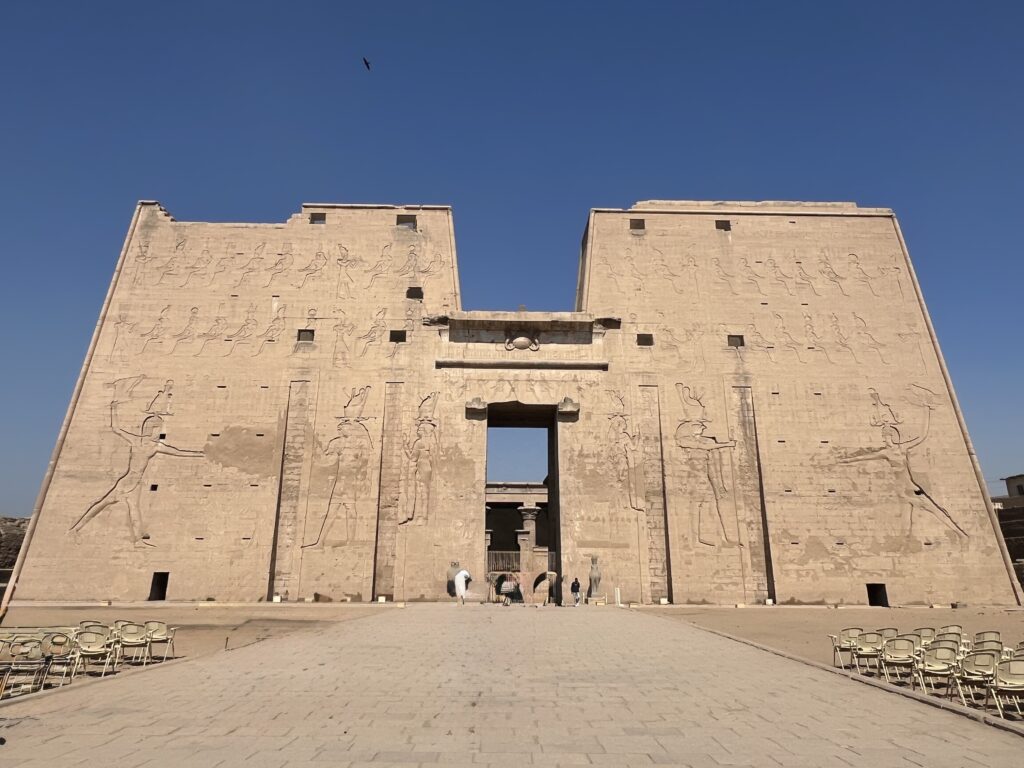
Temple of Edfu
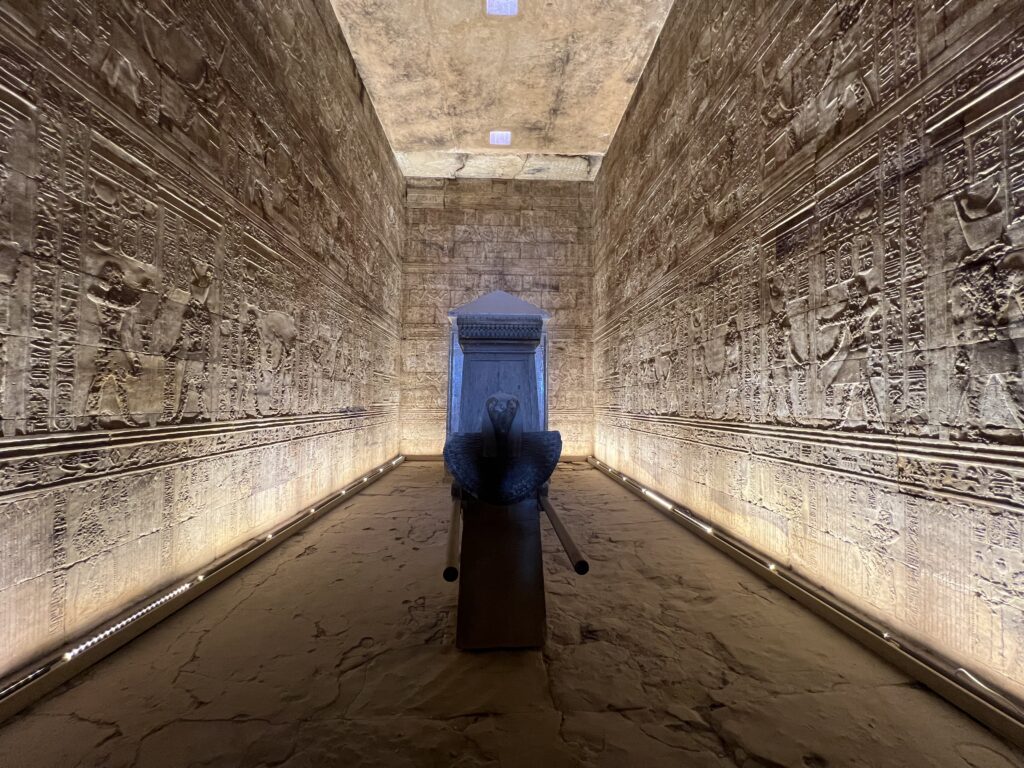
Sanctuary in the center of the temple

Our tour group with Asmaa and some family members
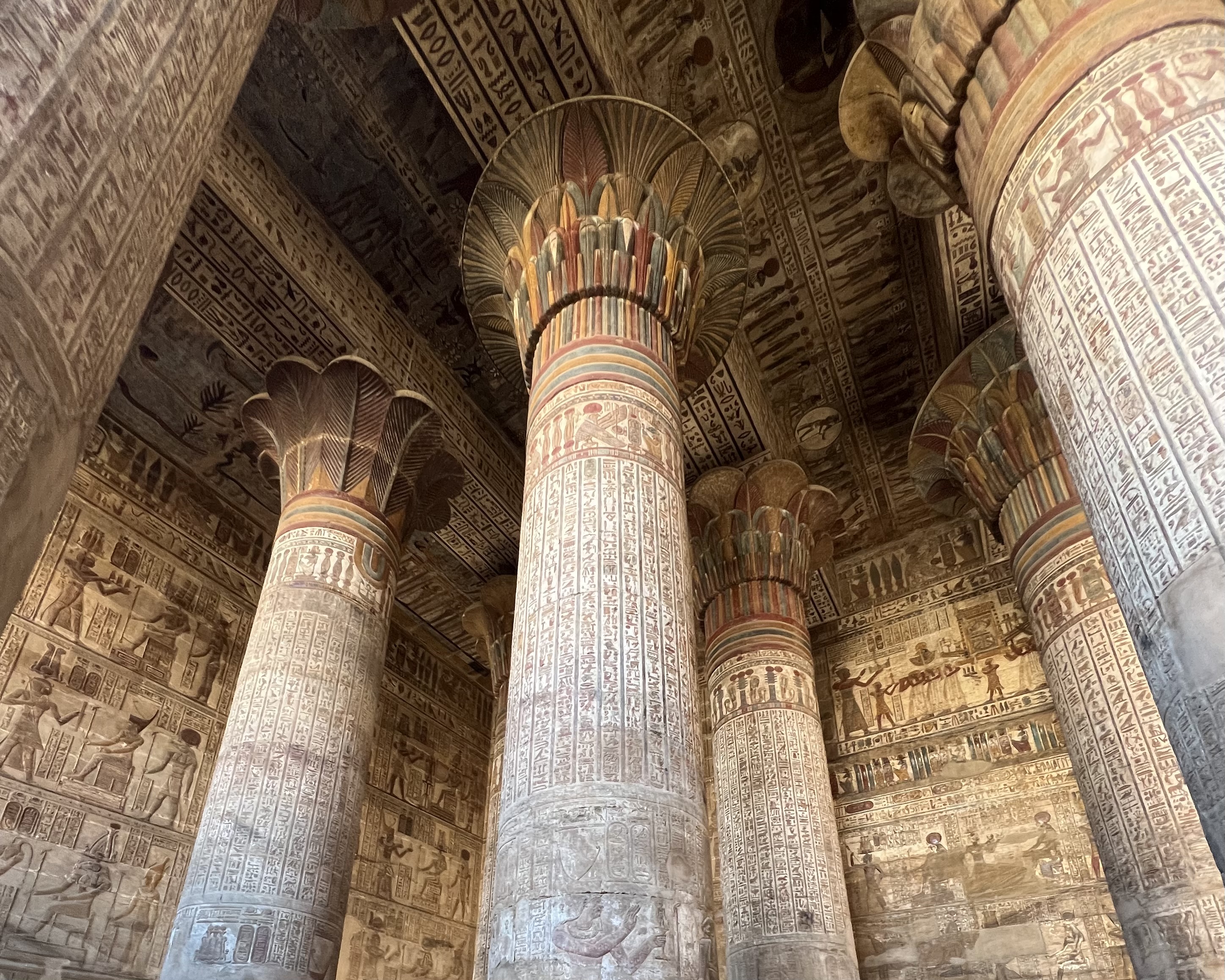
Colorful pillars in Esna Temple
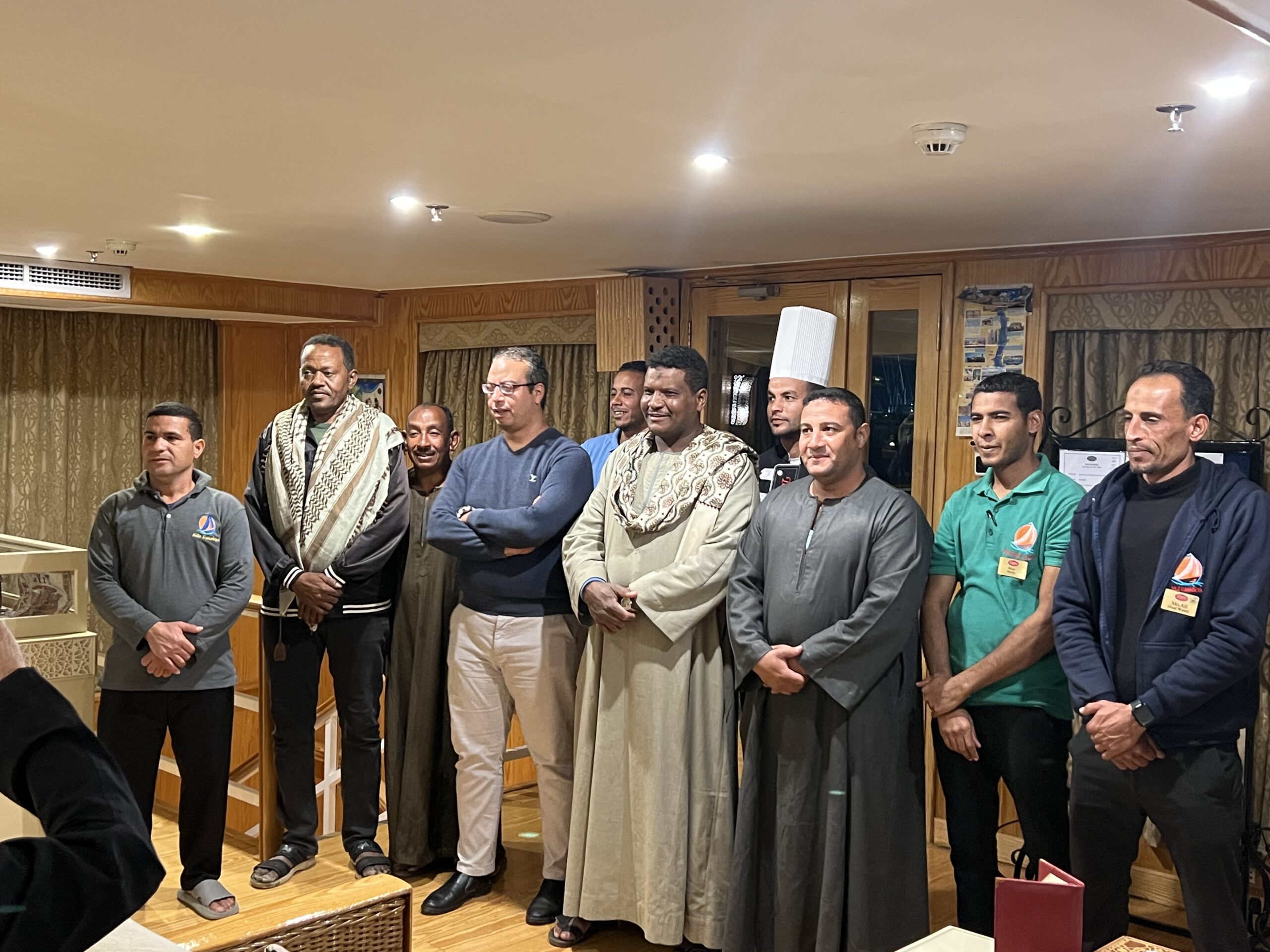
The fabulous crew of the Amunet
Day 12 Thursday 1/30 El Hegs and Esna
On Thursday morning we visited the small village of El Hegs, where we met Asmaa and her family. Our Trip Leader, Gladys, had met her a few years ago on a trip and connected with her. She agreed to start meeting an Overseas Adventure Travel group on a regular basis to teach people about her village. Her husband works at a resort in Hurghada, and is gone 45 days and home for 15. She has a sewing business to make extra money. A few of us purchased some things from her, but we had to ask, because she wasn’t actually trying to sell us anything.
Many people in her village originally criticized Asmaa for working with OAT, but they have come around and are now participating and interested in meeting people and also learning about us. She and her family live in a house that was built by the British back in the 1920’s when they were exerting their influence in the area. They also built canals and infrastructure in the area that is still in use today. Her village has many modern amenities like TV and social media, even though they don’t have much compared to us in the US. They grow all their own food, have lots of farm animals, and are pretty much self sufficient. It was a great visit with another lovely family who are healthy and happy, and have no desire to leave their village.
Later in the afternoon, we docked in the city of Esna, which was our final stop on the cruise portion of this trip. We visited Esna Temple, which was dedicated to the god Khnum, and built roughly around 200-100 BC. According to our guide, the temple was discovered when the man who owned the city lot started to excavate to build. The temple is also beautifully preserved due to the layers of mud and silt from the flooding of the Nile that covered it. Lots of colors and beautiful artwork are inside. It’s much easier to imagine all the temples in full color when you see some of it that remains. The temple is currently being restored with a visitor center and better access planned. As of now, you have to walk down a long-ish stairway to reach the temple, as it was underground when discovered.
On the way to Esna temple, we walked through the city market, and we met a man who had an ironing business, where he used his feet to guide the heavy iron that he heated in a fire. We also met a man who had a business sewing handmade suits and galabeyas, and saw bales of Egyptian cotton.
Back on the yacht, we had our farewell to the crew dinner. We were sad to be leaving crew and the beautiful ship that had been our home for that past five days. The crew could not have been more accommodating, kind, and helpful. Everyone from the crew manager to the sailors to the housekeeping staff were amazing. After dinner we packed up and prepared to disembark in the morning and start our trip to Luxor.
Day 13 Friday 1/31 Luxor and Valley of the Kings
Today we sadly disembarked our beautiful yacht with its wonderful crew, but were happy to head to Luxor to spend two nights. We again had a comfortable full size tour bus for our drive to Luxor.
When we arrived in Luxor, our first stop was the Valley of the Kings. Your ticket includes access to visit three tombs of your choice from the list of the included tombs. This entrance ticket is included in the price of your trip. Your ticket also includes the fee for the tram that takes you up the hill from the parking area to the valley itself. You definitely do not want to walk this in the heat. Take a hat and some water for your visit, as there is only a small canopy area near Rameses IV, and it will likely be scorching hot. There is also a gift shop and café where you can get cold drinks and shade. Expect there to be lines waiting to enter the tombs.
You may also choose to purchase additional tickets to see more tombs. Your TEL will secure the tickets for you and recommend which tombs to see. Tickets to visit the tombs of King Tut, Seti I, and Rameses VI are an additional fee. You will notice that the tombs are all numbered KV 1 (for King’s Valley) through KV 65, for the order in which they were discovered.
There is a nice visitor center at the bottom of the Valley of the Kings with clean flush toilets and a snack bar. There is a 10 EGP fee to use the toilets. It’s a good idea to go the toilet now before you take the tram up to the valley. A must see at the visitor center is the large acrylic model of the valley with the location of the tombs. It is fascinating to see the location of them under all that rock!
We visited Rameses IV as one of our three included tombs. It is an impressive tomb (but I thought they were all amazing and impressive) known for its large sarcophagus and colorful walls and ceilings. The sarcophagus was broken and the tomb was robbed in antiquity. This tomb was open to visitors in the Ancient Egyptian and Roman eras, and contains lots of graffiti. The mummy of Rameses IV is currently located in the National Museum of Egyptian Civilization in Cairo.
Next we enjoyed the visit to King Tutankhamun’s tomb, with his perfectly preserved mummified body inside. The mummy is preserved in a glass enclosure behind a guarded railing. There was a gentleman inside the railing who would use your phone to take close up photos for you for a very small fee, $1 US. Of course, we were happy to pay him for some great photos.
King Tut’s tomb is remarkably small compared to others in the area. The theory is that he died rather unexpectedly, and they needed a tomb in a hurry. His tomb may have been under construction for someone else. It’s quite fascinating. Tut was considered an unimportant ruler in his time with nothing truly memorable about him. His fame comes from the fact that his tomb was discovered intact with all the treasures inside, while all the others had been robbed centuries ago.
The tomb’s inner most sarcophagus was layered inside five separate shrines. Some of the other shrines and sarcophagi, as well as the famous gold mask, are located in the Egyptian Museum in Cairo (not the GEM). The inner most sarcophagus remains in the tomb. Of course, we had to take photos while walking like an Egyptian in his condo made of stona. :)
We then visited Seti I, which is one of the largest, deepest, and most decorated tombs in the valley. While this tomb had been heavily damaged over the years by explorers, tourism practices, and flooding, much of it has been restored and the number of visitors is limited. It is quite impressive with its massive pillars, and beautifully painted ceilings that resemble the night sky. Seti’s mummy is also located in the National Museum of Egyptian Civilization in Cairo.
We also visited the tomb of Tausert/Setnakht as our second included tomb. This tomb was originally the resting place of the female Pharoah Tausert, but was later reused for the male Pharoah Setnakht. Many of the depictions Tausert were replaced with depictions of Setnakht. There is a complex and unsettled history with these two. This tomb is also one of the longest tombs in the valley and holds the impressive sarcophagus of Setnakht.
This concluded our visit to the tombs located in the Valley of the Kings. We definitely need to go back, as there was not enough time to see all of the open tombs. We got a cold drink in the café, and our group took the tram back down to the parking area.
From there, we boarded the bus and headed to Queen Hatshepsut’s Mortuary Temple. Hatshetsup is famous for being Egypt’s second confirmed female Pharaoh, and was often depicted on carvings and artwork as a man. She ruled 1479-1458 BC. Her temple is built on massive terraces across the Nile from the city of Luxor. It is quite a bit of walking to see this temple complex. While the temperature was in the 70’s F on this day, it sure felt hot out there in the sun.
We then stopped briefly at the Colossi of Memnon. This is the ruined Mortuary Temple of Pharaoh Amenhotep III, with two massive statues of him still standing, but in poor shape. The temple was originally thought to be dedicated to the Greek God Memnon due to some of the inscriptions. We had the opportunity to take photos before heading to lunch. We enjoyed the included lunch at The New Memnon Hotel Restaurant. The food was delicious and the hotel and grounds were beautiful.
We later checked into the Sofitel Winter Palace Hotel in Luxor. This is a beautiful 5 star hotel built in the early 1900’s and since refurbished. Famous guests include Lord Carnarvon and Howard Carter, the financier and discoverer of King Tut’s tomb in 1922. The hotel was used as the staging area for the press corps during coverage of the discovery. The rooms and the grounds are remarkable for their beauty and we enjoyed a two night stay here. The included dinner on this night was at The Lantern Room, another delicious meal of local Egyptian specialties.
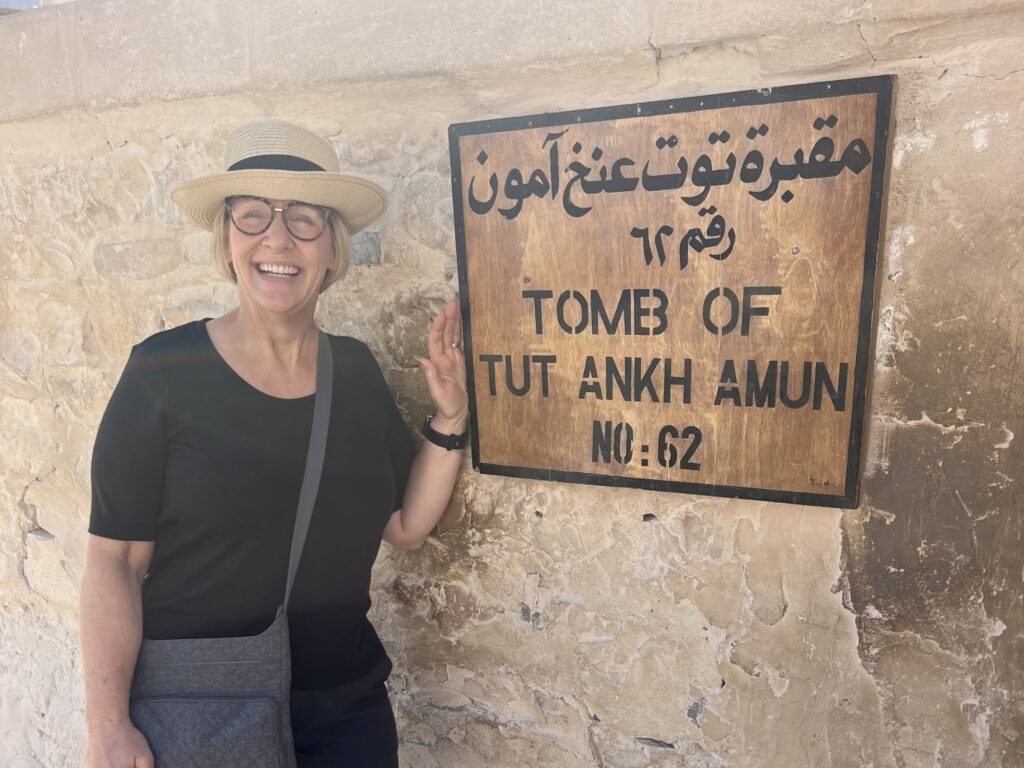
Entrance to King Tut’s tomb

King Tut’s carefully preserved mummy
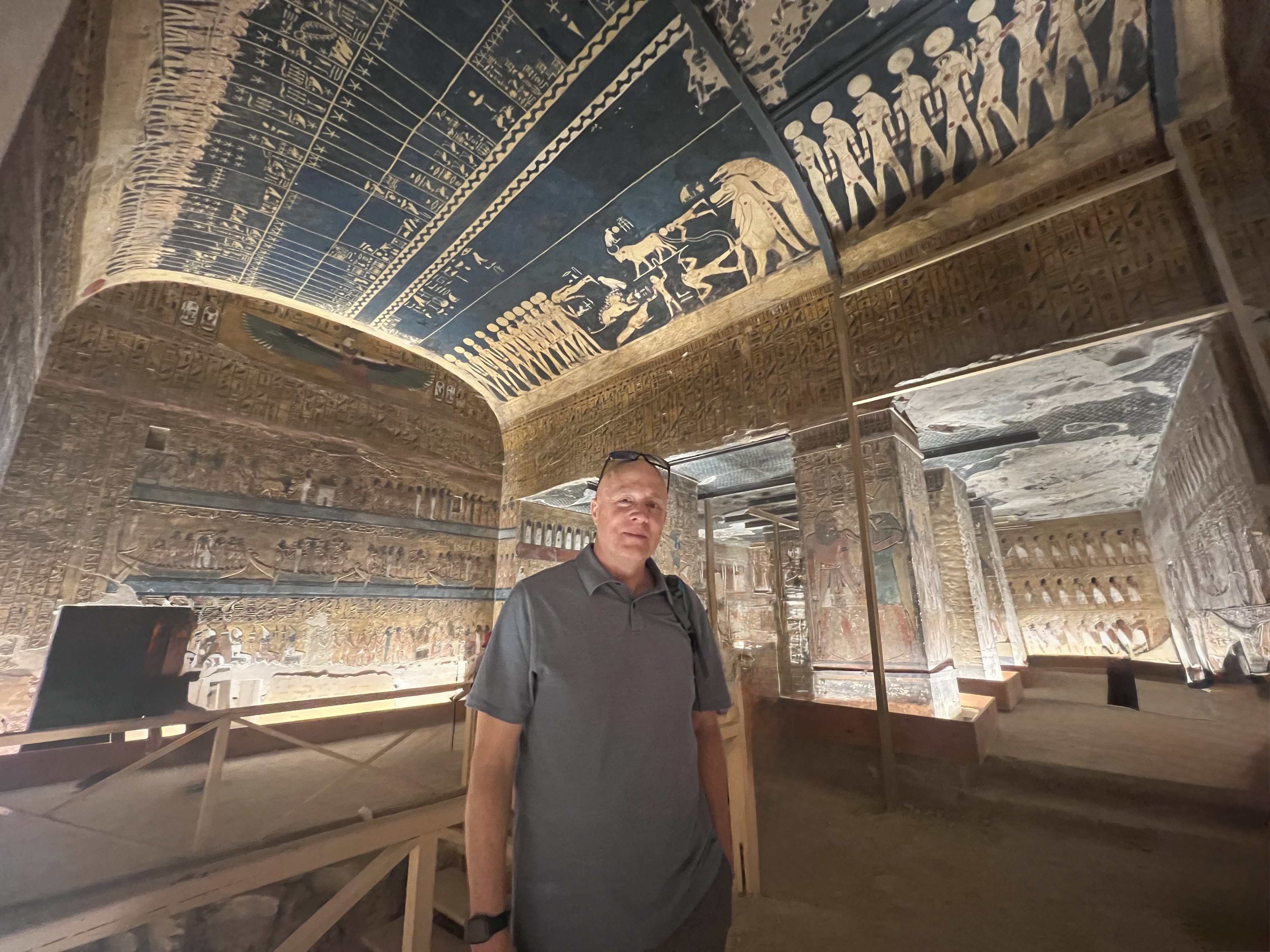
Tomb of Seti I

Tomb of Seti I
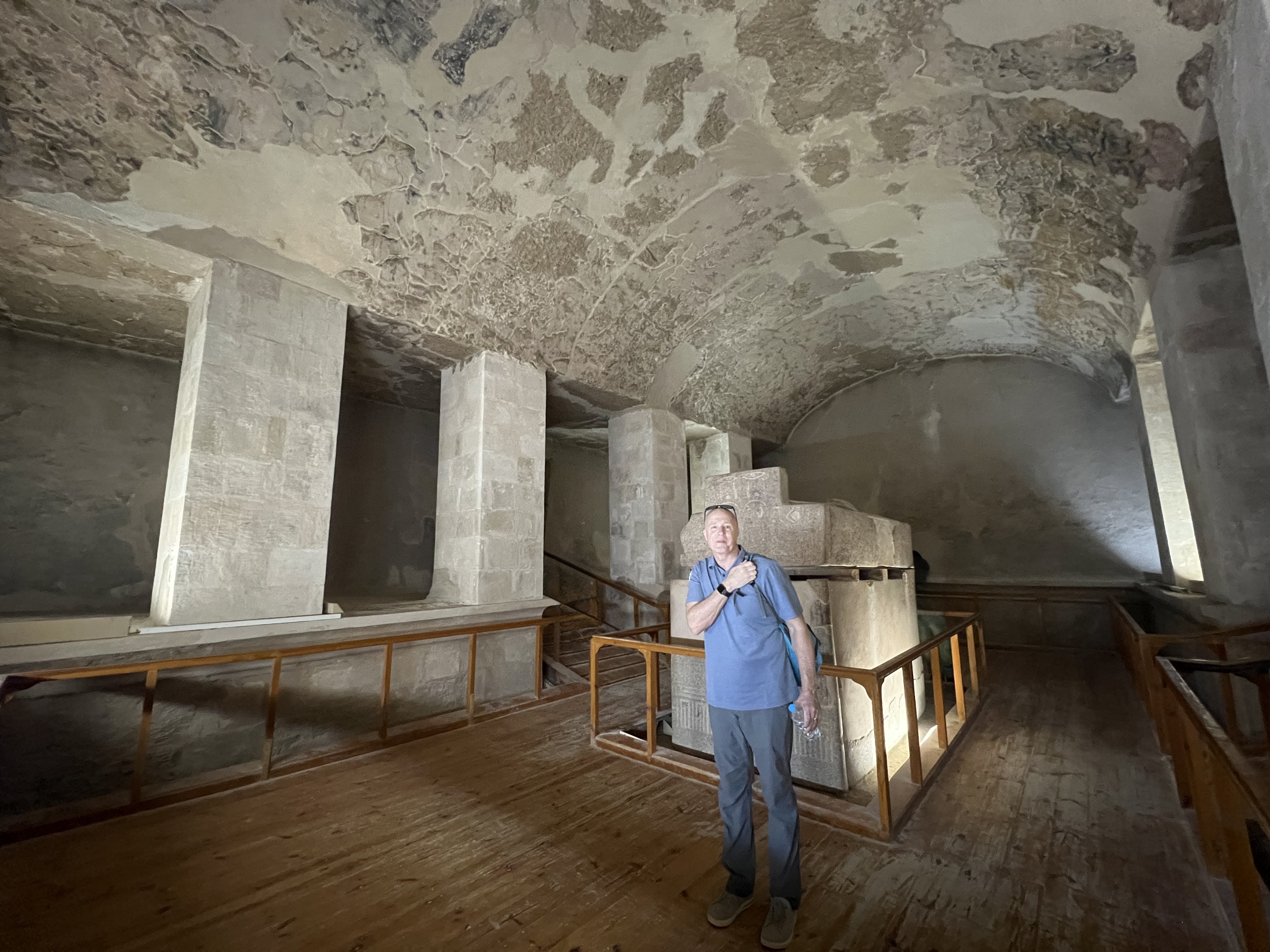
Sarcophagus in tomb of Tausert/Setnakht
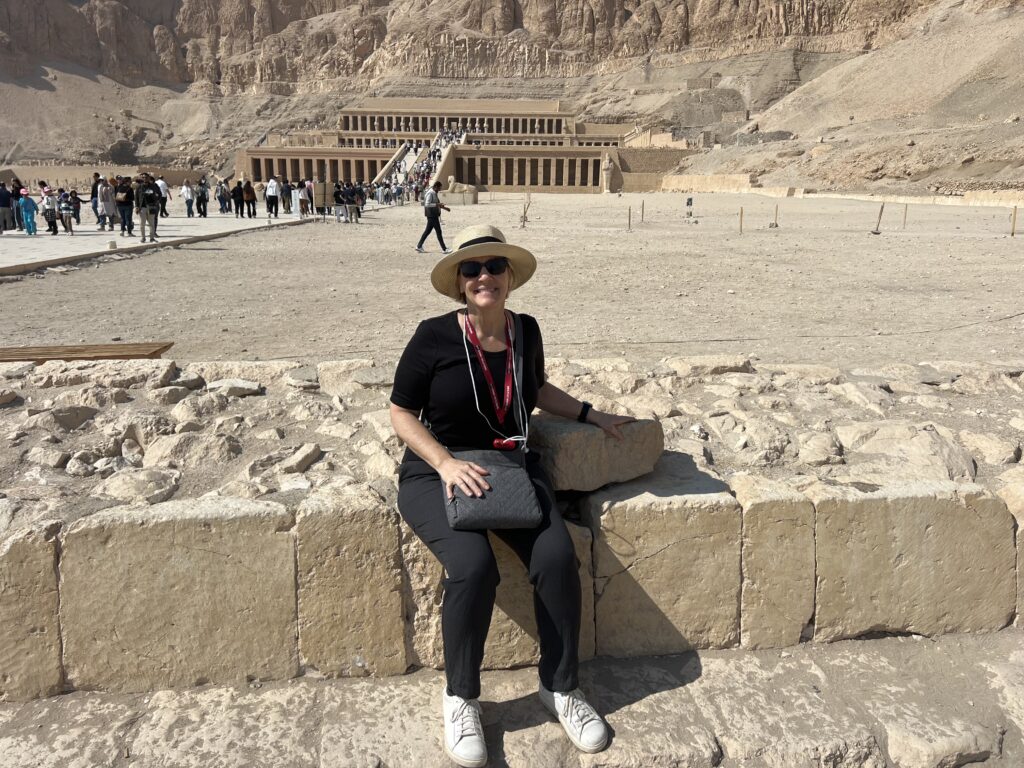
Queen Hatshepsut’s Mortuary Temple
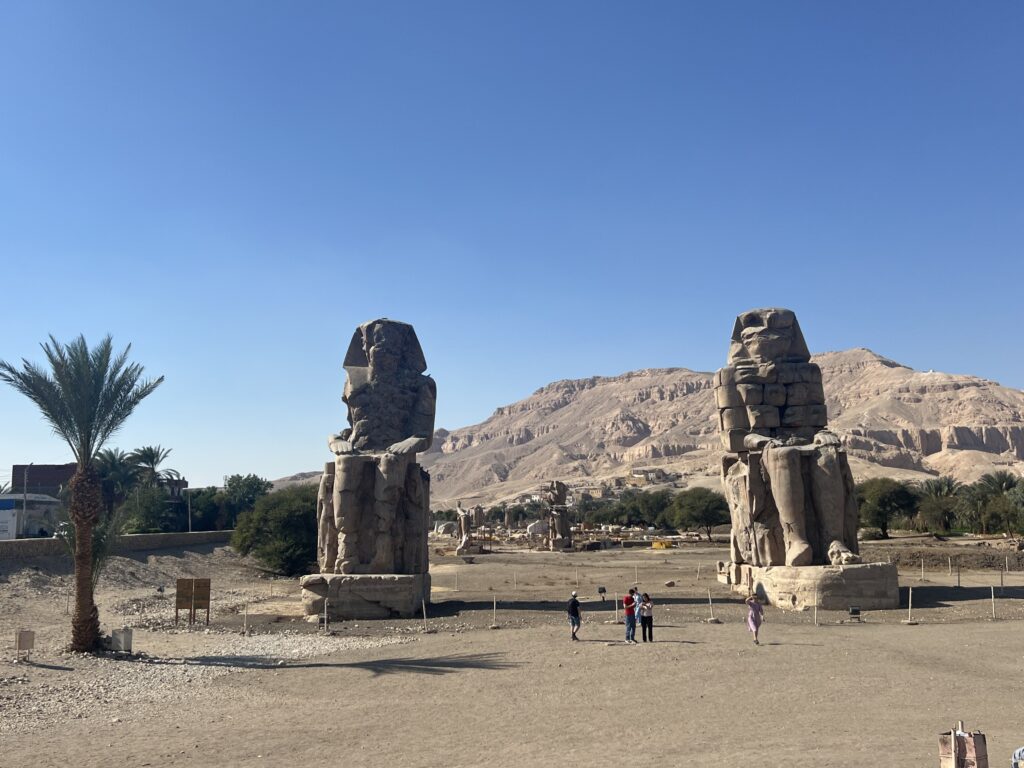
Colossi of Memnon
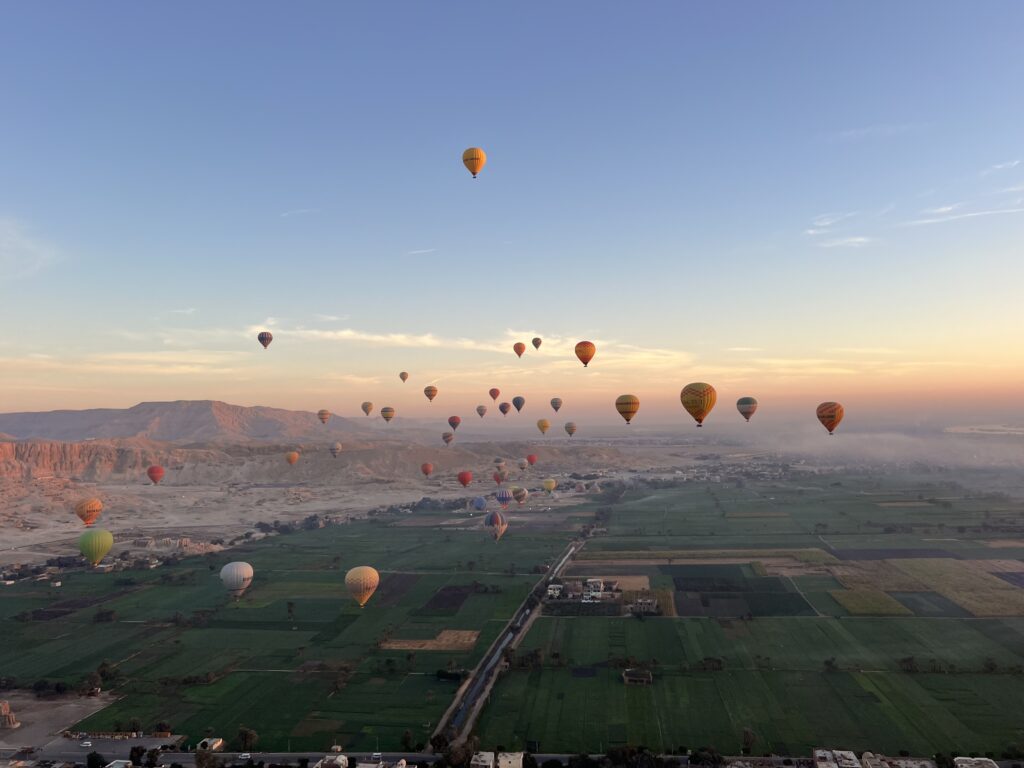
Sunrise over Valley of the Kings and Nile River
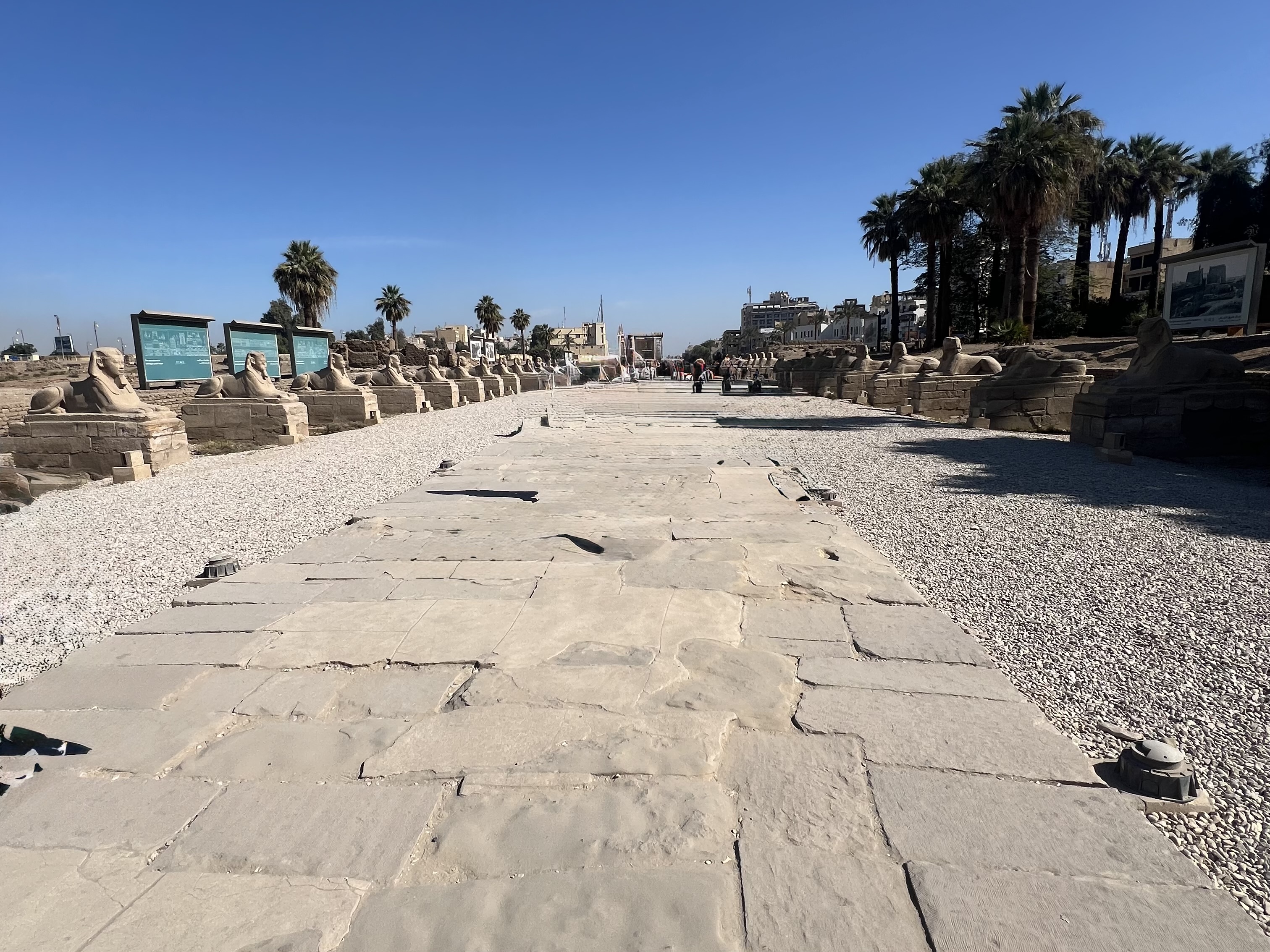
Avenue of the Sphinxes
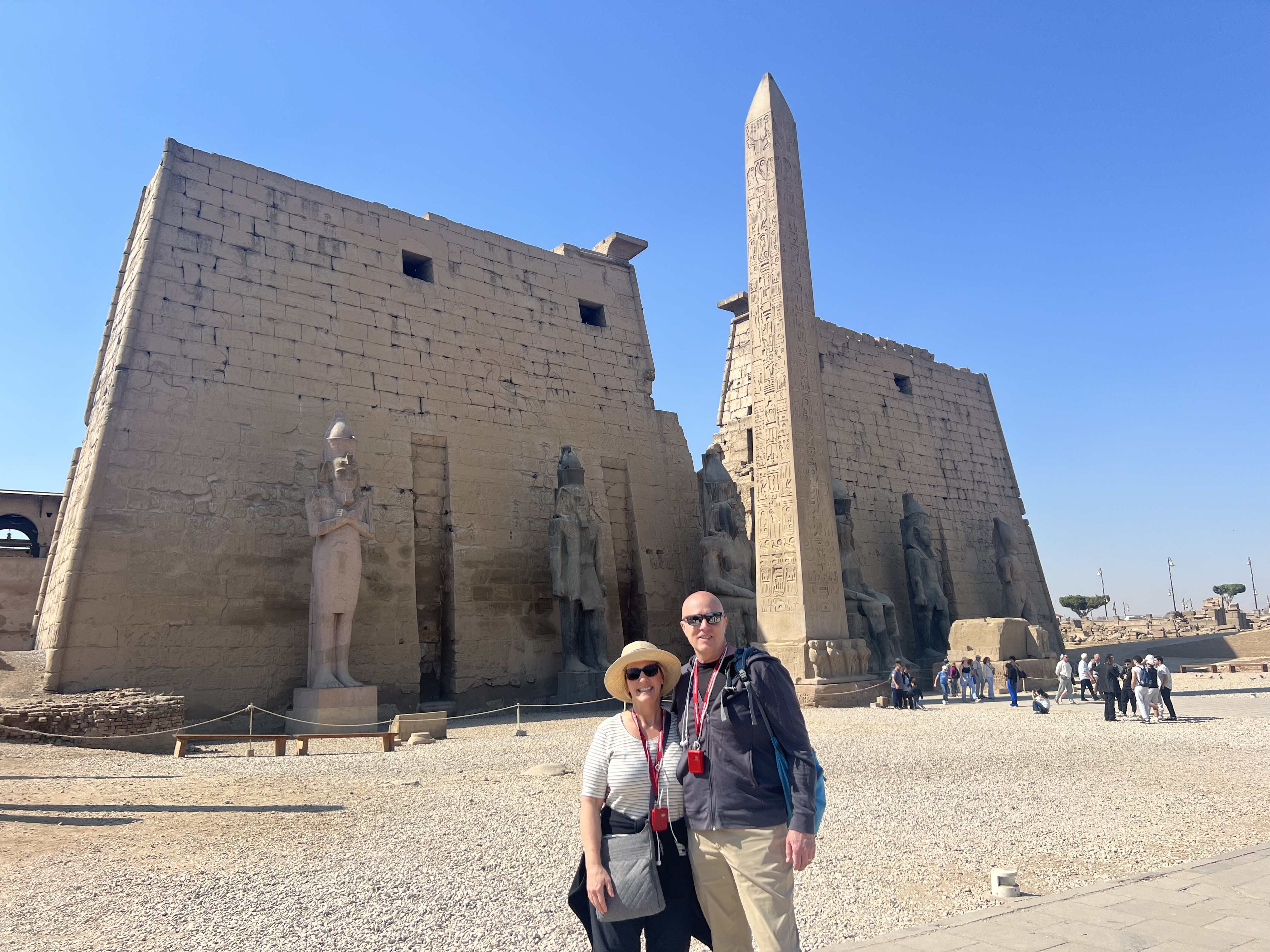
Luxor Temple

Karnak Temple
Day 14 Saturday 2/1 Balloon Ride, Avenue of the Sphinxes, Karnak and Luxor Temples
We got up way too early this morning for a hot air balloon ride over the Valley of the Kings. There are 22 balloon companies in Luxor and they sure are busy. We had to take a small boat across the Nile, then a van to the balloon field. When we arrived, all the balloons were laying out with the huge baskets on their sides. When they got the go ahead from the airport, they all used giant fans to blow air into the balloons before firing up the flames. Then the crew trucks pulled the baskets to the upright position. The baskets hold 20 passengers with the pilot in the middle. We hopped in and off we went to see the sunrise over the Nile. As we were rising, the next crew was laying out and inflating the next group of balloons. It was a very well-oiled machine. I can’t say enough about this experience. It was fabulous. Our pilot was hilarious and he really made the trip a lot of fun.
There will be a dedicated photographer with you all morning, taking tons of photos of you throughout the entire experience. We had the opportunity to purchase all the photos at the end, and wish now that we had done so. I do not recall the prices. While you will take lots of photos yourselves, don’t pass up the opportunity to get these photos from a hard working two-man local photography team.
Definitely take a warm jacket with you. It was almost cold at 0430 in the morning. While I was wearing a long sleeve tee and a fuzzy jacket, I could have used another layer. They did serve us a nice hot coffee and a Twinkie on the small boat we used to cross the Nile. You will be amazed at what seems like hundreds of small boats and white vans used to transport all the tourists, so expect a lot of people and a crazy fast ride to the balloon field. While it is not included in the cost of the trip, the $149 USD fee per person was definitely worth it. Your TEL will book this for you and you can pay with a credit card.
Later that morning we visited Luxor Temple, Karnak Temple, and the Avenue of the Sphinxes, which connects the two temples. There are 1057 original sphinx statues lining the avenue. Construction began in the 16th century BCE and years of Nile flooding and sand eventually buried the sphinxes. They weren’t discovered until 1949 and today you can walk the entire 1.7 mile long avenue again.
Luxor Temple was constructed around 1400 BCE by Pharaohs such as Rameses II, Tut, and Amenhotep III. It is a large temple complex built from sandstone quarried from Gebel el-Silsila. Originally, there were two large obelisks at the entrance to the temple. Only one remains today, as the other was given to France by then ruler Muhammad Ali in 1835. So many of Egypt’s treasures were claimed and given or sold in the 1800’s. It’s sad to think they should still be in Egypt, but many of them were in fact saved from destruction by the British and other explorers.
Construction on the Karnak Temple Complex began in the 20th century BCE and it wasn’t completed until the 4th century CE. It is quite large and contains many chapels, temples, pylons, and obelisks. According to our guide, about 30 Pharaohs reigned during the construction of this temple. It truly is massive and will take you quite a while to see the whole thing. Definitely take a hat and water with you. There is a small gift shop and restaurant located within the temple complex. Be prepared to run the vendor gauntlet as you are leaving. It is a long walk back to the parking lot. We bought an alabaster obelisk from a very nice young gentleman on the way back.
Our TEL Gladys was a wealth of knowledge for us during our visit to these two temple complexes. She truly has a gift for making ancient Egypt come to life. The TELs will give you plenty of time for their guided tour, and plenty of free time to explore on your own.
We had our included dinner at the Winter Palace hotel on this evening. Gladys gave us small gifts to show her appreciation for all of us. She also had a special gift for one of our group members who had completed 48 trips with Overseas Adventure Travel! That’s definitely something to aspire to! (Also, yes, I did end that sentence with a preposition.)
Day 15 Sunday 2/2 Mosques and Egyptian Museum
On Sunday morning, we flew from Luxor to Cairo on Egypt Air. This was another full commercial flight. Your TEL will again help everyone secure their boarding passes and check their luggage. After arriving, we boarded a full size tour bus and drove through the newer parts of the city of Cairo. It is much different from the older parts of Cairo that we had seen before.
We had a guided visit of the Mosque-Madrasa of Sultan Hasan, a 14th century mosque, and the Al-Rifa’i Mosque, built in the early 1900’s. You can barely tell which one is older. At the Hasan Mosque, we met the Imam, who performed a prayer song for us. It was absolutely amazing to hear him sing. At the Al-Rifa’i Mosque, we saw the gravesite of Mohammad Reza Pahlavi, the last monarch of Iran, which we knew as the Shah of Iran before his government was overthrown in 1979.
After the mosques, we checked into the Marriott Hotel again and had some free time. We wanted to see King Tut’s gold mask, so we grabbed an Uber and went to the older Egyptian Museum in Tahrir Square. We would have walked the 35 minute 1.4 mile route from the Marriott, but it was quite warm that day and I didn’t want to be sweaty when we got there. The Uber app is easy to use in Cairo. Our trip was less than $5 USD each way. The driver will pick you up at the entrance of the tower where you will likely be staying, rather than the main entrance to the hotel. (There are two guest towers at this hotel.) This is the same entrance our group used when coming and going on day tours from the Marriott and it’s the easiest entrance to access from your room in the tower. There is a security checkpoint at this entrance, and several places to sit while waiting for the tour members to gather in the morning. Gladys referred to it as the white lobby, as there is quite a bit it of white marble throughout.
When we arrived at the Egyptian Museum, there was a short line at the security checkpoint near the road. Once we got through security, we had a short walk to the entrance and the ticket booths. We procured our tickets using Apple Pay or a credit card, I don’t recall which, and headed in. While there is still a lot to see at the Egyptian Museum, many of the artifacts have been relocated to the new Grand Egyptian Museum (GEM). The King Tut exhibit here is vast and a provides a wealth of information to the visitor. While you are able to photograph many of the artifacts, you are not permitted to photograph the gold mask and the sarcophagi. Tutankhamun’s funerary mask is quite impressive and not to be missed! I always thought it was black, but it is actually a beautiful navy blue, and made of glass. You’ll have to take our word for this and see it for yourself!
We did see a few people who were attempting to take photos of the mask and sarcophagi. The museum staff scolded them, but really???? Can’t you just be an adult and follow the clearly marked rules??? Please don’t be that ugly tourist person.
When we returned from the museum, we went for a drink at the outdoor terrace at the hotel. We then had our included farewell dinner with our fellow travelers in the hotel restaurant. This is the time when most people choose to give their tips to the Trip Experience Leader. (Before we left the US, Gladys told us she preferred USD.) We came prepared with US dollars in an envelope, and threw in the remaining Egyptian money that we had left over.
After dinner, we packed up and got ready to leave. About six people in our group were heading to Alexandria for the OAT extension, but we didn’t have enough time off for that on this trip. We had to leave the hotel at 10 pm to head to the Cairo airport so no sleep for us. This was our choice, as we just wanted to be home when the trip was over. Four of us took this option. A couple people were heading out the following morning for their trip back to the US, but would spend the night in their connection city in Europe instead of doing it like we did. I do believe there are advantages to both itineraries, but for us, we just wanted to get the flights over with and get home to our own beds and our four pets.
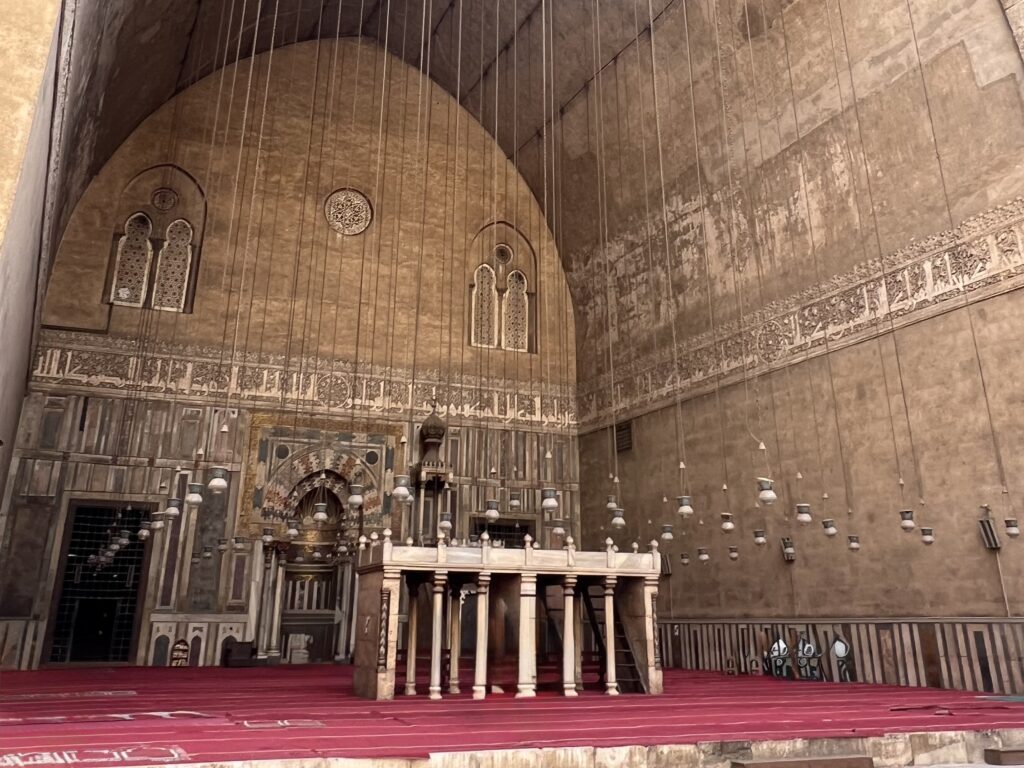
Mosque-Madrasa of Sultan Hasan
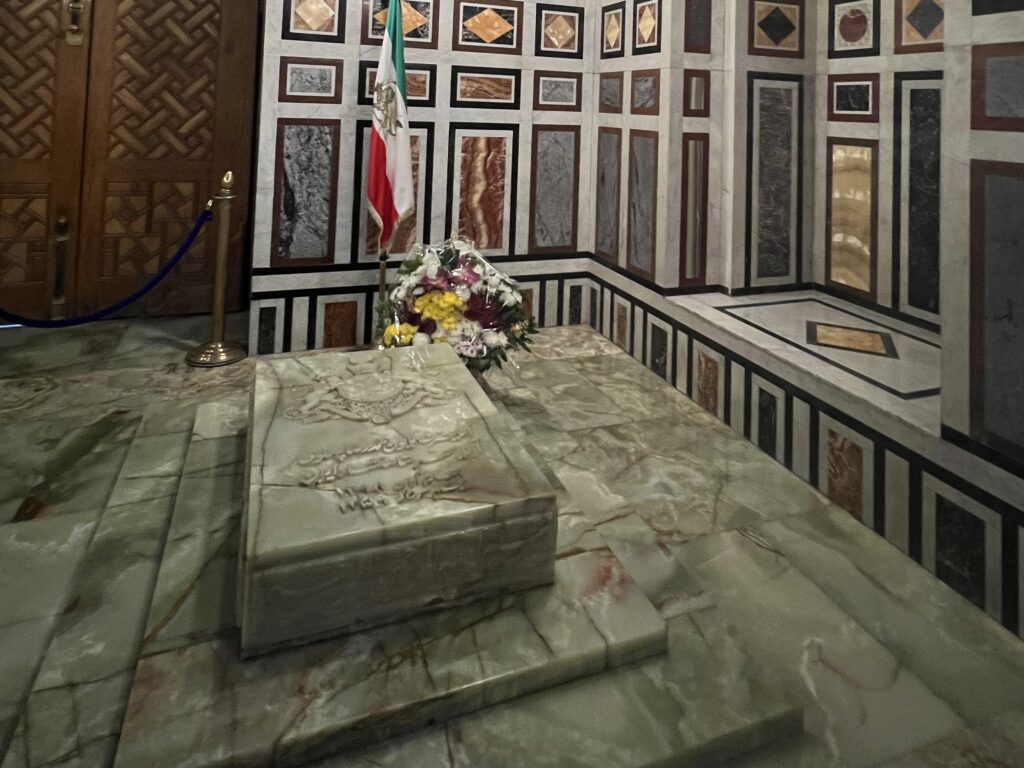
Gravesite of Mohammad Pahlavi, last Shah of Iran

Egyptian Museum

Anubis Shrine from King Tut’s tomb
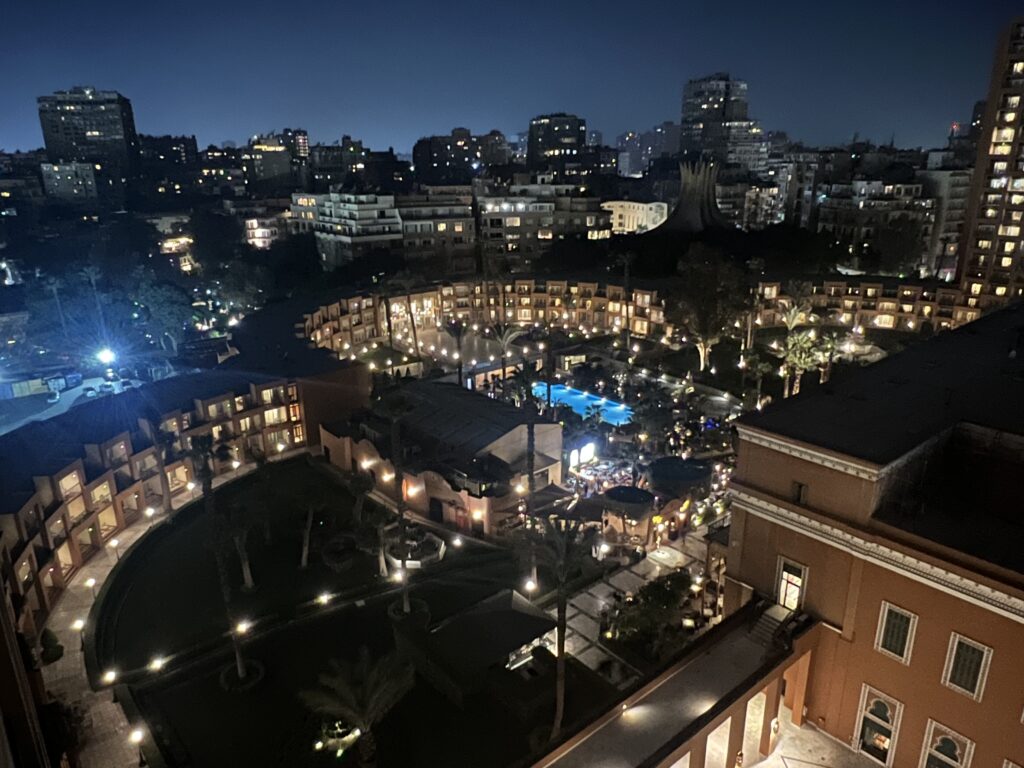
Courtyard of Cairo Marriott from our balcony

Happy to be back home to our pups
Day 16 Monday 2/3 Flight Home and Summary
Our flight on United left Cairo about 0130 am, stopped in Frankfurt for about three hours, and stopped in Chicago for about three hours. We finally got home at 6 pm on Monday, exhausted but happy, after 24 hours of travel.
The long flights were totally worth it. This was an amazing trip that I cannot say enough good things about. If you are thinking about this trip, definitely do it. We felt very safe and very cared for by the folks at Overseas Adventure Travel. They take care of every detail, and they even send a personal escort with you back to the airport. This person waits in line with you and stays with you until you are all checked in and headed to the gate. All the internal travel and flights are seamlessly coordinated, all the hotels were fantastic, and the food was great. The crew on the boat went above and beyond to accommodate us.
Finally, our Trip Experience Leader, Gladys Haddad, was phenomenal. She really made the ancient Egyptians come to life. It’s hard to imagine life 4000 years ago, but her knowledge and expertise, along with her ability to tell stories with humor and compassion, really brought the whole country to life for us. We met amazing local people, had experiences we will never forget, and we are forever grateful for this trip of a lifetime.
Disclaimer: We mainly use iPhones for photos, and while all photos were taken by us, I use the Apple clean up tool to remove people and extraneous objects from the photos. Therefore, you may see some weird or wonky shapes in the photos.
Like what you read? Hate it? Please leave us a comment below, but don’t be bitchy. Happy Travels! (Your email address will not be published.)