
Straight to the Point…
Choosing the best suitcase for your particular style and length of travel can be a tough decision. There are many factors to consider: size, weight, two wheels vs spinners (and the related factor of volume), hard side vs soft side (and durability), locks, charging capability, color, price, and warranty are the factors to be considered. We’ll briefly break these down to help you decide what is right for you, and tell you why I love my Travelpro bags.
Now, on the information you need…
Before we get started, I want to let you know I have no affiliation with Travelpro. I buy all my own products and my opinions are solely based on my own experiences.
Size Matters
Size matters for carry-on bags. The single most important factor in choosing a carry-on bag is size. Different airlines have different requirements for sizing and this makes your choice more difficult. It would seem like the airlines could or should standardize their sizing, but airplanes are not always configured the same way. For example, a Southwest Boeing 737 may be configured in a different layout and have a different number of seats than a United or American B-737. This means the overhead bins may be a different size, made by a different manufacturer, or have been retro-fitted, and they may require a certain maximum size of bag to fit properly in the bin.
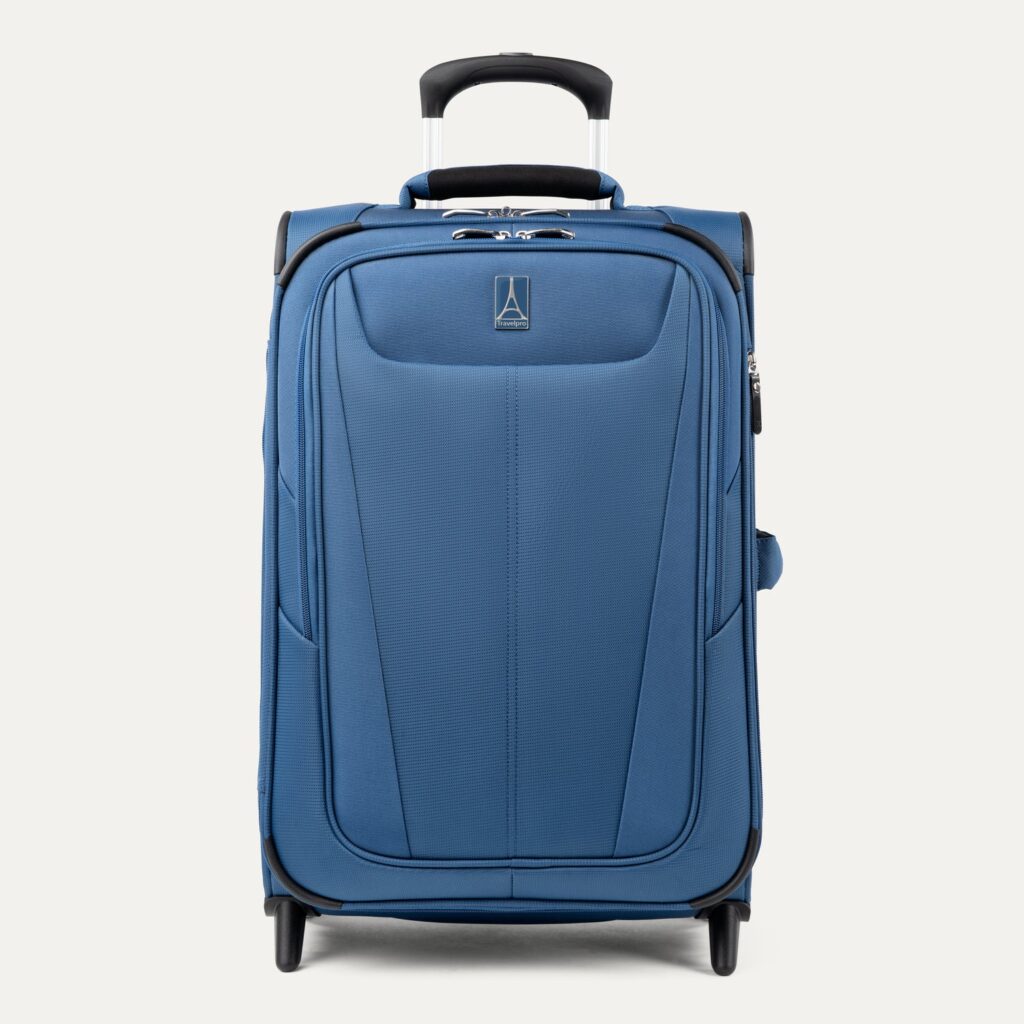
For most major US carriers, the maximum size allowed for a carry-on bag that will be placed in an overhead bin is 22” X 14” X 9”. These dimensions include the wheels and handles. If you plan on traveling with a carry-on, you are pretty safe choosing any bag that fits close to these specifications. I generally fly Delta or United, and most often use my Travelpro 22” Maxlite 5 Rollaboard two wheeled bag. Its dimensions are 23” X 14.5” X 9”, and it fits perfectly in all the overhead bins on all the airplanes I have flown on Delta and United.
International airlines, especially regional carriers, often have a smaller maximum size for carry-on bags. That standard size is generally 21.5” X 15.5” X 9”, also including wheels and handles, although individual airlines will again vary. To fit this smaller requirement, I also own the Travelpro 20” International Sized Maxlite 5 two wheeled carry-on. Its dimensions are 21.75” X 15.75” X 7.75”. (Please note that I believe both of these bags are incorrectly named by Travelpro. The sizing in the names of the bags is the interior size, not the outside dimensions, so it is a bit of a misconception when shopping for a bag.)
Size also matters for checked bags. Most airlines allow a maximum size of 62 linear inches for checked bags. This calculation is done with height + width + depth. Bags in the 27” to 30” range will fit in this category. This requirement varies greatly by airline and by ticket class, so be sure to check with your airline each time to be sure your checked bag is in compliance.
Weight Matters
I am generally (but not always) a carry-on only traveler, and I most often travel alone to our destination (Steve normally takes a flight on his airline and meets me there). This means that I am responsible for whatever I pack, and it has to be transported through the airport, in and out of ride share vehicles, onto trains, up and down stairways, and dragged over cobblestones. The weight of my bags definitely matters to me. The joke about him being my pack mule, is just that…a joke. In addition to being responsible for my own bags, I do occasionally fly an airline that has a weight restriction for carry-on bags. Delta and United do not have a carry-on weight restriction, but many other airlines do.
Because the weight of my bags is important to me, I like a bag that weighs as little as possible when empty. Some bags weigh upwards of 9 pounds empty. This is another reason I appreciate the Travelpro Maxlite 5 line of bags. My 22” bag weighs 5.4 pounds and my 20” bag weighs 5.1 pounds. These lightweight bags allow me to pack a couple more pounds of clothing than I would be able to pack in a heavier bag. I also find most soft side bags weigh less than comparably sized hard side bags.

Weight also matters for checked bags. Most airlines allow 50 pounds as a maximum weight for checked bags. Some business or first class fares allow 70 pounds in a checked bag. This, again, varies greatly by airline and by class of ticket. You can often check a heavier bag for a fee, so be sure to check with your airline for weight limits.
Two Wheeled vs Spinner
The debate over two wheeled bags vs spinners is ongoing on blogs and in travel forums of all kinds. The simple truth is that it comes down to personal choice and one isn’t necessarily better than the other. There are pros and cons for each, and in addition, a pro to me might be seen as a con by others. I prefer two wheeled bags for a few important reasons.
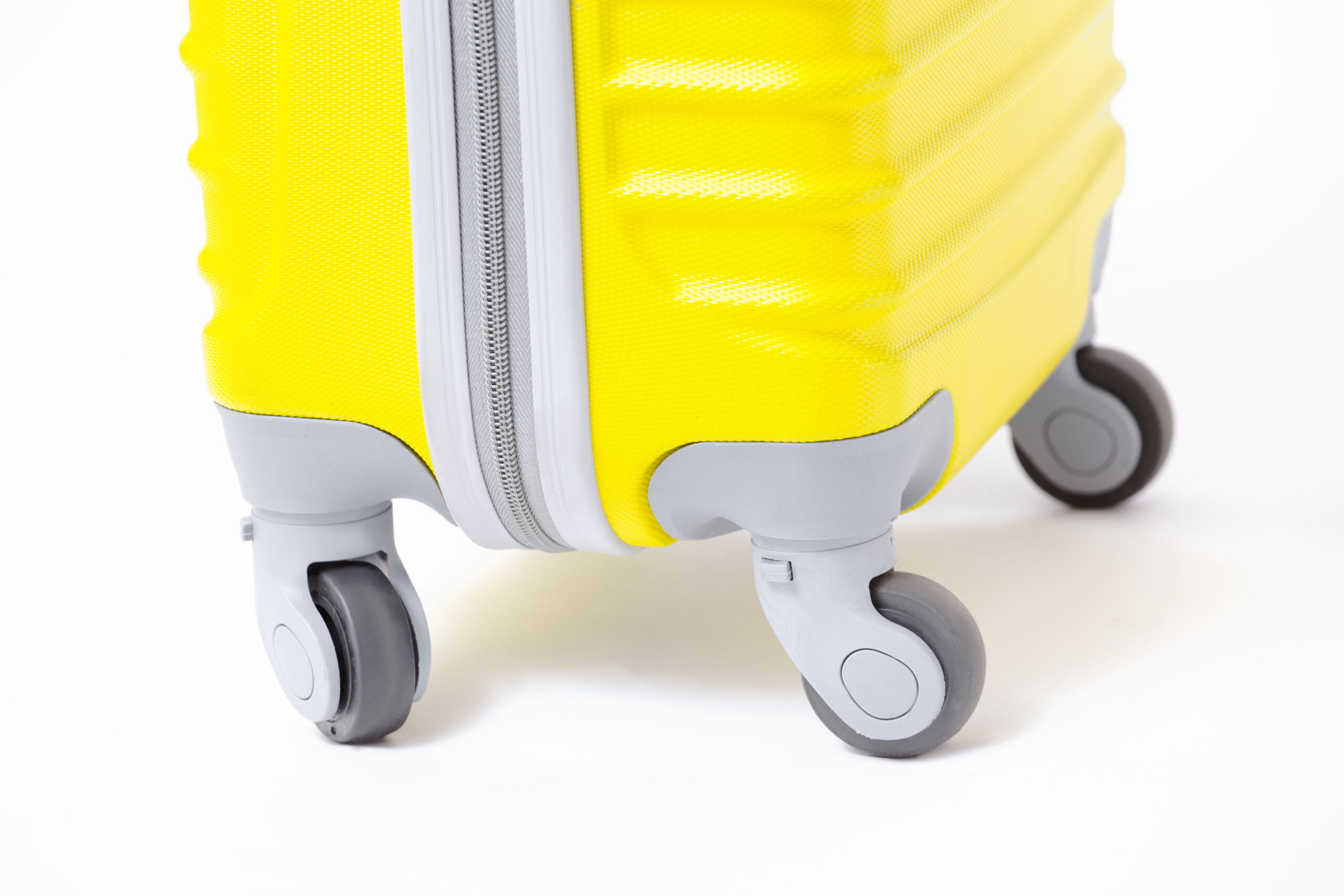
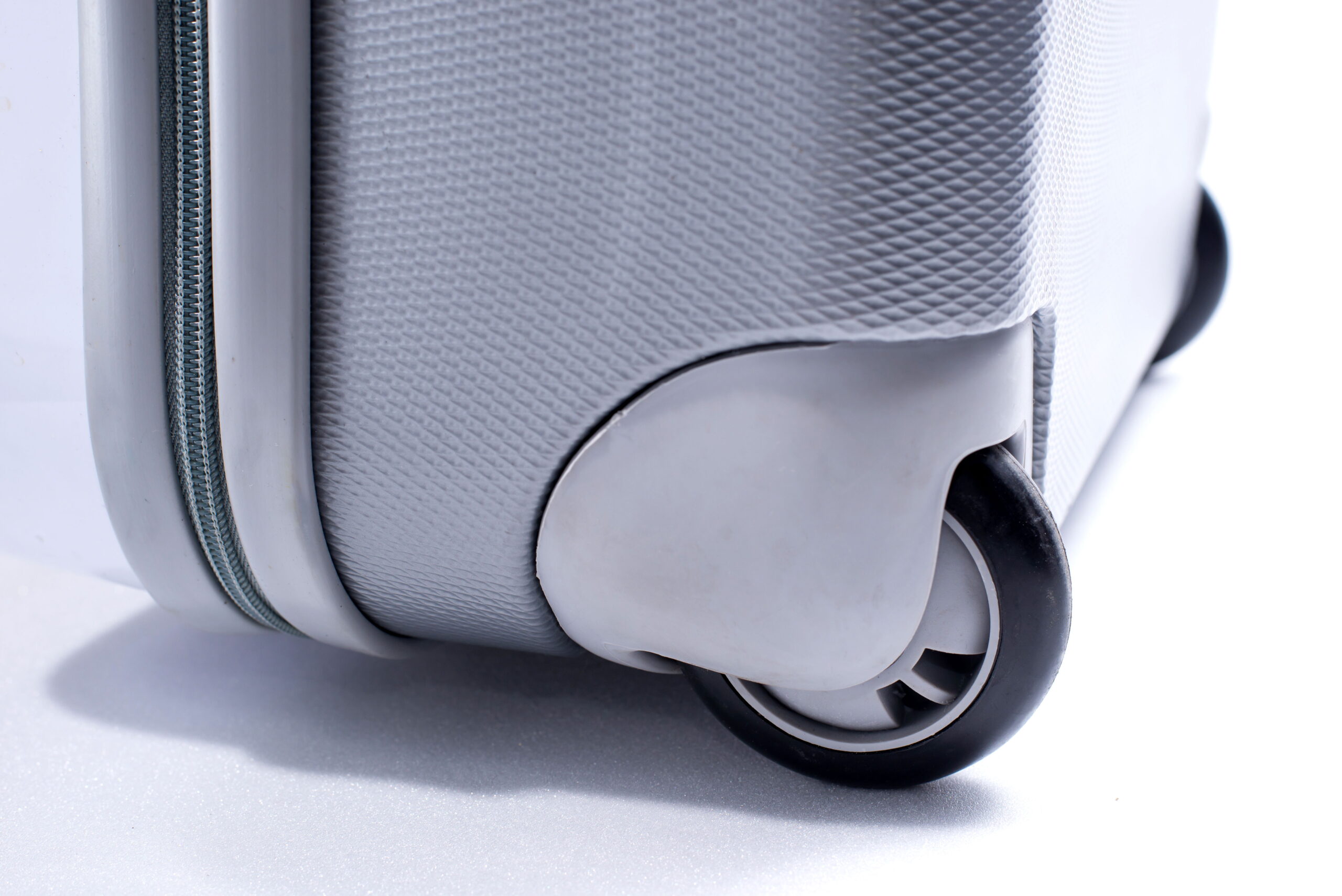
The wheels are sturdier and less prone to breaking. Two wheeled bags often use inline skate wheels, and they are recessed into the frame of the bag, protecting them from damage. Spinner wheels can be prone to snapping off if not handled properly.
I find two wheeled bags easier to maneuver over cobblestones and uneven terrain, as spinner bags can get their wheels caught. Two wheeled bags also have more momentum to get you over rough sidewalks and doorways, as they are being pulled instead of pushed.
The inside volume of a two wheeled bag is larger than the inside volume of a spinner with the same external dimensions. This is because the spinner wheels add to the overall length of the bag, so the bag itself is a bit smaller. For example, (form the Travelpro website) the Travelpro 22” Maxlite 5 Carry-On Rollaboard two wheeled bag has an overall dimension of 23” X 14.5” X 9” and a packing volume of 52 liters. The 22” Maxlite 5 Carry-On Spinner has an overall dimension of 23” X 14.5” X 9” and a packing volume of only 38 liters. That is 37% more packing space in the two wheeled bag. BTW, Rollaboard is actually a term trademarked by Travelpro, but over the years, has come to mean any two wheeled carry-on sized bag. You might also see this referred to as rollerboard. If you didn’t already guess, I am admittedly a SHOWI, or a storehouse of worthless information, just ask me.
Two wheeled bag are not for everyone. If you have arm or shoulder pain, a spinner might be a better option for you. Spinners can also be pulled behind you if needed, giving you two ways to maneuver them. However, this puts more strain on the back two wheels, making them prone to weakening. I do own a 25″ Travelpro Maxlite 5 spinner bag that I check for certain trips, usually an ocean cruise or beach vacation, where I’m not dragging my bag over cobblestones, changing lodging frequently, going up and down stairs, or taking trains.
Hard Side vs Soft Side
Hard side vs soft side also comes down to personal preference, but they do have important differences. Some people prefer the sleek appearance of hard side bags, and I agree they are nice looking bags. Another pro for hard side bags is the ability to clean them. They can be wiped down with a product containing bleach, or simply cleaned with a soap and water.
Hard side bags offer your belongings more protection from weather and rain. If you’ve ever seen a cart full of luggage sitting outside the airplane in the pouring rain as it’s being loaded, you will be glad you chose a hard side bag to keep your belongings dry. Soft side bags simply do not offer this level of protection. While the material is quite thick, it is no match for prolonged pouring rain. Travelpro advertises their soft side bags as having a DuraGuard coating that is supposed to be resistant to water, in addition to stains and scratches. Many soft side brands have similar coatings and protections, but they are still made from a type of fabric.
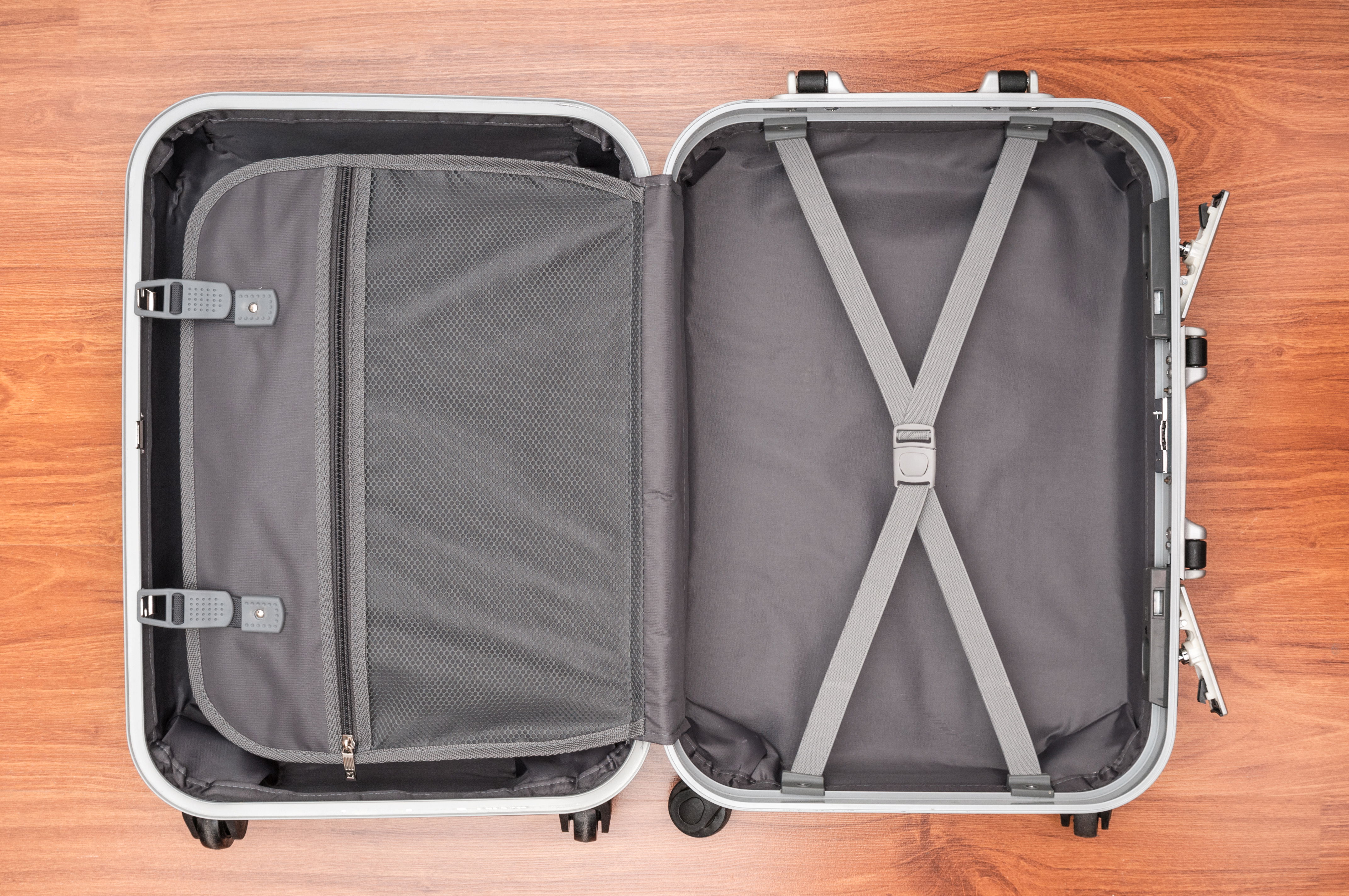
Hard side bags can also offer more organization. Hard side bags have a clamshell opening, so the bag is divided into two halves. These bags often have one or two interior zippered lids or straps to secure the items inside. The downside to the clamshell opening is that is takes up more space in small hotel rooms when the bag is fully opened. I personally don’t find the clamshell opening beneficial to me, as I pack my clothes folded and standing up like index cards. I can see all my clothes and flip through them to access the items I need without removing everything to access what’s on the bottom.
The durability of hard side bags can be in question in my opinion. I don’t own any, buy I’ve seen photos of cracked or caved in bags that cannot be repaired. Many good brands will have a warranty to cover repairs or replacement if damaged. I think soft side bags can roll with the punches a little better and withstand some rough treatment they may receive from a hurried baggage handler.
Soft side bags can also be prone to damage. They can be scraped, scratched, or cut, and these are usually not repairable. Mine have not been damaged, but they have received a couple black marks from baggage belts. I tend to check my carry-on when I am returning home from a trip, and my bags have arrived dirty with some black marks. I use Dawn Platinum Power Wash to remove the marks, and Lysol spray to disinfect them.
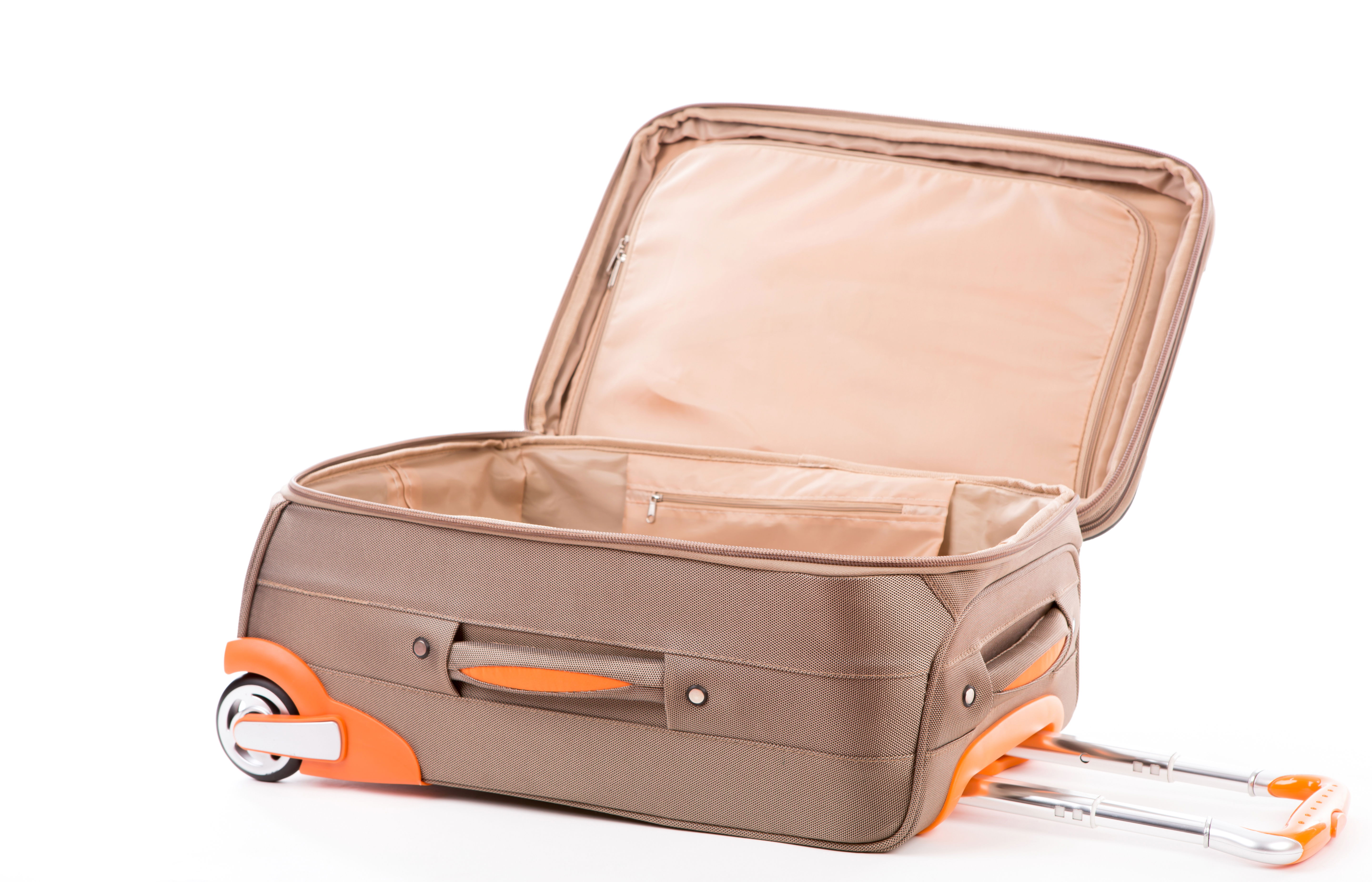
Soft side bags offer more flexibility in packing because they are less rigid, and they have an outside pocket or two that hard side bags generally do not. (I have seen a couple with an outside pocket for a laptop.) I like to stuff my rain jacket and slippers into the outside pocket in the lid of my bag, and soft side bags provide this added space. My Travelpro bags stand upright with no problem even with the lid stuffed full.


TSA Locks
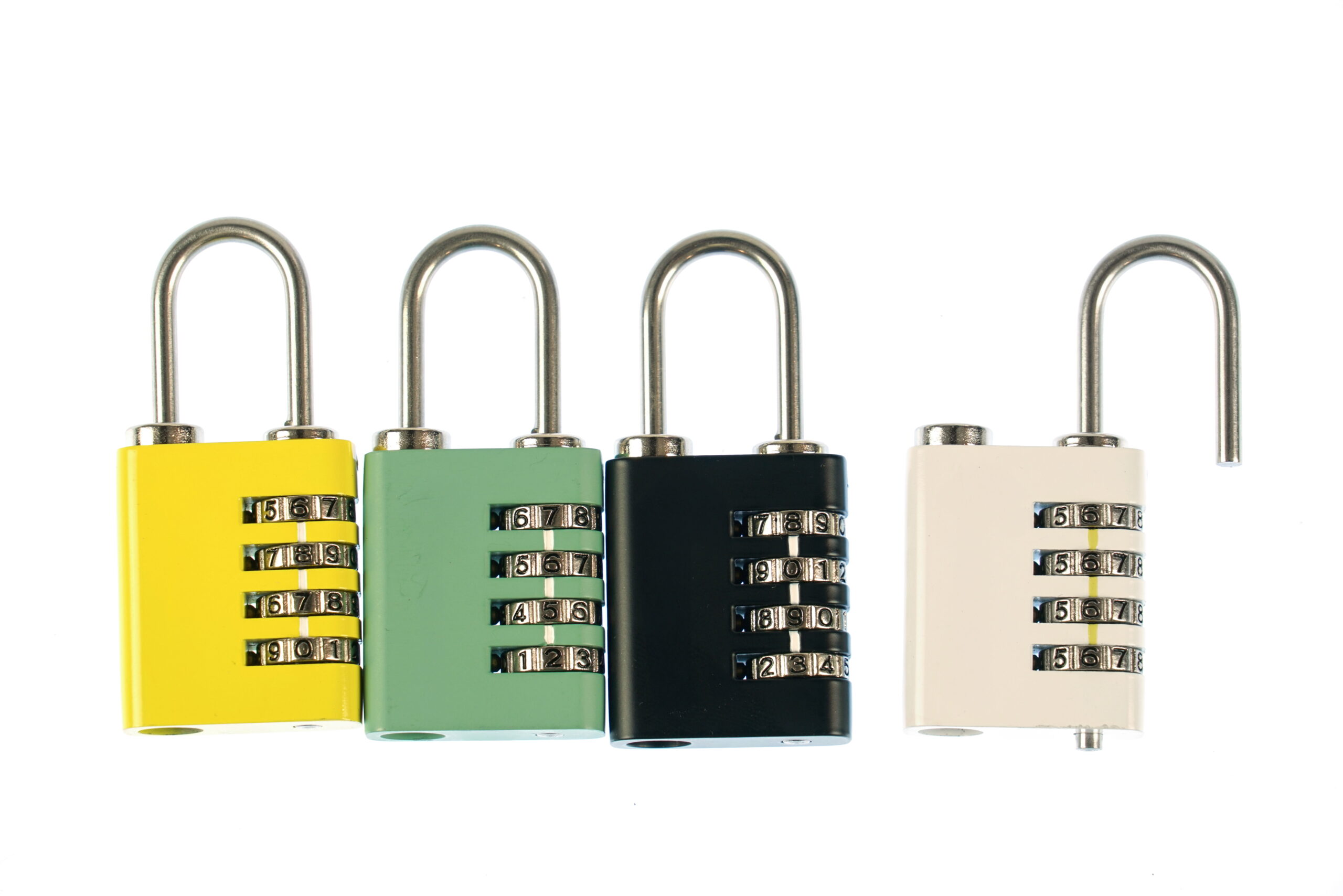
Built-in TSA (Transportation Security Administration) locks are a popular feature in many bags. TSA locks are designed to be opened using a combination of numbers chosen by the owner, or occasionally a key on older models. These locks can be opened for inspection by TSA agents by using a universal key. TSA locks are recognized by their Red Diamond logo. Though we refer to them as TSA locks, these locks with the Red Diamond logo can be accessed by airport security agents around the world.
Many travelers like the comfort and peace of mind that using TSA locks gives them. However, some people feel the locks provide a false sense of security. The locks can be broken and the universal key can be misused, effectively rendering TSA locks useless. If you feel strongly about locking your bags, you might prefer a built-in TSA lock over adding your own separate lock to your bag.
I use my own TSA locks, and I do lock my bags when I check them. I understand that adding my own locks is also not foolproof. While most people are honest, if an unscrupulous baggage handler wants in my bag, they are going to open or cut off the lock and get in. I do feel the lock is a good deterrent for someone looking to do a quick grab during handling, as they are more likely to target an unlocked bag that is easier to access in a hurry.
Built-in Charging Capability
Many bags now come with USB ports or cords for charging capability. The actual power banks are not built-in (due to having to be removed before checking) and generally are not included. You will need to add your own power bank to utilize the charging port. There is usually a small pocket inside the bag to house the power bank. The advantage to these bags is that if you need to charge your device while you are sitting in the airport (and who doesn’t?), you simply access the port or cord and plug in your device without having to fumble with a separate bank or cord. Many people like the convenience of having this option.
The down side to purchasing a bag with a built-in port or cord is that devices are always changing and you may need a different port or cord to charge a newer device. I have a backpack with a built-in USB-A cord and I would have to use an adapter or carry an additional cord to charge my phone, as it came with a USB-C to USB-C cord. But still, if you like the convenience of built-in ports, a bag with this capability is worth the investment. I have never found them to be particularly useful for me.

Color
There are So. Many. Black. Bags. In my own very unscientific observations, black definitely seems to be the most popular color for bags. My husband’s bags are all black, but in his defense, they are supplied by his airline, and he doesn’t really have much of a choice.
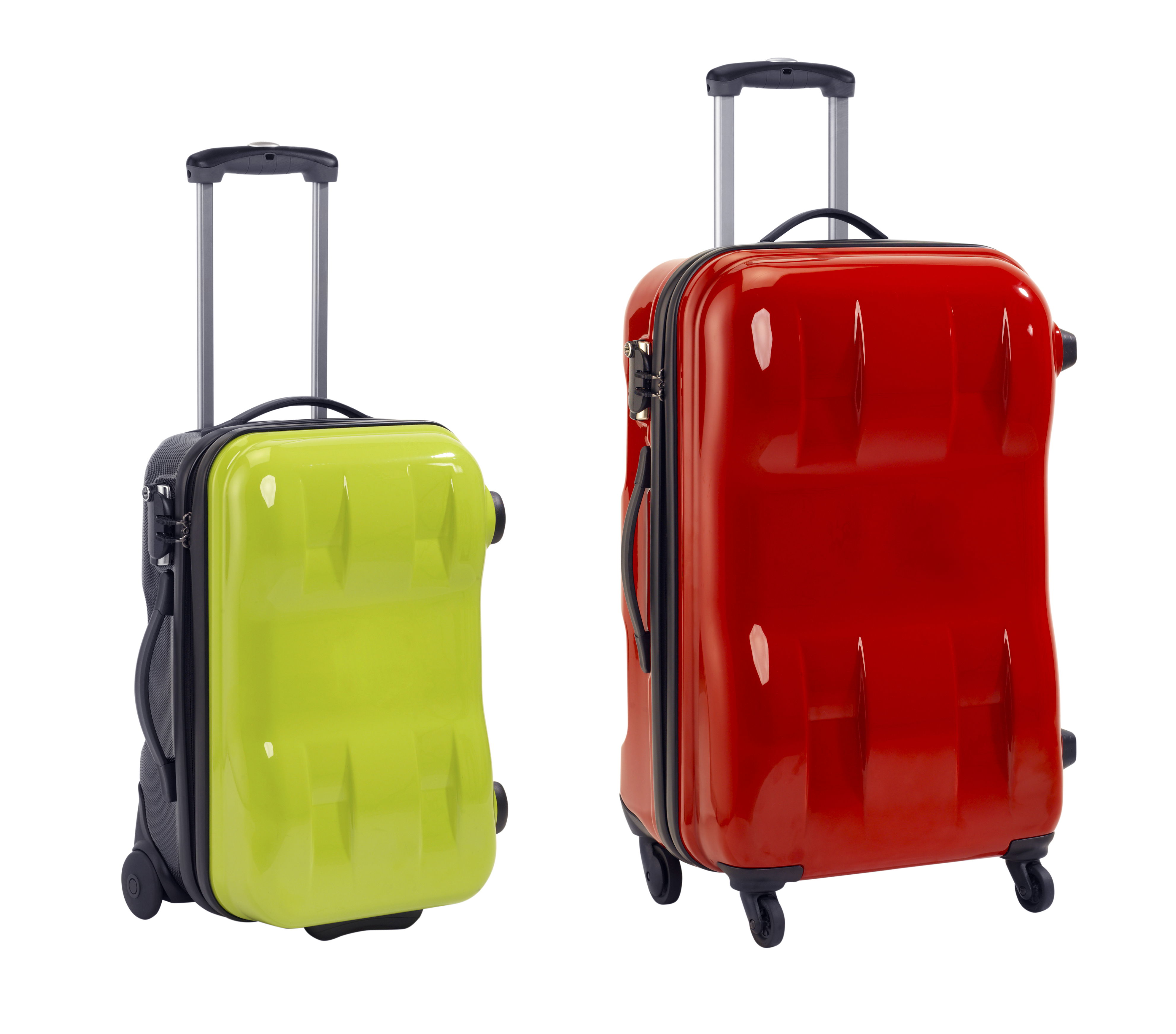
Black is classic and tends to hide the dirt and grime that come with air travel. Black is also the easiest color to mix up at the baggage carousel because so many look alike. Olive is another popular color that I see a lot of these days. To make my bags more readily identifiable, I prefer a color other than black. My 22” bag is blue and my 20” bag is a dusty pink color. There are so may pretty colors and patterns available in bags today that you can pick about any color you choose.
Price
Price is an important consideration. Higher priced bags are supposedly higher quality, longer lasting, and more durable. Many of these come with a warranty. Lower priced bags are certainly useable and won’t break the bank, and I’ve seen some lower priced bags with a good warranty.
My opinion is that you get what you pay for, in general. I tend to shop for things that are mid-priced. However, the Maxlite 5 bags happen to be the most economical bags in Travelpro’s lineup, and are not the highest quality bags they offer. Travelpro started making bags designed by, and exclusively for, airline crew. They make several bags that are heavier and higher quality than the Maxlite 5, but according to their website, they recognized the need for a quality lightweight bag for the general traveler, and created the Maxlite 5 in response to that need. I find this economically priced bag is a good fit for my needs.


Warranty
A warranty can give you peace of mind, and cover the cost of repair or replacement of your bag for several specified reasons. The important thing to note about most warranties is that they only cover defects in manufacturer material or workmanship. Things like wheels, zippers, extension handles, and carrying handles are usually covered under these limited warranties. Warranties generally do not cover scratches, dents, tears, or stains that don’t impact the functionality of the bag, wear and tear from use, or damage from carriers. You would need to file a claim with the airline if they damaged your bag.
So, is a warranty really a necessary component? Would the lack of manufacturer’s warranty keep me from buying a bag I otherwise loved? Probably not. It is nice to know manufacturer’s defects are covered, but the likelihood of an airline damaging my bag is much greater in my opinion. If a warranty is important to you, there are lots of companies that offer them, and you should choose a bag that offers a warranty that meets your needs. Don’t forget to register your bag upon purchase to activate the manufacturer’s warranty.
Summary
There are many factors to consider when investing in a new bag. Size, weight, number of wheels, material, and personal choice are the most important for many travelers, including me. While there are many great choices on the market, the Travelpro Maxlite 5 gives me everything I need in a bag: overhead bin compatibility, lightweight, two wheeled, durable, flexible, easily recognizable colors, and priced not the break the bank. Give them a try and let me know what you think.