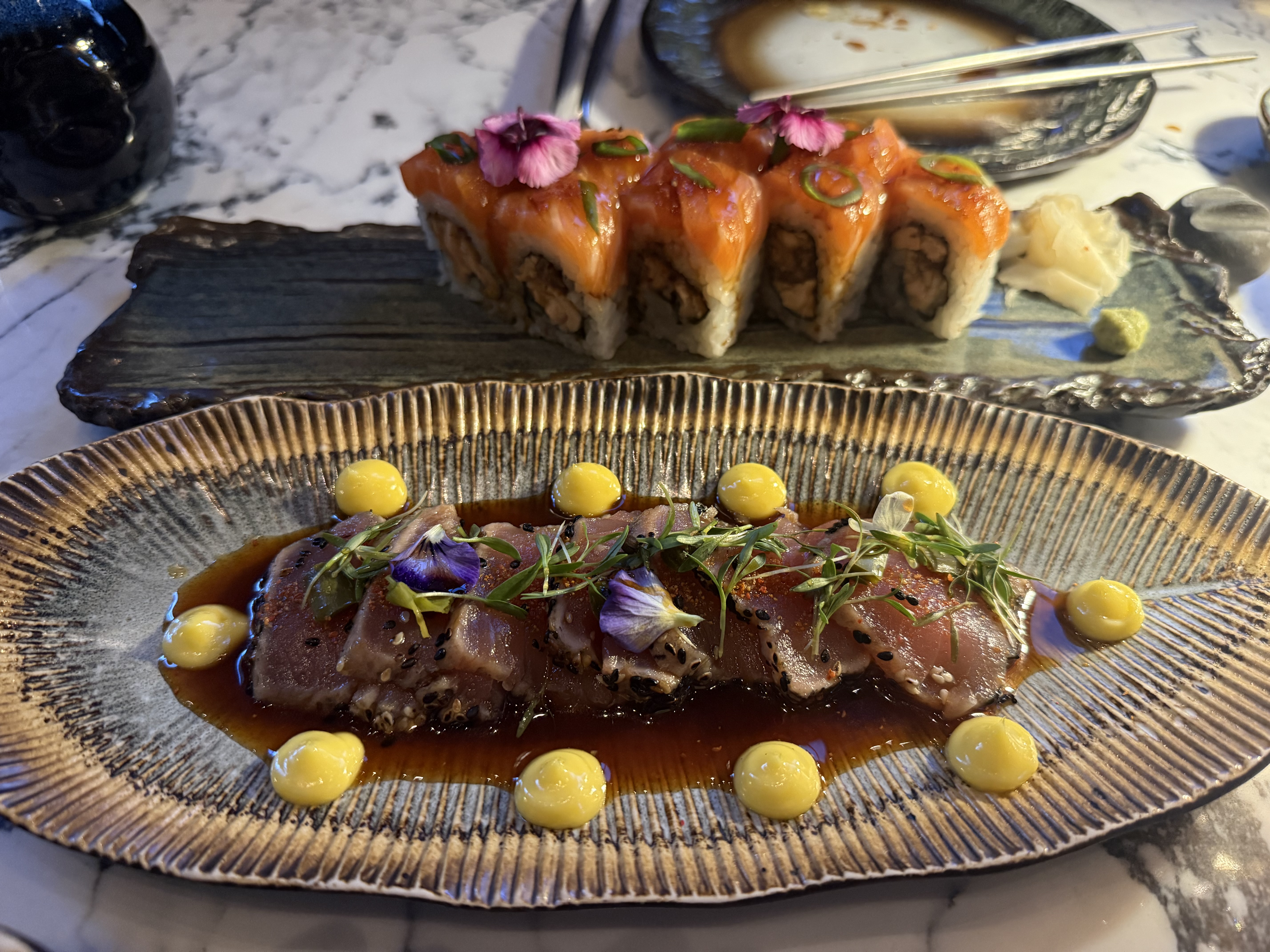
Robben Island and Nikkei Sept 18 Thursday
While the rest of our group was heading home today, we decided to stay an extra day to see Robben Island. The prison where Nelson Mandela was incarcerated for 18 of his 27 years was located on Robben Island. Robben is the Dutch word for seal, and Robben Island is a UNESCO World Heritage Site. The island was first used as a prison to incarcerate Dutch political prisoners in the late 1600’s. Survivors from the mutiny of the slave ship Meermin were imprisoned there, along with other Dutch political prisoners. In the 1800’s, the island was used as a leper colony to separate people with Leprosy from the general population, as it was poorly understood at that time. After the implementation of Apartheid following WW II, the prison was used extensively for political prisoners who opposed Apartheid. Political prisoners who served sentences here during that time were isolated, beaten, starved, forced into manual labor for the sake of labor, and denied medical care or given purposefully inappropriate or negligent medical care. The motto above the entrance stands in purposeful contrast to the reality of events that took place inside.
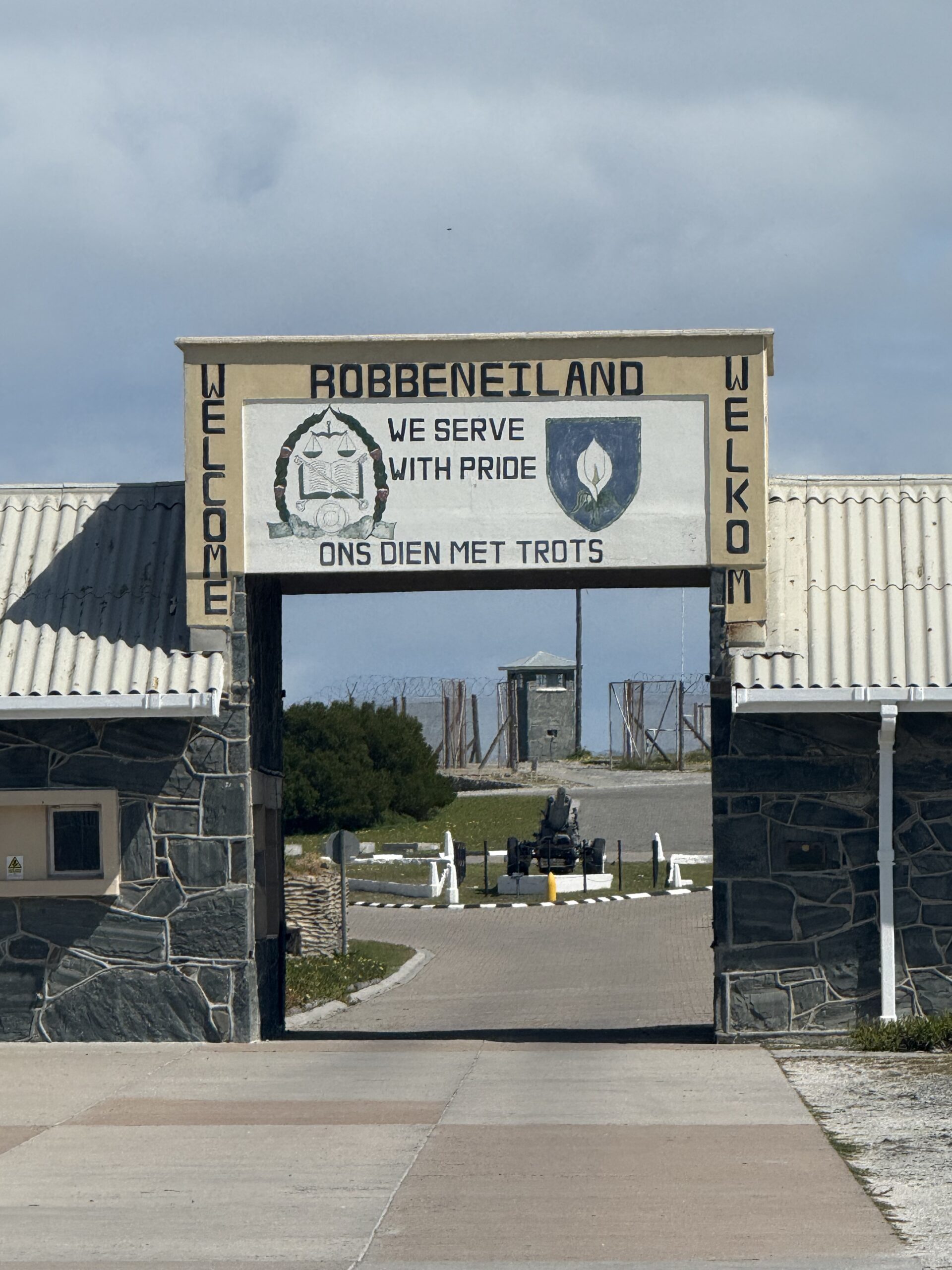
The tour begins with a 30 minute ferry ride to the island. Once we arrived, we were loaded into buses and taken around the island to see some of the historic sites including the famous Robben Island picture frame for a photo stop, and the house where Robert Sobukwe, the leader of the Pan African Congress political party, was incarcerated. Mr. Sobukwe, like many of his contemporaries such as Nelson Mandela, was highly educated and had a law degree. His is a sad and tragic story that I will let you google.
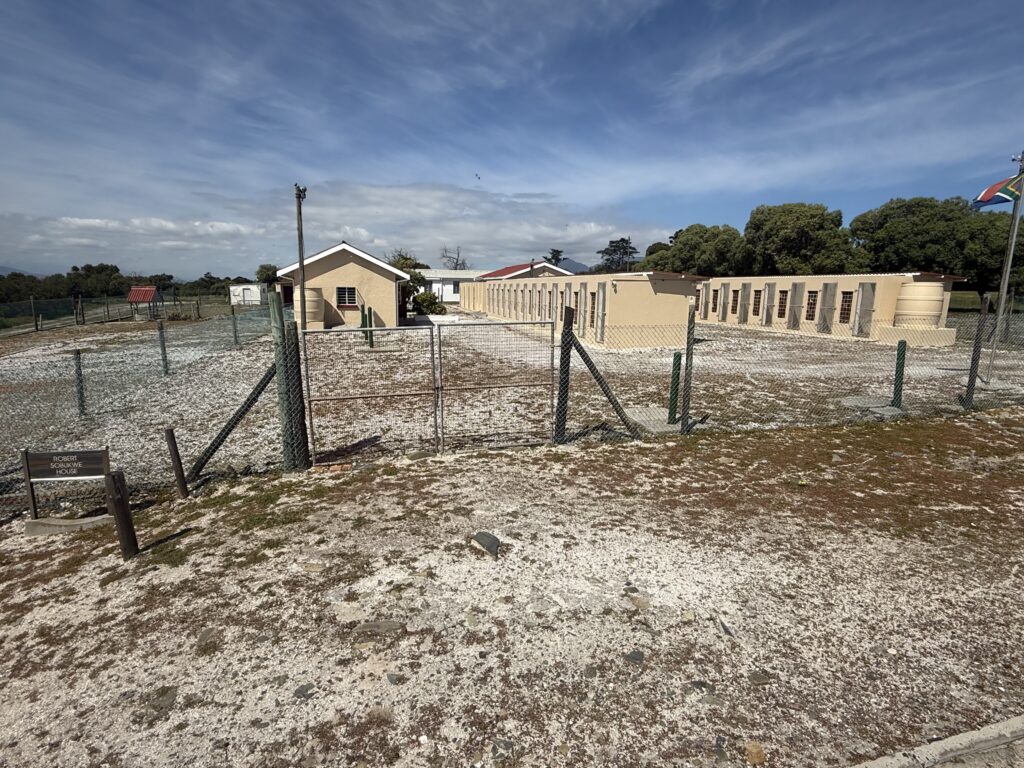
Robert Sobukwe solitary house near kennels
After the drive, we were met by a guide who had been incarcerated on the island. Robben Island is a living museum, most of the guides are former prisoners, and the cells are set up to provide an actual representation of life during incarceration. We listened to his stories of being held there in the late 1980’s, and while hard to hear, his treatment there was much better than many of those who had come before him. Inside, we finally saw the small cell where Nelson Mandela had been held for his 18 years. Yes, that red bucket is what you think it is. The entire experience was educational and moving, to say the very least. While Robben Island is a major tourist attraction, many of the people of South Africa regard it as symbol of oppression to this day.
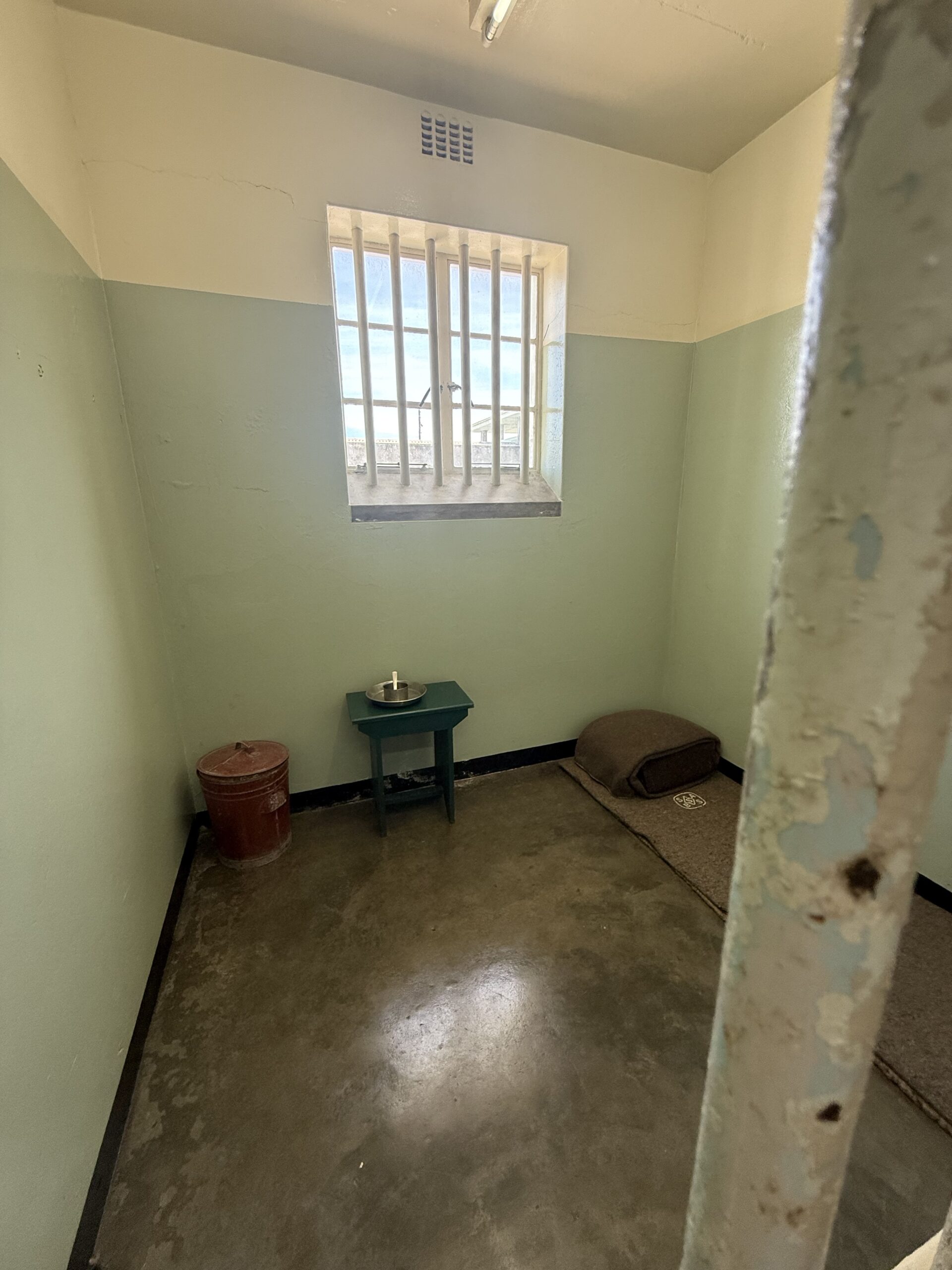
Nelson Mandela’s cell for 18 years
We needed a pick me up after that experience, so after returning to the hotel, we walked to The Gin Bar for some pretty delicious Gin and Tonics before our reservation at Nikkei Japanese and Peruvian Fusion for dinner that evening. Both are an easy walk from the hotel. Cape Town is a foodie haven and there is no shortage of highly sought after and regarded restaurants in the city. Reservations are always recommended. The dinner was more of an experience than a dinner. The food was amazing, the presentation was spectacular, and the entire evening was just an absolute joy. We met our guide Juan at a bar for drinks later to say goodbye to him. He has been a phenomenal guide. Local Capetonian, educated, well traveled, knowledgeable, funny, and filled with insights into local culture and history, he has been a wealth of knowledge for us. His great hope and optimism for the future of his beloved country shine through in everything he says and does. He is yet another amazing guide contracted by OAT. Here’s to you, Juan! :)
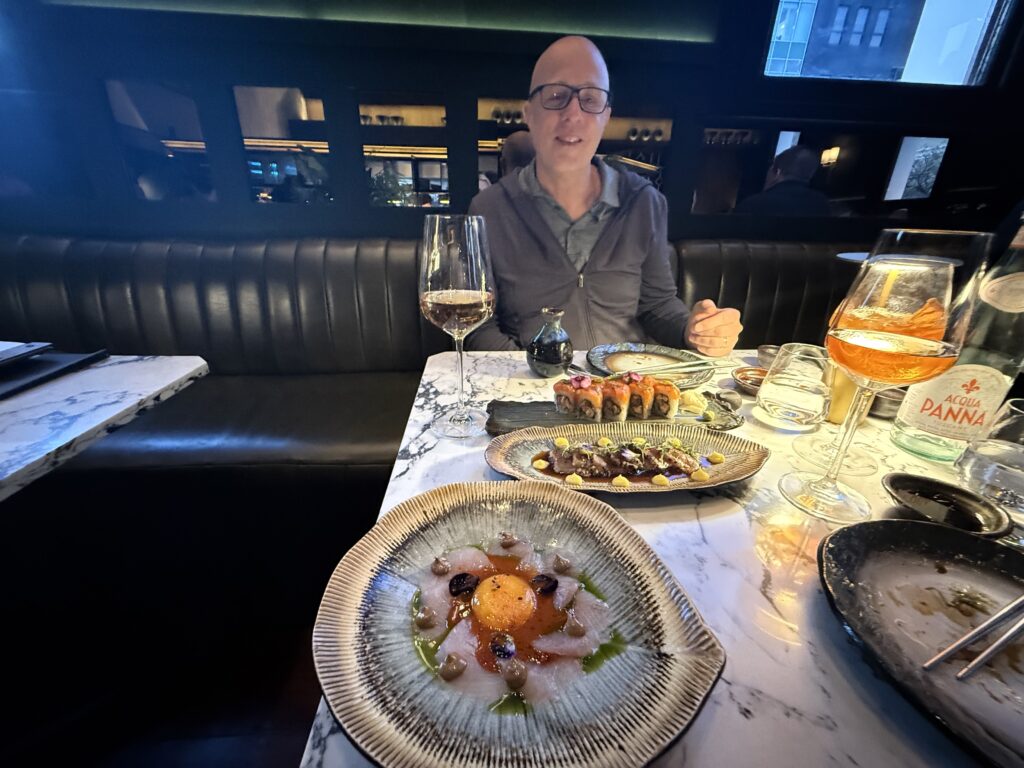
Dinner at Nikkei
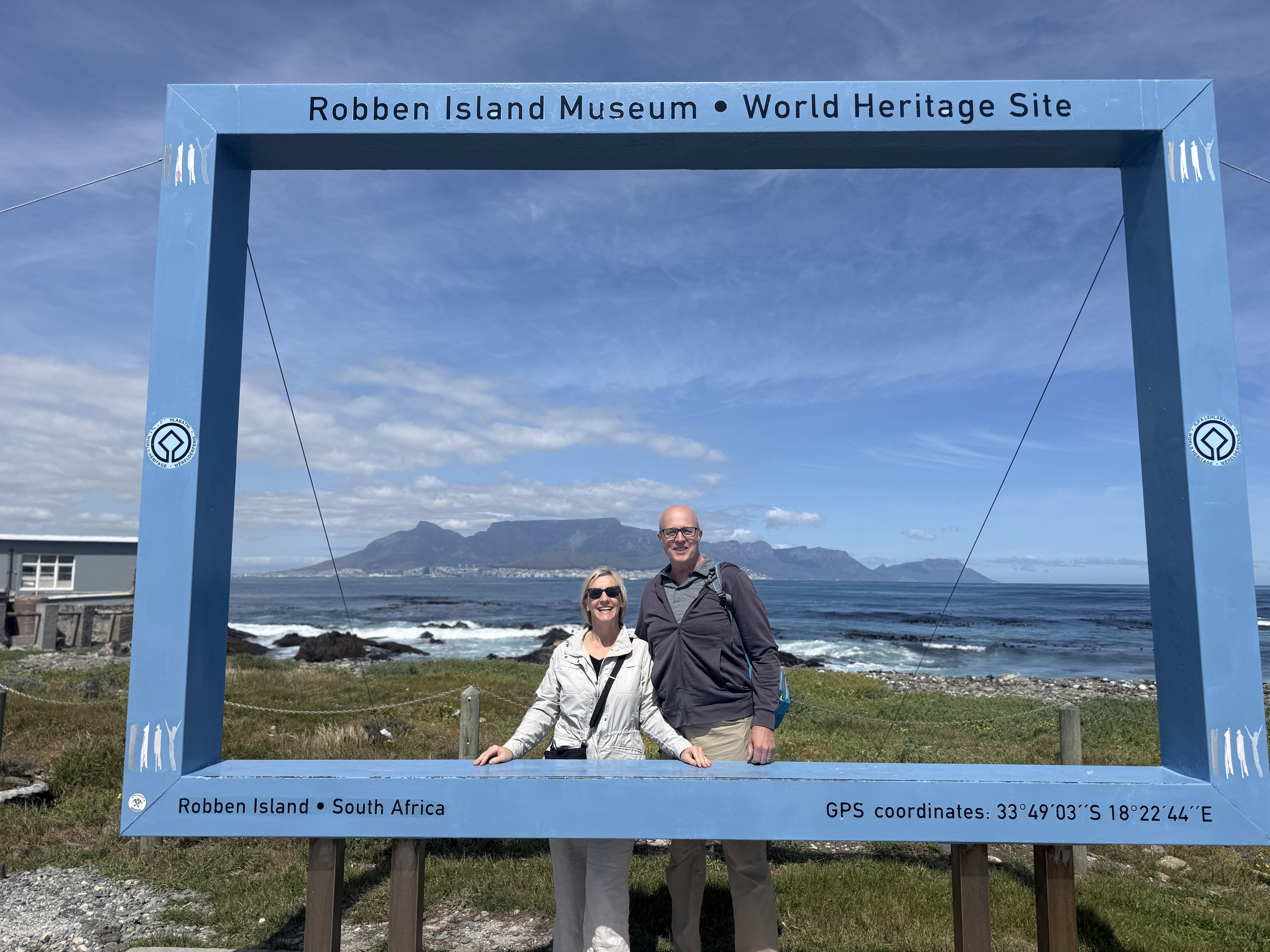
Famous photo stop with Table Mountain
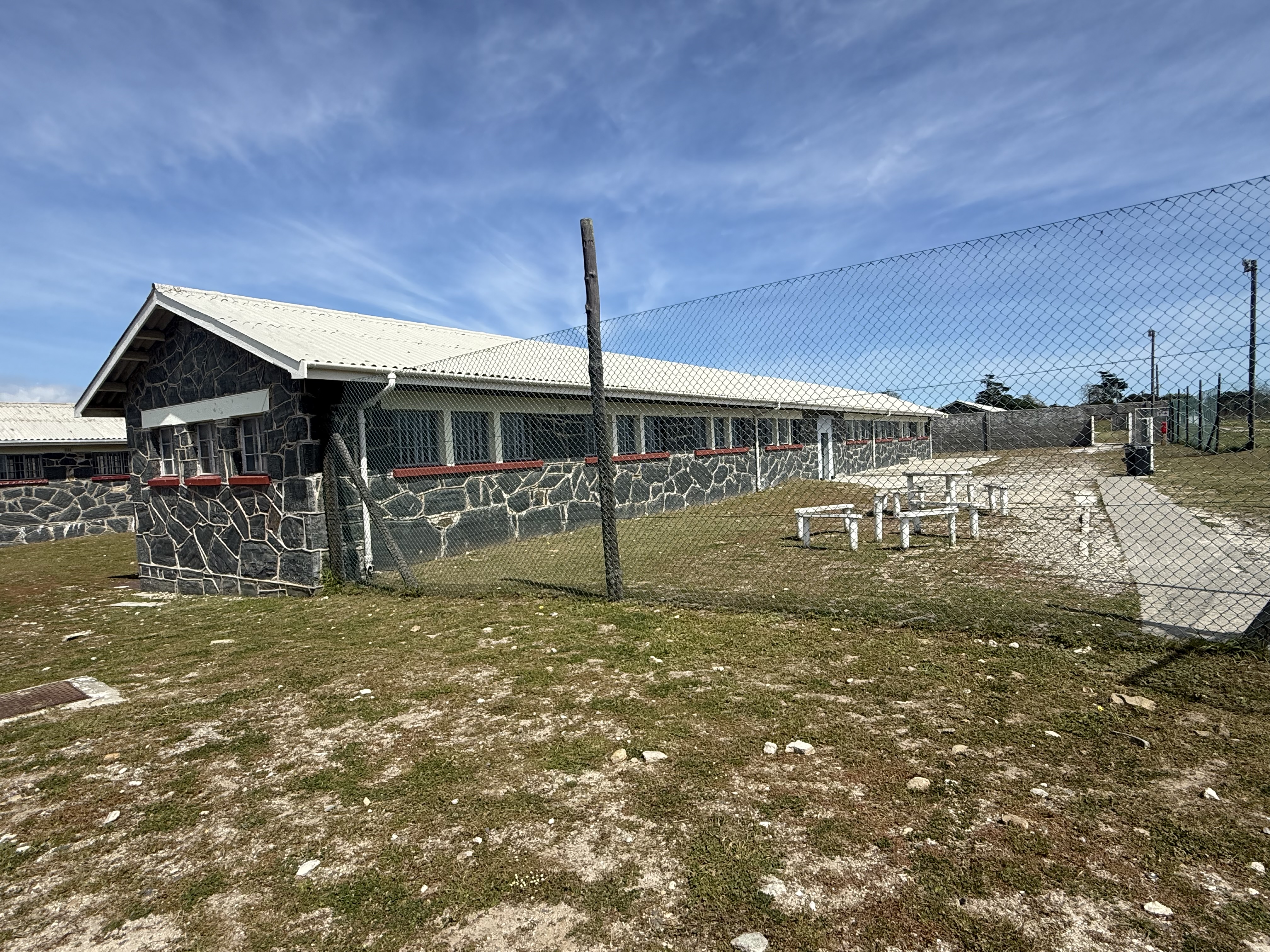
Cell block
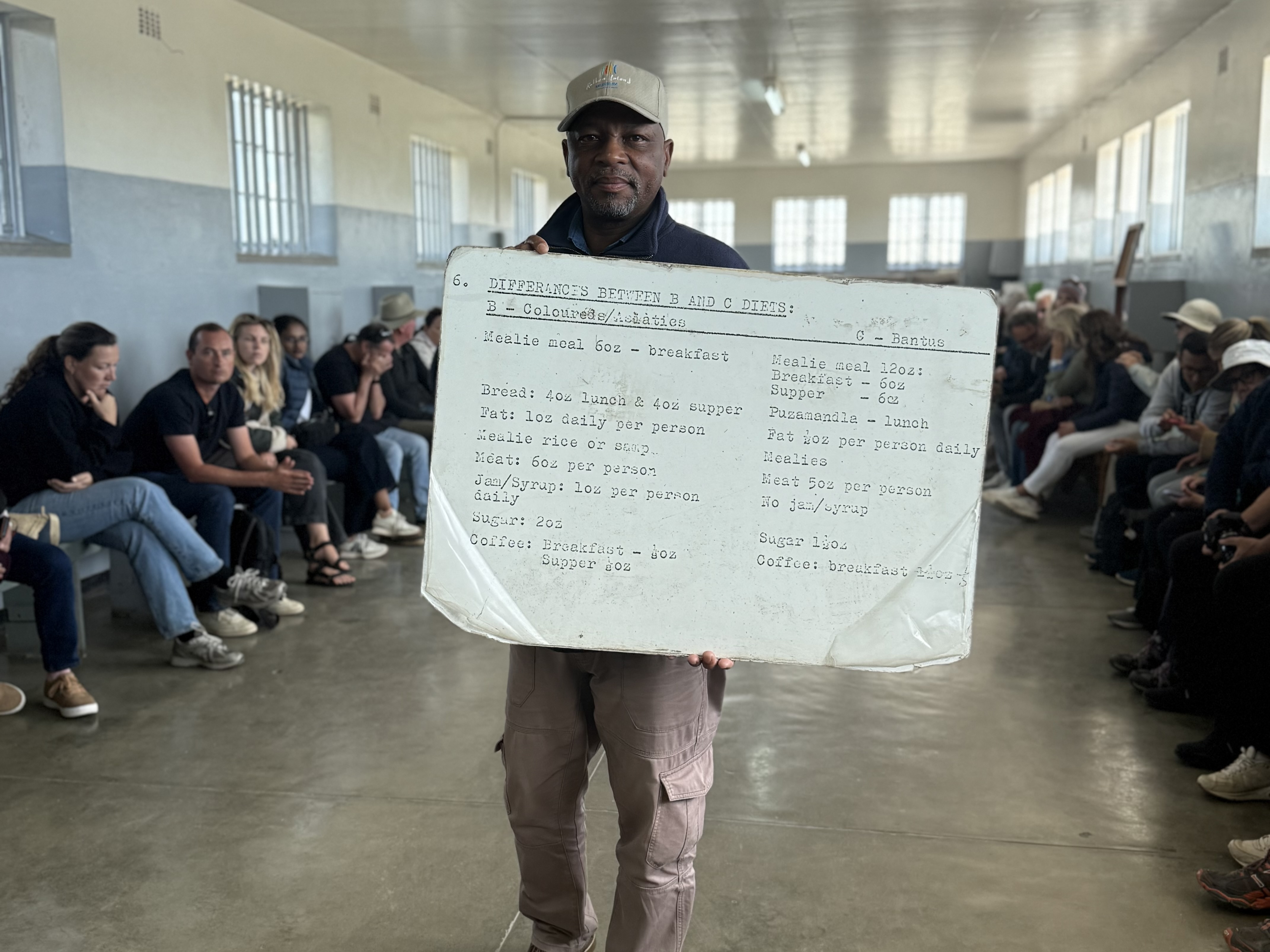
Guide showing food rations for Colored and Bantu