Kirstenbosch Botanical Garden and District 6 Museum Sept 15 Monday
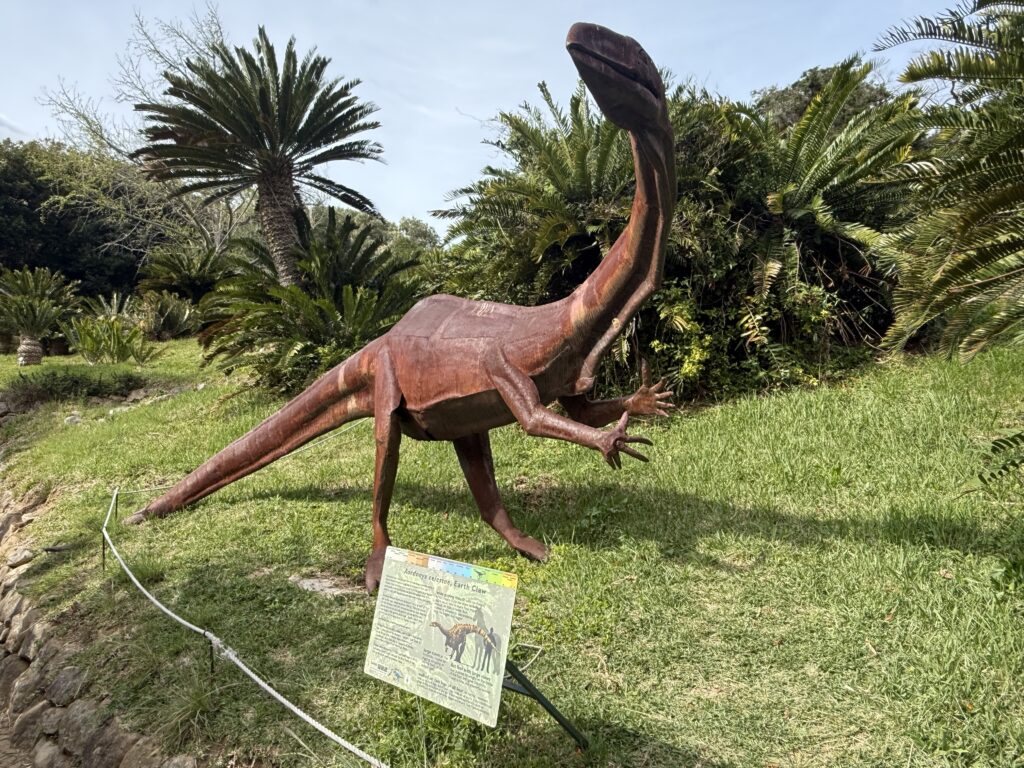
On Monday, we were supposed to visit Table Mountain, but woke to heavy cloud cover hanging over the mountain. Instead we opted for a trip to Kirstenbosch National Botanical Garden on the back side of Table Mountain. The garden was officially established in 1913 and its focus is on plants that are indigenous to the area. A lot of research is ongoing here. The garden is loved and used by locals for concerts and walking the trails, many of which lead up to the summit of Table Mountain. There are thousands of plants species located here. We had a beautiful guided walk through the garden and even saw some dinosaurs.
After the Botanical Garden, we visited the District Six Museum. As you are likely aware, South Africa has a sad history of racial discrimination and segregation, under an official policy known as Apartheid. In the late 1960’s, the government decided it wanted to own a prime section of land near the downtown central business district of Cape Town in an area known as the City Bowl, due to its location between Table Mountain and the harbor. They planned to clear the neighborhoods and redevelop the area into homes and infrastructure for white people only. This area was known as the Sixth Municipal District of Cape Town. The only problem was that the land had been mainly occupied by Black and Colored families since the 1800’s. As an FYI, Colored is an accepted and commonly used term in South Africa that means any person of mixed race. This does not include Blacks or indigenous African persons. Colored is one of the four official race groups in SA, along with White, Black, and Indian. While the term began during Apartheid, it is still commonly used and accepted today, unlike in the US.
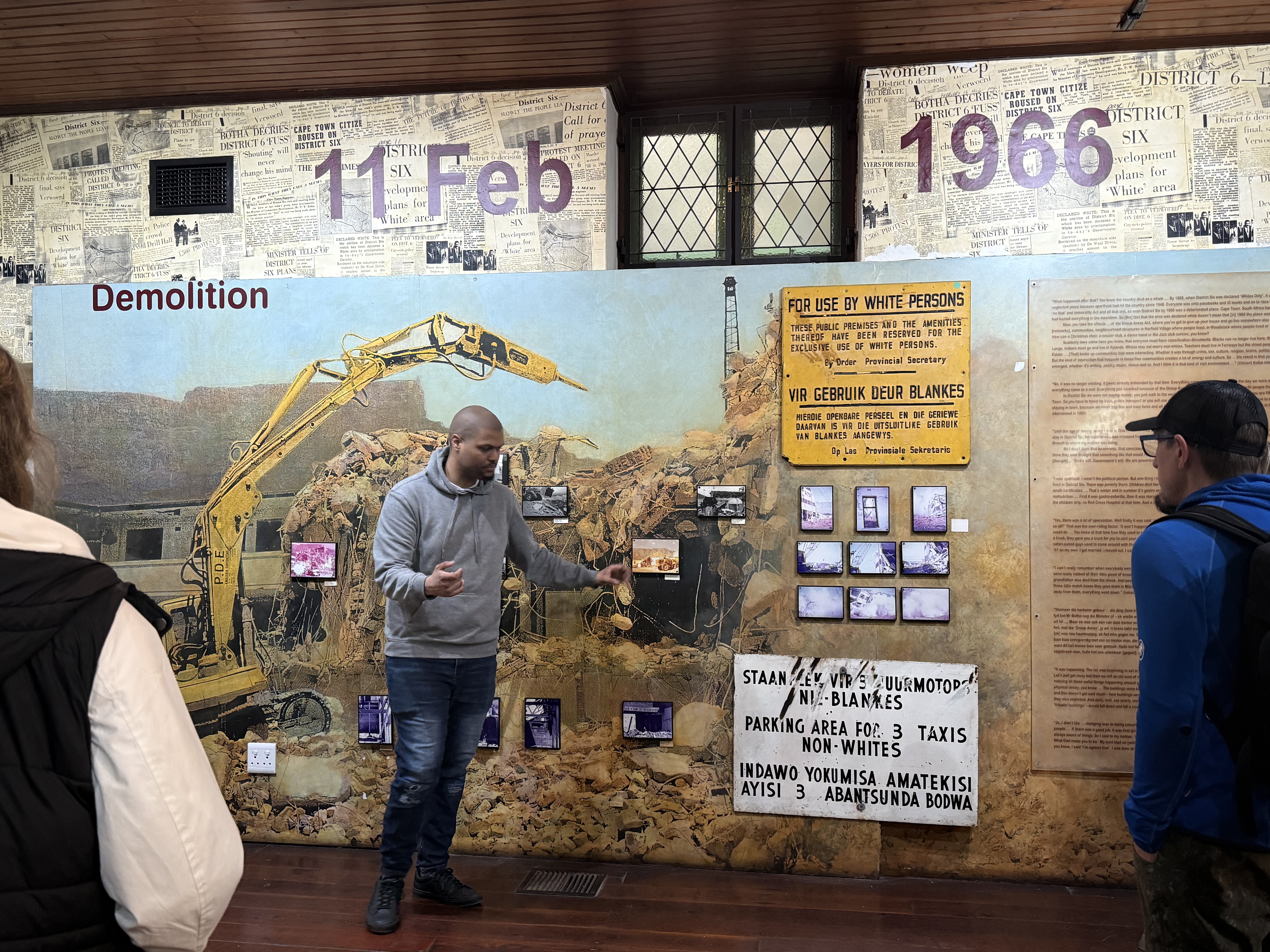
Our guide at the District 6 Museum
Because I can’t say it any better, the following is from Wikipedia: “Government officials gave four primary reasons for the removals. In accordance with apartheid philosophy, it stated that interracial interaction bred conflict, necessitating the separation of the races. They deemed District Six a slum, fit only for clearance, not rehabilitation. They also portrayed the area as crime-ridden and dangerous; they claimed that the district was a vice den, full of immoral activities like gambling, drinking, and prostitution.” While these were the official reasons, it was clear that the government sought the land because of its proximity to the city centre, Table Mountain, and the harbor.
Over a period of more than 10 years, the government forcibly removed over 60,000 people and literally bulldozed their homes to the ground, many as they were pulling out of the driveway. It is incredibly upsetting and sad to hear the stories of the families who were affected by this tragedy. It changed lives forever. One of the people employed to help in the demolition of District 6 was ordered to destroy all the street signs. The government wanted to wipe away any history that the neighborhood ever existed. Instead, he took them home and stored them in his basement, only to reveal them later when the backlash over the clearances had come full circle. Long story short, due to the outrage and the eventual dissolution of the Apartheid government and policies in the 1990’s (yes that’s what I said…the 1990’s), the land was never developed into its intended use. While some redevelopment has occurred, and some Black and Colored families eventually moved back into the area, the land remains mostly unoccupied to this day. It is a sad testament to the poor policies of a brutal and racist government.
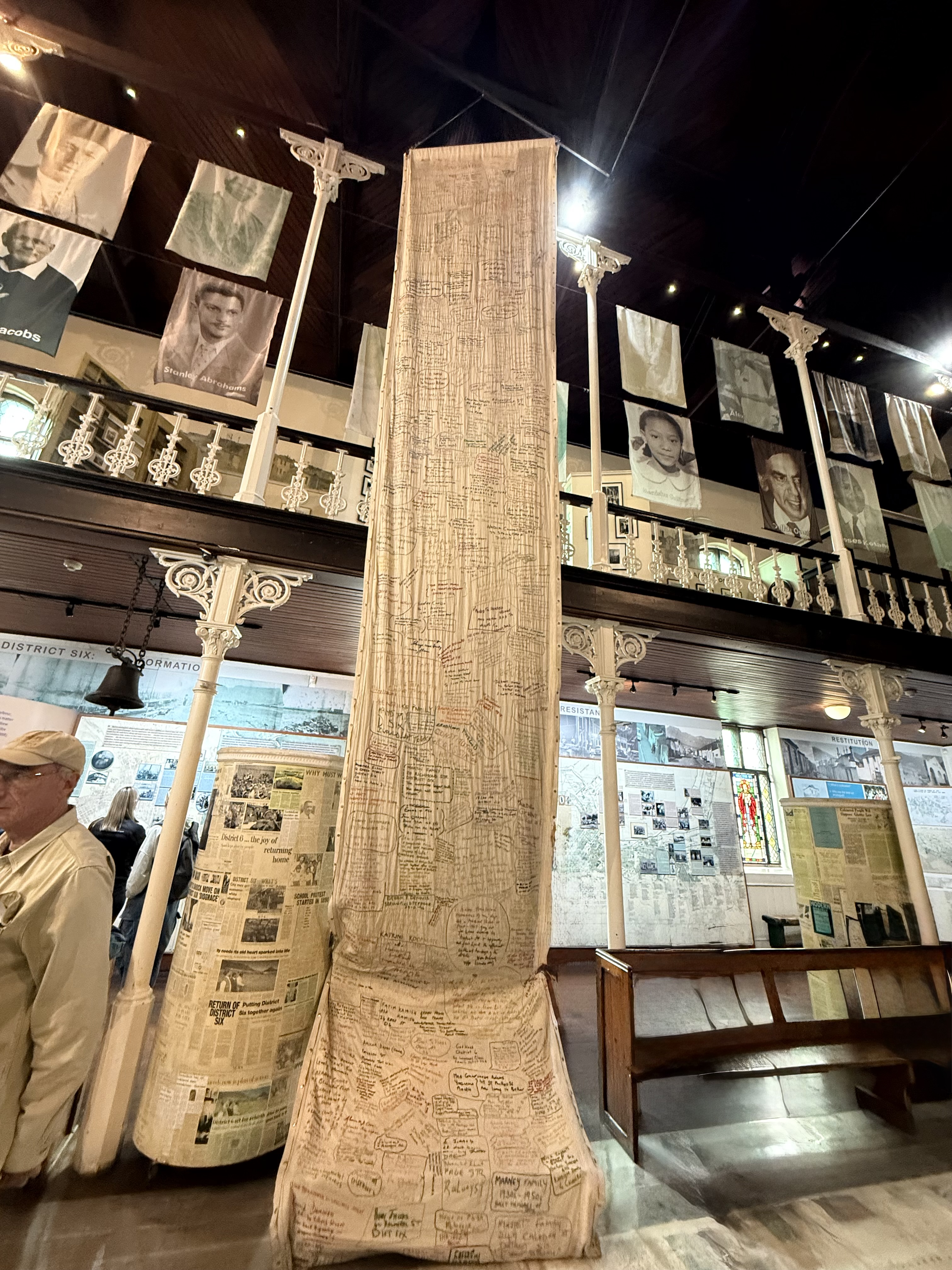
The main floor of the museum is a map of District 6. Many former residents wrote notes and remembrances on the map before it was covered with clear plastic to protect it. There are many first hand accounts of the removals at the museum, and they are difficult, but necessary, to read and understand.
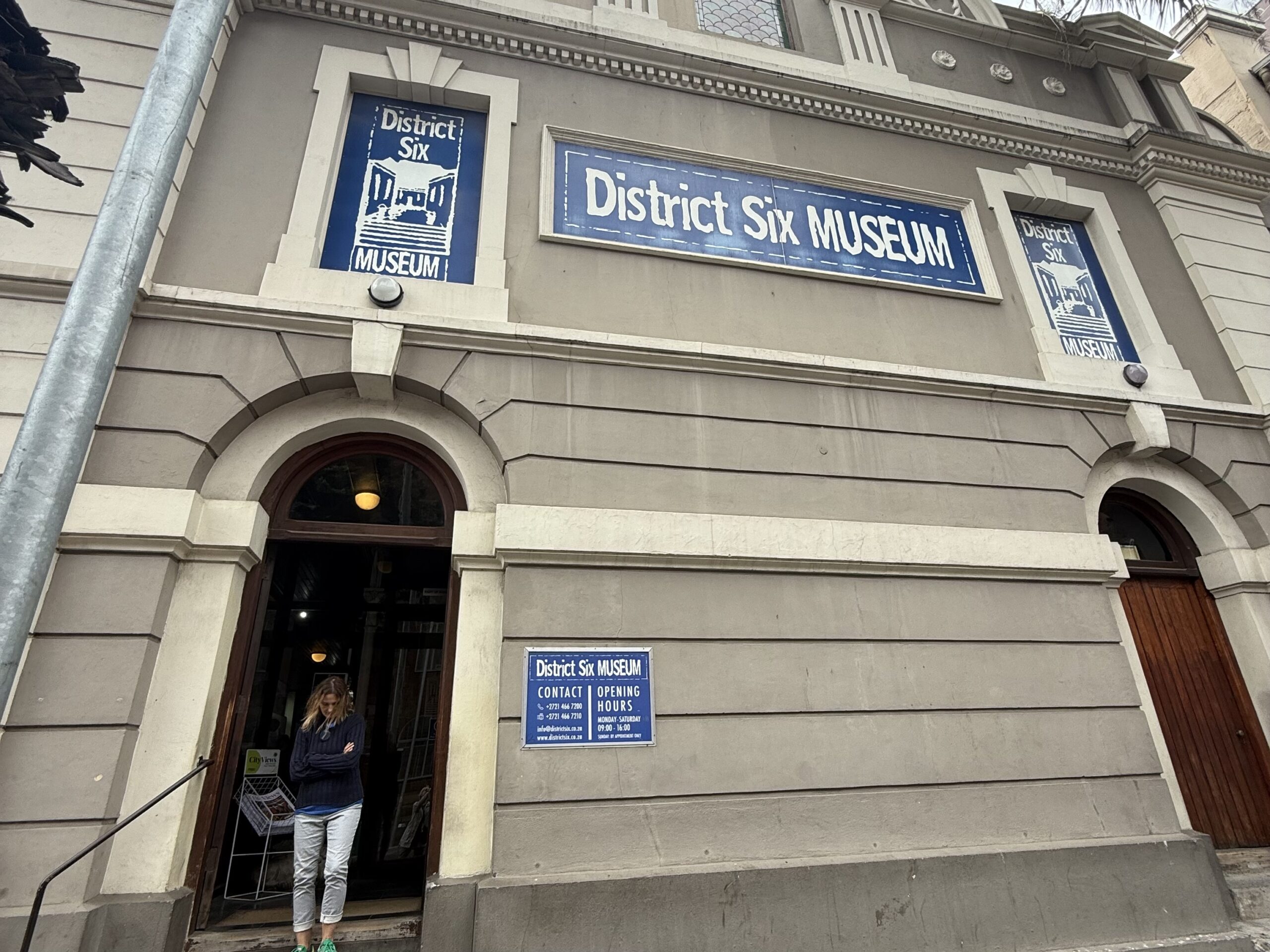
District 6 Museum
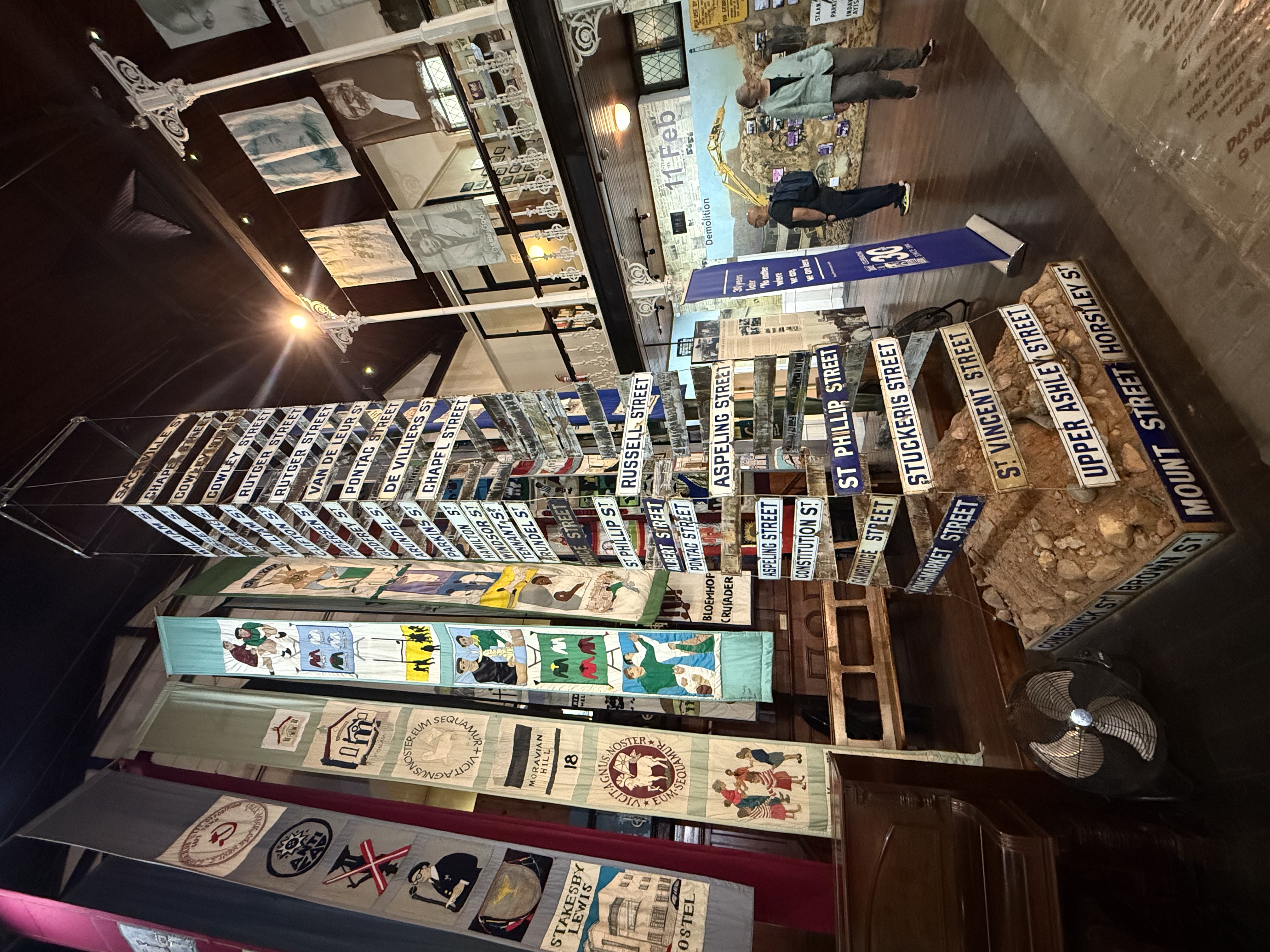
Street signs from District 6
In the afternoon, we took a walk through the city and down to the harbor area. Cape Town has a huge shipping port, and also a vibrant harbor scene with tons of shops and restaurants. We had lunch at Kapoochka, an Indian restaurant at the Time Out Market in the harbor, where we had Pani Puri Flavor Bombs. You’ll have to google it, they were delicious. We then walked back to hotel for some down time. We later had dinner at Bo-Vine Restaurant and Wine Bar, and it was probably the best steak tartar and Wagyu beef we have ever had. Cape Town is a foodie city, and the choice of restaurants is dazzling.
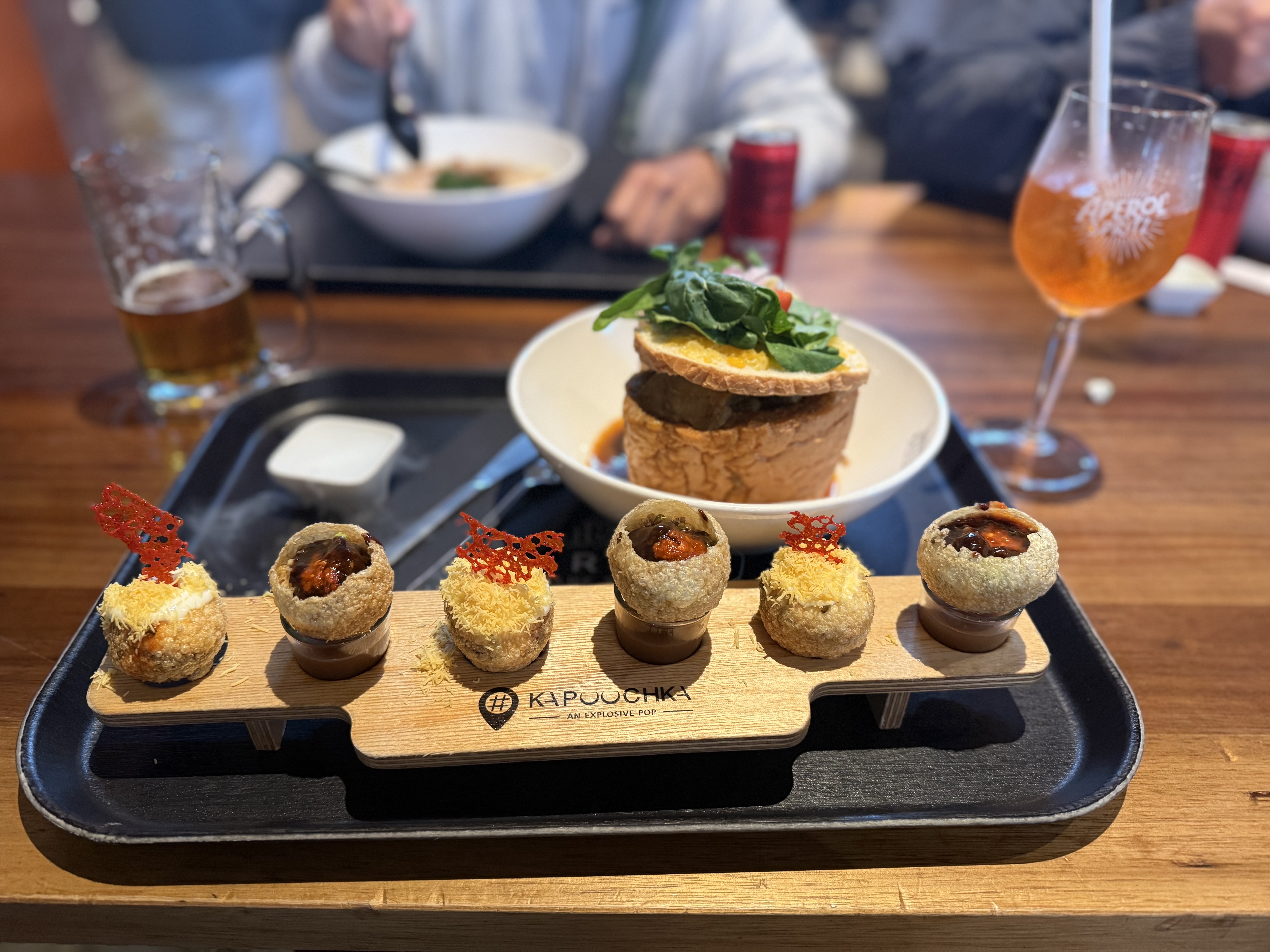
Pani Puri Flavor Bombs
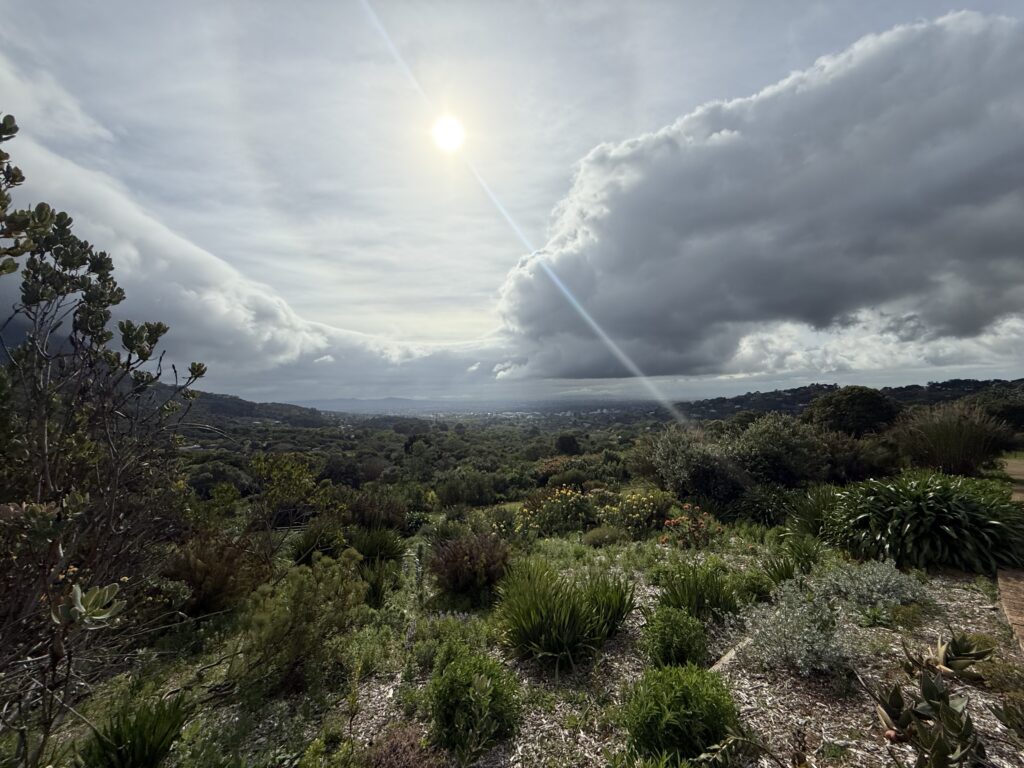
View from Kirstenbosch Garden behind Table Mtn
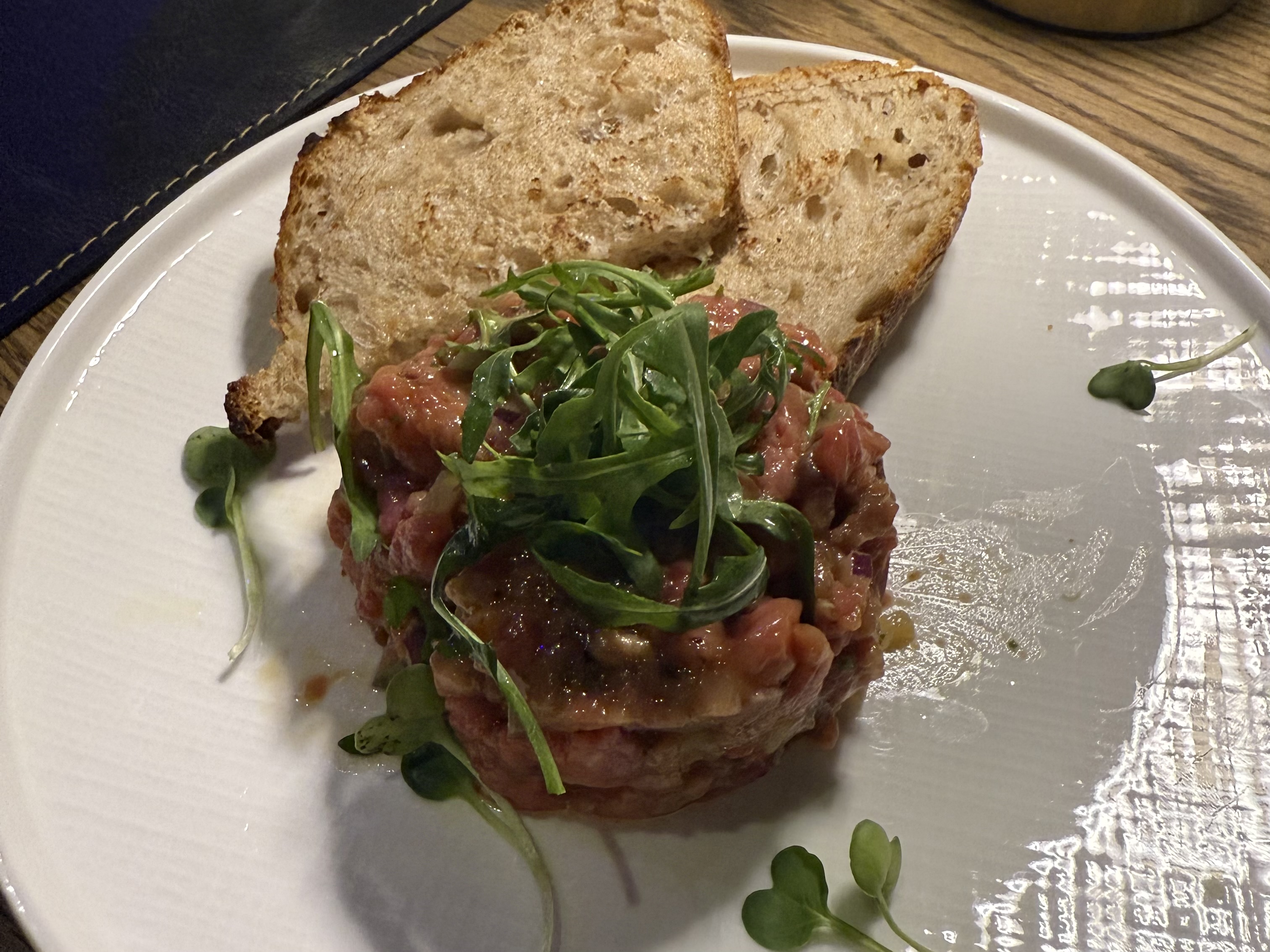
Steak Tartar at Bo-Vine
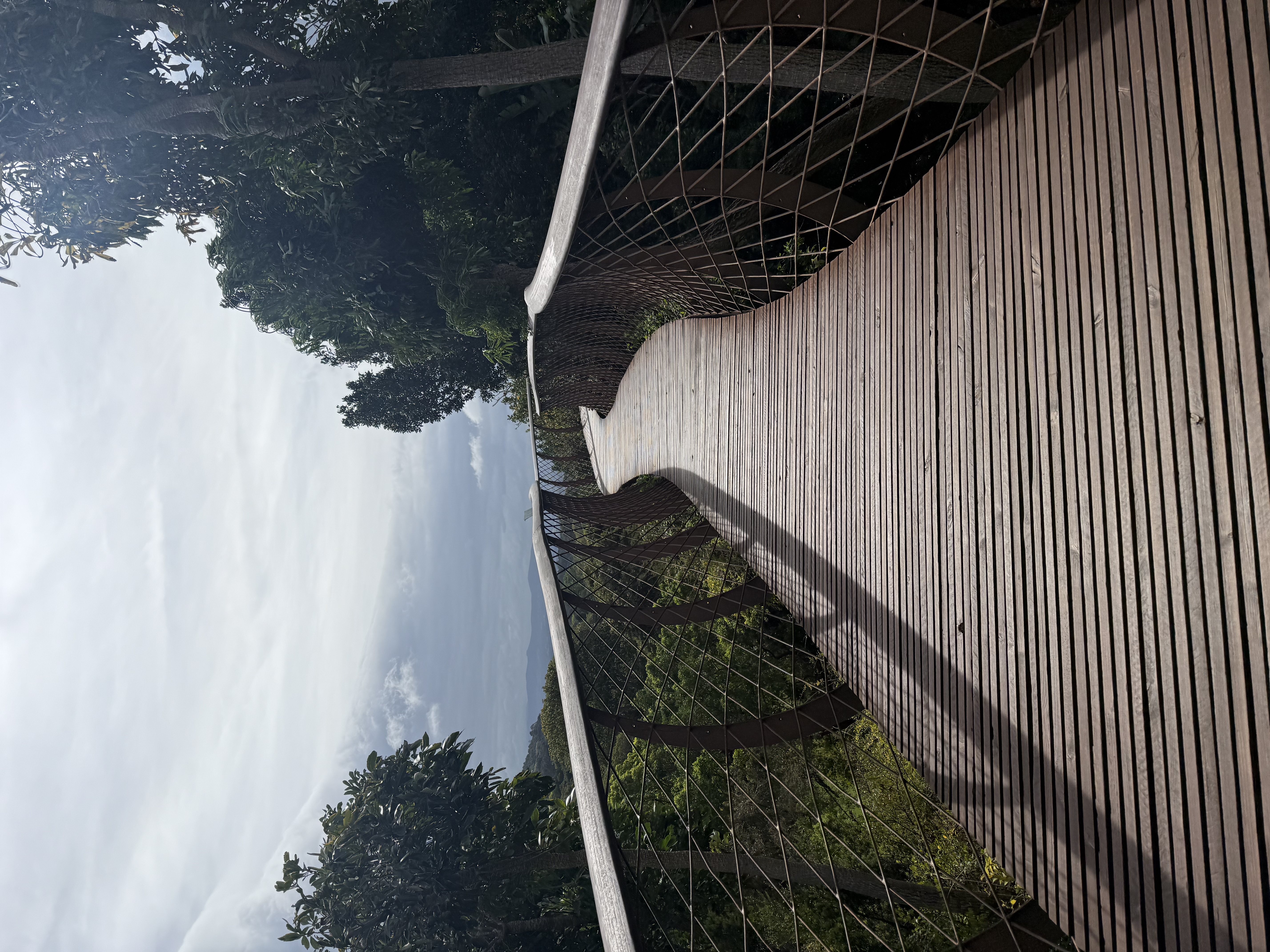
Bridge at Kirstenbosch Garden